
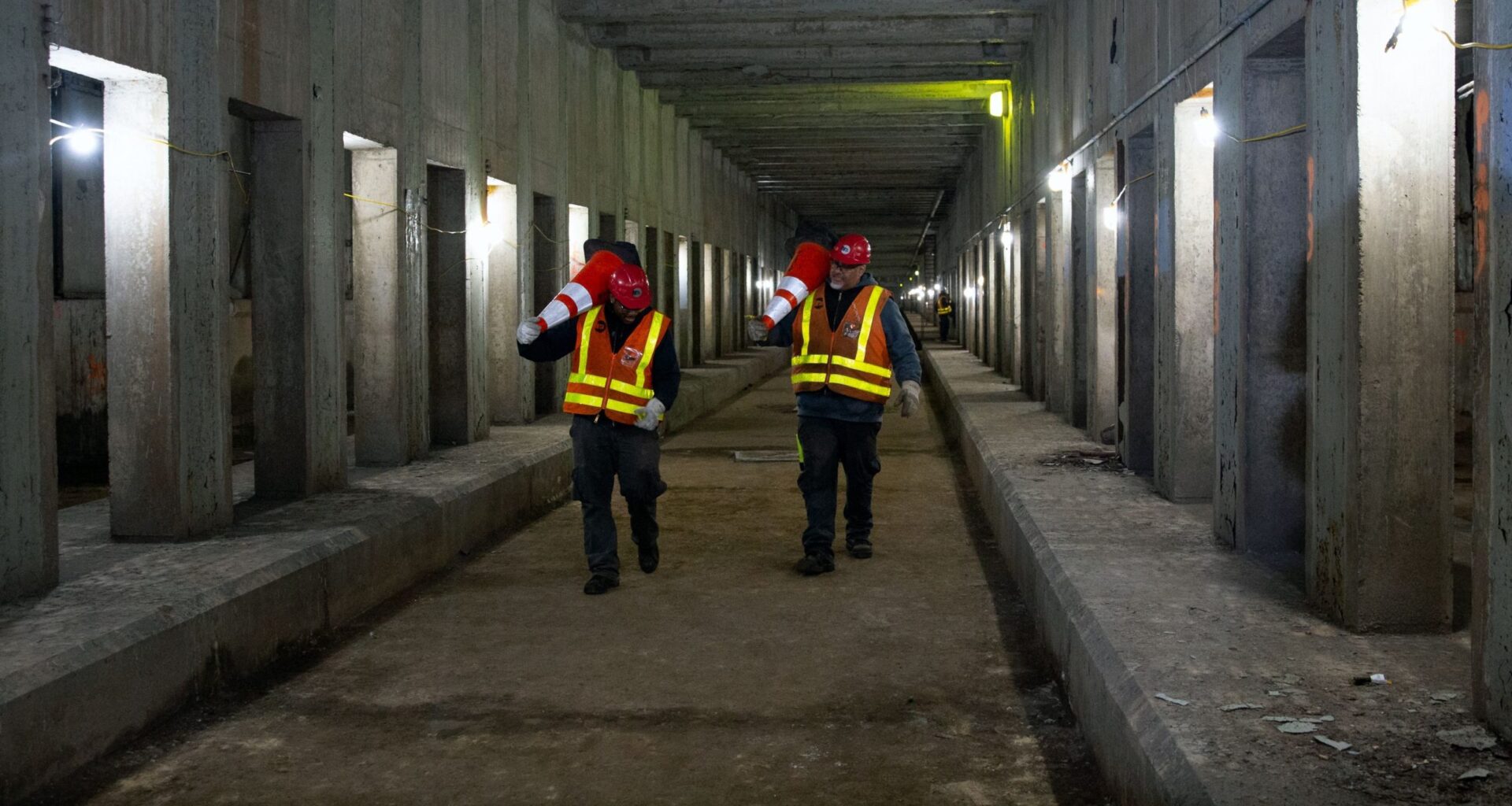
The MTA outlined plans Monday to keep the extension of the Second Avenue Subway to East Harlem on track — even as it battles the Trump administration in federal court over funding for the $7 billion project.
The transit authority’s board will vote Wednesday to award the third of four contracts for the planned three-station extension of the Q line from 96th to 125th streets. The vote will come just over a week after the MTA sued the federal government, charging that it is withholding $60 million in promised funding.
Jamie Torres-Springer, president of MTA Construction & Development, said the start of work hinges on “the uncertainty created by the federal government’s recent refusal to reimburse us” under a contractual agreement reached in 2023.
“We’re committing to delivering this project on time and on budget and we continue to do so and will do so if we’re able to follow through and award this contract as soon as possible,” Torres-Springer said, adding that the authority is “prepared to move quickly once federal uncertainty is resolved.”
MTA officials described the looming work as “perhaps the most technically challenging” part of the subway line extension, with 60-feet deep trenches set to be dug along Second Avenue from 105th to 110th streets during construction that will remove 215,000 cubic yards of earth.
If all goes as the MTA hopes, the work would begin later this year.
All of that would be accomplished, officials said, while keeping Second Avenue open to vehicular traffic, and aiming to minimize disruptions to buildings and businesses along the path of the planned route.
“Special care will be taken to ensure the access to the buildings, businesses and schools is continuously maintained,” said Jignesh Shah, senior director for MTA Construction & Development.
The contract is for excavation and construction of the Q line’s 106th Street station. Work would pick up south of 105th Street, connecting “tail tracks” just north of the end of the line’s first phase to a tunnel that’s been mothballed since the 1970s, when work on a line first proposed in 1929 was halted during the city’s financial crisis.
“It fulfills a promise almost a century old to bring subway service to East Harlem,” Torres-Springer said.
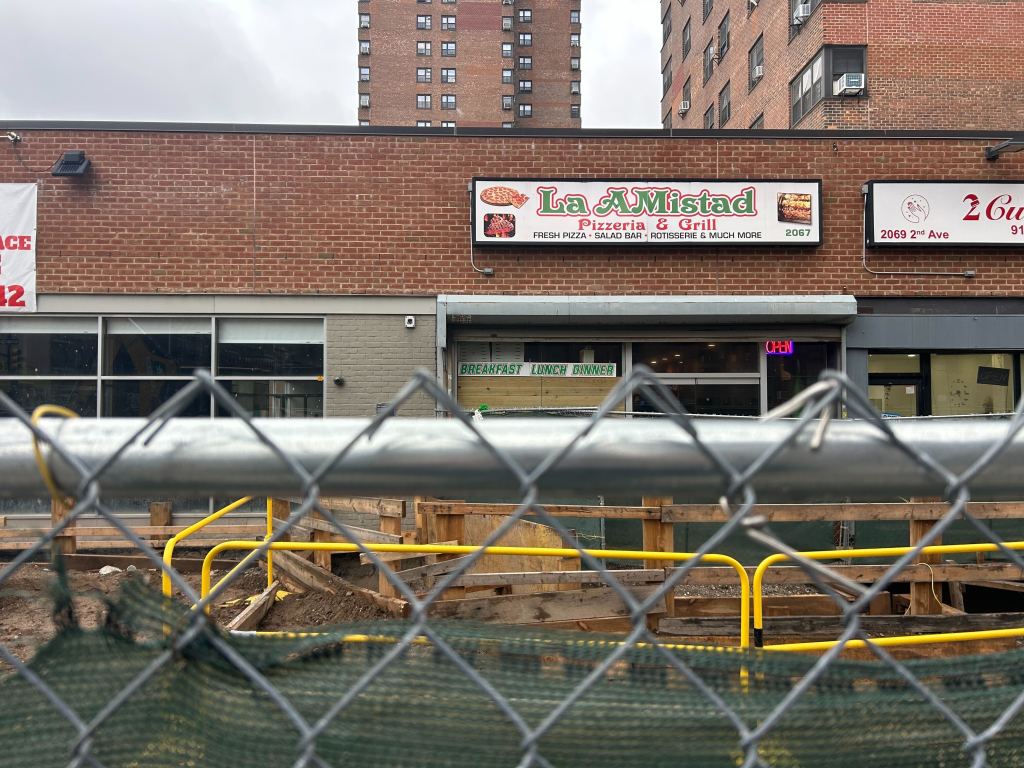 La Amistad Pizzeria & Grill is operating behind construction fencing in East Harlem as work on the next phase of the Second Avenue Subway begins, March 23, 2026. Jose Martinez/THE CITY
The first phase of the Second Avenue Subway opened in 2017, with cavernous new stations built at 72nd, 86th and 96th streets.
But now, the fate of the project is tangled up in a court fight with the Trump administration, with the MTA charging that the alleged breach of contract threatens the timetable for the long-planned subway extension.
According to the lawsuit filed last week, the breach “has required the MTA to divert millions of dollars away from other critical transportation projects in order to fill the gap.”
“Their refusal to honor the full funding grant agreement for the Second Avenue Subway is a farce,” Brian Fritsch, associate director for the Permanent Citizens Advisory Committee to the MTA, testified Monday at meetings of the authority’s board. “And we applaud Governor Hochul and the MTA for taking the feds to court.”
The Trump administration has been critical of transit construction costs, while MTA officials have said the authority is working to contain costs across its projects.
“The Department is committed to ensuring taxpayers dollars are used efficiently, consistent with the law and our constitution,” a spokesperson for the federal Department of Transportation said.
The feds last year froze funding on the subway extension, as well as the Gateway project to build a new rail tunnel between New York and New Jersey, questioning whether the projects are in line with a USDOT rule on disadvantaged business enterprises. Work on the Hudson River rail tunnel resumed last month amid another federal court fight.
MTA officials said work on the first contract for the next segment of the Second Avenue Subway is “aggressively advancing.”
“Our utility relocations have advanced significantly,” said Matthew Zeetwoch, vice president and program executive at MTA Construction & Development. “Gas, power, water, sewer and telecommunications are rapidly being relocated.”
At La Amistad Pizzeria & Grill, whose storefront at 106th Street and Second Avenue is already concealed by construction fencing for the subway project, owner Ediberto Rendon said the business is now in “survival mode.”
Rendon said he fears the eight-year-old business may not outlast the construction.
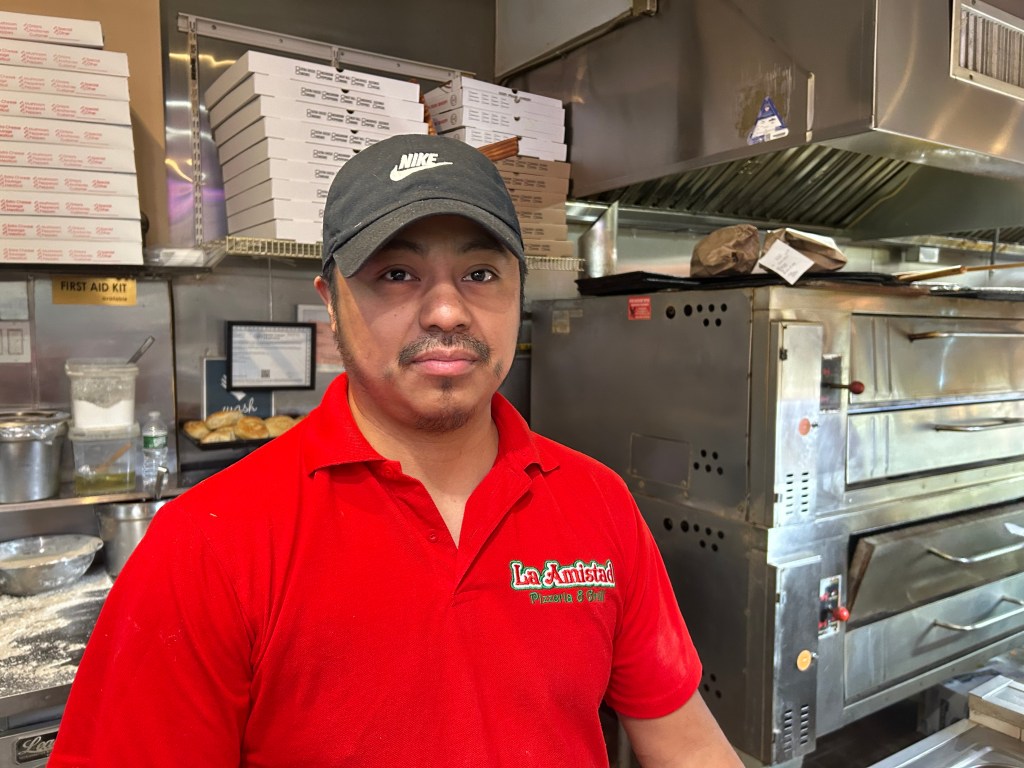 Ediberto Rendon operates a pizza shop in East Harlem, March 23, 2026. Jose Martinez/THE CITY
“I’m all for it, the thing is it’s really hurting me right now,” he told THE CITY. “That’s the thing I really need to figure out how to attack — my regulars know I’m here, but I don’t get new customers.”
A few blocks north, another shopkeeper said her family’s small grocery store is struggling behind the fencing even before the heavier work begins.
“Right now, it’s a miracle if we get new customers because of all of this,” said Adela Zamora, whose family owns Raspberry Deli & Grocery Co. “When the actual digging starts, it’s going to be even more problematic — more people, more construction all day long.”
Zamora said she is hopeful that the extension of the subway to East Harlem will eventually be a boon for the neighborhood and the city.
“I’m counting on it, honestly,” she said. “But it’s definitely a struggle.”
Related