
Annette Levin was sitting in the kitchen of her third floor apartment in Bed-Stuy when the lights started flickering. Suddenly, all but one went out.
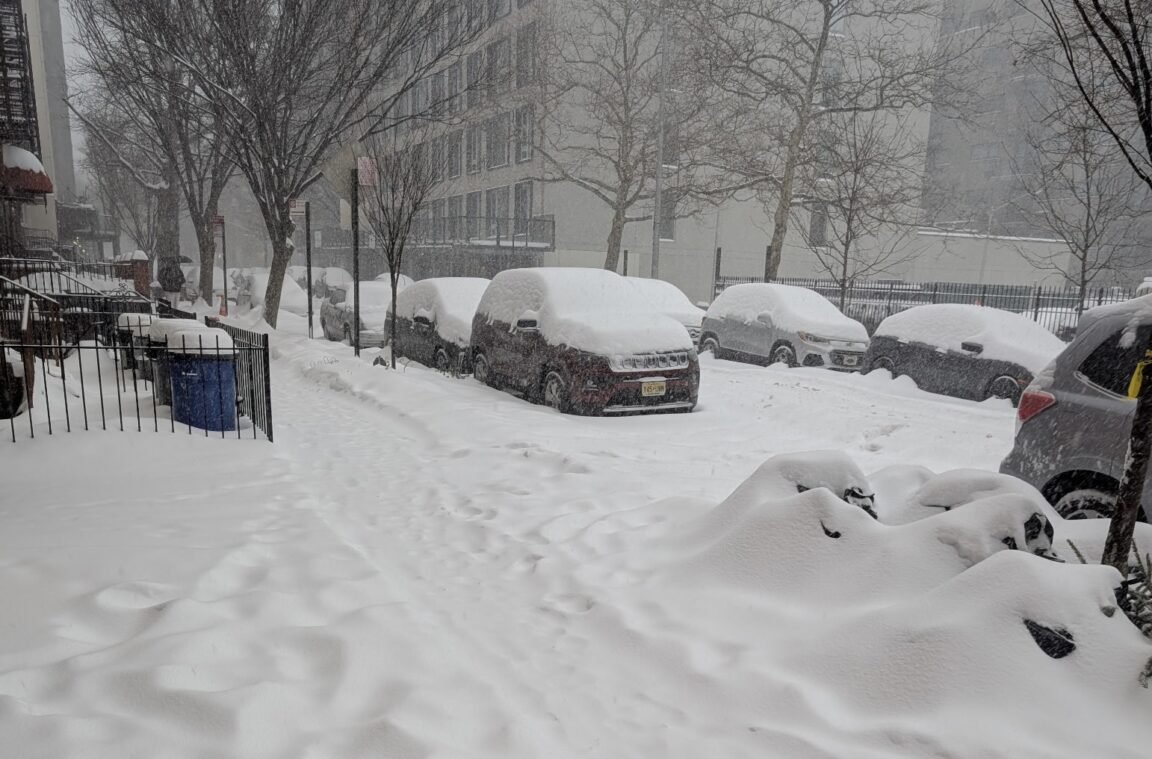
It was the evening after “Snowmageddon 2026,” a storm that dropped close to a foot of snow on New York City on Jan. 25.
Sally Horrigan’s building in Boerum Hill also gradually lost power.
“The lights just kept getting dimmer and dimmer and dimmer,” Horrigan said. “It was like something out of a horror movie, like before the killer shows up.”
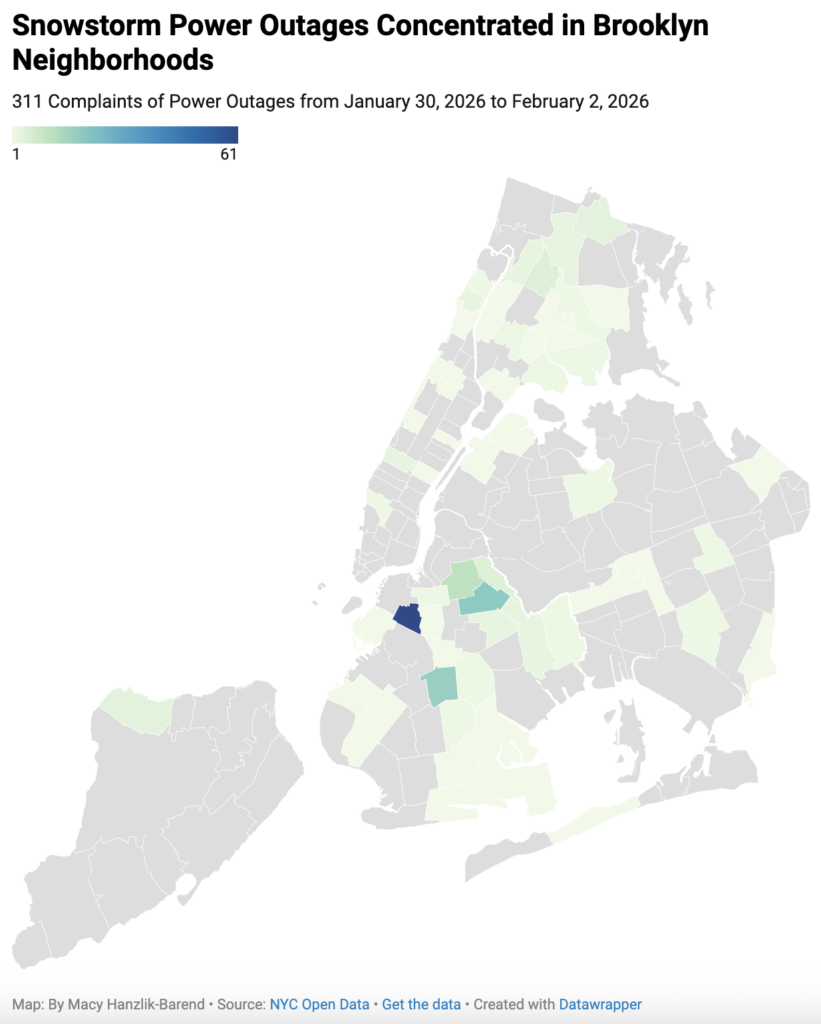
By Jan. 27, more than 990 Con Edison customers in Bed Stuy had lost power, according to Council Member Chi Ossé. By Feb. 2, nearly 2,000 had lost power in Boerum Hill and Park Slope. Though it was days after the storm, a spokesperson for Con Edison said in a statement that the delayed outages were caused by “melting snow mixing with road salt and seeping into our underground electric equipment.”
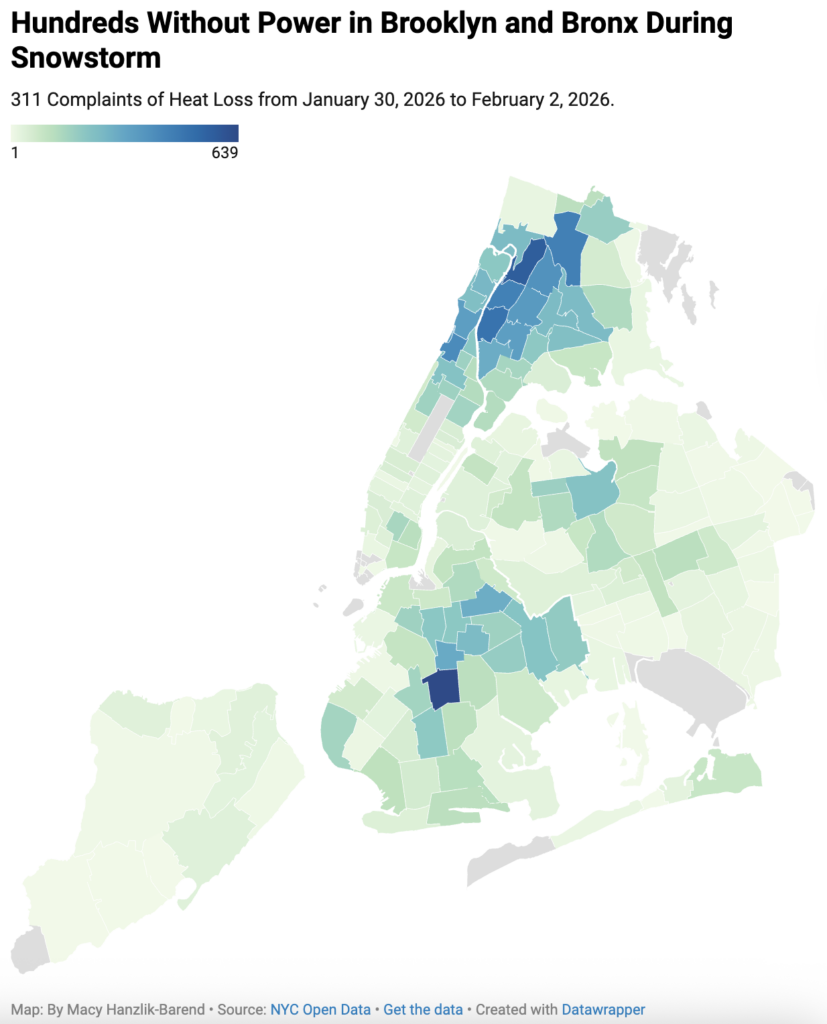
Data related to 311 calls show Bedford-Stuyvesant, Boerum Hill, and Flatbush were among the most heavily impacted neighborhoods.
When the power flickered out, Francesco Cecchetti’s first thought went to his 7-month-old baby, and the food supply.
“This house is now 40 degrees fahrenheit inside and I can’t have my baby living there,” Cecchetti recalled thinking.
His family also had 150 ounces of frozen breast milk in the freezer. Cecchetti quickly moved the supply to a neighbor’s house, which lost power the next morning.
As for the groceries, Cecchetti left them outside on his balcony at first, though not everything survived. The temperature dropped so low in Horrigan’s apartment that some food was preserved.
While Con Edison claims to offer reimbursements for spoiled food and prescription medications, customers must submit an itemized grocery and photographs of spoiled items.
Levin says she didn’t think to photograph the losses.
“The last thing on my mind was, ‘oh, I should document this.’ I was like, ‘ew it smells like rotten meat,’” Levin said.
Other residents say documentation has not guaranteed approval. Rami Abou Ghanem and his building neighbors submitted claims that were subsequently rejected. The rejection email stated “Con Edison does not pay claims associated with outages caused by road salting, which is beyond our control.”
Saltwater, created when melting snow and ice melt combine, can corrode cables and cause electrical shorts. For Abou Ghanem, this is not a good enough excuse, especially considering the rising costs of electricity and the likelihood of snowstorms in the city. In January, the New York State Public Service Commission approved a roughly 9% increase in electricity rates for Con Edison customers over three years.
“They are profiting off of us in mass numbers and they can’t even keep their systems resilient. They can’t even offer compensation, when things do get screwed up. It’s very frustrating,” Abou Ghanem said.
Cecchetti still has not heard back.
“There is no way to check the status of your claim,” Cecchetti said. “I called and was told ‘we need 30-45 days to answer.’”
The problem is that customers have 30 days from the outage to file, meaning if a claim is rejected after 45 days, the deadline to reapply has already passed.
Con Edison said it did not have claim statistics.
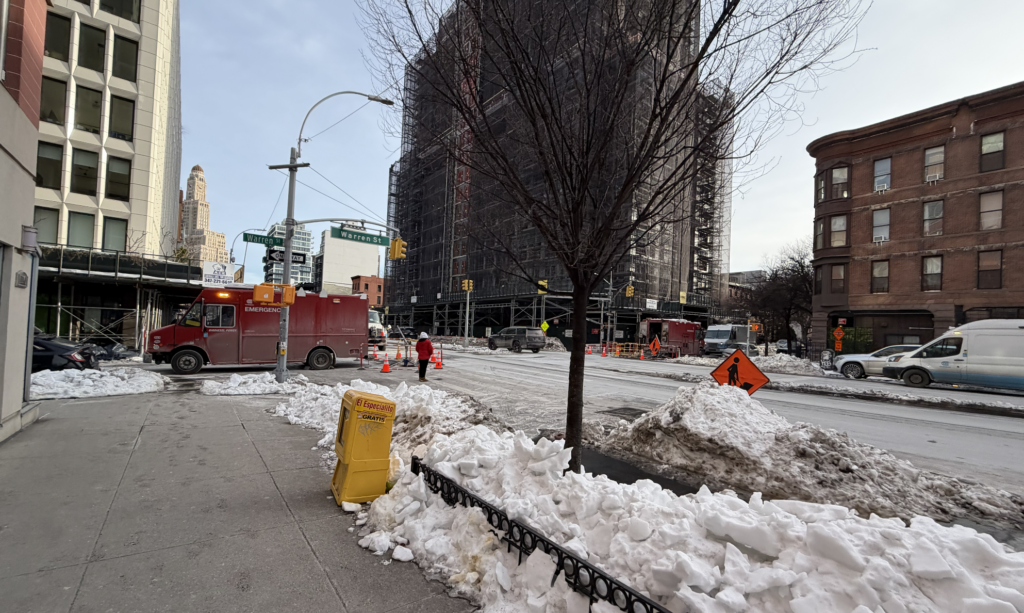
Con Edison emergency trucks on Warren St following the snowstorm. (Courtesy: Francesco Cecchetti)
Throughout the black out, information from Con Edison was hard to come by, prompting Council Member Chi Ossé to provide live Twitter updates.
“Con Ed’s communications were a nightmare. They kept saying, ‘you have electricity, congratulations,’ and we didn’t,” Levin said.
Many residents turned to Reddit or building group chats to communicate.
Horrigan’s partner, Jason Stack, was concerned by the lack of communication and volunteered with Council Member Shahana Hanif’s team to conduct door-to-door check-ins.
One story stuck with him: A neighbor had to bring his elderly mother to his sister’s house in Long Island after her COPD medical device lost power. The move ensured she could get the care she needed. She was able to access heat and oxygen.
“It was definitely the right thing to do checking in on people because Con Ed really wasn’t doing it,” Stack said.
The outage took an emotional toll, with many unsure when they could return home amid work and school obligations.
“If you would’ve called me during the week that it happened, I was, like, screaming. I was so angry and so disappointed in everybody,” Levin said.
A spokesperson for Con Edison said crews worked “around the clock to make the necessary repairs to restore service as quickly and safely as possible.”
Still, for many residents, the company’s efforts felt insufficient, leaving them with a sense of neglect and shock at Con Edison’s large-scale failure. Similar outages occurred just a month later when a February 23 storm dumped close to 24 inches of snow on parts of the city. Upwards of 1,800 residents lost power throughout Brooklyn in the week that followed.
While Con Edison points to salt water corrosion as a factor beyond the company’s control, it remains unclear how much salt spread by New York City Department of Sanitation (DSNY) contributed to underground infrastructure damages. The combination of aging electrical infrastructure and saltwater created by melting snow and road salt can cause a range of issues from exploding manholes to subway delays. DSNY would not comment on whether salting contributes to power grid issues.
In a statement, a DSNY spokesperson emphasized that rock salt remains essential to public safety. “The use of rock salt to limit snow and ice accumulation and to prevent refreezing is among the chief reasons that city streets are safe and passable so quickly after major snowfall,” the spokesperson said, adding that alternatives like beet and pickle juice have been tested but proved less effective.
Residents impacted by the outage say the larger issue is the system’s fragility. “I didn’t really think anybody from Con Ed seemed to care what we were going through,” Horrigan said. “Our infrastructure is not resilient enough at this point to withstand these severe weather events.”