
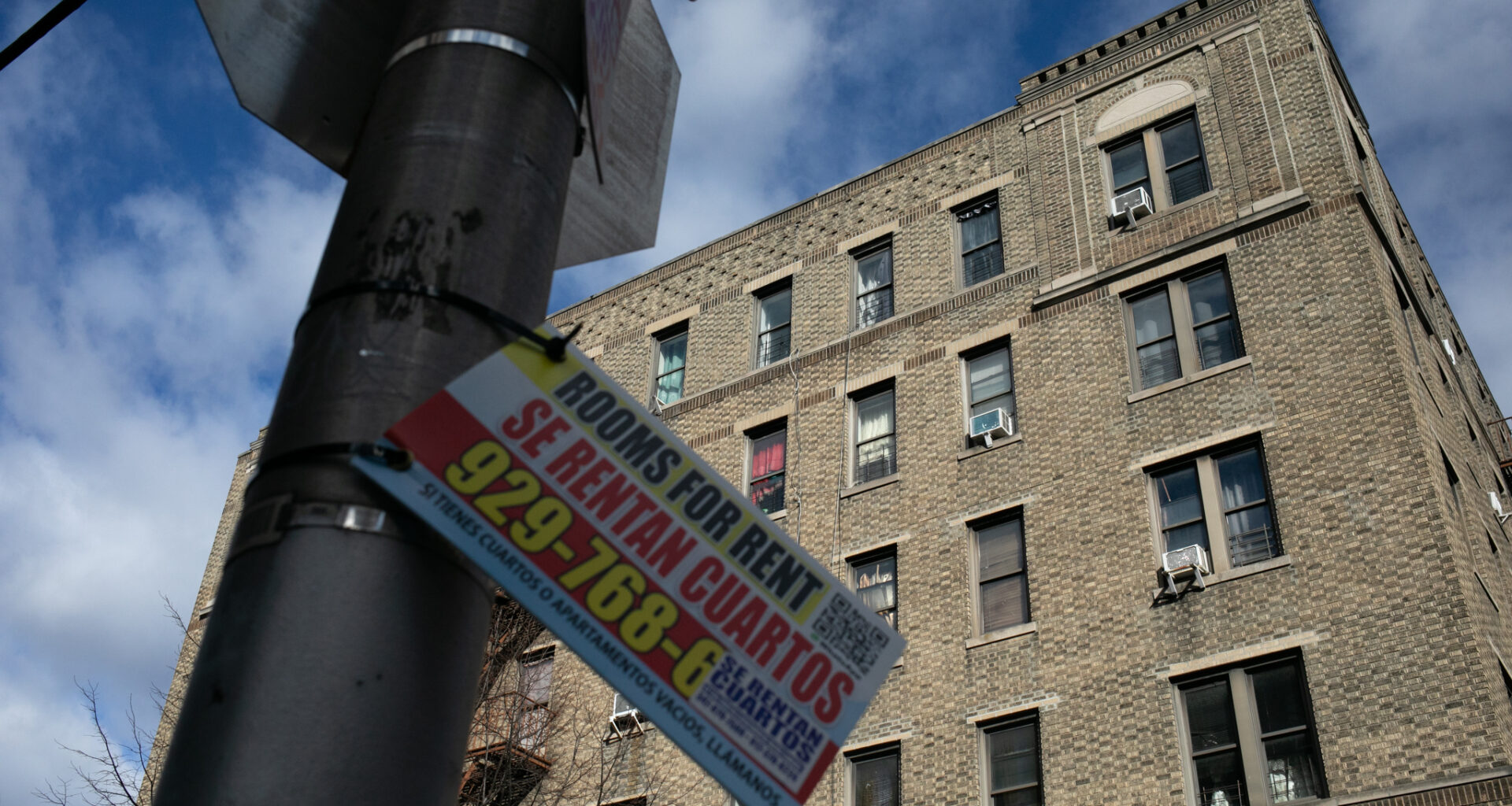
On Friday, Quiana Nichol received an email that filled her with dread.
For three years, the 26-year-old has lived in an Elmhurst apartment that has been partially subsidized by a federally funded Emergency Housing Voucher. But the email warned that funding for the voucher she uses to pay most of her rent will run out before the end of the year — and that she will not be able to get a standard Section 8 voucher.
“It just re-stressed me out. I got super anxious because that just reminded me of being on the street,” Nichol said. “It just had me rethinking my whole life, thinking, should I move or find something more affordable? Because without the voucher, honestly, I cannot afford to be here.”
The New York City Public Housing Authority, which administers some of the emergency vouchers, sent the emails to voucher-holders like Nichol and their landlords, informing them to keep an eye out for more information “in the coming weeks.”
NYCHA is “currently looking at alternative options” for funding the program, agency chief Lisa Bova-Hiatt said Tuesday at a City Council budget hearing.
The Emergency Housing Voucher program was supposed to provide rental assistance until 2030, but in March of last year, the U.S. Department of Housing and Urban Development announced it would stop funding the program.
The $5 billion federal program was created in 2021 during the COVID crisis to help some of the most vulnerable people — including youth aging out of foster care, domestic violence survivors and people living with HIV/AIDs — cover rent. In all, about 70,000 households throughout the country received the vouchers, which cover 70% of rental costs.
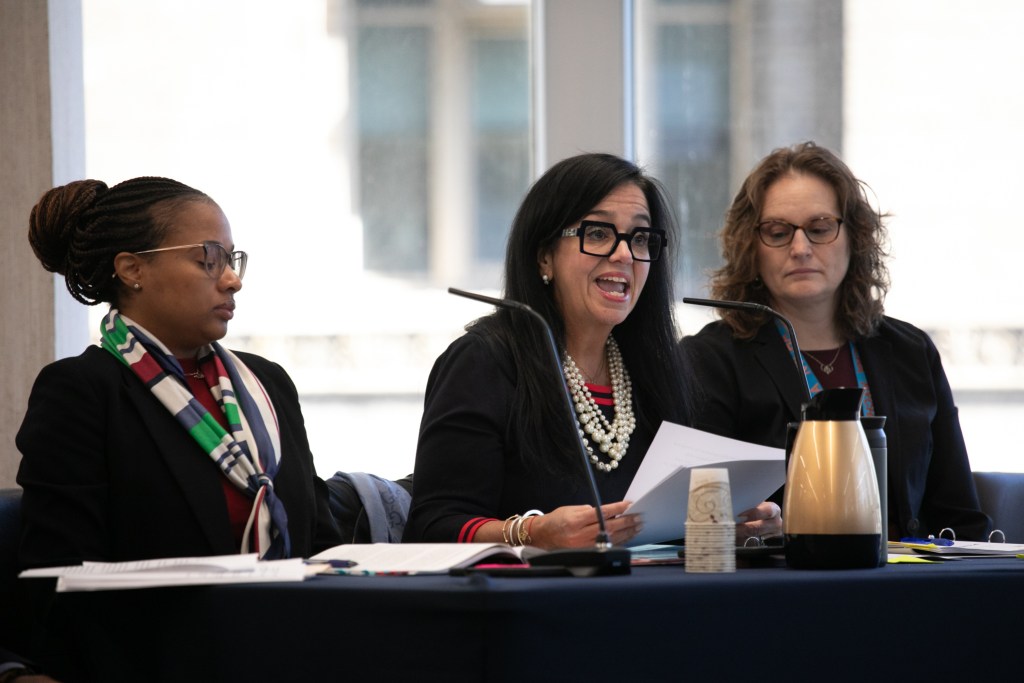 NYCHA CEO Lisa Bova-Hiatt testifies during a City Council budget hearing, March 24, 2026. Credit: Ben Fractenberg/THE CITY
NYCHA gives the vouchers to more than 5,200 households citywide, while another 2,000 households obtain their vouchers through the Department of Housing Preservation and Development. In New York City, that amounts to more than 16,000 people housed with an Emergency Housing Voucher, according to the New York Housing Conference.
HPD has said it plans to plug the gap for two years through the Tenant-Based Rental Assistance program, using federal dollars.
Originally, NYCHA asked the federal government if Emergency Housing Voucher-holders could transition to Section 8 vouchers, but HUD in February denied the request. Since then, NYCHA has lacked a solid plan to replace the rental subsidies, Gothamist reported last month.
Households with an Emergency Housing Voucher have an average income of $18,000, and on average, the vouchers cover about $1,900 in rent according to the Housing Conference.
Participants likely cannot afford to pay rent without the voucher — and that will harm their landlords, as well.
Stephanie Rudolph, a staff attorney with The Legal Aid Society, said several panicked clients reached out to them after receiving the notices NYCHA sent Friday.
“It didn’t necessarily provide any concrete plan, so what I have just been telling my clients is to make sure that their house is in order,” Rudolph said, explaining that tenants should schedule any required inspections and recertify on time. “It’s a really tough situation, and I’ve just told people to try not to worry yet, but obviously there’s not that much that folks can do in this moment, other than be aware.”
Gabriela Sandoval Requena, vice president of external affairs at New Destiny Housing, also said the organization received a stream of messages and calls to staff from voucher-holders on Friday.
“Most are trying to navigate this high level of uncertainty,” she said.
Requena worries that the uncertainty may lead to evictions or people unable to stay in their homes.
“For domestic violence survivors … we’re pretty confident that many will go back to situations that are unsafe, including situations of abuse,” she added.
For Nichol, the possibility of losing her Elmhurst apartment makes her fearful. Rudolph helped her secure the apartment years ago, which was difficult for many reasons — not least because Nichol, like other unstably housed youth, had no rental history.
“I was hoping I’d never have to go through it again. Honestly, this just feels like it’s about to just happen all over again,” Nichol said. “A lot of us are gonna have eviction notices for the first time because realistically speaking, if a voucher is just shut off, and we’re still in our leases, where are we getting this $3,000 a month?”
Related