
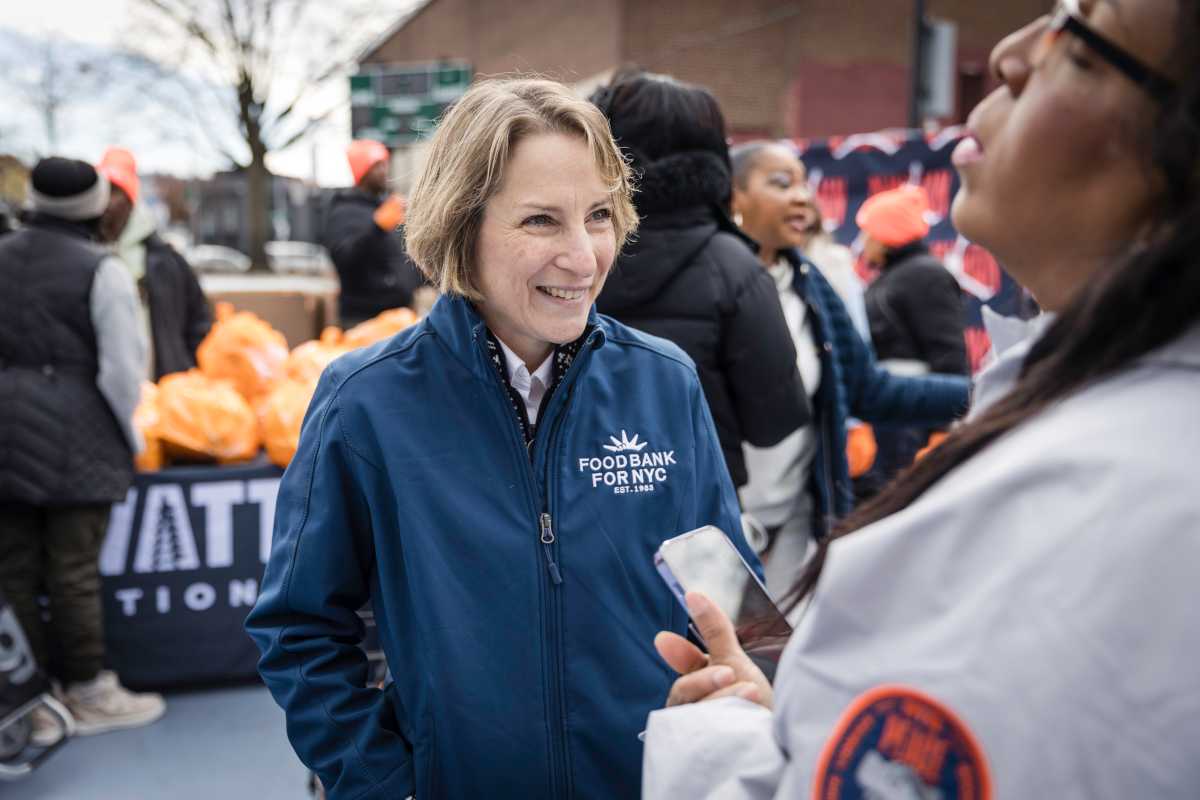
Leslie Gordan, President and CEO of Food Bank for New York City, leads one of the nation’s largest hunger relief organizations at a time when food insecurity continues to rise across the city. As she works to support millions of New Yorkers, her message continues to empower others.
“You don’t need to apologize for who you are because you are a woman,” Gordan says.
Gordan stepped into her role on March 20th, 2020, just as the COVID-19 pandemic shut down New York City. From this challenging beginning, she has led one of the largest food banks to double its national output to nearly 150 million pounds in less than 18 months. Notably, in 2021, the Food Bank for New York City distributed more than 121 million meals across the five boroughs—more meals than ever before in the organization’s history.
Before setting records for the organization, Leslie drew inspiration from her mother, Myra, whom she credits with shaping her commitment to service. Myra broke barriers as the Executive Director of Hunts Point Produce Market in the South Bronx, becoming the only woman to run the nation’s largest produce market. “It was a very intimidating environment,” Gordan says, as “she was the 1st woman of the team.”
Through her mother’s resilience and leadership in a male-dominated field, Gordan learned to stay authentic and prioritize self-worth, a lesson deeply rooted in her family history.
Gordan continues: “Women often feel the need to apologize for who they are and for their ideas, but they simply don’t need to. They have just as much opportunity to make an impact as anyone else.” This perspective resonates with me as a young college woman still finding my place in society.
Growing up, Gordan recalls realizing the joy she found in helping others. As the third generation in her family dedicated to connecting people with nutritious food, she draws inspiration from her grandfather, Norman Goldberg.
Goldberg, raised in poverty by European-born parents without running water or plumbing, relied on his garden to feed his family and help others. That legacy continues to inspire Leslie’s leadership, helping women envision themselves in leadership roles.
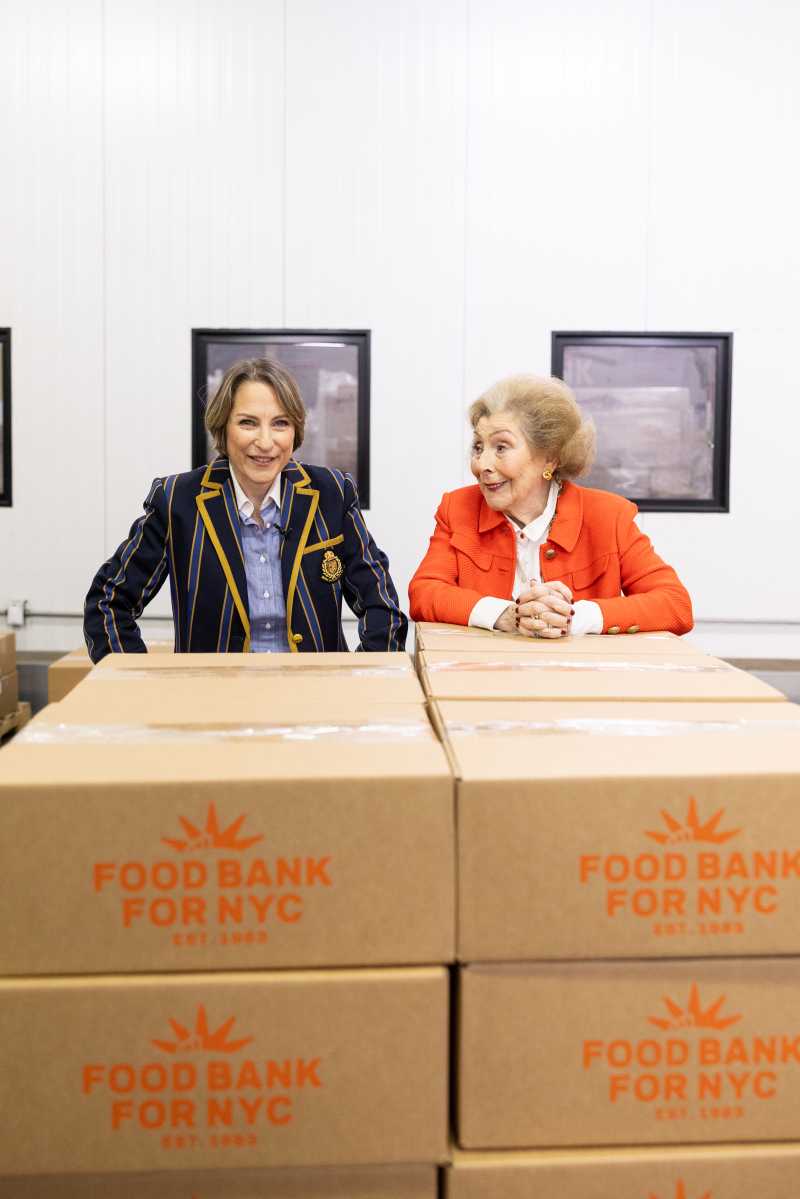 Leslie Gordan (left) with donations.Photo courtesy of Food Bank for New York City
“There was no promise of access to good meals every day,” Gordan said. “I grew up hearing him and watching him, giving to people in need.”
For example, Gordan told amNewYork that “he would take leftover brown grocery store bags and leave any zucchini, string beans, tomatoes, corn, on the neighbors’ doorsteps.”
Generation after generation, Gordan grew up seeing her grandfather’s actions, then her mother’s, as her mother ensured excess product from that facility reached charities that would get it to people who needed it.
“Giving back is part of my DNA, my family story, and who I am authentically.”
Looking back at her start as CEO just before the March 2020 shutdown, Gordan says her focus became “ensuring people could count on us. Food Bank for New York City is made for moments—pandemic, 9/11, or Hurricane Sandy, we’ve always been here for New Yorkers.”
Gordan wants the whole team to feel seen, heard, and supported, with the resources they need to do their jobs. I’m accessible and available to stand shoulder to shoulder and take on any job that’s needed. I think at first, quite frankly, they’re not sure that they believe that was who I authentically was, and now today, it’s really a blessing they can appreciate that’s me, I mean, I’ll do any job.”
Looking to the future, Gordan notes, “We’re gonna continue to be here knowing the unfortunate and stubborn forces that are coming together. For women who work so diligently to hold their families together, the rising costs of rent, the rising costs of food, the decline in SNAP benefits, access to Medicaid or general health insurance benefits, it’s all coming together at once.”
Surprising Statistics Regarding NYC Food Bank
Today, 60% of New Yorkers turn to the NYC Food Bank. They provide fresh, protein-rich foods, including culturally appropriate options for diverse communities throughout the city.
To better visualize this scale, the NYC Food Bank delivers nearly 100 million pounds of food over 12 months. For perspective, imagine a tractor passing by; it’s probably about 30,000-35,000 pounds, which is equivalent to tens of thousands of tractor-trailers of food—a tremendous amount.
Currently, the food bank is primarily focused on helping the Bronx, which has the highest level of food insecurity in the city. The Bronx has the worst food insecurity rate of any other place in the United States with a population over 100,000 people. In these neighborhoods—Hunts Point, Soundview, Parkchester, and Fordham Heights—1 in 3 kids is food-insecure. These facts might surprise many people.
150 million pounds of food have been delivered under Gordan, as she shares the strategies that made that possible. By investing in a private truck fleet, the food bank for NYC is, for the 1st time, one of the nation’s largest. There are currently 200 food banks in the country, and New York City is one of the nation’s largest.
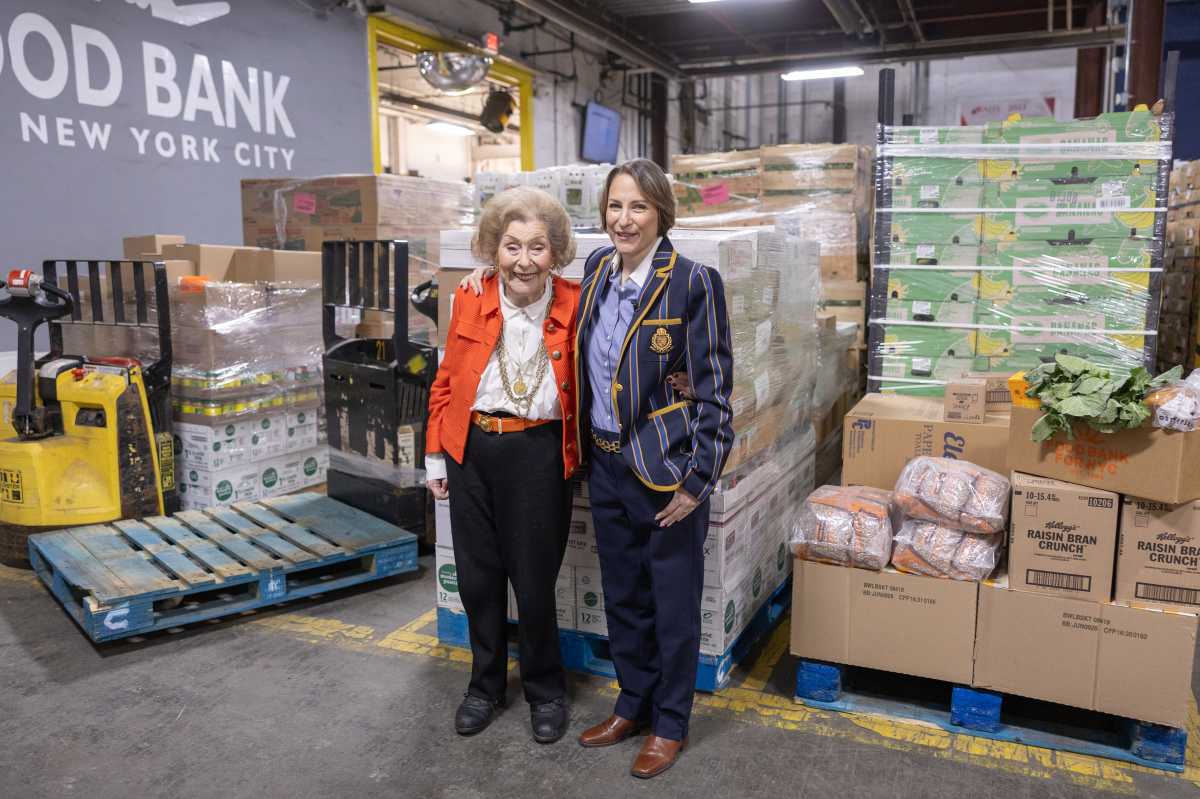 Leslie Gordan (right) with donations.Photo courtesy of Food Bank for New York City
Something surprising about NYC Food Bank is that they don’t just feed people; they also offer a range of resources to help people feel more stable in their households. For example, connecting them to SNAP and helping them fill out the paperwork, and helping people understand how to shop, cook, and eat healthy on a limited budget. With registered dietitians and nutritionists on staff, Gordan provides free nutrition education to community stakeholders, including kids and older adults.
These offerings help people understand how to manage money, gain financial empowerment, and learn about budgets, credit, and building financial stability.
In addition to direct food programs, NYC Food Bank sometimes partners with retailers like Stop & Shop, ShopRite, and Starbucks. Any excess product is taken into the system and distributed to people in need.
For instance, with Starbucks, refrigerated cases of sandwiches, yogurt combinations, nuts, and cheese that are not sold within their industry-established window are inspected for quality, then distributed to those in need as quickly as possible.
Through all these efforts, Gordan inspires people from ages 5 to 95 to find opportunities to engage in their mission. “You can donate, you can advocate, you can intervene, you can volunteer.”