
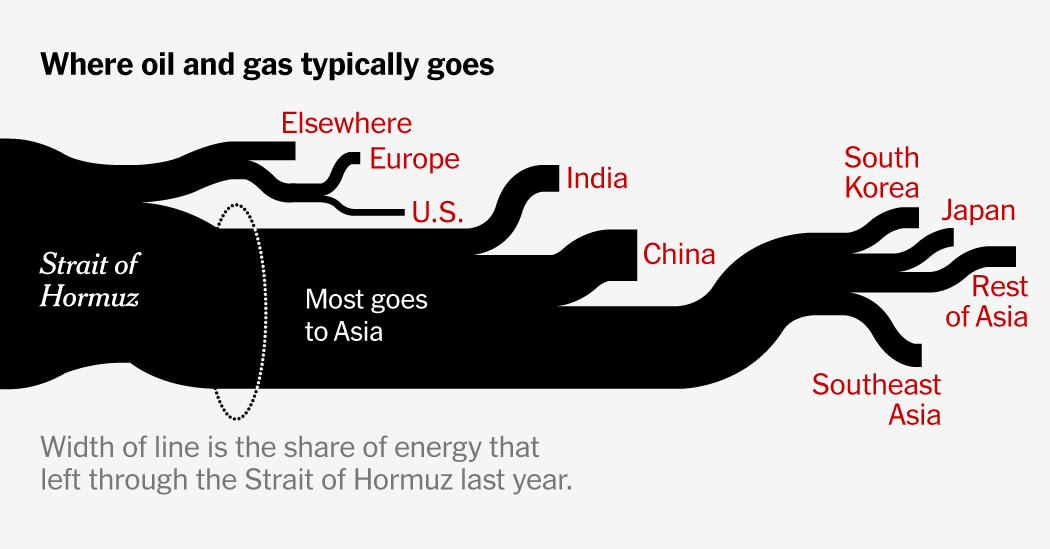
The strait is just 35 miles wide, but before the war began, a quarter of the world’s seaborne oil and one-fifth of its gas traversed through the waterway. The choking off of that supply is creating economic shocks around the world. Even nations not heavily dependent on Gulf oil and gas are contending with the consequences.
International oil prices are at their highest levels in years. L.N.G. prices have soared. Rising jet fuel costs are causing flight cancellations. From Tokyo to Vancouver, driving has become considerably more expensive. In Bangladesh, garment factories have begun to sit idle. In Pakistan, the government has established statewide school closures to conserve power.
The price shock is depleting foreign currency reserves and stoking inflation in nations already struggling with rising costs.
Experts have called the current situation a “systemic collapse” of the energy security era established in the 20th century.
Governments worldwide are deploying measures to combat shortages and high energy prices, including the largest-ever release of strategic oil reserves by the United States, Japan, South Korea and others.
For now, energy experts and economists say these stopgap measures are helping shield households and companies from the most acute disruptions, but they warn that the drag on global economic growth will compound if the war persists.
President Trump has pressed for an international naval coalition to break the Iranian blockade of the strait. Over the weekend, he threatened to obliterate parts of Iran if it did not reverse course. Tehran has said “non-hostile” ships can sail through the strait, but it is unclear if any vessels will try.
Methodology
The New York Times identified ports and energy installations in the Persian Gulf affected by the Strait of Hormuz and then used activity tracked by Kpler, an industry data firm, to measure the tonnage of individual shipments flowing out of the region in 2025, as well as their final destinations. The shipping analysis focused on seaborne trade and was limited to the following oil and gas products: crude oil and condensate; gasoline and naphtha; liquefied petroleum gas; gasoil and diesel; kero and jet; fuel oils; and liquefied natural gas. About half of the outgoing shipments made by Iran are estimated by Kpler using satellite imagery.