
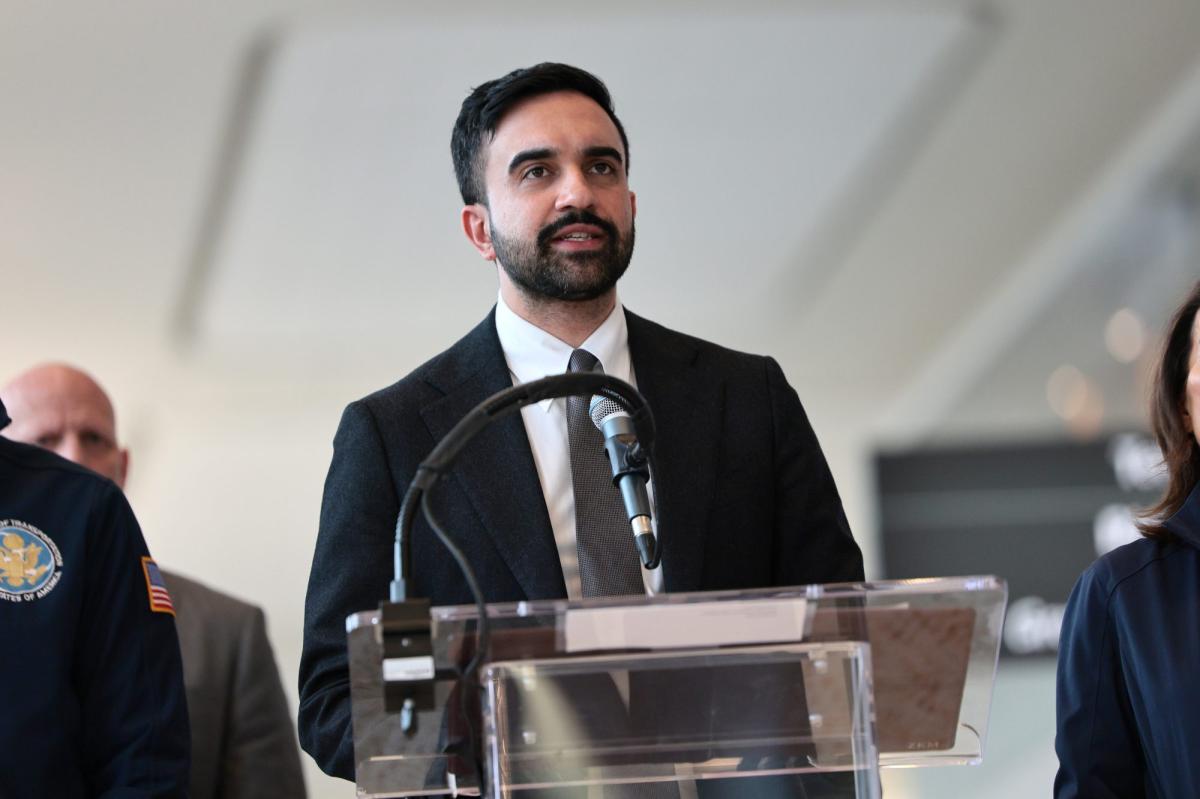
A cash-strapped Mayor Zohran Mamdani is looking under the couch cushions for savings, but he should be going to the mattresses.
On Wednesday, the mayor announced the first round of cuts in a planned $1.7 billion savings initiative, following a January directive for agencies to trim 1.5% from the current-year budget and 2.5% for Fiscal 2027, which begins in July.
Many of these cuts were long overdue.
The single biggest potential savings, $100 million, comes from identifying and removing ineligible dependents from the city’s swollen health insurance plans.
The remainder is a hodge-podge: his social-media videos highlight $27 million saved on pens and paper and another million by buying Naloxone from another vendor.
But let’s not kid ourselves: the mayor is being penny-wise and pound-foolish. He can’t tighten the budget’s belt without addressing the 330,000-strong public workforce and cutting low-value programs.
History shows how other mayors balanced their budget gaps with much less fuss by pausing city hiring and boosting efficiency.
With the city reeling from the Great Recession, Mayor Bloomberg announced a budget in January 2010 that proposed cuts of 4% to uniformed agencies and 8% to others over two years. Between 2010 and 2012, he eliminated more than 8,000 positions while modernizing city services and processes.
Mamdani won’t touch the big drivers of spending — personnel and benefits — because that would mean confronting the unions. For all his talk of efficiency, he hasn’t committed to using AI to boost productivity — despite its potential to reduce unnecessary headcount and deliver faster, more responsive results.
In the context of a proposed $127 billion budget, the (hoped-for) $1.7 billion savings don’t even cover the $3 billion in new spending the mayor wants just for the Department of Education.
Roughly $1.6 billion of his budget — about the same amount of his cuts — is going just to satisfy the state’s class-size mandate. Premised on the wrongheaded assumption that smaller class sizes lead to better student results, this law was crafted to prop up the teachers’ union’s ranks.
Get opinions and commentary from our columnists
Subscribe to our daily Post Opinion newsletter!
Thanks for signing up!
Despite DOE losing about 118,000 students since 2019, Albany found a way to boost demand for teachers — even as shrinking classes without boosting teacher quality won’t improve achievement.
The School Construction Authority is also continuing to spend some $1.4 billion between now and 2029 on electrification and biofuel heating to comply with Local Law 97, the city’s carbon-reduction law.
That’s more than a billion dollars in the capital budget unrelated to helping kids learn, with taxpayers on the hook for the interest each year.
The mayor could immediately slow the fastest-growing part of the DOE budget — reimbursements for private-school special education — by requiring that parents sue the city each year to obtain reimbursement. At an average annual cost of $101,757 per student and a projected total of $1.5 billion, these payouts will continue to drag on future budgets unless Mamdani intervenes.
Meanwhile, a hundred miles up the Hudson, the unions are pressing Albany to reverse the 2009 and 2012 reforms that helped bring public-pension costs under control — and saved the city tens of billions of dollars in future liabilities.
Rolling them back, by allowing white-collar office employees to retire with full pensions at age 55 and to stop contributing anything toward their pension after a decade on the job, would be a fiscal meteor strike for the city, blowing up a budget that already commits over 8% — over $10 billion — to pensions.
The mayor has built a career around bemoaning austerity. But as he said Wednesday, “Government must deliver for working people — and every dollar in our budget should work as hard as they do.”
So far, he’s only stretching a few dollars, but he can’t afford to leave the hard work undone.
John Ketcham and Ken Girardin are fellows at the Manhattan Institute.