
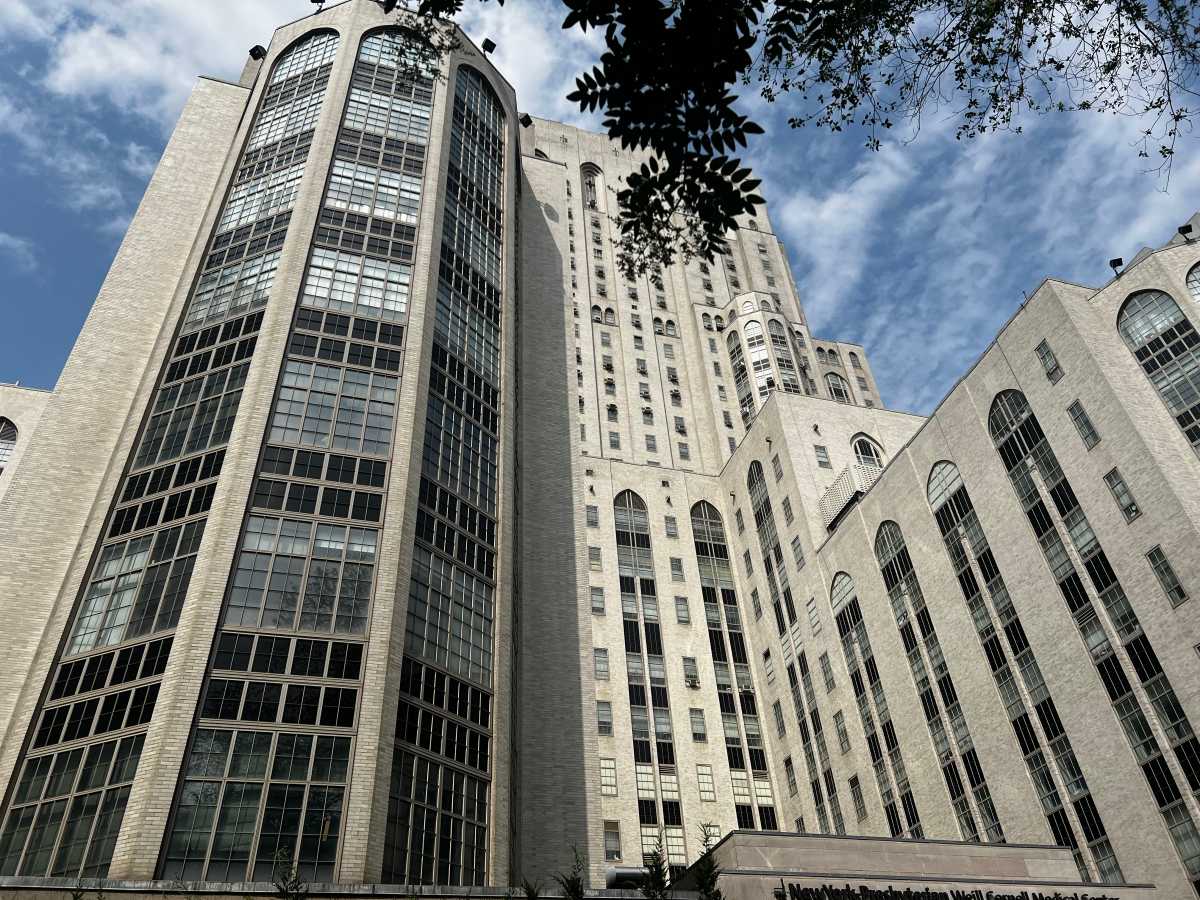
NewYork-Presbyterian Weill Cornell Medical Center in the Upper East Side. Photo by Andrew Denney
Photo by Andrew Denney
The U.S. Department of Justice filed an antitrust lawsuit against New York-Presbyterian Hospital Thursday, claiming the hospital’s contracts blocked New Yorkers from being able to choose more affordable health insurance plans.
New York-Presbyterian, the largest hospital system in New York City, used its leverage to restrict health insurance companies from selling plans at lower prices, according to the Sherman Act lawsuit filed in the Southern District of New York. The hospital called the claims meritless.
When insurers have to negotiate competitive prices with providers, the DOJ says, that savings gets passed along to consumers. Insurers can create plans that encourage patients to pick more affordable options, and providers cut prices in order to be included in such plans, thus attracting more patients. Those who keep prices high, conversely, risk being shut out of budget-conscious plans and lose patients.
“[New York-Presbyterian] is one of those high-priced providers,” the DOJ suit says. “It protects its high prices by imposing contractual plan design restrictions that prevent payors from offering budget-conscious insurance plans.”
Specifically, the restrictions forbid insurance companies from offering plans that either exclude New York-Presbyterian or offer better benefits at rival hospitals, according to the lawsuit.
“Without its unlawful contracts, NYP would need to compete more vigorously against other providers, and its rivals could compete to attract additional patients by lowering their own prices or investing in quality improvements,” the DOJ writes. “All employers and patients who purchase healthcare in New York City would benefit from lower prices and higher quality as the healthcare marketplace becomes more competitive.”
The DOJ seeks to stop the hospital from imposing the restrictions in question.
Omeed Assefi, acting assistant attorney general of the DOJ’s Antitrust Division, called healthcare a “vital sector of our nation’s economy that touches the life of every single American” in a statement announcing the lawsuit.
“New York-Presbyterian has known for years that the American consumer wants budget-conscious health plans that reduce healthcare costs. But rather than offer consumers choice, New York-Presbyterian uses its market power to protect its margins, impede competition from rival hospitals, and prevent employers and unions from creating these plans,” Assefi said.
In a statement emailed to amNewYork Law, NewYork-Presbyterian said the lawsuit doesn’t carry water, and that it has been cooperating with the DOJ during its investigation, which was reported by The New York Times last June.
“NewYork-Presbyterian is disappointed that the Department of Justice has filed this lawsuit, which we think is without merit. We have been cooperating with the Department’s inquiries into our contracting practices and had begun what we thought were productive discussions with the Department’s leadership. As we have explained to the Department, NewYork-Presbyterian complies fully with all applicable federal and state laws and regulations. We stand behind our policies and processes, which we believe are pro-competitive,” the hospital said in its statement.
It denied that it seeks to exclude other hospitals from insurance networks or requires favorable treatment.
“In our contract negotiations with insurers, we seek to maximize access to the highest quality of care. Insurance companies hold the market power and use it to restrict patient choice,” NewYork-Presbyterian said.