
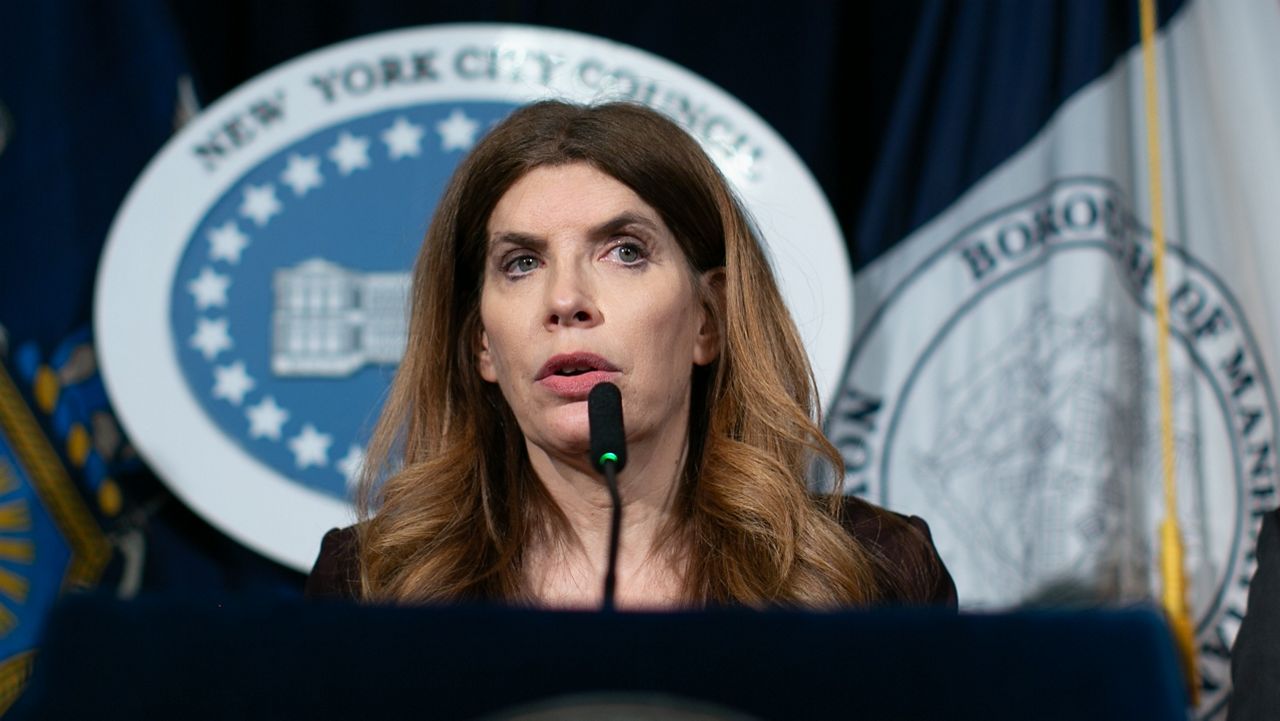
In the wake of protests outside synagogues that turned ugly in recent months — one on the Upper East Side and one in Kew Gardens, Queens — City Council Speaker Julie Menin proposed so-called buffer zones of up to 100 feet outside houses of worship, part of a five-point action plan to combat antisemitism.
But free speech concerns prompted changes, and the bill that ultimately passed the City Council on Thursday essentially requires only that the NYPD develop a plan.
What You Need To Know
The City Council passed a bill Thursday requiring that the NYPD create a plan to police protests outside houses of worship
Mayor Mamdani has not said whether he’d veto the legislation, which passed with a veto-proof majority of 44 votes out of 51 members
A similar bill relating to protests outside schools passed with only 30 votes, shy of a veto-proof majority
“That plan will determine whether a security perimeter is needed,” Menin told reporters at a news conference, “and if so, how far the perimeter should extend from the entrance and the exit to the house of worship.”
The bill states that the NYPD plan should “address and contain the risk of physical obstruction, physical injury, intimidation, and interference, while preserving and protecting the rights to free speech, assembly, and protest, at places of religious worship through the use of security perimeters.”
The bill also requires that the NYPD post its plans publicly, provide a point of contact and engage with both religious leaders and protesters.
The changes did not quell free speech concerns.
“These security perimeters would give the NYPD broad discretion to censor speech, target protesters and arrest dissenters,” said Donna Lieberman, executive director of the New York Civil Liberties Union, who led a protest on the City Hall steps before Thursday’s vote.
The bill drew objections from a range of voices, including some left-leaning council members.
“We know that these incoherent bills are a message against dissent,” Brooklyn City Councilwoman Alexa Aviles said, “in particular against pro-Palestinian voices.”
Still, the legislation passed with 44 votes out of 51 members, a veto-proof majority. Mayor Zohran Mamdani has not expressed support for the bill, but has not discussed any potential veto.
In a statement earlier this week, City Hall spokeswoman Dora Pekec said: “The mayor is keenly aware of the serious concerns regarding these bills’ limiting of New Yorkers’ constitutional rights, and he will keep these concerns in mind for any bills that land on his desk. He wants to ensure both the right to prayer and the right to protest are protected here in New York City.”
“To be clear, these bills in no way infringe on the First Amendment right to protest, which is sacrosanct,” Menin said. “The bills don’t even talk about protest.”
A similar bill relating to protests outside schools also passed, but with only 30 votes, shy of a veto-proof majority.
“There are no constitutional issues with telling the NYPD to come up with a plan to address instances of intimidation, interference and physical obstruction,” Bronx Councilman Eric Dinowitz, lead sponsor of the bill, said.