
“Have you noticed how calm it’s been?” the driver remarked as I jumped into the taxi, racing to catch the day’s last train from Tel Aviv to the northern town of Beit She’an.
In truth, strangely, I hadn’t really noticed. Over the preceding few hours, beginning around 3 p.m. on Monday, I had cleaned up my apartment and finished packing, only for an Israeli airline to tell me that my flight, due to take off that night for Athens, had been canceled. My connection to New York would have to be canceled, too.
By 5 p.m., I had booked a new itinerary from Amman, Jordan, to JFK via Abu Dhabi. My biggest challenge now was how to make it from Tel Aviv to the Queen Alia International Airport by noon the next day.
Between it all, I hadn’t thought much about the fact that, for hours on end, there had been no Iranian missile fire on central Israel.
Like many people in Israel, my concerns over the previous few days revolved around one personal and logistical question: Will I be able to get on a flight?
Get The Times of Israel’s Daily Edition
by email and never miss our top stories
By signing up, you agree to the terms
That question is born of a triple whammy that’s hit Israel over the past week, as Iranian missiles cause damage and injuries across the country. As a result, the government has massively restricted how many people can fly out of Ben Gurion Airport. And Passover is coming up next week.
That has led hundreds of Israelis to conjure up convoluted ways of getting where they need, or want, to go — pricey car services to Amman, Aqaba or Taba. Buses arranged by the US embassy for those with American citizenship. Taking one’s chances with the dwindling number of Israeli-operated flights.
Or, like me, showing up at the Jordanian border crossing first thing in the morning and trying to make my own way.
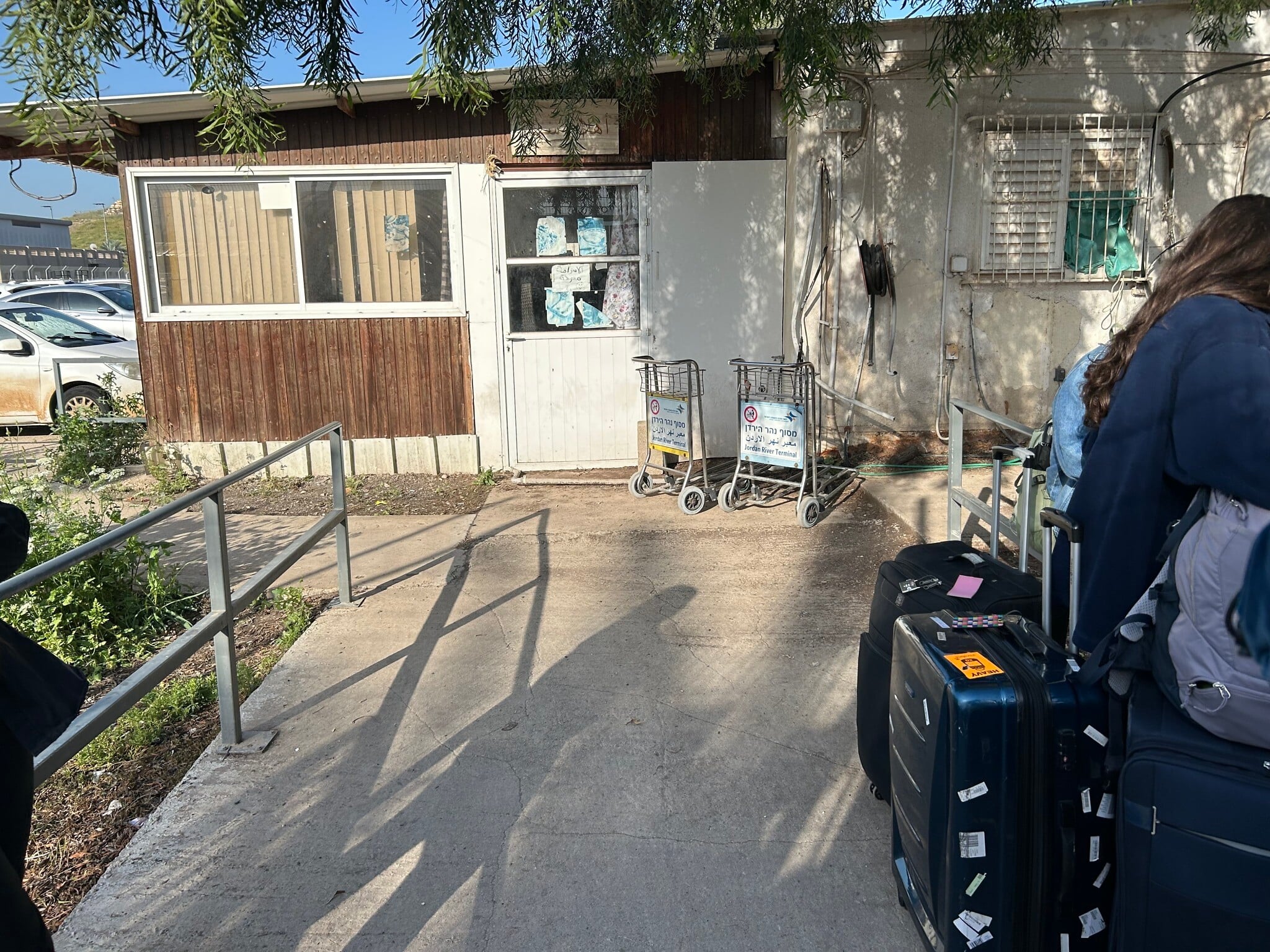
The waiting area outside the Jordan River Border Crossing in the early morning of March 24, 2026. Within minutes, it would fill with hopeful travelers. (Ben Sales/The Times of Israel)
Delayed on the border: ‘You’re Israeli now’
I slept at a friend’s house close to the crossing, which opened at 8:30 a.m., four and a half hours before my flight. It was a two-hour drive away. That didn’t leave much room for error.
At 7:30, the waiting area outside the border crossing was almost empty. By 8, it was packed with hopeful travelers. Shortly before the gate finally opened, we heard sirens in the distance, then the now-familiar boom of a missile being intercepted. No one moved. A few people looked up at the sky.
I learned soon afterward that Iranian missile fire had hit Tel Aviv, too, including an impact a short walk from our apartment. Friends texted to see if I was alright. I told them I was about to enter Jordan. They sent back sighs of relief.
I was relieved, too, if only to have a flight booked to New York, where our family is spending Passover. It felt a little strange to suddenly feel that Amman and Abu Dhabi, two places wholly unfamiliar to me, were safe havens from Israel. As it turned out, things were a bit more complicated.
Without giving it a second thought, I exited Israel on my Israeli passport, and planned to use my US passport for the duration of the trip. This quickly proved impossible. As soon as I entered Jordan, I was shunted aside with a collection of other travelers, and a no-nonsense Jordanian administrator informed us, in Hebrew, that as Israelis, we could only enter Jordan by making arrangements ahead of time with a guide, which we had all neglected to do.
Then she took all of our passports.
“But I’m an American,” I protested, waving my US documents in the air in an embarrassingly cliche way.
“You came in on your Israeli passport,” she responded. “You’re Israeli now.”
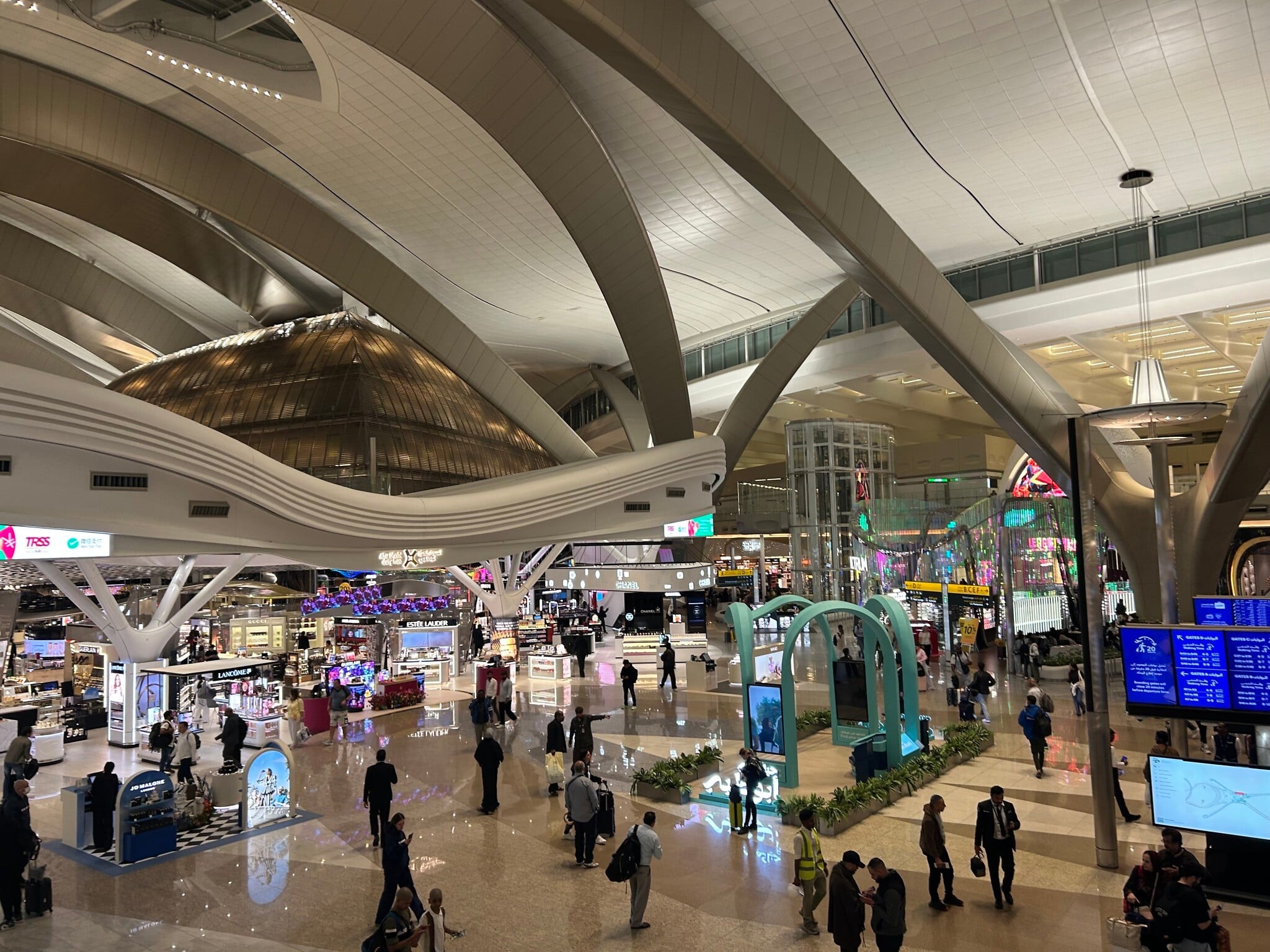
A view of the waiting area at Zayed International Airport in Abu Dhabi, UAE, March 24, 2026. (Ben Sales/The Times of Israel)
A daredevil run to the airport
Many long minutes later, with my boarding time fast approaching, I, along with two other people on my flight to Abu Dhabi, cajoled the administrator into assigning us a taxi driver who would chaperone us to the airport.
What followed were multiple instances of men in uniform rifling through luggage, having brief, heated discussions with each other, and repeatedly ordering us from one room to another, while we waited to be given the all-clear to leave.
Meanwhile, since entering Jordan, a series of officials had held or photocopied my passport, with no indication of when I would get it back.
After a 100 shekel “tip” to a guy who rolled our suitcases maybe 200 meters, we were on our way, our three passports wedged awkwardly between the driver’s legs. Thankfully, he drove like a devil-may-care maniac down bumpy streets, playing chicken with more cars than I could count — and getting us to the airport, amazingly, nearly an hour before our flight.
Did we get our passports back when we reached the airport? Of course not. Straightaway, another man in uniform took them, photocopied them (naturally) and acted as our minder until we got to security. We sprinted to the gate, panting, passports finally in hand.
An Etihad flight that felt like El Al
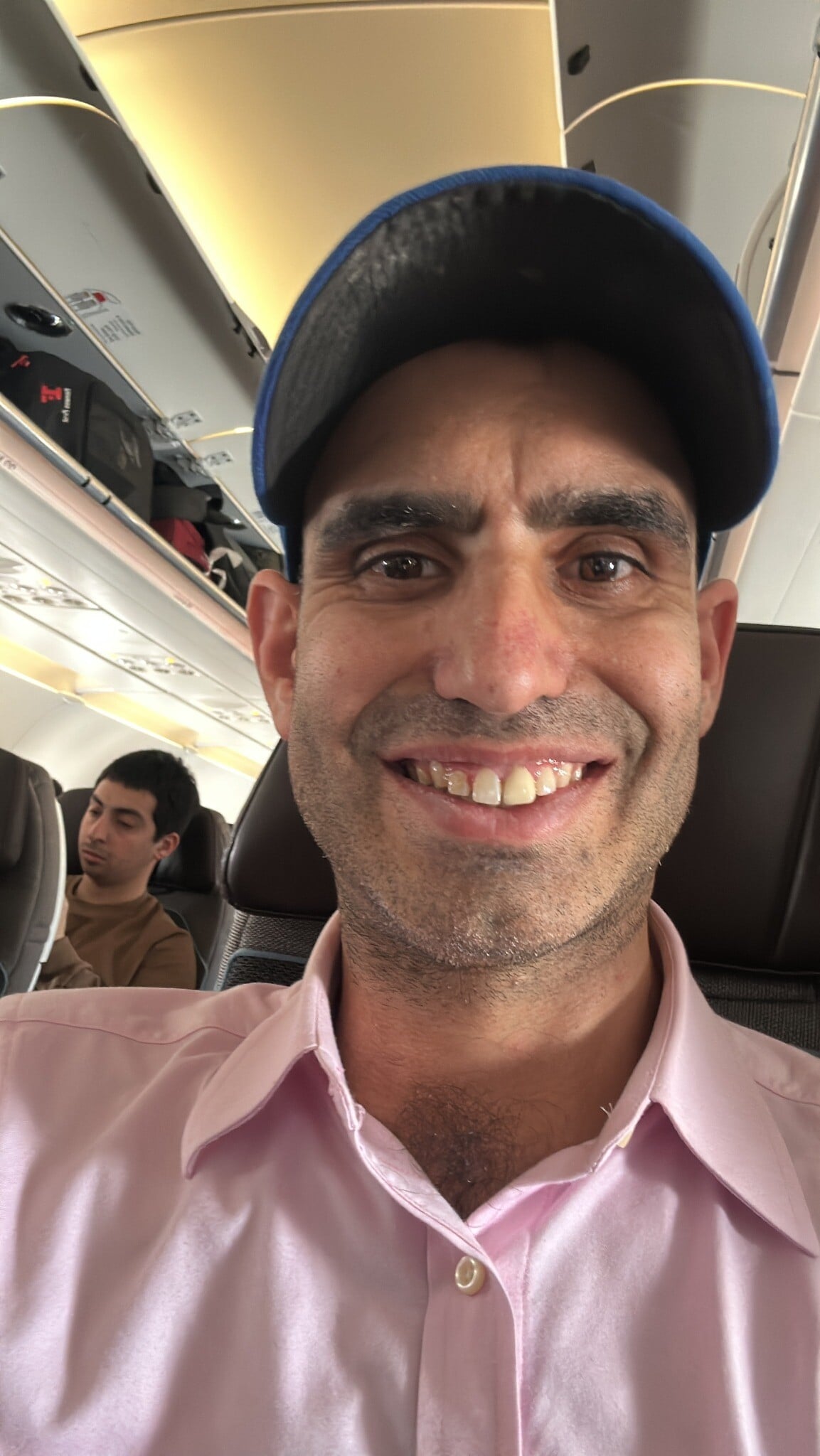
The author, finally en route from Amman to Abu Dhabi, March 24, 2026. (Ben Sales/The Times of Israel)
When we got on the Etihad flight from Amman to Abu Dhabi, it may as well have been an El Al route. Israelis bantering with each other loudly in Hebrew. Israeli kids running up and down the aisle mid-flight. Israelis getting up to take their things out of the overhead bins seconds after the plane touched down.
About 11 hours later, I was taking off to New York without incident, on my US passport.
I stood in line at JFK, expecting my passport to be perfunctorily stamped upon entry as it had been dozens of times before. Instead, I was sent to a side room for more questioning before being let out about 10 minutes later. The agent half-apologetically explained that they were on high alert because of all the weird travel lately from Israel.
They briefly took my passport; I have no idea if they photocopied it.
Feeling secure, and insecure, in Israel and abroad
If there’s one thing the experience illustrated, it’s that throughout this nearly monthlong war, Israelis have been beset by simultaneous feelings of security and insecurity.
There’s a certain measure of security because the sirens, early warnings, shelters and missile defense systems have protected thousands, if not more, from being killed. Israelis can go out to eat or for a stroll with a reasonable presumption of safety. But there’s insecurity, too, because 15 people have died, hundreds have been injured, and apartment buildings are being destroyed.
There’s a feeling of security because the Israeli Air Force, alongside the US, quickly established dominance over Iranian skies, and has taken out much of Iran’s leadership, and many of its bombs and launchers. But there is insecurity because the missiles are still flying — and hitting — with little clarity on when or whether the war’s goals can be met.
In the same vein, the winding, madcap journeys many Israelis have taken out of the country have reinforced those feelings of security and insecurity.
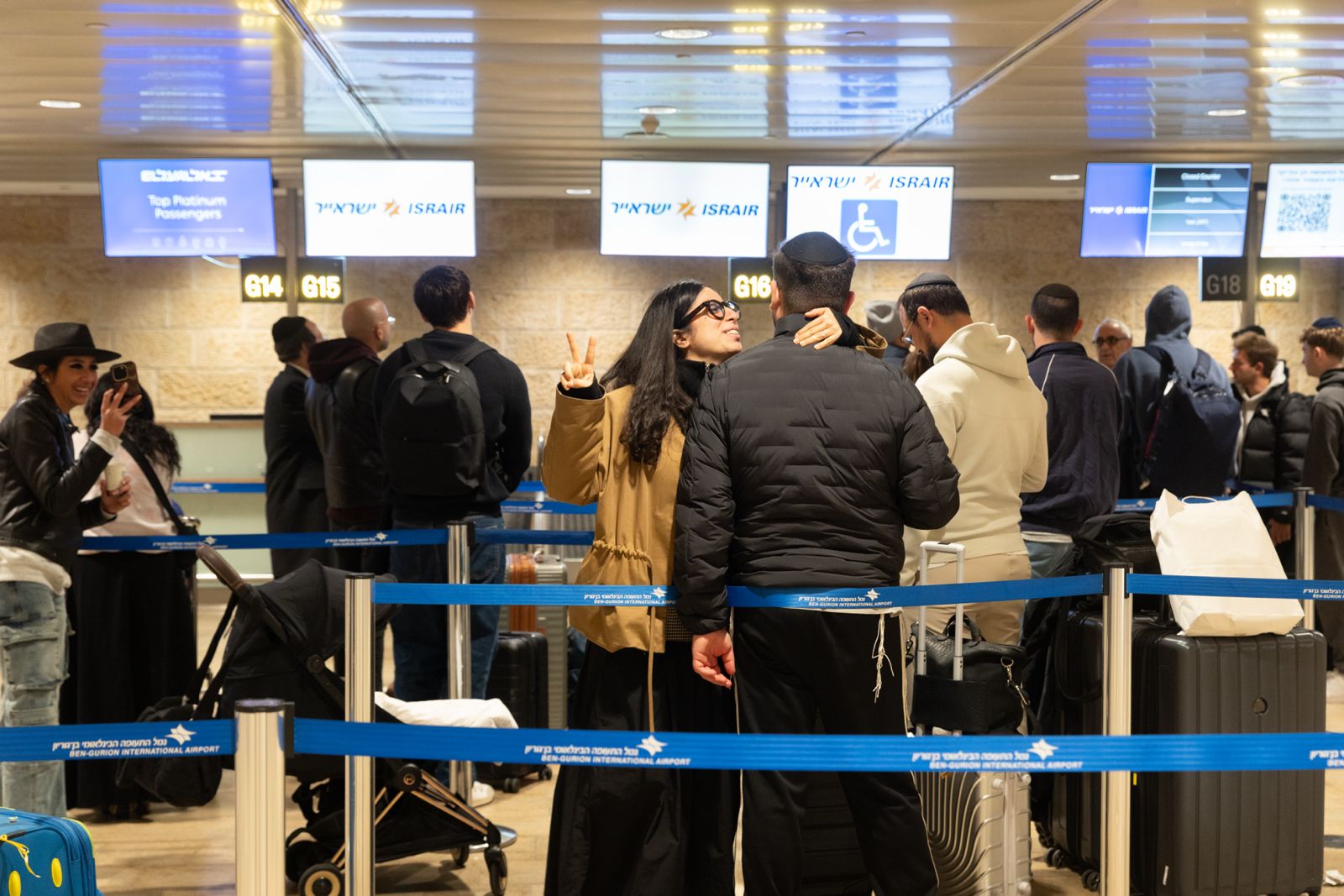
Passengers check in for the first outbound flights since the closure of Israel’s airspace on February 28, at Ben Gurion Airport on March 8, 2026. (Courtesy of Israel Airports Authority)
On the one hand, the flights are a sign of belonging. Fifty years ago, the idea that Israelis would be able to escape war in their own country by flying to capitals across the Arab world was fanciful. Now they’re unabashedly speaking Hebrew on an Etihad flight from Jordan to the UAE.
But the flights also demonstrate the abiding precariousness of Israeli life. For one thing, Israelis have had to decide whether, and how, to flee a war, and have had to do so while their own airport is all but shuttered. Some who went through Jordan, like me, found out that, even in a neighboring country that has had peace with Israel for three decades, Israelis are treated as suspicious just by virtue of their nationality.
Stuck in the middle of those tensions, many Israelis — including a growing number of my friends and neighbors — have chosen to leave, seeking safety, or a change of scene for their schoolless children, or, as in my case, taking a pre-planned Passover trip.
Few know exactly how or when they will be able to return. It’s possible that the war will be over by the time the holiday ends. Or it could escalate.
The uncertainty is constant, and weighty. But the dozens of people who crossed from Israel into Jordan with me, heading to Amman and then across the globe, didn’t seem overwhelmed by it.
Over and over, as we wended our way across Jordan, my fellow travelers and I reminded each other that things would be OK, one way or another. We’d find our way out. We’ll find our way back, too.