
✕
Construction will begin soon on the 2 million-square-foot Science Park and Research Campus (SPARC) at Hunter College’s Brookdale Campus in Manhattan. It will be the first major project to follow the city’s Circular Guidelines for Design and Construction, an operational toolkit published by New York City’s Economic Development Corporation for reducing waste and embodied carbon in the built environment. But before the new SPARC buildings, designed by Ennead and Dattner Architects, can go up, the old Hunter Bellevue School of Nursing, which has occupied part of the site since 1954, must come down. Because demolition and landfill disposal can be among the most wasteful and toxic parts of the construction process, Brooklyn-based studio CO Adaptive (a 2022 Design Vanguard) saw an opportunity to contribute to the environmental effort by salvaging reusable materials.
]]>
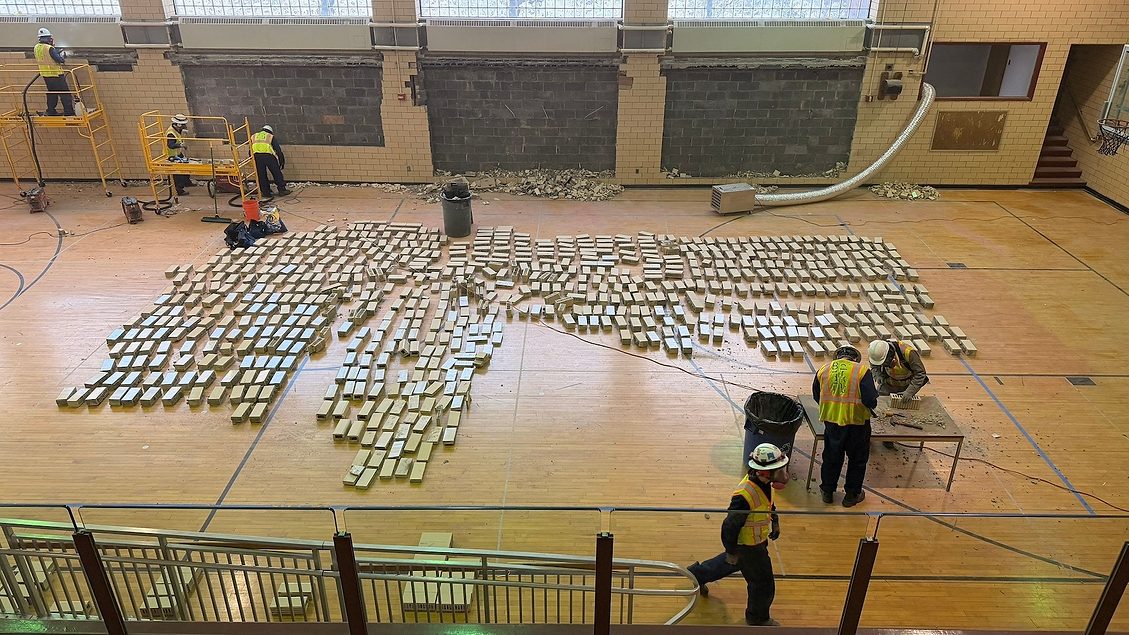
Workers carefully salvage ceramic blocks and other materials at the Hunter Bellevue School of Nursing. Video by Hudson Lines, courtesy CO Adaptive
Ruth Mandl and Bobby Johnston, who founded CO Adaptive in 2011, learned about SPARC and its sustainability goals through RECLAIM-NYC, an advocacy group they are part of that includes architects, engineers, policymakers, manufacturers, and researchers committed to developing a circular construction economy. “We’re all very invested in making sure that SPARC is a success,” says Mandl, “because it will set the bar for what the city can do to incorporate material salvage and reuse.”
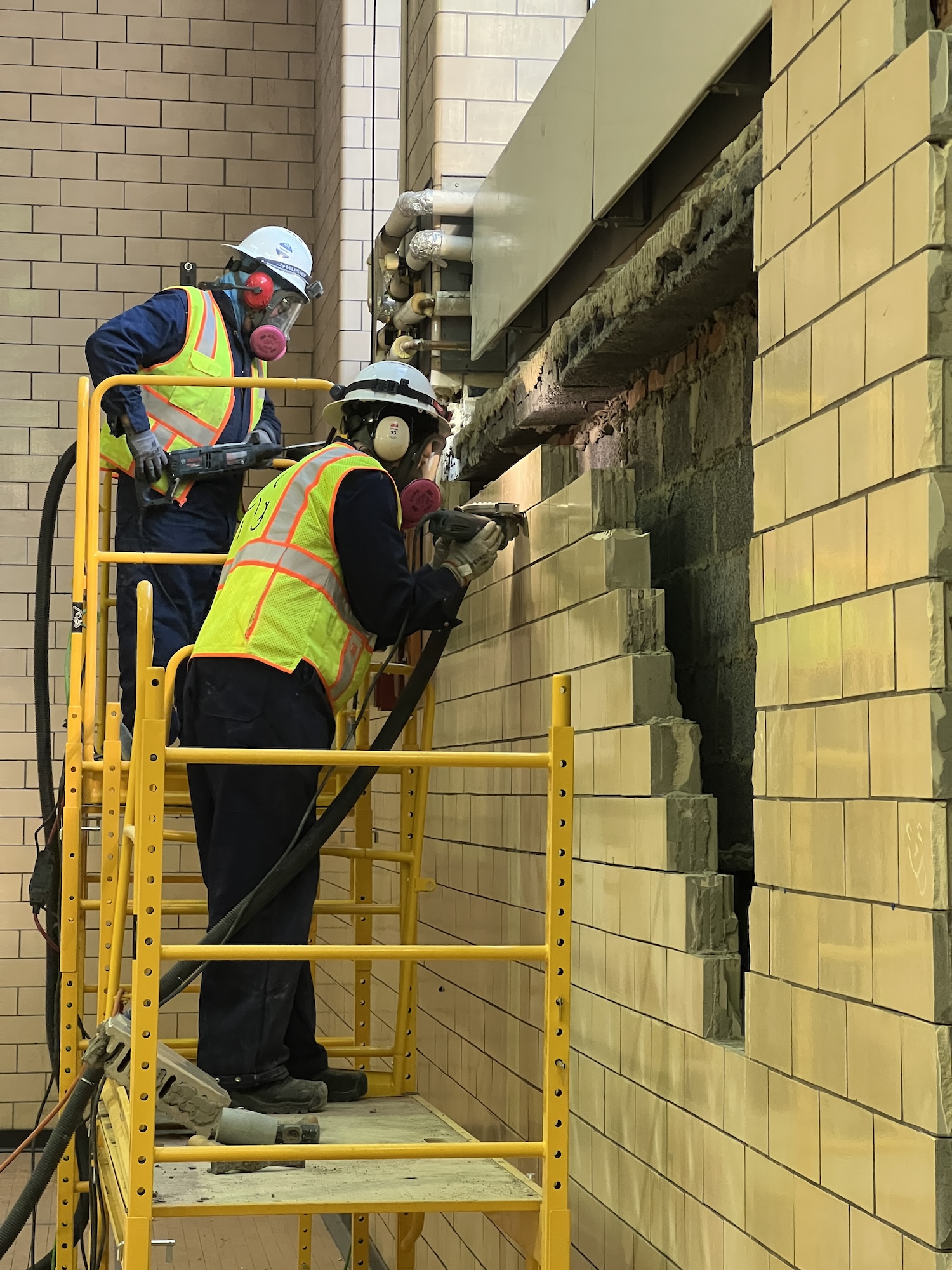
Photo © Hudson Lines
Acting like a subcontractor under construction management firm Skanska, CO Adaptive began salvaging materials from the nursing school in February 2026. Owing to its status as a design-build practice, the architects were able to file for their own permit, and they had the insurance required to work on-site. CO Adaptive collected approximately 2,000 square feet of maple-faced acoustic paneling from the school’s auditorium. The panels were then sold to and installed in four music venues across the city, including Nublu in the Lower East Side. The architects also saved the mint-green and off-white glazed ceramic blocks used throughout the school. The blocks are currently in storage until CO Adaptive finds a reuse application. The firm also collected materials, including lighting fixtures and theater seating, on behalf of other organizations affiliated with RECLAIM-NYC.
Deconstructing and salvaging materials as part of a network of environmentally conscious groups isn’t typically what architects do, but redefining what it means to practice is at the heart of the mission of CO Adaptive, which, in addition to its Design Vanguard status, was recently named a 2026 Emerging Voices winner by the Architectural League of New York. “The role of the architect can be in taking materials that may not be considered ideal and showing that they can be reused and be beautiful,” says Mandl. “That’s our creativity, our ability to sell, that is what I think we should emphasize.”
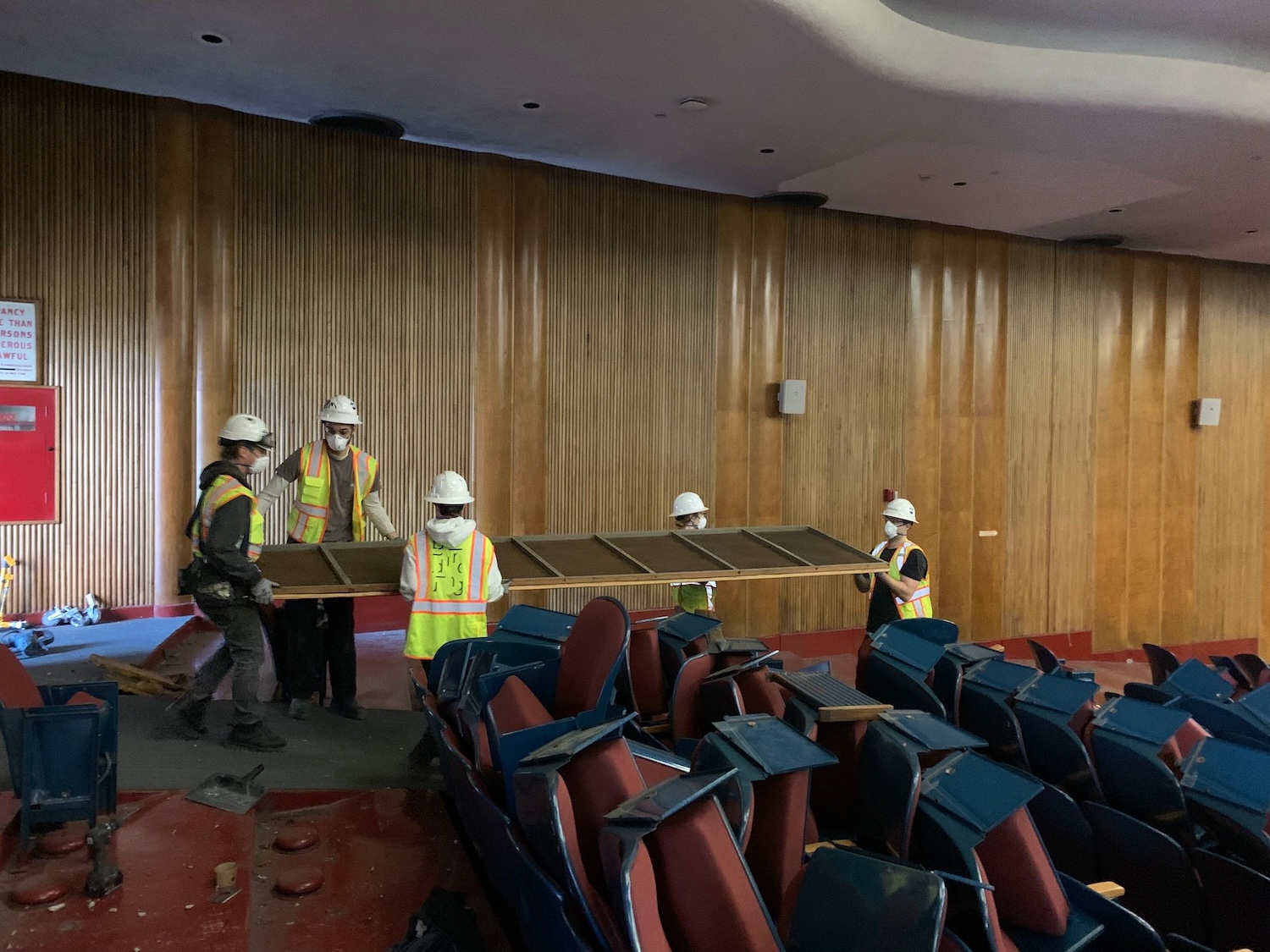
Photo © Hudson Lines
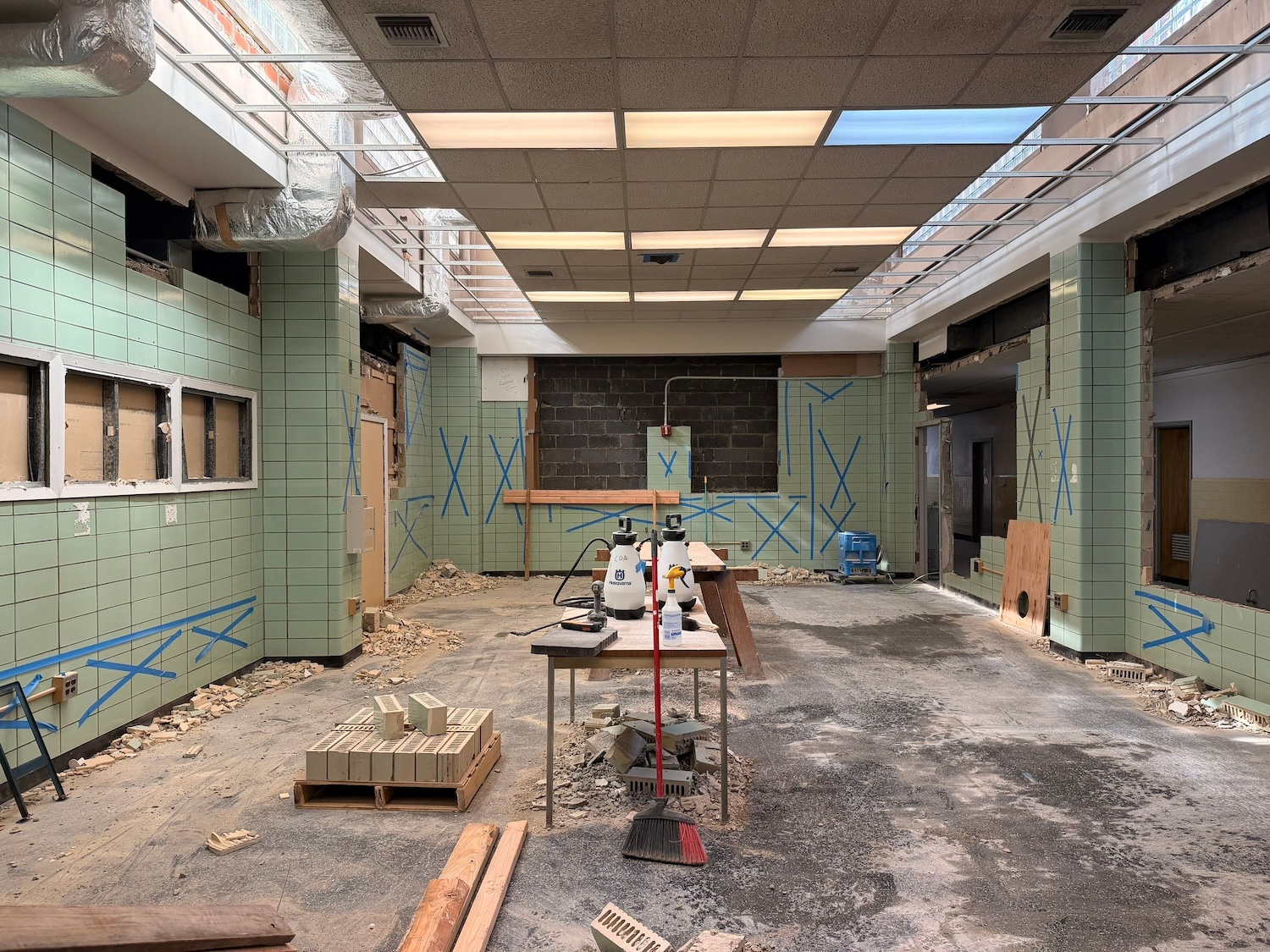
Photo courtesy CO Adaptive
While discussions of material reuse, circular economies, and urban metabolism are at the forefront of efforts to reduce embodied carbon and to change the way architects think about material assemblies, what appears to be cutting-edge in sustainability today was the norm historically. Travertine from the Colosseum was famously reused in St. Peter’s Basilica and in Roman palazzos, for example. “At the turn of the 20th century, there were wreckers who would come in and deconstruct a building,” says Johnston, “and that’s exactly what we’re doing now. But that was more than 100 years ago, and there was a secondary market back then. Now we’ve just lost how to do that.”
“It’s like re-remembering,” adds Mandl. “This is not a new thing, but it has been forgotten.”