
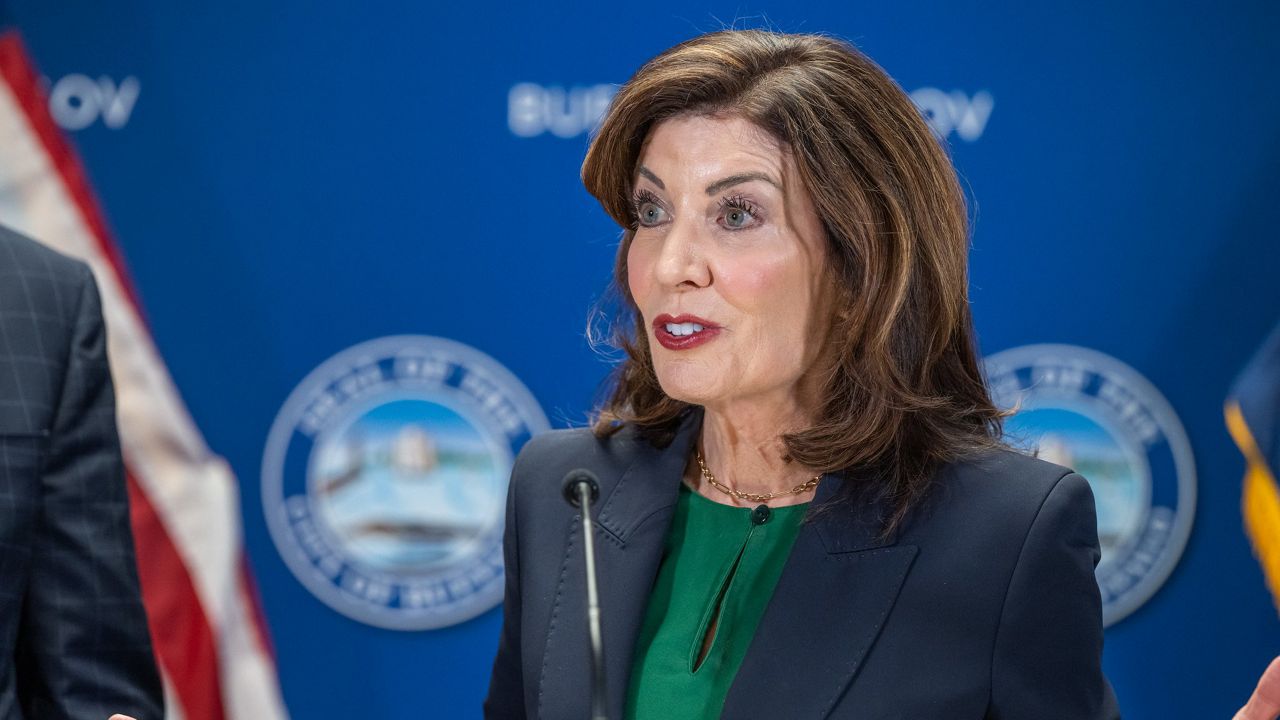
With the April 1 state budget deadline looming next week, Gov. Kathy Hochul and lawmakers appear far from reaching a deal on major proposals, including overhauling auto insurance and changing environmental reviews for construction projects.
Since Hochul became governor in 2021, she’s presided over four budget deals. All of them were late.
What You Need To Know
With the April 1 state budget deadline looming next week, Gov. Kathy Hochul and lawmakers appear far from reaching a deal on major proposals
Since Hochul became governor in 2021, she’s presided over four budget deals; all of them were late
In her fifth budget, she’s proposing a $260 billion financial package
Some issues Hochul and the legislature are still discussing include auto insurance and environmental reviews for construction projects
“When you’re working on that and it goes later, it makes it hard to then turn to the big legislative priorities that most of the members have,” said state Assemblymember Keith Powers, a Democrat representing parts of Manhattan.
In her fifth budget, she’s proposing a $260 billion financial package. But Hochul and the state legislature are still talking over issues, like pushing back deadlines tied to the 2019 climate law, changing the way New York requires multi-family housing projects to go through environmental review and trying to lower the costs on the state’s expensive car insurance system.
“We want New York State to stay on its climate goals, but I totally recognize that the governor is saying that we have to do it in a way that’s cost efficient, so it’s complicated,” said Powers.
Although the City Council passed legislation ordering the NYPD to submit a plan to enforce protests around houses of worship, state lawmakers have their own ideas.
“Putting forth state legislation would actually be the best model because it would cover houses of worship across the state,” said state Assemblymember Nily Rozic, a Democrat from Queens.
“A 25-foot buffer zone around houses of worship makes sense in terms of establishing the balance between freedom of expression and your freedom to worship,” she added.
While Mayor Zohran Mamdani is keen on Albany approving tax hikes on the wealthy and big business, a late budget also forces local governments — and the Big Apple — to take a wait and see approach.
“The longer we go, the longer cities like New York have to sit and wait to try and parse through that information and also have a sense of what urgency it is around other issues,” said Powers.
There are other lower-profile tax proposals, like on nicotine pouches, and some lawmakers want to end tax breaks for “opportunity zone” investors who get federal benefits from investing in low-income communities.
“If indeed it’s helping to build affordable housing for example, that would be great but that’s not exactly what’s happening here,” said Bronx state Assemblymember Jeffrey Dinowitz, who sponsors a bill that he says could mean recouping $424 million annually.
“We need to look at anything that’s going to cut down on wasteful programs, anything that’s going to save us money,” he said.
Meanwhile, the nonprofit group Selfhelp is asking for $2 million for a program providing social worker help to seniors living in affordable housing in the city and on Long Island. The group says its issue could fail to get attention given the budget holdup.
“Without this assistance, folks are going to end up in crisis more often,” said Katie Foley, of Selfhelp Community Services.
She argues it also falls in line with New York’s affordability agenda.
“They’re able to avoid unnecessary hospitalizations, they’re able to stay in their homes longer. So we really see that an investment in on-site social services in senior affordable housing makes a huge impact, not only for the individual who can remain healthier, but also saving Medicaid dollars in a year when the state is really looking for Medicaid savings,” she said.