
 13 min read
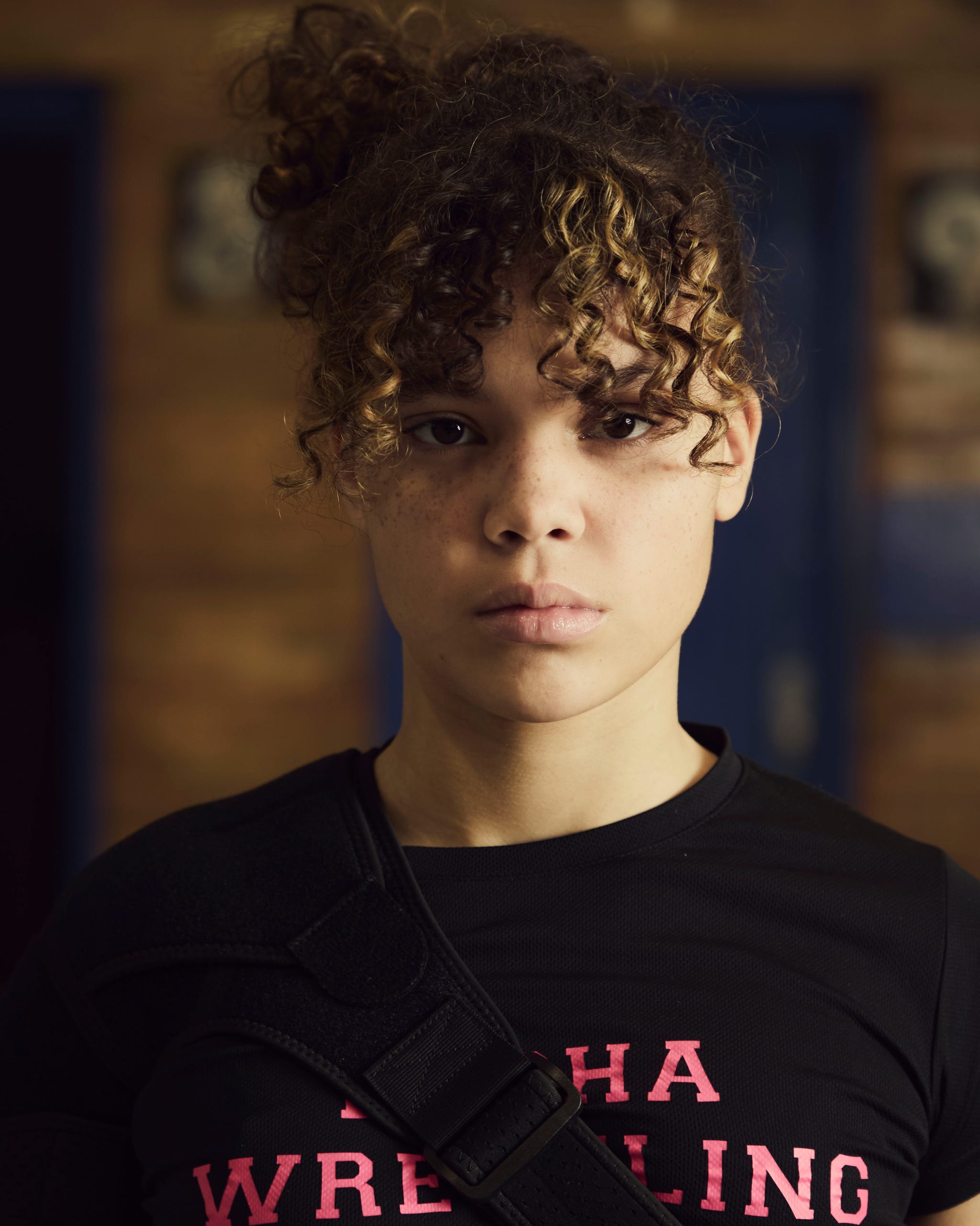
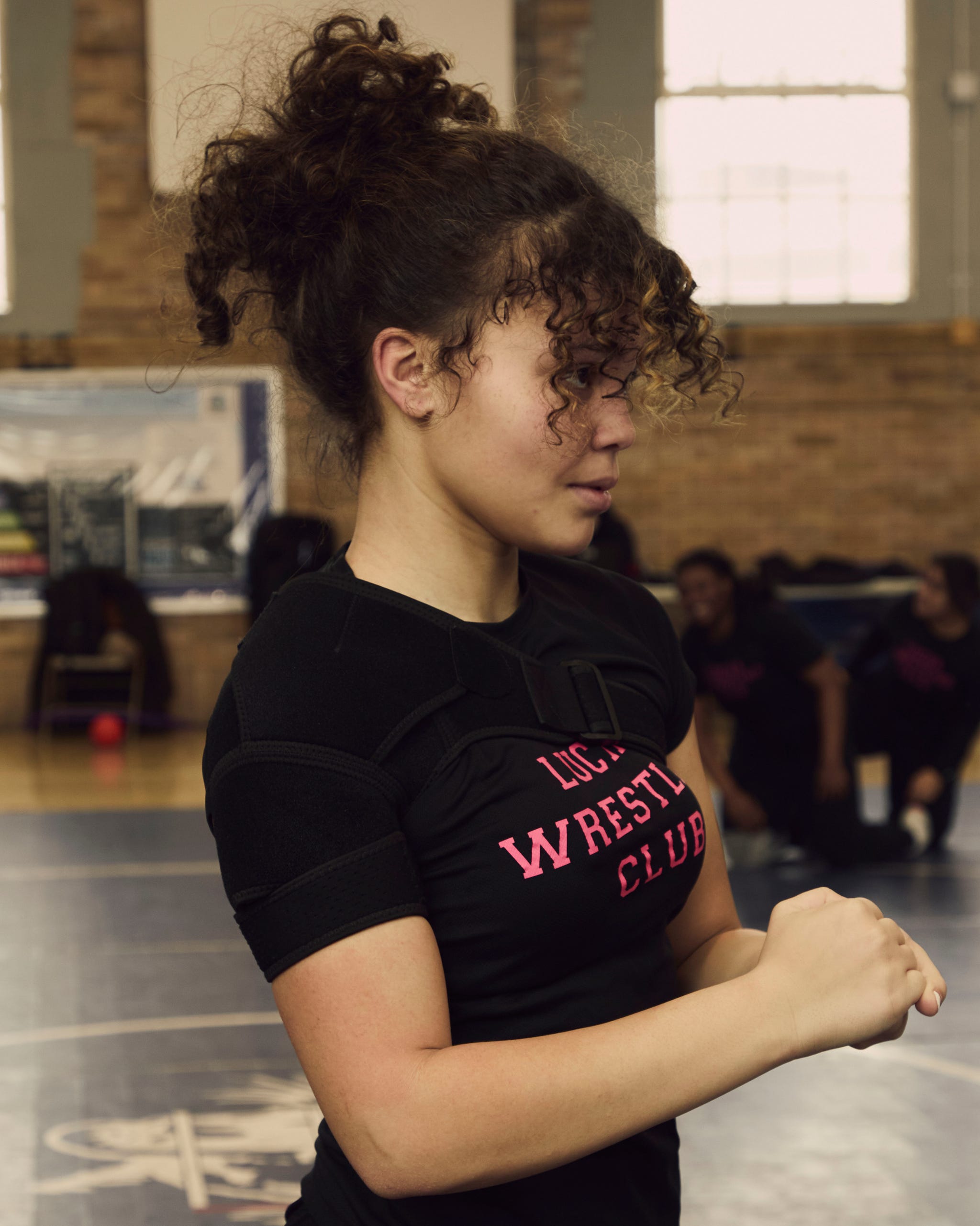
When Ariana Byrd steps onto the mat for a wrestling match, there’s always an initial feeling of fear. A few steps away, her coaches and teammates are on their feet, shouting in encouragement—just as the opposing squad is for the rival to take her down. She makes eye contact with her competition and, for a brief moment, wonders if they’re better than she is. Then the high school sophomore remembers the countless hours spent in training that helped unearth strength she didn’t know she had.
A year ago, a friend convinced Byrd, 15, to try out for the co-ed wrestling team at her high school in Harlem. She’d tried a few other sports, like tennis and lacrosse, but didn’t stick with any of them. As a freshman, she was extremely shy and often afraid to try new things. Plus, as an only daughter with two older brothers, she faced resistance from her parents, whose protective instincts kicked in when she brought up wrestling, Byrd says.
“I didn’t think I had what it took,” she adds.
 Rona Ahdout
A big turning point for Ariana Byrd’s confidence came in her first-ever wrestling match last year, when she pinned her opponent and won. “That was one of the happiest moments of my life so far,” she says.
Rona Ahdout
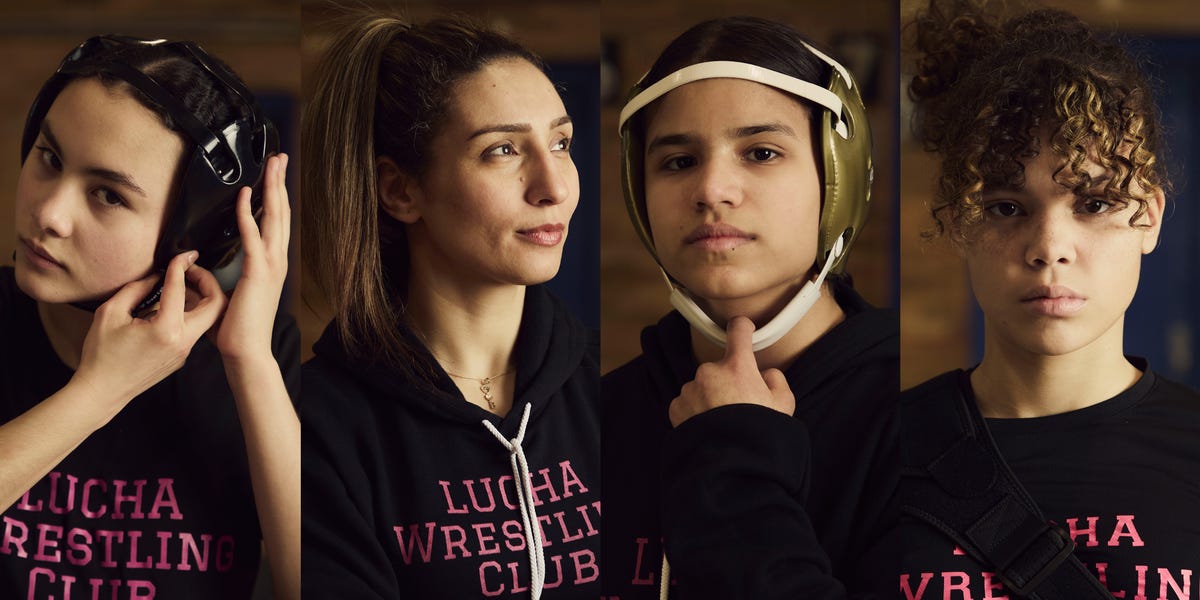
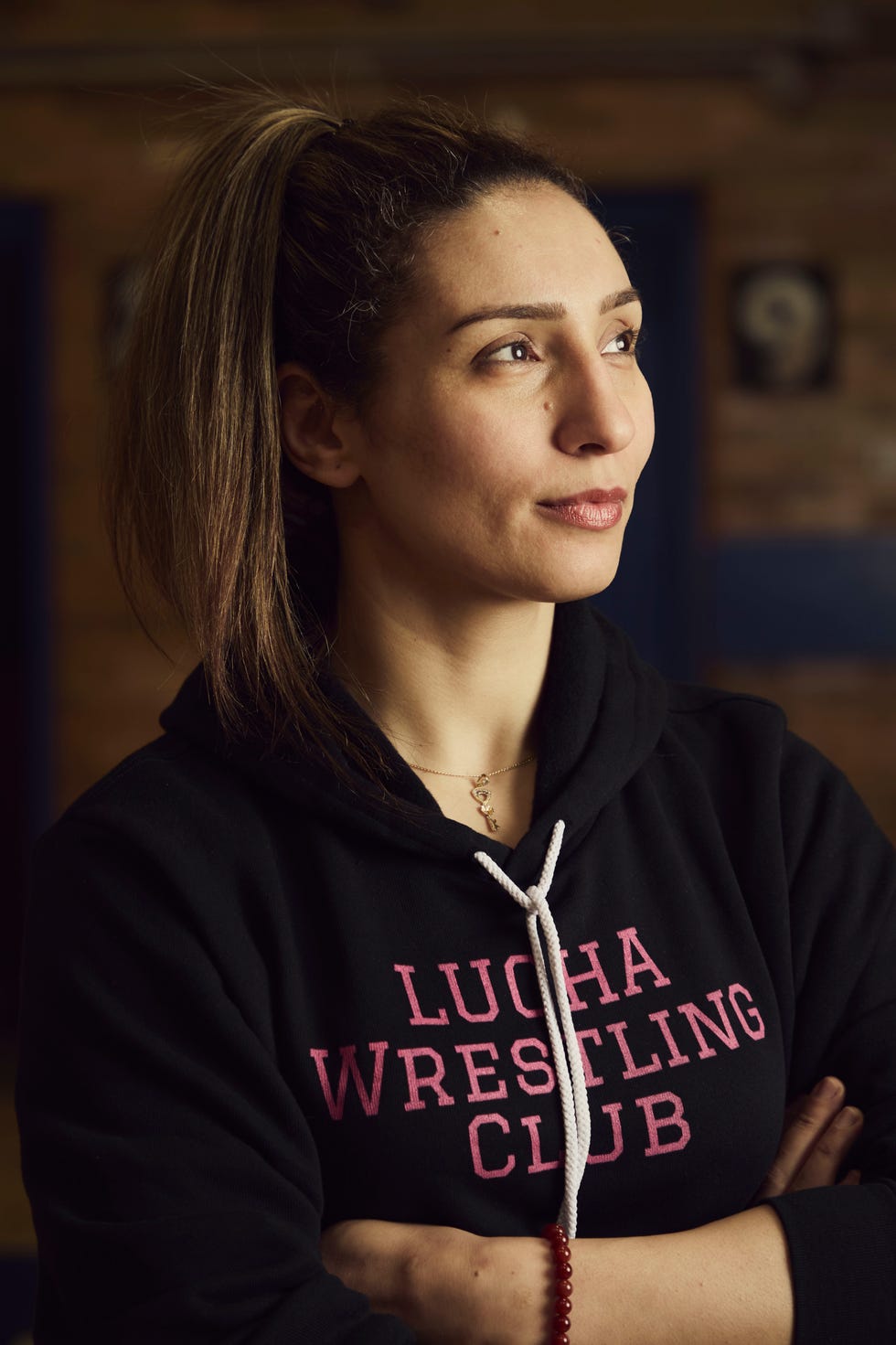
When an upperclassman recommended the Lucha Wrestling Club, the first all-girls freestyle wrestling program in New York City, Byrd was intrigued. There she found an unexpected community of female wrestlers, led by coach Enas Ahmed, a two-time Olympian. Over several months, Byrd worked tirelessly at the club’s gym in the Bronx with her Lucha teammates—honing techniques taught by one of the best female wrestlers in the world.
 Rona Ahdout
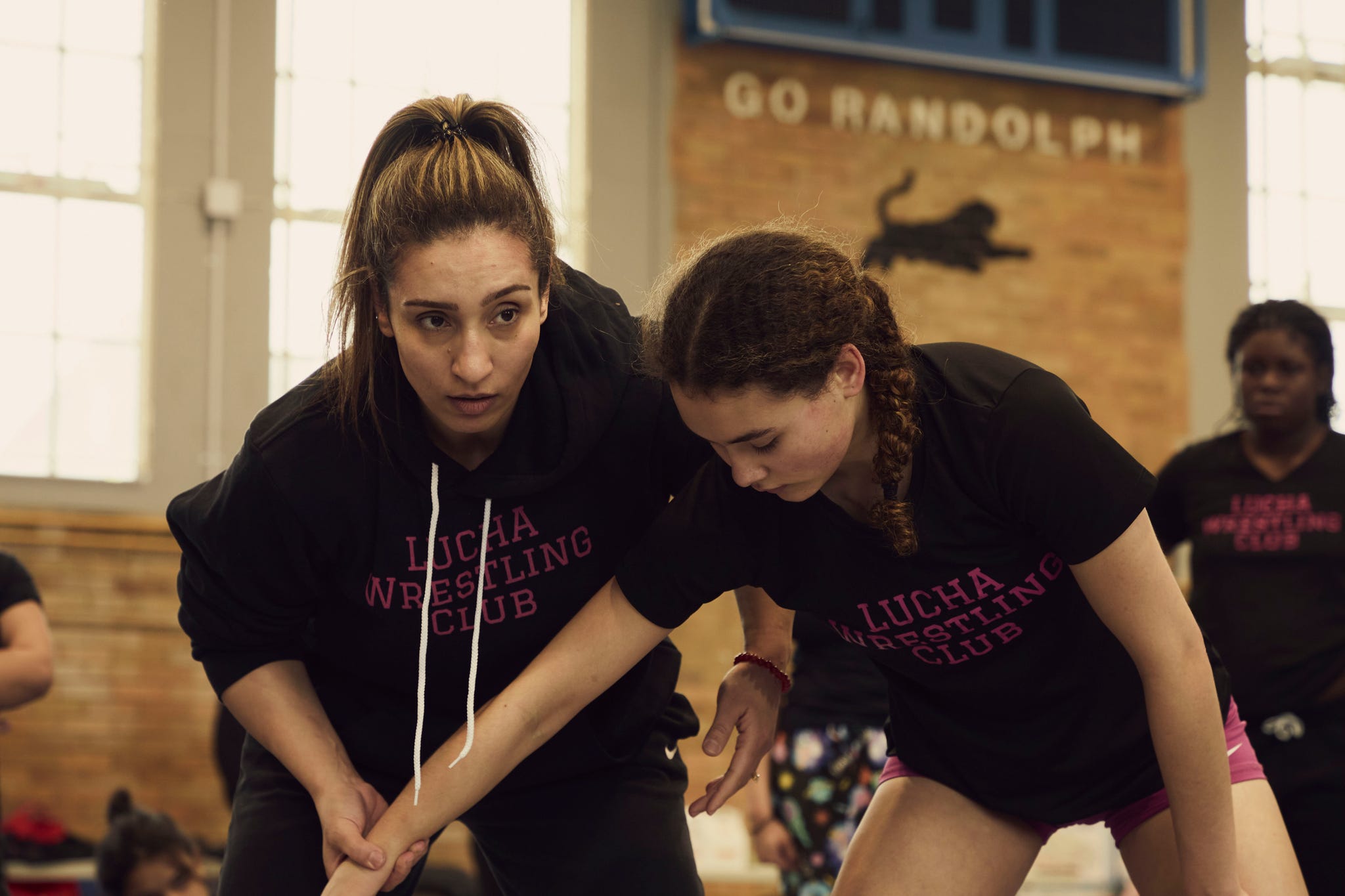
Enas Ahmed also started her wrestling career in high school before representing Egypt at the 2016 and 2020 Olympic Games. “I learned a lot, and I want to use my own experience for the next generations,” Ahmed says. “When I saw how Lucha is helping other girls and giving them more opportunities to be better, I wanted to be part of that.”
Rather than let fear take over when she steps onto the mat, Byrd turns to positive self-talk. She reminds herself to win every position she’s in and take every shot by the time three minutes are up.
“Coach Enas has helped me be so confident in my moves that I feel like nobody can beat me,” says Byrd, who is already the captain of her high school team as a sophomore.
 Rona Ahdout
Much of Ahmed’s training focuses on helping the girls of Lucha build a connection between their mind and muscles, so they’re ready to execute techniques with speed and conviction.
Though the Lucha Wrestling Club has only been around for just over a year, its organizers’ mission of helping girls find inner strength through the sport has been an ongoing endeavor for over a decade. Founded in the Bronx, the poorest county in New York, where students often pass through metal detectors when entering school, Lucha aims to provide a pathway to college for young female wrestlers, who now have more scholarship opportunities than ever before.
Emerging from the shadow of what was once a male-dominated sport, women’s freestyle wrestling is on the rise. Girls’ wrestling is one of the fastest-growing high school sports in the U.S., with 74,000 participants last year, up 15 percent from the year prior, and almost 1,000 schools adding a girls’ wrestling program. In January 2025, the NCAA added women’s wrestling as its 91st championship sport. The first-ever NCAA championship for women took place in Coralville, Iowa, earlier this month.
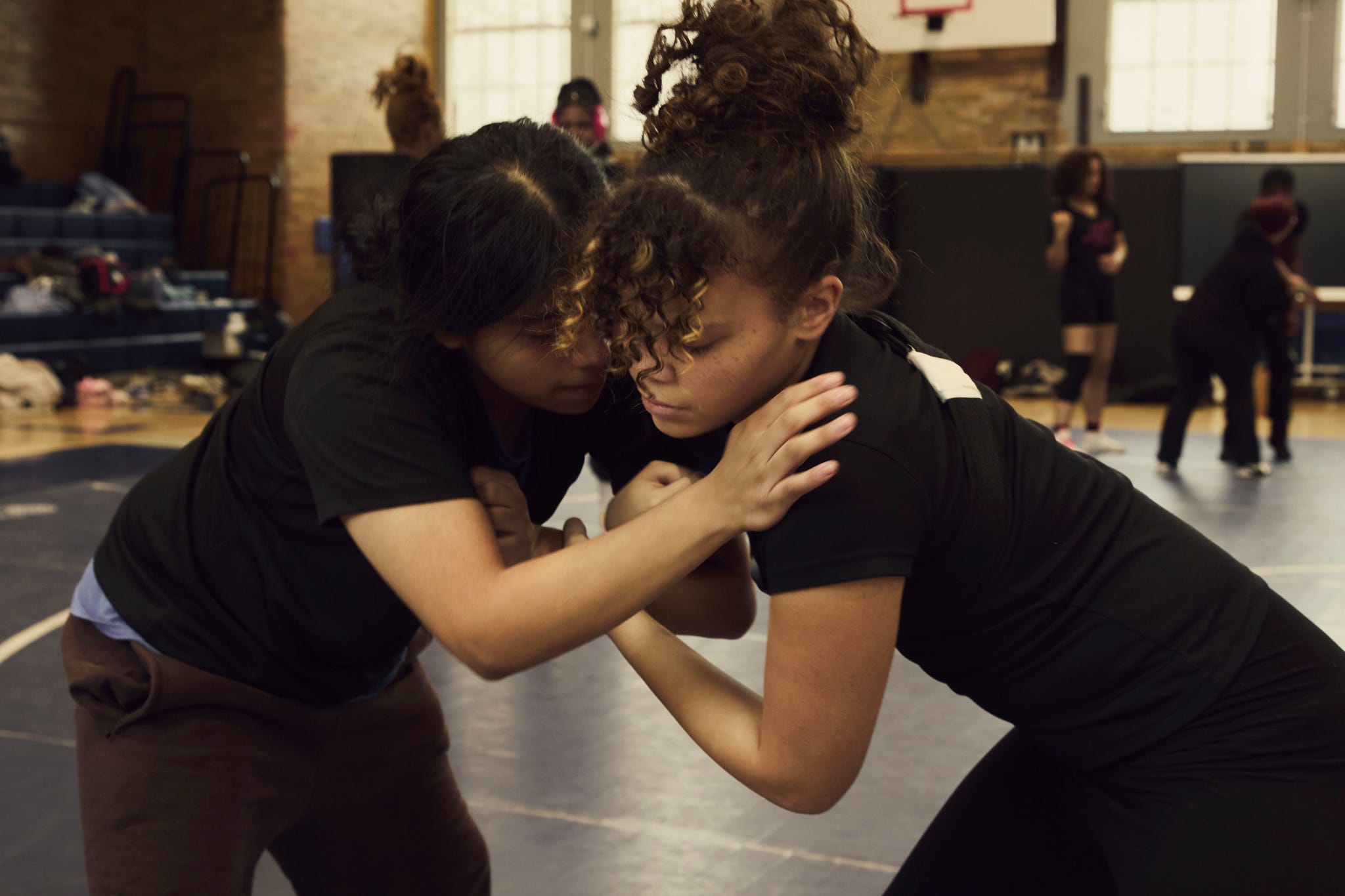
Wrestling is arguably the ultimate test of resilience—a skill that translates far beyond the mat for the girls of Lucha.
 Rona Ahdout
In her second season, Byrd is aiming to qualify for the U.S. Marine Corps Junior Nationals in Fargo, North Dakota.
 From a Recruiting Video to an Award-Winning Film
The origins of Lucha, which means “struggle” in Spanish, can be traced back to a coach determined to bring wrestling to high school students in the Bronx.
A former walk-on wrestler at the University of North Carolina, Josh Lee worked in insurance sales after graduating, but he soon realized he wanted to pursue a career with more purpose, he says. In 2010, Lee moved from the Raleigh, North Carolina, area to New York City, where he started teaching special education at the William H. Taft High School Educational Campus in the Bronx.
“Coach Enas has helped me be so confident in my moves that I feel like nobody can beat me.”
One of his first students wrestled in middle school and urged him to start a wrestling team at Taft. Lee approached administrators about the idea, but they immediately turned him down, citing a lack of funding. Undeterred, he called the office every week for a year.
“I think they were looking out for me, to be honest. They were right about a lot. There is no support, there’s no money, there’s no funding for sports, especially,” Lee says. “But you tell a wrestler you can’t do something and you set them on a path, like, ‘I’m going to kill myself trying to get this done to prove you wrong.’”
 Rona Ahdout
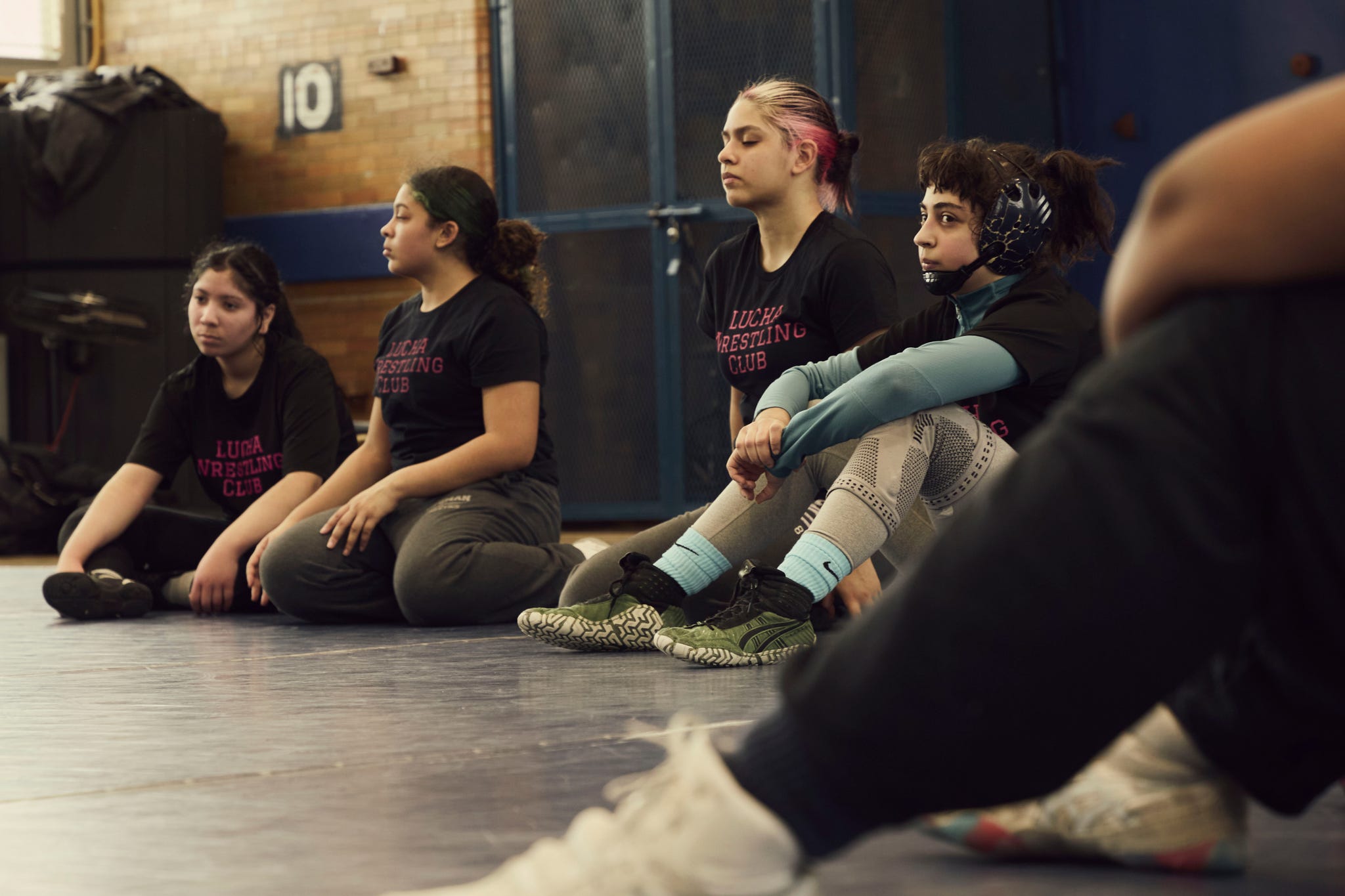
Girls come from all over the Manhattan area, some traveling up to 90 minutes by train, to meet for Lucha practice in the Bronx.
Eventually, his persistence paid off, but administrators approached him with an unexpected change of plans. Instead of adding one wrestling team, they would create two, for boys and girls. He would coach both programs alongside his colleague Robert Carrillo starting in 2013—the same year New York City launched one of the first all-girls high school wrestling leagues in the U.S.
“It was just happenstance that I was coaching girls’ wrestling, but it was a bit of a case study,” Lee says, adding that Taft was the only school in the city where the girls’ team started at the same time as the boys’ team. Until then, girls who wanted to wrestle at a school with a preexisting team had to join a program that was created for boys. “As a new team, they told us we were considered developmental, and we had two years to prove that we could recruit or they would not let us keep the program permanently.”
The coaches came up with the idea to create a 15-minute recruiting video in an effort to get students interested in joining the squad (and their parents on board). They started with footage shot by students in the school’s film class.
Lee imagined the video would feature both the boys’ and girls’ teams, but several poignant moments with the girls’ team shifted their focus to create a film that transcends sport.
 Rona Ahdout
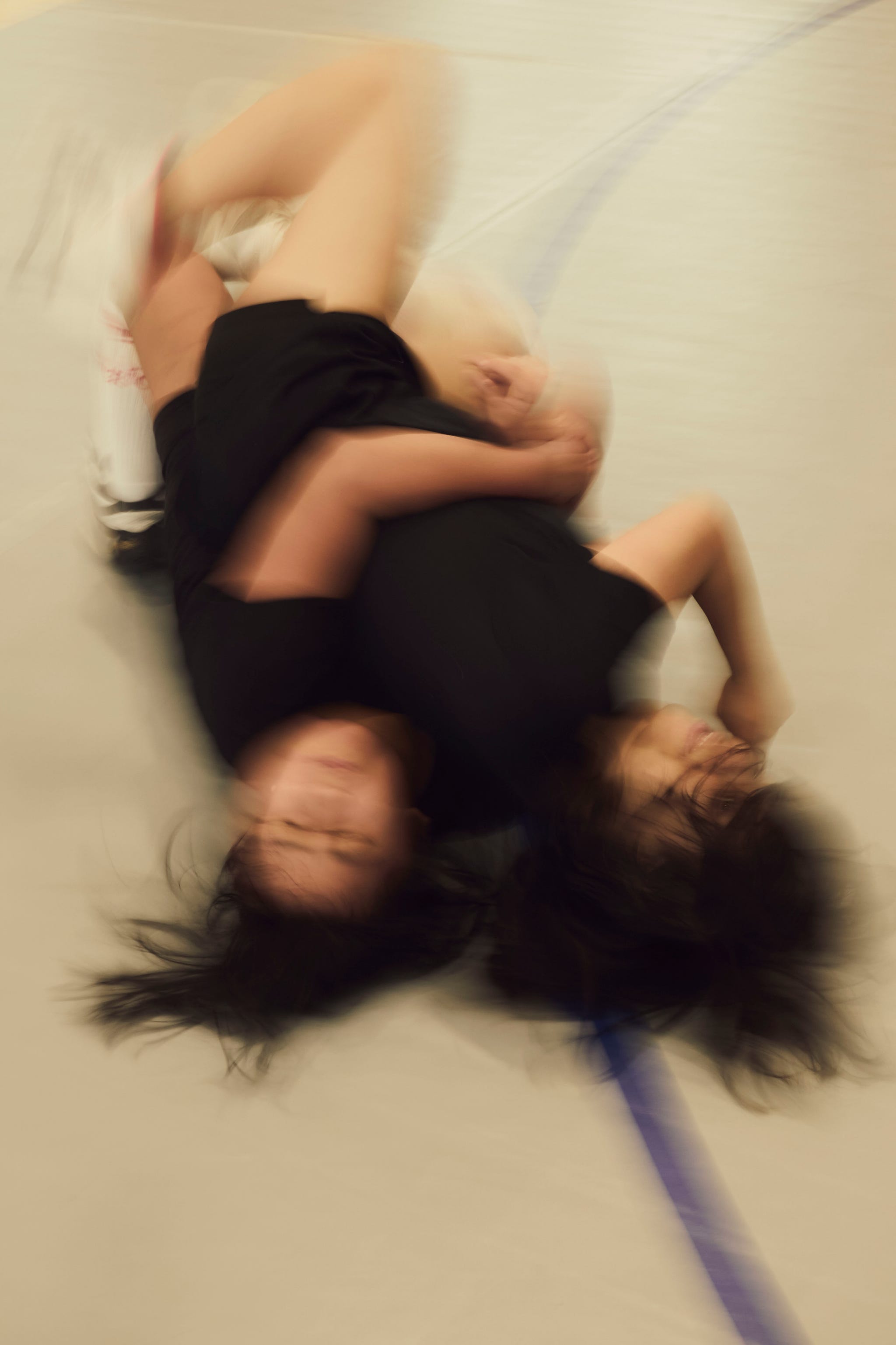
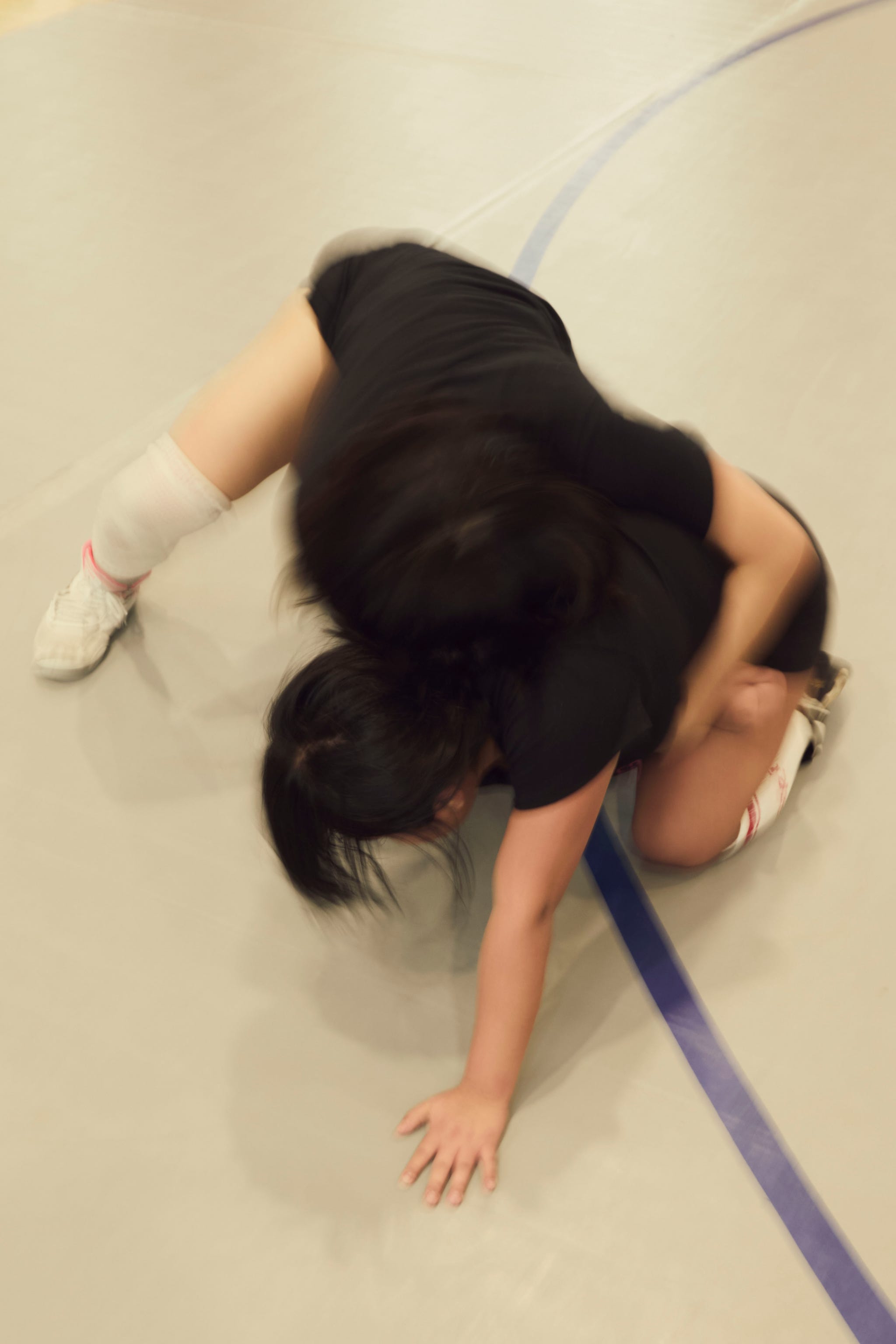
In New York, high school girls wrestle freestyle, which means points are earned from takedowns and big throws, among other scoring elements.
Rona Ahdout
Early on, the coaches discovered that some girls needed to leave practice early in order to care for their siblings at home, or to make it back to the shelter before curfew. After the team won a tournament, one of the athletes learned that her mother was going to be deported, and her teammates consoled her in the gym.
During the summer of 2013, Lee was also working for Taskrabbit. While on a job moving art supplies into a basement filled with camera equipment, he mentioned the project to the client, Marco Ricci, a documentary filmmaker. Ricci was immediately intrigued. After attending one practice at Taft, Ricci told Lee he wanted to create a full-length documentary featuring the inspiring stories of the girls in the program.
From 2014 to 2016, the film crew followed high school teammates Shirley Paulino, Nyasia Jennings, Alba Ciprian, Mariam Silllah, and Shakye Ford to create Lucha: A Wrestling Tale. As the documentary shows, the athletes became connected as trailblazers in the sport while also navigating challenges off the mat that are all too common in the Bronx. For example, Paulino, the captain of the squad, faced periods of homelessness while trying to use wrestling as an opportunity to get into college.
This spring, almost 10 years after filming concluded, Paulino will graduate from Lehman College in the Bronx with a bachelor’s degree in physics and math. She hopes to work in medical physics and give back to the sport as a coach someday.
“The only thing [wrestling] didn’t do is provide a roof over my head, and that’s because it couldn’t,” Paulino says. “But it gave me purpose, it gave me direction, it gave me family. It taught me how to love again. It was more than just a sport for me.… It gave me a place to thrive and be myself.” When she graduated from high school, opportunities for girls to earn college wrestling scholarships were scarce. Paulino remembers hearing about only one or two schools that had a women’s team at the time. Today, there are 112 NCAA programs that offer women’s wrestling.
“[Wrestling] was more than just a sport for me.… It gave me a place to thrive and be myself.”
When the film was finally released in 2023, it won a number of awards, including the Grand Jury Metropolis Prize at DOC NYC, the largest documentary film festival in the country. After multiple screenings, Lee and the team were approached by people in the audience who were moved by the girls’ stories and wanted to donate to the program, Lee says. Through fundraising, Lee was able to create the Lucha Wrestling Club, a nonprofit organization that provides expert-level training, academic support, nutrition education, and leadership skills to wrestlers throughout the New York City area.
Rona Ahdout
“The goal is to make the program a consistent pipeline out of poverty into college for girls,” Lee says, adding that the team’s emphasis is on supporting athletes in the Bronx and northern Manhattan, where students don’t have as many resources. “Helping someone get a college degree, maybe the first college degree in their family, pays dividends not just for the kid, but also for the family.”
In January 2025, the day after the NCAA approved women’s wrestling as a new championship sport, Lucha held its first official practice.
‘If You Can Wrestle, You Can Do Anything’
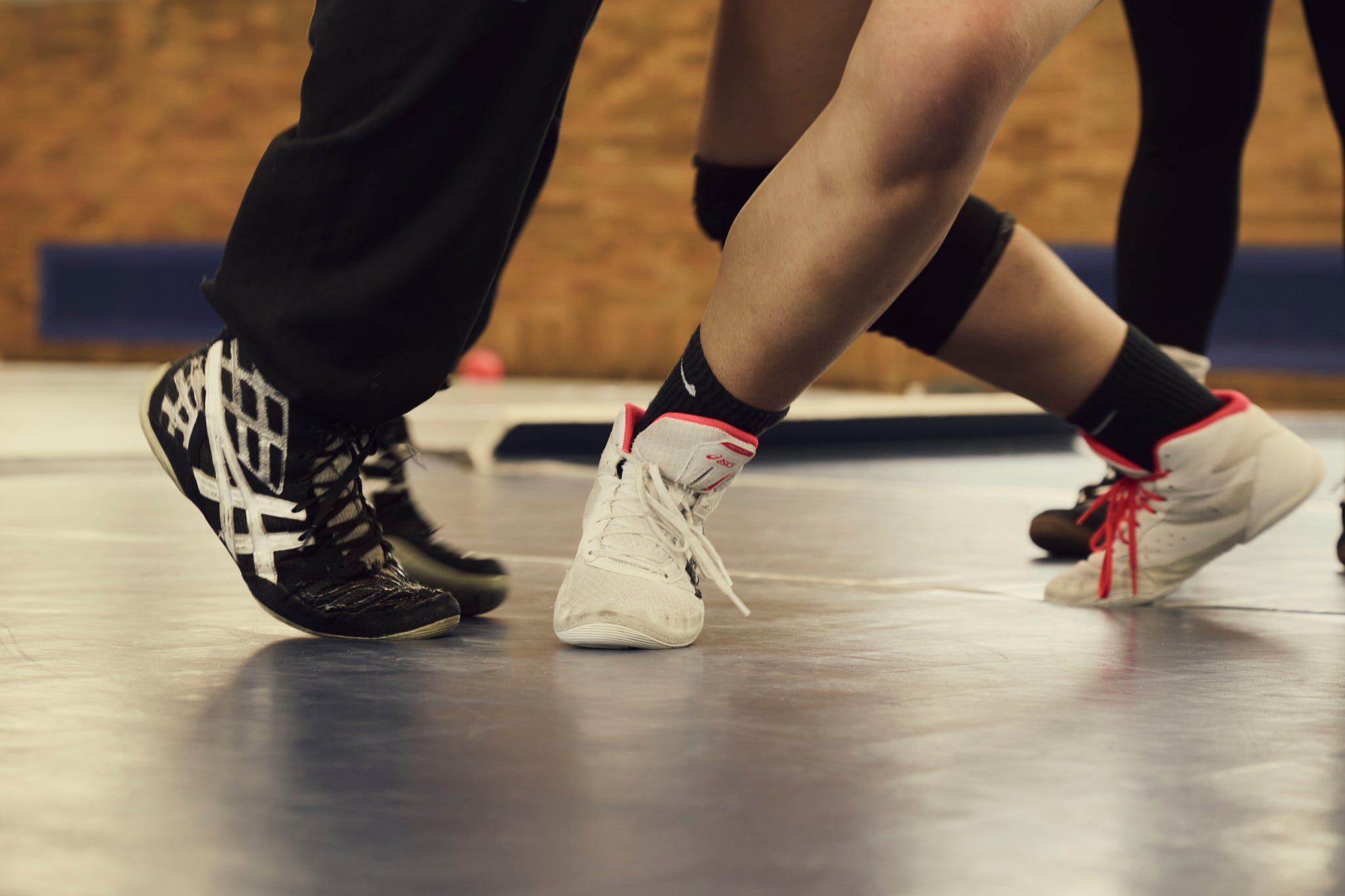
Lee met Ahmed, who was coaching at another club and doing freelance training, at a wrestling clinic and encouraged her to watch the documentary. Right away, the coach became interested in the club’s concept—especially because there are so few opportunities for girls to train in freestyle, the type of wrestling done by women in the NCAA and the Olympics. (In the U.S, men mostly wrestle in folkstyle.) New York was one of the first states where high school girls started competing in freestyle, a change made during the 2024 season. While the objective of both freestyle and folkstyle is the same—control and pin your opponent—freestyle rewards execution and big moves, while folkstyle rewards control and involves fewer throws. To get more experience on the mat, some of the Lucha girls wrestle boys in folkstyle during the off-season.
To have an elite female wrestler coach an all-girls team is also a rarity. It’s more common for girls to train in a co-ed program led by a male coach, if their high school offers a wrestling team at all. Ahmed has a deep appreciation for female representation in the sport.
 Rona Ahdout
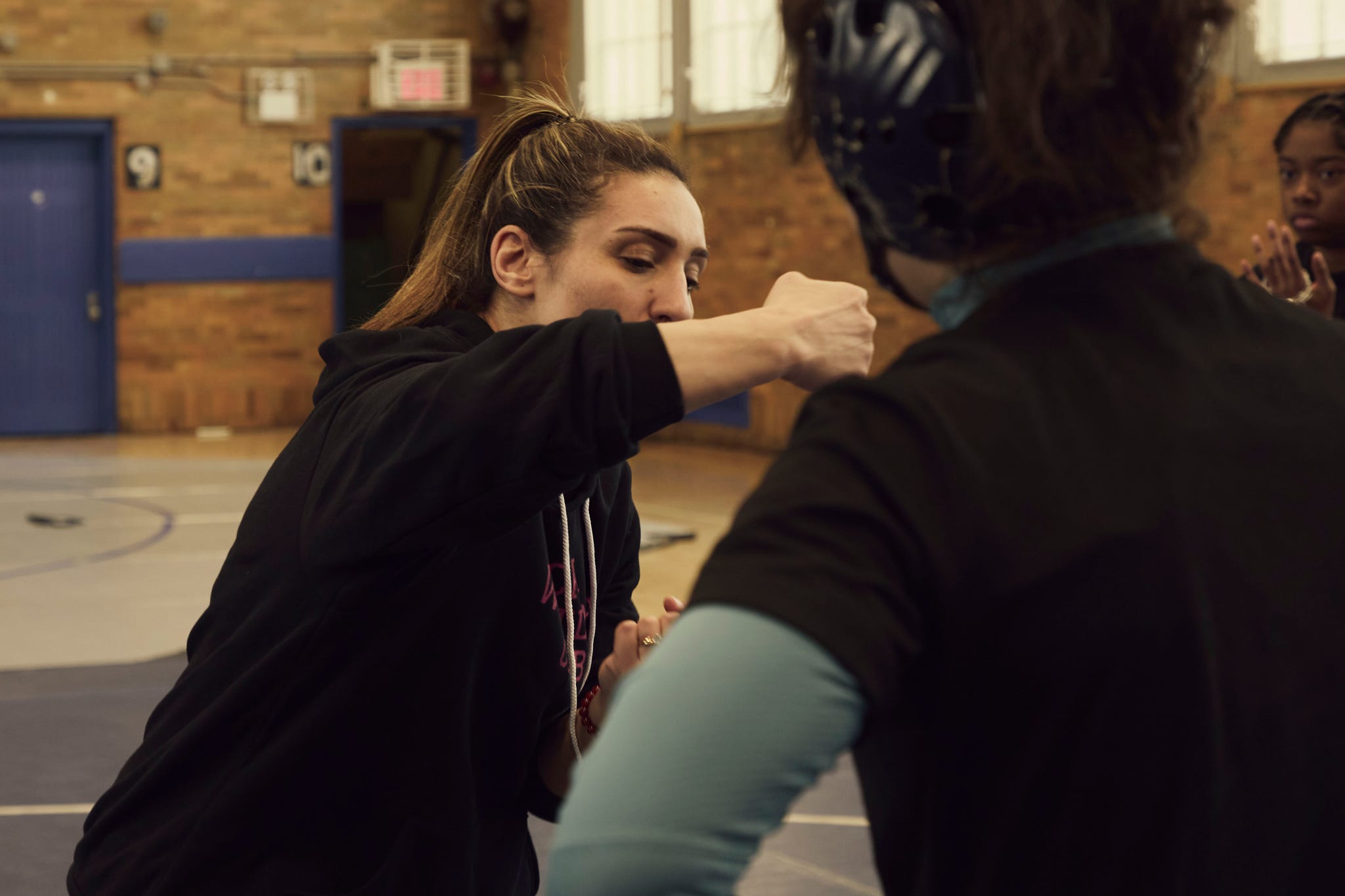
“Some girls believe wrestling is not for them. They are afraid to try,” Ahmed says. “When I show them that a supportive environment is here for them at Lucha, they feel safe to fail and try again—and that’s when the real growth happens.”
Growing up in Alexandria, Egypt, Ahmed didn’t realize girls could wrestle until she started looking for ways to earn scholarships for college. Hyperfocused on academics, she didn’t participate in sports as a kid. Her dad was a wrestling coach and suggested she try it.
At 16 years old, Ahmed began with the basics, learning among a team of female wrestlers who helped her realize that “nothing is impossible,” she says. She won her first match ever, which ignited a love for the sport that spans decades.
“Wrestling made me discover myself and made me feel like I’m stronger than I expected,” Ahmed says. She represented Egypt at the Olympic Games in 2016 and 2021. She placed fifth overall in Rio de Janeiro. She’s also a six-time medalist at the African Wrestling Championships, winning gold in 2014 and 2015.
As the head coach of Lucha, Ahmed aims to create an environment where the girls aren’t afraid to make mistakes or try something new. One way she removes the element of fear is by having the athletes practice particular moves on teammates across every weight class, so they are prepared to take on any competitor they come across.
“I believe women have a lot of power, more than what they expect,” she says. “When I’m working in that, they believe it too, and that’s what makes Lucha different.”
“Wrestling made me discover myself and made me feel like I’m stronger than I expected.”
Knowing that all her athletes are coming from their own unique situation, Ahmed tries to meet each girl where she’s at. Whether it’s building confidence to help an athlete reach the point where she’s ready to wrestle or navigating disappointment from a recent loss, Ahmed faces the challenges head-on with them, knowing how far they can apply those skills.
“If you can wrestle, you can do anything else in your life,” she says.
A Different Kind of Confidence Builder
On a frigid Saturday morning in early February, the girls made their way to the gym at A.P. Randolph High School in Harlem, one of the facilities Lucha uses for training. In 12-degree weather, some athletes traveled up to 90 minutes by train to practice with Ahmed. It’s always worth the effort.
After the warmup, Ahmed went straight into a demonstration of double leg to tilt roll-through, an advanced sequence of moves that enables the wrestler to effectively end the match. While the girls watched Ahmed’s example on the mat, Lee noted he didn’t learn these moves until his third year of wrestling.
As they progress, the athletes of Lucha are redefining resilience and defying expectations in what is still an emerging sport for women.
Angelina Ramirez, 14, was introduced to wrestling through a friend who hosted an informal clinic in her living room. There, an older female classmate, who was on the school’s wrestling team, taught them the basics. A then-12-year-old Angelina was already practicing tae kwon do and karate (she’s a black belt in tae kwon do and a brown belt in karate), but she’d always thought of wrestling as a sport that wasn’t open to girls. The impromptu lesson fascinated her.
 Rona Ahdout
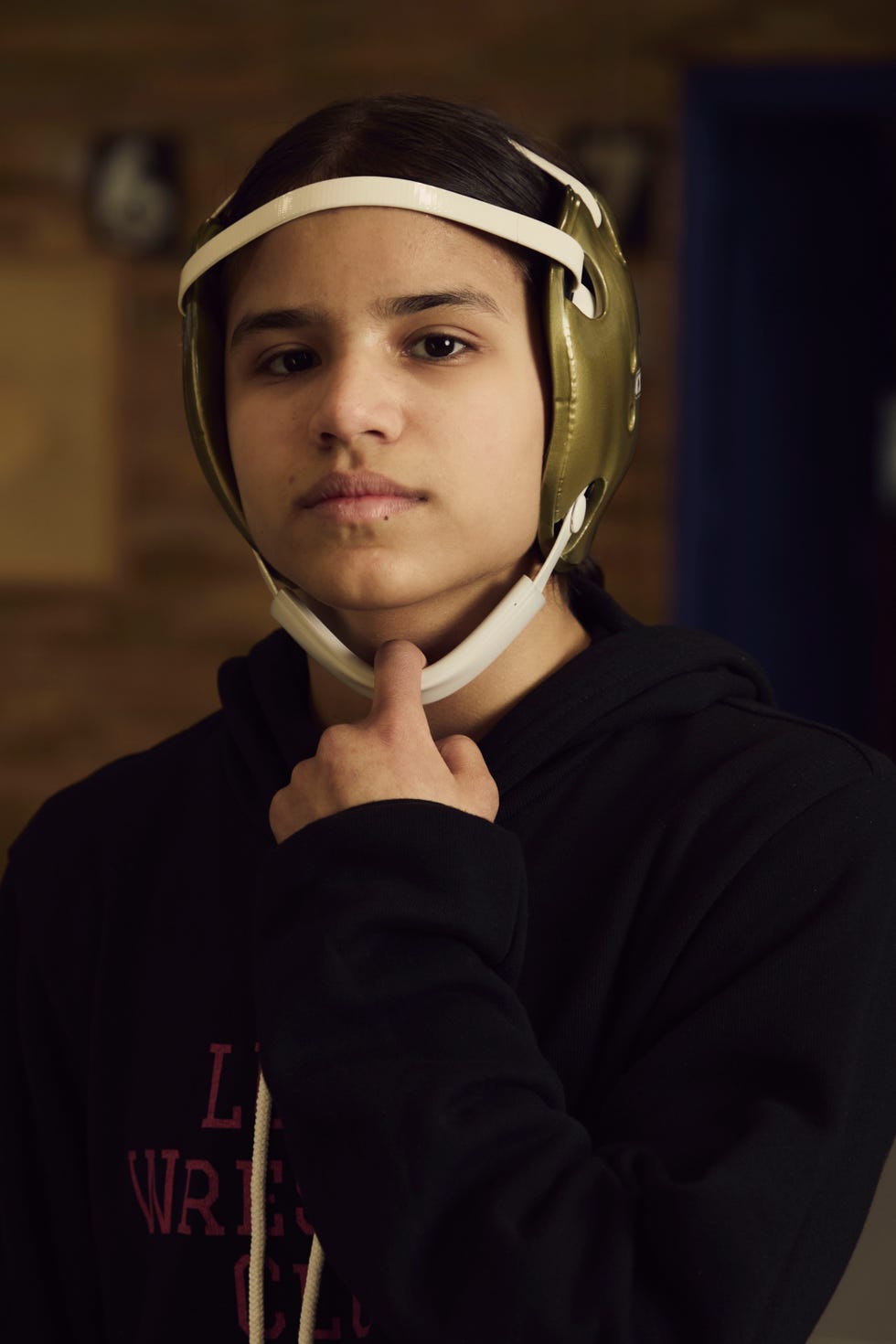
Angelina Ramirez loves how wrestling brought out her inner strength. “I felt very strong, and it helped me grow mentally,” she says. “I just like to feel like a strong woman, an independent girl.”
“Seeing a girl wrestle was pretty cool,” Angelina says. “Watching her throw us and teaching us how to go through the moves was really cool to watch, and it got me interested, because it was like, ‘Wow, I can actually do something challenging and something that helps me through life.’”
At first, her mom, Raquel Ramirez, was taken aback when Angelina told her she wanted to try out for the wrestling team at her middle school. They were driving home when Angelina shared the idea from the back seat of the car. A former college softball player, Raquel always imagined her daughter taking up a similar sport—maybe something more traditional for girls, like volleyball. Wrestling was never a consideration.
“I immediately just gripped the steering wheel and took a deep breath. I was fearful. Like, she’s going to get hurt, she’s so tiny. That’s a scary feeling,” Raquel says. “But I didn’t want to hold her back. I told her, ‘Go try out, and if it’s something you like, then we can talk about it.’”
It didn’t take long for Angelina to make her mark on the co-ed squad, which included three girls on a team of mostly boys. Early on, the school’s coach told Raquel her daughter had talent. Unbeknownst to her mom, Angelina was also sneaking into practices with the high school program after school—often wrestling in jeans.
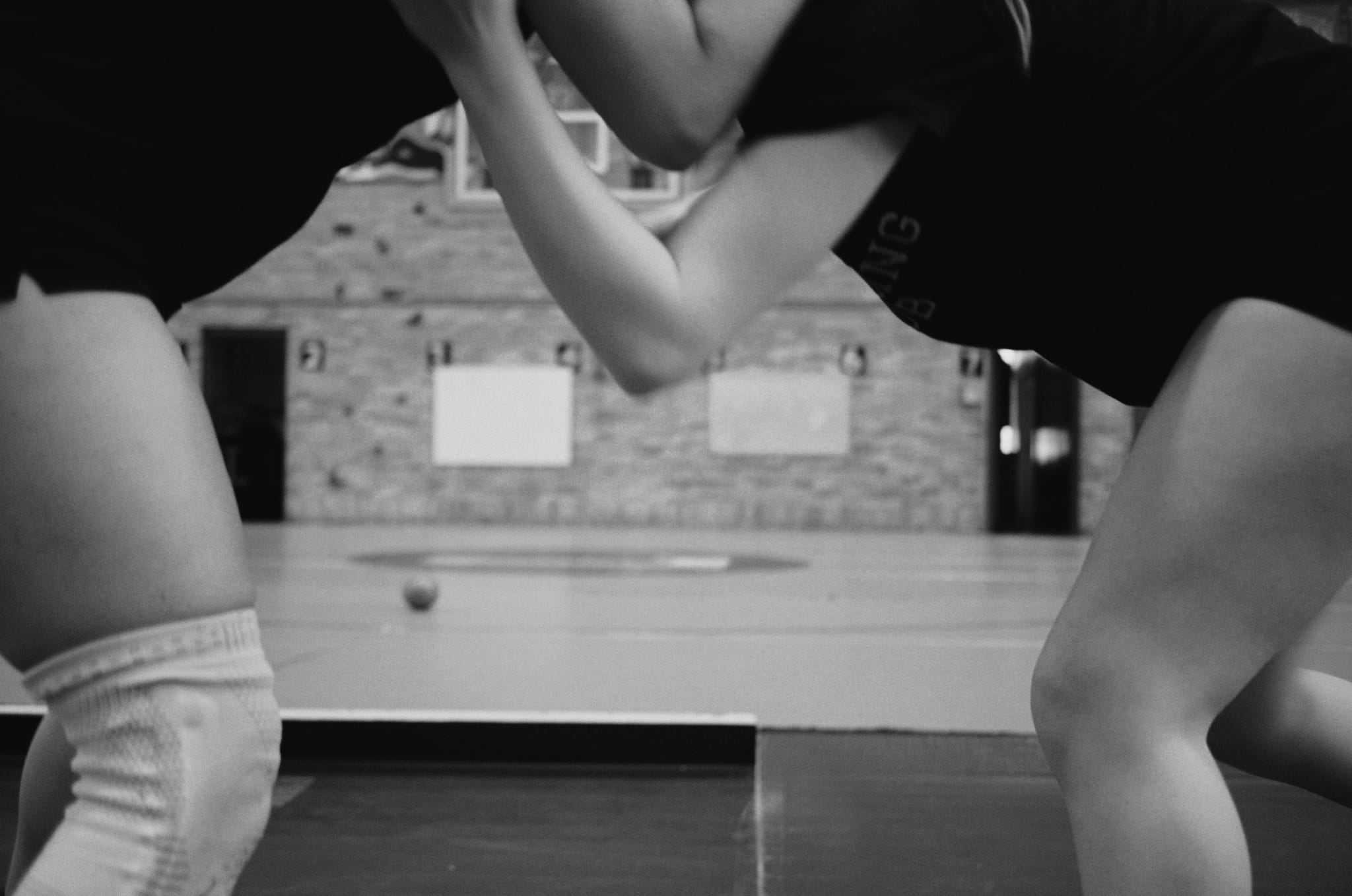
Rona Ahdout
When she was in eighth grade, Angelina beat a boy for the first time in a match—the first of many victories against male competitors. “A lot of girls don’t think they can beat a boy, they feel lesser than them, but I can match them,” she says.
Though early on she was still nervous watching her daughter wrestle, Raquel could see that Angelina’s love for the sport was undeniable, and she wanted to support her. When Angelina’s middle-school coach recommended she join Lucha last year, Raquel was in disbelief that an all-girls club existed.
“It’s a different facilitation at Lucha that allows girls to be comfortable but still with focus, and the coaching is very technical, very firm, structured,” Raquel says. “[Ahmed] doesn’t waste a minute.”
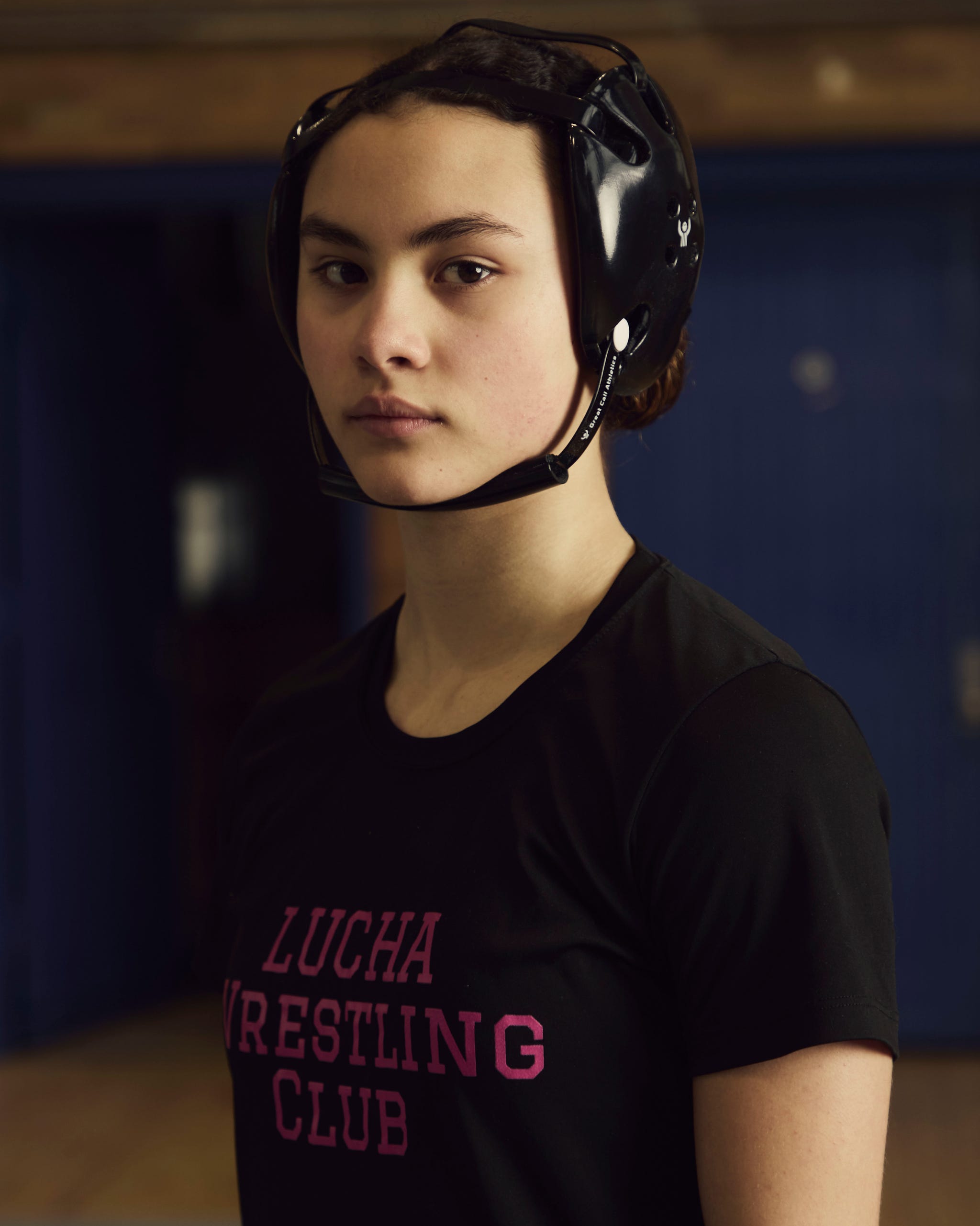 Rona Ahdout
Whin Eimicke’s father encouraged her to try wrestling because he believed the skills would translate well to her other sport, jujitsu. “I found Lucha and started wrestling with them more, and I really fell in love with the sport,” she says. “I love the feeling of stepping on the mat and giving it your all.”
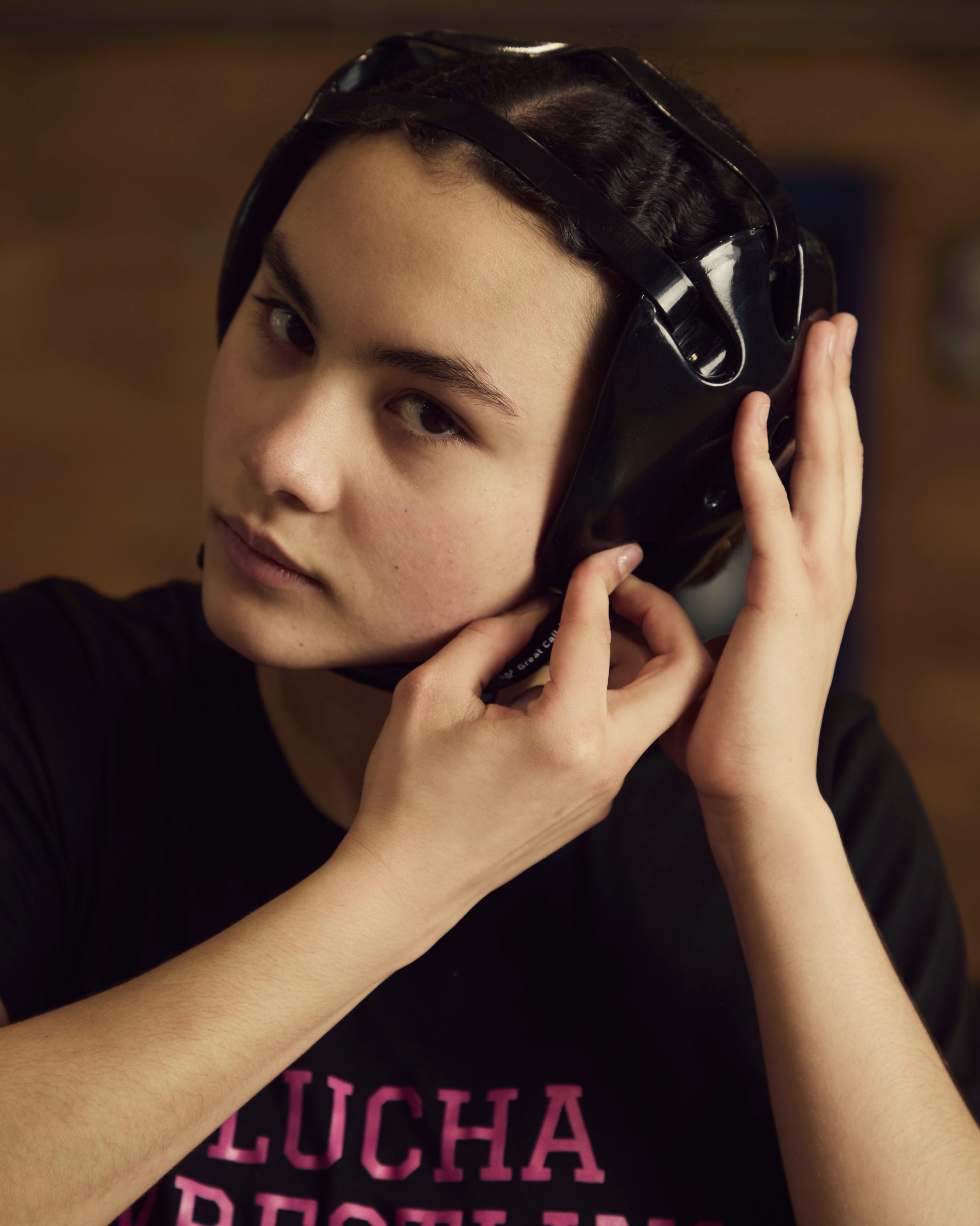
Rona Ahdout
For Whin Eimicke, 15, training with the Lucha team was instrumental in helping her return to competition after a devastating injury.
In 2024, the high school sophomore was competing in a jujitsu match against a male rival when her collarbone shattered—a “terrifying” moment that nearly punctured the arteries next to her heart and lungs, she says. Eimicke took six months to recover physically. Mentally, it took much longer, and she still battles with some apprehension when wrestling boys, she says. But Ahmed helped her come back even stronger.
After months of repeating skills on the mat and with overwhelming support from her Lucha teammates, Eimicke finally reached a point where she was winning again. More importantly, she was back to believing in herself.
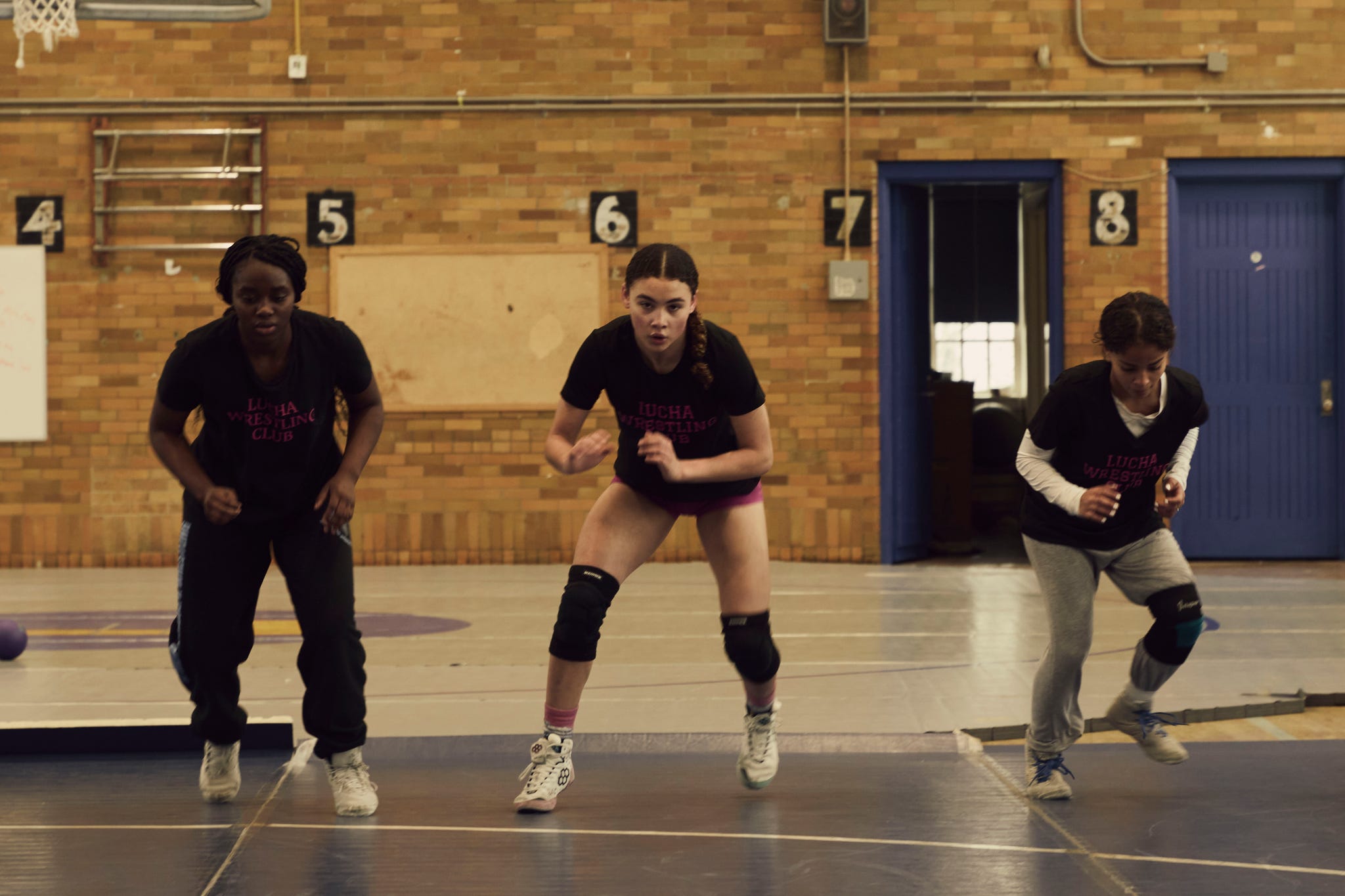 Rona Ahdout
“Those skills that Coach Enas and Coach Lee gave me, they really helped show me that I can do it,” Eimicke says.
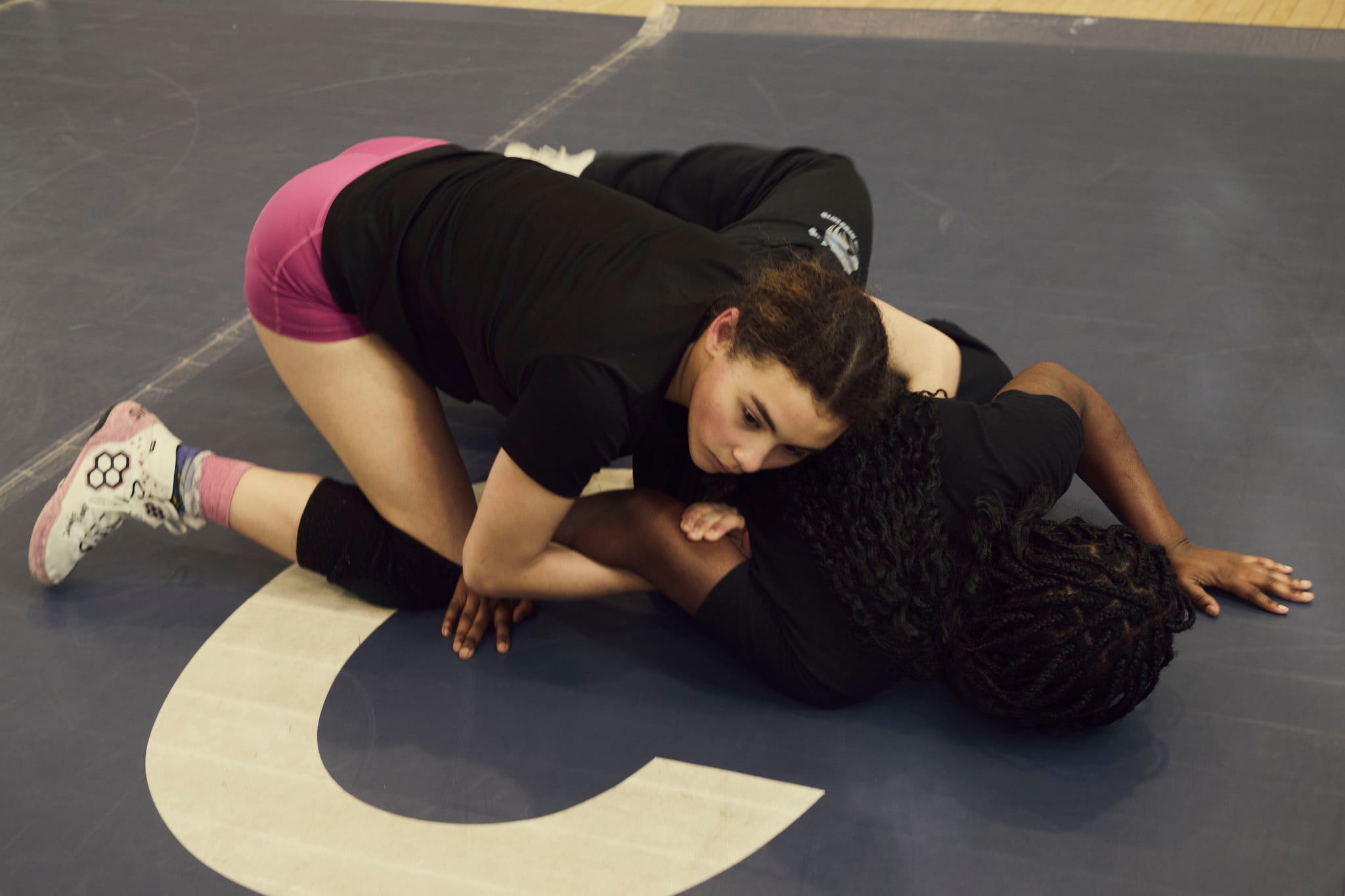
In November, Eimicke wrestled a boy in competition for the first time since the injury, and she didn’t hold back. Using constant pressure and attacking maneuvers, she ultimately beat him with shot recovery—a technique for turning a failed takedown attempt into a neutral, defensive, or offensive position rather than giving up points. At the buzzer, Eimicke’s opponent slapped the mat in frustration over the loss, while she beamed with pride as the referee lifted her arm as the winner.
“To beat him and see him smack the mat like that, it was just like, ‘I can do this,’ and it felt really, really good. I burst into tears after,” Eimicke says. “I was so happy.”
Her dad, Pierce Eimicke, pointed out the importance of these hard-earned experiences. “In all respects, it’s a fight, and they’re going at it,” he says. “Other obstacles they’ll face in life after doing all of this will seem easier to them.”
 Rona Ahdout
This season, Eimicke hopes to become a city champion and win a state title. After that, her goal is to wrestle in college.
Paving the Way for Girls in Wrestling
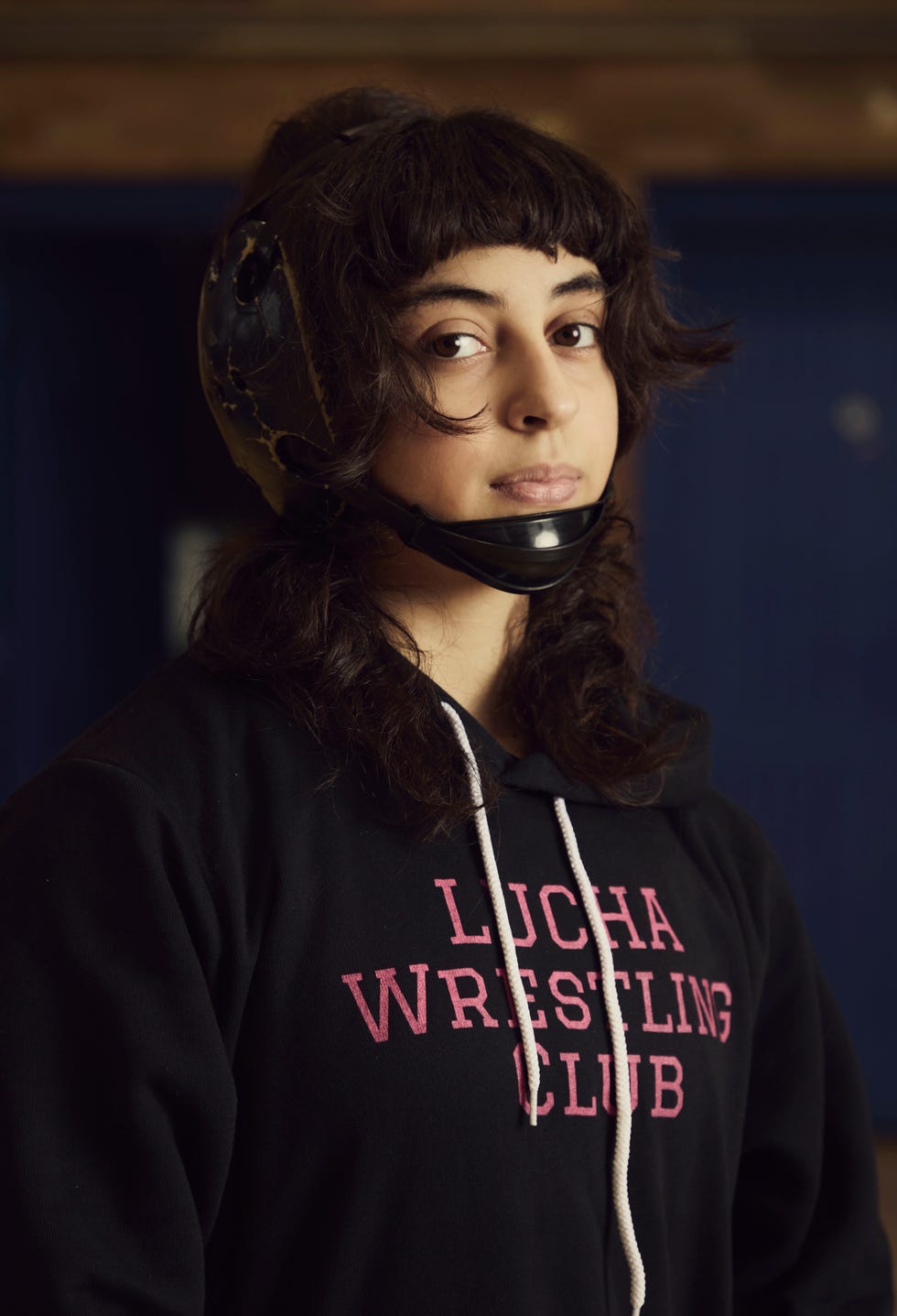
For high school senior Areti Kokonas, 17, the best part of training with Lucha is having a female mentor. After training with boys for most of her early years in the sport, she was surprised to discover moves and abilities that give women an edge on the mat.
“[Ahmed] understands that because of the different physiology, boys and girls wrestle differently, and we have different strengths we can play into,” Kokonas says. Ahmed shows them that women are more flexible and can wriggle out of maneuvers most men cannot. At practice, they train for flexibility—stretching and strengthening their necks and backs—so they are able to break free from an opponent’s grasp.
 Rona Ahdout
After spending her first three years as one of the few girls on a wrestling team of mostly boys, Areti Kokonas was thrilled to join a community of women in the sport for the first time. “There’s something about being in a wrestling room with all girls that makes me want to train better, train harder,” she says.
“She shows us the full potential of our bodies, that we can do things unique to us to improve our game,” Kokonas says. “I feel like she sees more in me than I see in myself sometimes.”
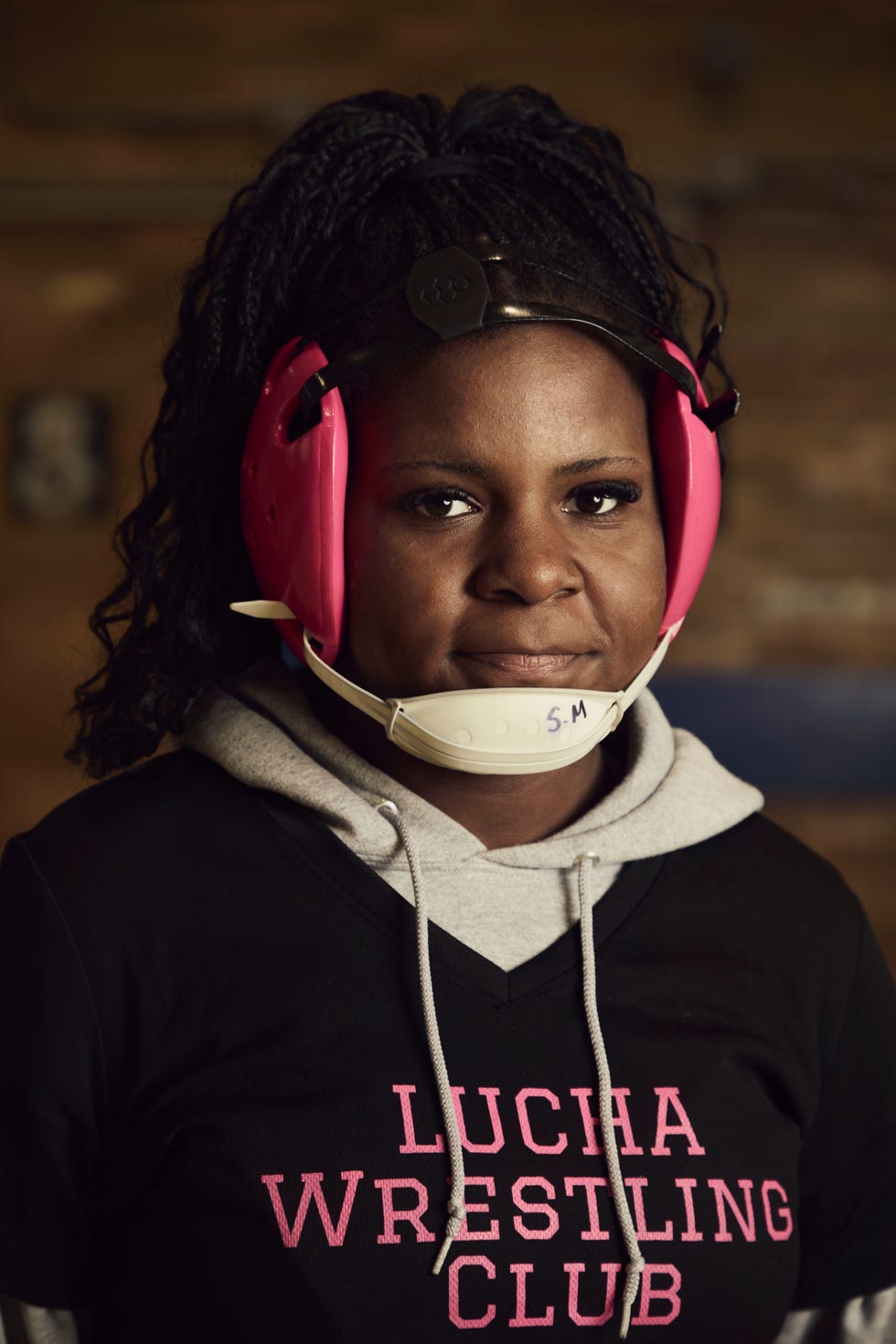
In the club’s first season, Lucha produced 14 state qualifiers, five state medalists, and three national qualifiers, including Monique Teal—the program’s first college scholarship recipient.
 Rona Ahdout
Monique Teal initially joined her high school’s wrestling program as the team manager, until her coach encouraged her to try it herself. After a few weeks of training, Teal won her first match. From there, she was hooked.
Last year, the high school senior finished third at the New York state meet and qualified to compete at the U.S. Marine Corps Junior Nationals in Fargo, North Dakota. It was a proud moment for the Bronx native, who is the youngest of seven kids and the first to take up wrestling—a decision that shocked her family, until they saw her compete, she says.
In the fall, Teal, 17, will join the women’s wrestling team at Alfred State College, which is in its third season. For now, she’s focused on returning to Fargo and improving on her 0-2 finish at last year’s tournament.
“That made me work harder my senior year. Even in the summer, when I came back from nationals, I was back on the mat working on things I could have done better,” she says. “It really opened my eyes to bigger things.”
Rona Ahdout

For the past decade, Taylor has reported on sports, health, and wellness for leading fitness publications including Runner’s World, SELF, Bicycling, and Outside. She’s also a podcast host and film producer focused on amplifying the stories of women and other underrepresented communities in endurance sports. When she’s not writing, you can usually find her running—or eating breakfast tacos with her family in Austin, Texas.