
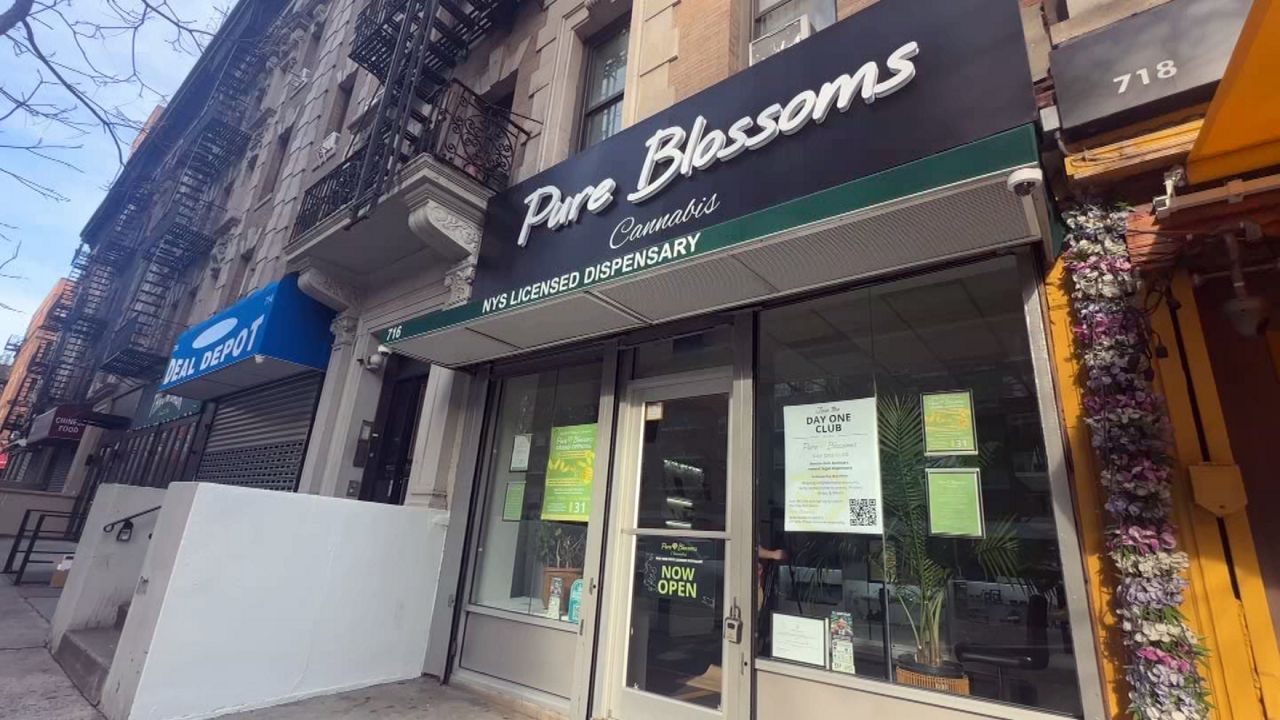
For the last three years, Michael Rodriguez has been thinking of this day: opening up a legal cannabis dispensary in the neighborhood he grew up in.
Rodriguez secured his license early in the New York state’s distribution of them, but he, like so many others, got caught up in setbacks and legal issues that came up as the state struggled with the rollout of the new industry.
What You Need To Know
March 31 marks five years since the Marihuana Regulation and Taxation Act was signed into law, legalizing recreational marijuana
New York’s cannabis market has generated $3.3 billion in total retail sales and expanded to more than 600 licensed dispensaries statewide
The state celebrated the anniversary with the opening of Pure Blossoms dispensary, the state’s 600th legal dispensary
“I get a chance to educate, to inform and bring everybody into the realization of cannabis today,” he explained while getting his shop Pure Blossoms on Manhattan’s Upper West Side ready for the grand opening.
State regulators have been tripped up by lawsuits and by the proliferation of unlicensed smoke shops, while making embarrassing regulatory missteps, including miscalculating the distance between dispensaries and schools.
“A lot of trials and tribulations with this store in particular,” Rodriguez recalled. “I initially got the lease, I thought I was compliant. Then I found out I was a 1-foot encroachment and I got delayed. I had a lease I had to pay rent, and I had to go through a whole other process.”
Despite challenges, the Office of Cannabis Management says the first five years of legalization have been profitable.
New York’s cannabis market has generated $3.3 billion in total retail sales and expanded to more than 600 licensed dispensaries statewide.
Rodriguez’s Pure Blossoms is recognized as the state’s 600th.
Local residents say they are happy to have this option in the neighborhood.
“You never knew what you was getting in the streets,” said Eddie Feliciano, as he came in to congratulate Rodriguez. “Now we know what we are getting. We know THC, how much grams how much everything, so it is legit, and that’s what I like.”
Written into the legislation is a big focus on ensuring those who had been disproportionately impacted by marijuana enforcement in the past would be prioritized to benefit from its legalization.
Of the more than 2,000 adult-use licenses that have been issued, the state says 56% have been awarded to Social and Economic Equity applicants.
This includes individuals with a cannabis-related conviction or who have lived in areas with high rates of cannabis enforcement, like Rodriguez.
“When the law came out I felt like it was structure for someone like me,” he said. “We were the ones that were over-policed, over-enforced, and now it is time to give back to the people the injustices were done to.”
The state says it has made a lot of progress in its enforcement of illegal marijuana shops.
Across the state last year, enforcement action has led to more than $20 million in illicit cannabis seized and nearly 600 illegal shops closed.