
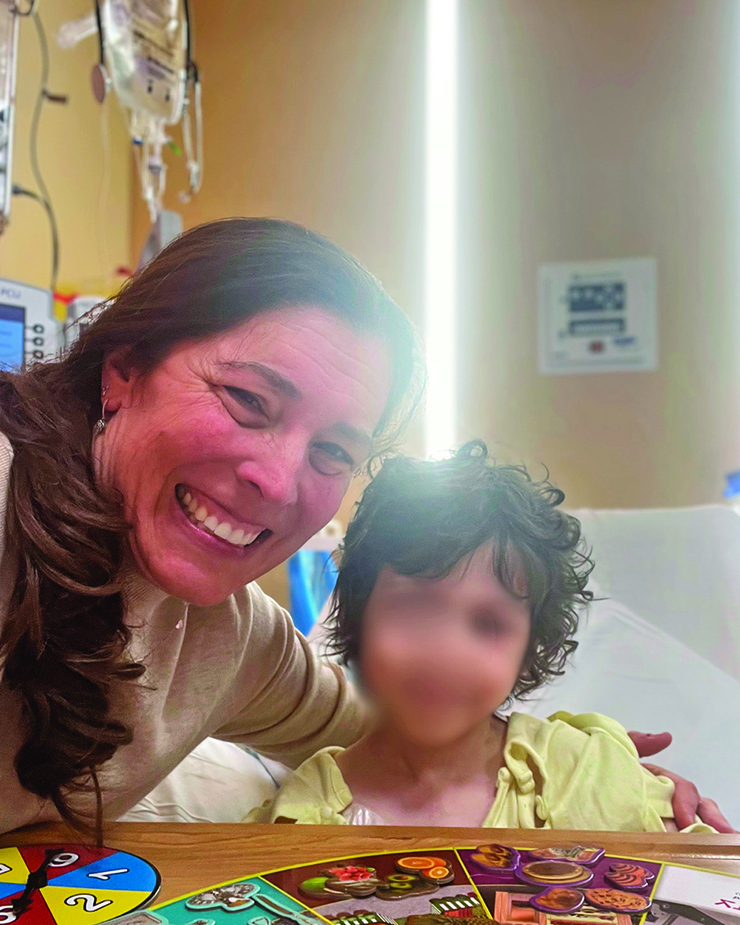
 Morah Nicole Kinches with a young patient.
(Courtesy of Kochavim) “But Morah, why are you leaving already?” asked Bella.
“But Morah, you were here for so little!” protested Moshe.
“Morah, can you stay with me?” begged Libby.
And I so wished that I could stay just a bit more with those little warriors sitting in the hospital, whose little minds and hearts thirst for knowledge, for Yiddishkeit.
As one of many Morahs on Wheels for Kochavim organization, Morah Nicole travels to NYC hospitals and to children at home to teach seriously ill children. Filling a void, no, a chasm. Children are desperate for stimulation, a taste of upcoming holidays, to feel like a regular child. Amidst the pre-Pesach hecticness our devoted morahs ensure that every child feels empowered at their Seder, that every child has their own Haggadah to take pride in, that no child is deprived of the joy of preparing for Pesach.
It all started 21 years ago, when Kochavim founder and director Yitty Fisch was volunteering for a little girl named Dina, who had come from Israel for medical treatment.
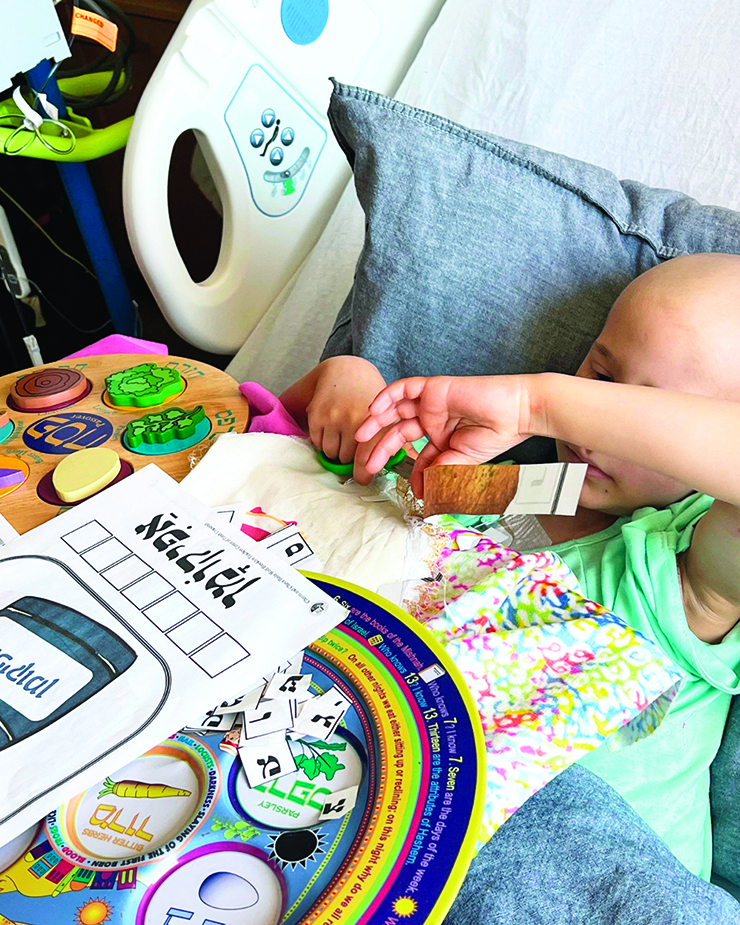
“One day, I walked in and saw her sitting quietly, coloring Mickey Mouse pages,” Yitty reminisced. “I asked her something about Pesach. She looked at me blankly. Not uninterested, not unwilling—just disconnected from something she should have been part of. I walked out quickly, ran to Eichler’s, and grabbed a Pesach coloring book. When I came back and sat down next to her, something shifted. Her eyes lit up. Her smile stretched wide. Her mother smiled. Her parents smiled. The whole room felt different. Not filled with medicine—but with meaning. With belonging. She was back inside the story. Dina passed away 21 years ago, but that moment never left. Because in that room, something became very clear: If you can fill a child’s heart and mind with education, everyone gains.”
And from that moment, Morahs on Wheels was born—a promise that no child should miss Pesach because they’re missing school. Today, that promise travels from hospital to hospital, room to room, across the United States, bringing every child back into the story.
Launched in 2021, the Morahs on Wheels program has received overwhelming feedback from parents and children, growing by leaps and bounds as Kochavim struggles to keep up with the immense demand. Kochavim currently has 16 morahs speaking four languages visiting NYC hospitals and local homes daily. And still, that is not enough to satisfy the unquenchable thirst those children have for meaningful entertainment.
Meet Morah Nicole Kinches, who joined the Kochavim team in 2025.
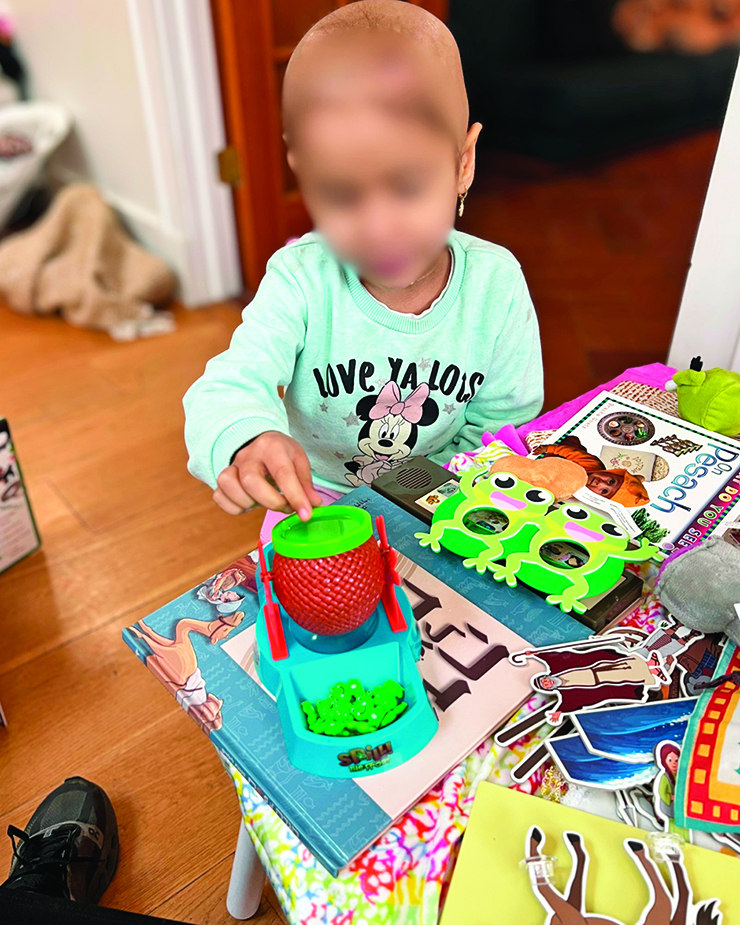
“My job is the best job in the entire world,” Morah Nicole said emotionally. “To have the ability to put a smile on a child’s face, to walk into a room and transform it into an alternate, familiar reality: It’s priceless.”
Do we even realize the gift of a child being able to attend school? The gift of regular life?
“We don’t relate to anyone as a patient, but as a student; a regular capable child just like their siblings and peers.” Morah Malky stated. “This is their escape, their chance to feel whole again.”
For a child, learning about Yom Tov is not just a nice pastime; it is vital; it’s their very identity.
“I had three kids sitting in MSK’s playroom all making Haggadahs together.” Morah Yitty shared. “The pride and joy with which they painstakingly crafted and created brought tears to my eyes.”
Hospital teaching differs tremendously from classroom instruction. It requires much creativity and a variety of activities to keep the children engaged.
A huge thank you goes to Amram Elbaz of Maayan Judaica for generously sponsoring many Judaica-themed toys and activities for Kochavim Morahs. His impact is seen in the incredible smiles when morah walks into the hospital room carrying that special Maayan Judaica bag. The gloom transforms into curious excitement!
“I walked into the room and Rivka was lying listlessly on her hospital bed,” Morah Estee recalled. “Upon seeing me, she jumped up excitedly, her misery all but forgotten.”
“Eleven-year-old Sury was so, so sick when I stopped into her room,” Morah Yitty shared. “Her eyes were closed and she appeared to be sleeping. I gently told her, “Sury, I’m just going to leave Pesach materials here.” ‘Do it now,’ she whispered weakly.
“So I started sharing divrei Torah and interesting tidbits on Pesach. Her eyes slowly opened. I continued talking. She sat up. I helped her out of bed into a chair. I went on to Gematrias. Sury insisted on figuring them all out on her own. For two hours we sat and learned and delved deeply and then deeper.
“Sury came home from the hospital for the Pesach sedarim. She sat like a princess and her face shone with an otherworldly glow as she participated and shared every one of the divrei Torah that we had learned. On Chol Hamoed Pesach, just three days later, Sury was niftar. At her shiva, her parents couldn’t stop thanking me for the priceless gift I had granted her in her last days in this world.”
Many families, like Sury’s, travel far from home for treatment. Kochavim’s morahs serve children in many languages and visit most major New York City medical centers, including MSK and Columbia. Visits are arranged only at parent request and are carefully scheduled to accommodate each child’s needs, strength and routine.
Morahs on Wheels is more than a program. It is a lifeline of learning, dignity, warmth, and yom tov spirit for children whose worlds have been turned upside down. It is the reminder that even in a hospital room, a child can still be a child, still be a student, still be part of the story.