
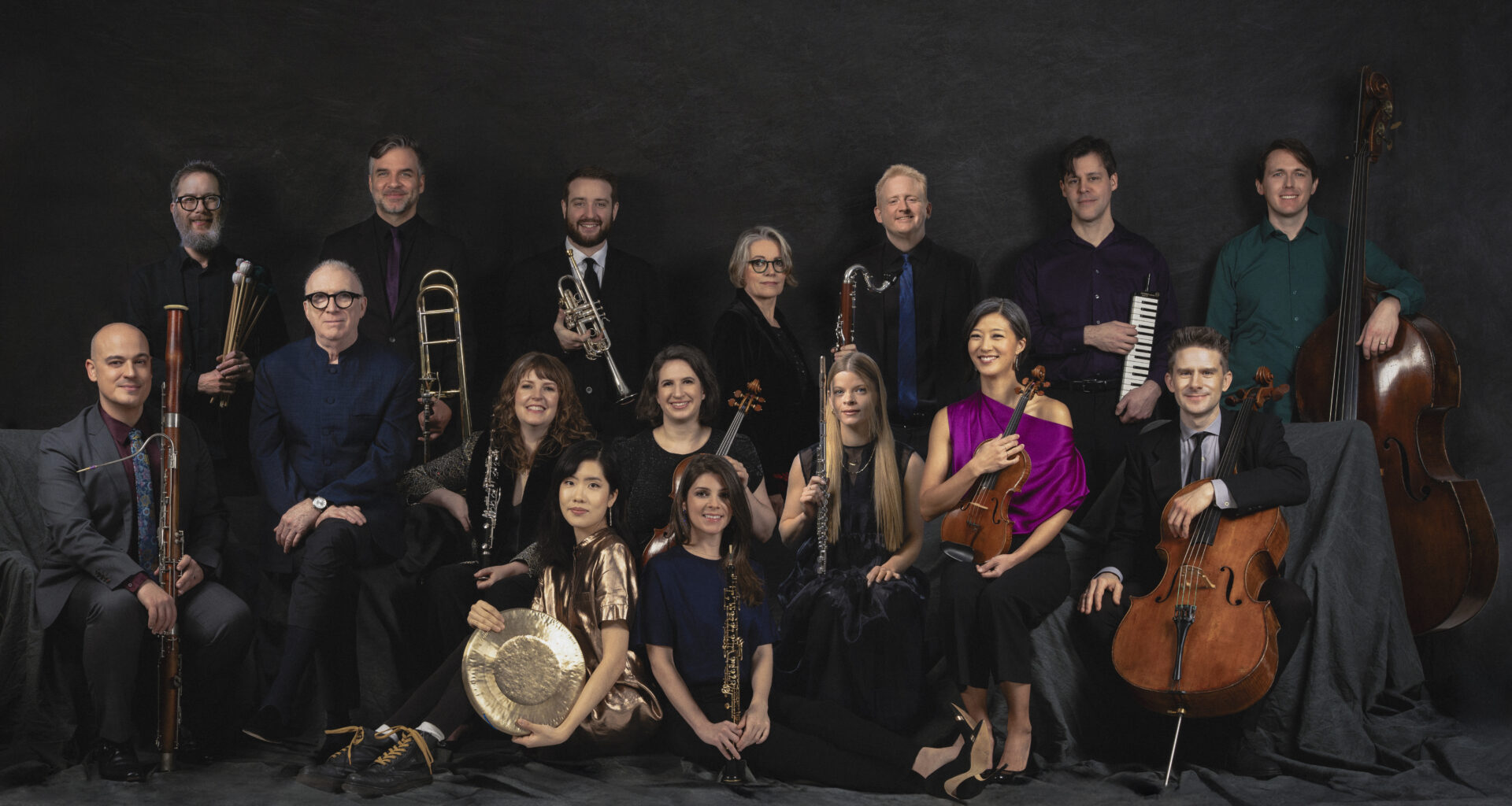
The Talea Ensemble, one of the most exacting and serious new music ensembles in New York, has been bouncing around from venue to venue since pianist-composer Anthony Cheung and percussionist Alex Lipowski founded the group in 2007. That’s not unusual. Bands of every genre rehearse in rented halls and studios and perform in borrowed bars and churches. Unless you have money, odds are you can’t afford to have your own place to practice and perform.
But Talea found a way to do just that. Last year, the sixteen-piece ensemble became the primary tenant of St. Bartholomew Hall at the Church of St. Luke and St. Matthew (SLSM) in Clinton Hill. Now, they have, as Clinton Hill native Biggie Smalls once said, big plans.
Talea looms large in the psyches of new music minded New Yorkers despite the fact that they don’t perform here as often as many of their peers. Their enduring relevance may owe something to their solid relationship with TIME:SPANS. That festival annually marks the end of the new music scene’s summer recess and the beginning of the fall concert season, and Talea has been a fixture since its establishment in 2015, when the only other group on the bill was JACK Quartet. But they’ve largely preferred to keep an eye on developments in European classical music. They’ve spent a lot of time in Europe, playing at festivals like Donaueschingen Musiktage, Internationales Musikinstitut Darmstadt, Warsaw Autumn, Wien Modern, and Time of Music Finland. And since European classical music, broadly speaking, seems to still be preoccupied with complexity—while many stateside composers are still coming to terms with the influence of minimalism—Talea has earned a reputation for bringing difficult works to New York, inoculating audiences with healthy doses of both confusion and awe.
The pandemic halted touring and made Talea reconsider their relationship to New York. They realized that they had been on the road almost more than performing here. “It’s fun to travel around the world and meet other musicians and composers in other places and do these programs elsewhere and go to the European festivals,” Talea bassoonist and Executive Director Adrian Morejon told the Rail. “But a bunch of us were like, hey, why aren’t we doing more here? Why not have a strong home base?”
So they started the search. To be sure, there were precedents for a small ensemble long-term leasing its own rehearsal space: Ensemble Mise-En was in Bushwick and Greenpoint before they moved to Harlem last year; Sō Percussion has a studio in the Navy Yard; International Contemporary Ensemble’s studio is an eleven-minute walk from Talea’s new home in Clinton Hill. But these spaces are either tiny or aren’t used for performances. Would it be possible to find a real hall that could accommodate a sizable audience?
Luckily, love was in the air. In 2024, Wilden Dannenberg, a French hornist who has played with Talea, was music director at SLSM (he still is). He was engaged to Stephanie Liu, a violinist and Talea’s director of development and marketing. When Talea got word that Bartholomew’s primary tenant, GALLIM, was on their way out, they pounced. In the fall of that year, the ensemble tried out the space to see how it felt and sounded. Large ensemble works by Luigi Nono, Chaya Czernowin, Claudia Jane Scroccaro, and Marcos Balter were the guinea pigs. The verdict: a little wet, a little resonant. Morejon said it took some getting used to, especially when you’re playing “thorny contemporary music that needs a lot of clarity.” But once you acclimate, you notice a “rounded” quality to the sound that swaddles the listener. The deal was too good to pass up: affordable price, existing relationships between personnel, and right off the C train—convenient for their Manhattan audience to get to Brooklyn. In January 2025, they signed a renewable multiyear lease and became the primary tenant of the hall. The same month, in the same church, Liu and Dannenberg were married.
Talea has to move much of its audience from Manhattan, but it also wants to build its audience. To do that, and to attract more members of the immediate Brooklyn community who may not be new music aficionados, Morejon said they may host open rehearsals, workshops, and sound installations. And they will sublease the space to other ensembles who may not have the biggest budget. Morejon wouldn’t disclose how much Talea pays in rent or how much they plan to charge other groups, but Leonard Bopp, conductor of the young-but-mighty BlackBox Ensemble, told the Rail, “It’s definitely helpful for ensembles like ours to have access to a fantastic hall in a great location at affordable rates.” They also have to tweak their repertoire. As Morejon explained: