
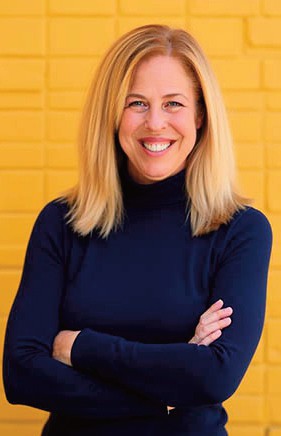

Alyce Wittenstein is a Queens native, attorney, and organizer, and Chair of Queens Says No Kings (QSNK), one of the first borough based “No Kings” marches, launched to protest Donald Trump on his birthday in his hometown.
She served as lead marshal and publicity lead for the first march, and as art director and publicity lead for the second. After No Kings 2, she curated The Resistance Art Show at Yant Art Space, featuring protest art QSNK and from across New York City, before becoming Chair in advance of “No Kings 3.” Her vision is to transform the march into a moving art installation inspired by the Manhattan mass marches, combining large-scale visuals, protest music, and clear pathways for ongoing civic engagement.
She is currently partnering with Hands Off NYC to bring Manhattan’s large-scale art builds to Queens and organizing VOTEFEST, a community-driven outdoor event focused on voter registration, civic engagement, and creative participation.
NB: Other than the amazing diversity, what do/did you love most about living in Queens (or Queens in general)? How has Queens changed over the years?
AW: One of the things I love most about Queens is the food— you can find incredible, authentic food everywhere, often in the most unassuming places. That connects to what really defines Queens for me, which is how real it feels—unpolished, not curated, and grounded in how people actually live. There’s also a burgeoning art scene that feels organic and community-driven.
NB: How does Queens inspire you? What are some of your favorite places to be inspired in Queens?
AW: In Queens, you can travel internationally without a passport. Some of my favorite places are the New World Mall and the surrounding area in Flushing, Little Thailand in Elmhurst, and Little India in Jackson Heights. I love the Queens Botanical Garden, where you can sometimes catch people doing Tai Chi among the trees.
NB: What advice do you have for readers who are hoping to develop their political or organizing practice?
AW: Find a way to bring what you’re passionate about into the movement. For me, that’s art—I’m inspired by creating visual work, and my background as a film producer and director translates naturally into organizing large-scale protests. If you want to be heard, start by showing up—attend protests and visibility brigades. Join a group, and look up listings on Mobilize to find actions that appeal to you. If you’re more comfortable helping from home, you can call representatives or write postcards. There are many ways to participate; the key is to begin.
NB: How important is personal connection and communication (networking?) in your industry?
AW: It’s everything. Organizing depends on trust, and that is built through real relationships and consistent communication. We all need volunteers and funding, but being overly competitive backfires—generosity in organizing, whether sharing people, information, or support, ultimately produces far stronger results.
NB: What are your favorite restaurants, cafes, theaters, book stores, exhibits, museums, communities, and venues in Queens? Favorite places to protest in Queens?
AW: My favorite place to protest in Queens is MacDonald Park, where our No Kings marches begin. A powerful BLM march started there in 2020 and wound through the historic Tudor parts of Forest Hills to a receptive crowd.
I love Kew & Willow Books in Kew Gardens, a small, well-curated bookstore that also hosts events. The Queens Museum has preserved the Panorama of the City of New York from the 1964 World’s Fair—it includes nearly 900,000 individual structures, and you can watch the sunrise and fall across the city. It’s as awe-inspiring now as the first time I saw it.
The Queens Night Market showcases some of the best food in the borough. My favorite restaurants include Ayada in Elmhurst, Angel in Jackson Heights, Jiang Nan in Flushing, Empanada Cafe in Corona, and for old-world Italian, Park Side in Corona.
There are also so many new art galleries and cafes opening across Queens that I’m looking forward to exploring—once things settle down after the Queens Says No Kings March on 3/28.
NB: What is something you wish I had asked? Please let me know what that question is, and answer it. Thank you.
AW: I wish you had asked: How do you turn a single protest into something that lasts?
The key is to offer a range of ways to participate— from being out on a bridge making noise to helping at a food pantry—so people can plug in at whatever works for them.
NB: Do you have any events or projects coming up that you’d like to promote? Your answer to this question helps with our production schedule. Can you tell us more about your work with Queens Says No Kings?
We’re hosting a follow-up Zoom call, “Queens Says No Kings After Party: What Comes Next for Queens?” the day after the march, hosted by Salua Baida.
We’re also partnering with Central Queens Mutual Aid to present Mutual Aid 101 with Steve Sacco on April 19, and with Central Queens Against Hate for Breaking Bread – Building Bonds at Queens College.
All of these activities can be found on our landing page at queenssaysnokings.com/next-steps.
—Nicollette Barsamian
For the complete story, visit QGazette.com.
The Local-Express interview series was originated on July 3, 2013 by Nicollette Barsamian.