
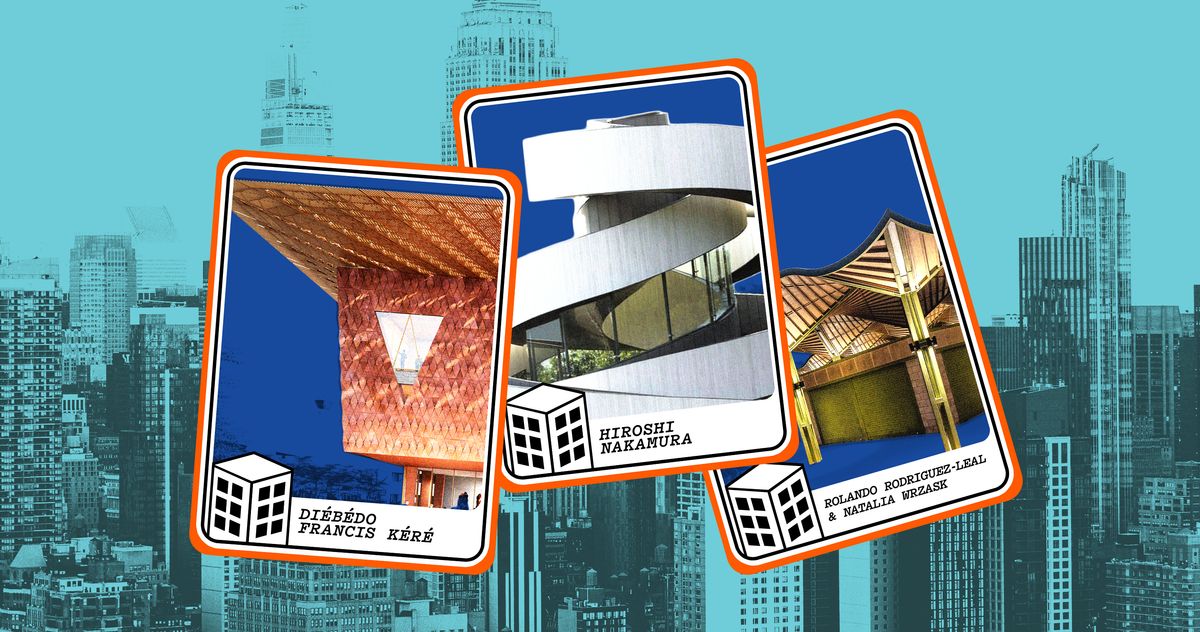
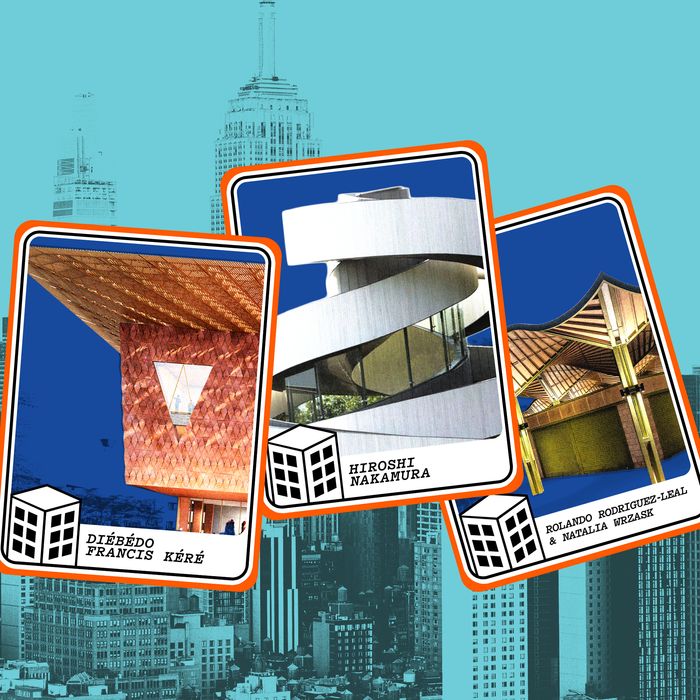
Photo-Illustration: Curbed; Photos: AIDIA, Getty, Hiroshi Nakamura & NAP, Kéré Architecture,
For a global city, New York can be awfully provincial. Its architecture firms export designs across the world, but only a handful of outside auteurs manage to penetrate the city’s insular development world, not always with great success. The reputations of Frank Gehry, Zaha Hadid, Rem Koolhaas, Shigeru Ban, Bernard Tschumi, Alvaro Siza, and Tadao Ando do not depend on the one or two buildings each of them have bestowed on New York. (Jean Nouvel and Santiago Calatrava have had slightly more impact.)
For public projects, the pool of global talent is even narrower. The city’s Design Excellence program, which prequalifies firms to design libraries, firehouses, and other civic buildings, is theoretically open to designers based anywhere as long as they employ or partner with an architect licensed in New York State. In practice, though, the list is largely made up of people who bump into each other at the Century Association or the Center for Architecture; even firms that originated abroad, like Snøhetta (Norway) and BIG (Denmark), have essentially become local. One of the very few welcome interlopers is the Chicago-based Studio Gang, which supplied Brooklyn with a firehouse and a recreation center.
That makes sense; working for the city requires the ability to navigate a convoluted bureaucracy and attend innumerable community meetings. But it also means that New York is missing out on the ideas of designers who could find surprising paths through an obstacle course of conventions, whose experience with the constraints and cultures of other continents might loosen New York’s rigid set of habits. Foreign architects could do for the urban landscape what so many immigrants have done for food, music, literature, and street life: enrich our culture and adapt to it at the same time.
It’s true that architecture doesn’t always travel well; a bamboo roof won’t survive a New York winter, and you can’t just get a few thousand volunteers to replaster the walls each year. But a northern climate, stringent building codes, and the gauntlet of public review shouldn’t exclude the immense trove of experienced professionals who have worked in big, dense cities that are more similar to than different from ours.
Hoping to stoke some healthy cravings, I’ve assembled a small fantasy league of international architects and paired each firm with a real city project that is in the early stages and not yet assigned to any designers. The firms I’ve chosen range in size, age, fame, and length of track record, but they have one thing in common: They have never built in New York.
The projects, too, vary in scope and complexity, and they fall under the purview of the Department of Design and Construction (DDC) or the Economic Development Corporation (EDC). All have been approved (and some have budgets), but they have a long way to go. My goal with these imaginary pairings isn’t to interfere with the public process, bypass community engagement, or foist a premature selection on a project before it is even underway. Rather, it’s to encourage architects who love our city from a distance to get involved here, and to offer readers (and decision-makers) a glimpse of a wider architectural panorama than the city we live in has reckoned with.
Country: Burkina Faso/Germany
Firm: Kéré Architecture
Project: Queens County Farm Museum Education Center
Client: DDC for Parks Department
Budget: $50 million
Scale: 18,000 square feet
Location: 73-50 Little Neck Parkway, Glen Oaks
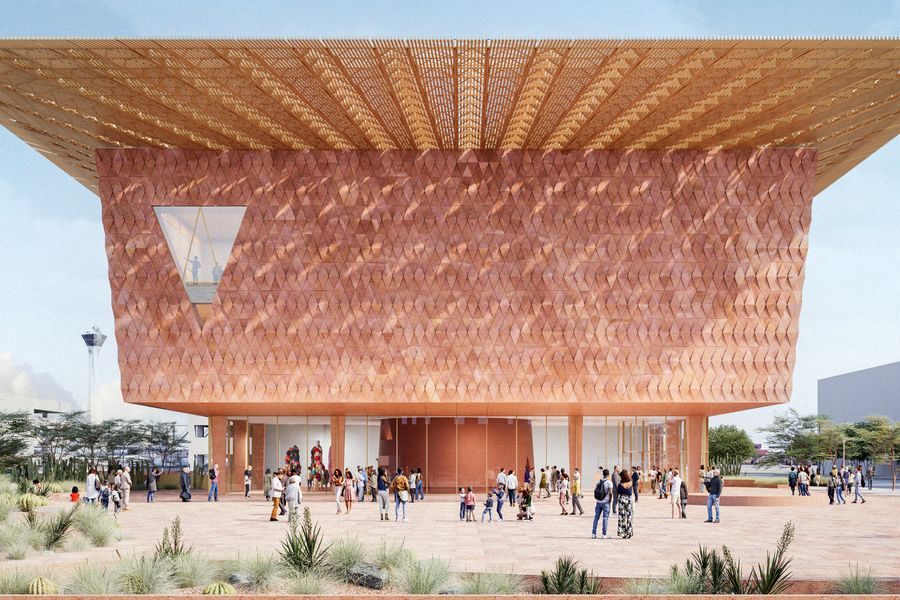
Rendering of the Las Vegas Museum of Art, currently under construction.
Photo: Kéré Architecture
The Berlin-based Kéré may be the architect most admired by those who have never seen his work in the flesh. He became internationally famous (and won a Pritzker Prize) primarily for a few school buildings he designed for Gando, his home village in his native Burkina Faso, but his portfolio now includes large-scale projects like the library he’s designed for a new planned neighborhood in Rio de Janeiro, an intriguing combination of cultural architecture and urbanism.
Kéré has developed his sensibility by spanning radically different worlds. In Gando, he imported his knowledge of European concrete to harden rammed-earth blocks that villagers could fabricate on their own. The ancient stack-effect techniques he refined to suck the brutal African heat up through the ceiling and keep the air flowing through classrooms will help cool the Las Vegas Museum of Art, a large stone basket with a cantilevered canopy like a wide-brimmed, rectilinear sombrero. The experience of Gando will also enrich a timber day-care center now going up on a noisy street in Munich. His first U.S. project, completed in 2019, was the Xylem Pavilion, an open-sided forest of hanging logs designed for an arts center in Montana, which demonstrates just how deft he is at creating a small but profoundly moving space out of the simplest elements.
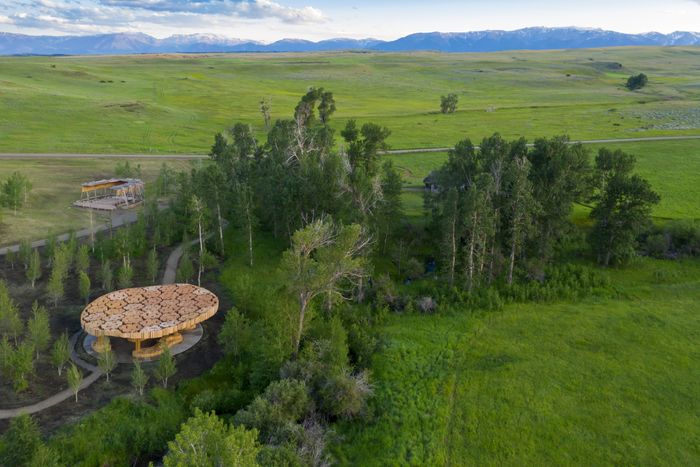
Keré’s Xylem Pavilion in Montana.
Photo: Iwan Baan
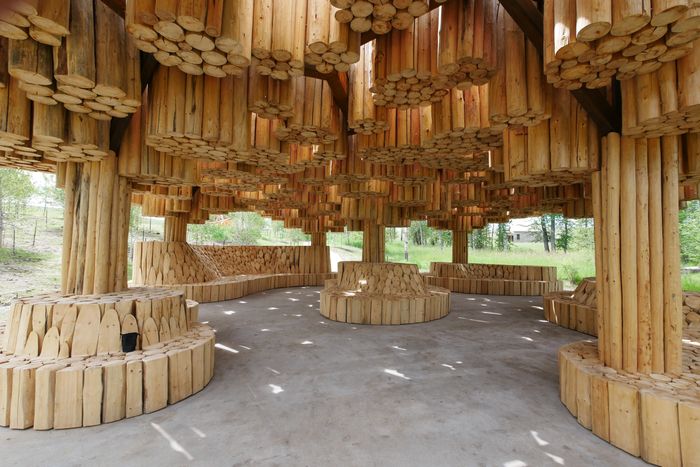
Inside the Xylem Pavilion.
Photo: Kéré Architecture
Given how smoothly he has been able to bridge the rural and metropolitan parts of his life, there’s something karmic about the notion of him making his New York debut with a visitor center for a farm museum in the heart of Queens. Details about the project are scant, but for someone like Kéré, that provisional vagueness would represent an opportunity. Few architects are better qualified to connect today’s city kids with their agrarian heritage.
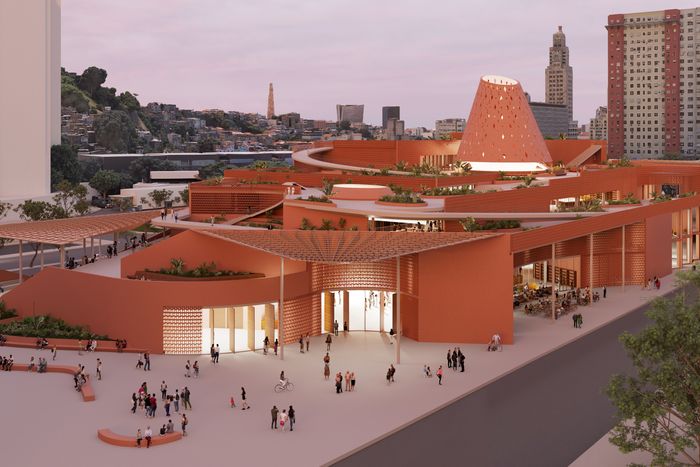
A rendering of the Biblioteca dos Saberes in Rio de Janeiro, currently under construction.
Photo: Kéré Architecture
Country: Japan
Firm: NAP
Project: Bloomingdale Library and Affordable Housing
Client: EDC
Budget: TBD
Scale: Tower complex on a 46,000-square-foot lot
Location: West 100th Street, Upper West Side
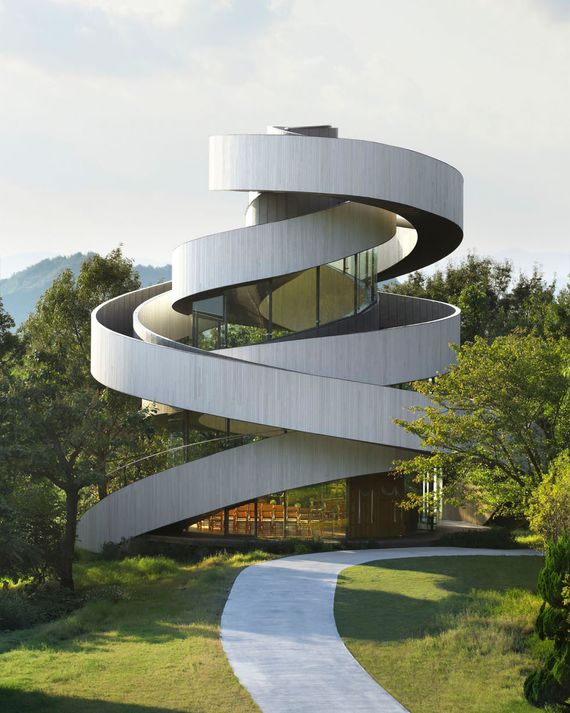
Nakamura’s Ribbon Chapel.
Photo: Nacasa & Partners Inc.
Contemporary urban construction is often as specialized as a hospital’s medical staff: One set of experts designs the façade, another fits out the interiors, a third greens the plaza out front. Nakamura, who works almost exclusively in his native Japan, smooths over those divisions, creating reverent, porous structures that open to the landscape or curl in on themselves in repose. His Ribbon Chapel at a wedding venue in the southern port city of Onomichi consists of two intertwined curls of staircase that rise up in a double helix above the guests; the bride descends one, the groom the other, until they meet at the altar. In a roadside brewery in the zero-waste village of Kamikatsu in Tokoshima, the pub’s triple-height seating area looks like a collage of windows in every size, affording a vertical panorama of mountains.
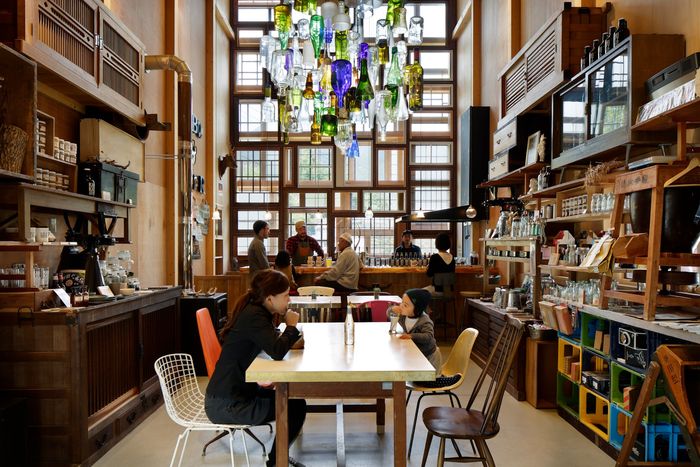
Kamikatz Public House, a brewery by Nakamura.
Photo: Nacasa & Partners Inc.
Nakamura is masterful at setting buildings in the countryside, but he also manages to incorporate nature into the dense urban weave of Hiroshima. In the Optical Glass House, he placed an indoor arbor right up against the sidewalk, shielded from street noise and pollution by a wall of custom glass blocks. Residents look out at the city as if through a sheet of falling water. Even when working on a large scale and with intense technical demands, such as at Tokyo’s Haneda Airport Terminal 2, he maintains a sense of delicacy and detail.
Nakamura designs for lingerers. His control of calm is just what’s needed for a New York library. Although the Bloomingdale branch now occupies its own (recently renovated) two-story building and shares a forecourt with a health-department facility, both buildings will eventually be razed and replaced by an affordable housing complex. If the design takes New York’s fallback course, the library could be swallowed into a plain brown box. Nakamura might be just the right antidote to business as usual, a designer capable of giving a crucial community space its own quietly poetic identity.
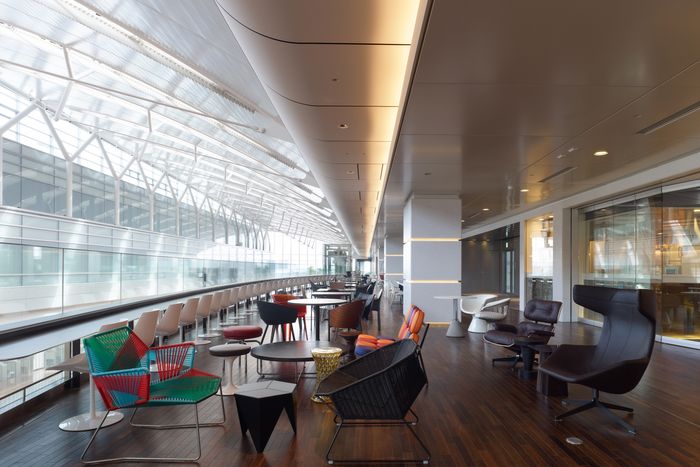
Haneda Airport.
Photo: Daici Ano
Country: Lebanon/France
Firm: Lina Ghotmeh Architecture
Project: 100 Gold Street
Client: EDC and Department of Housing Preservation and Development
Budget: TBD
Size: TBD
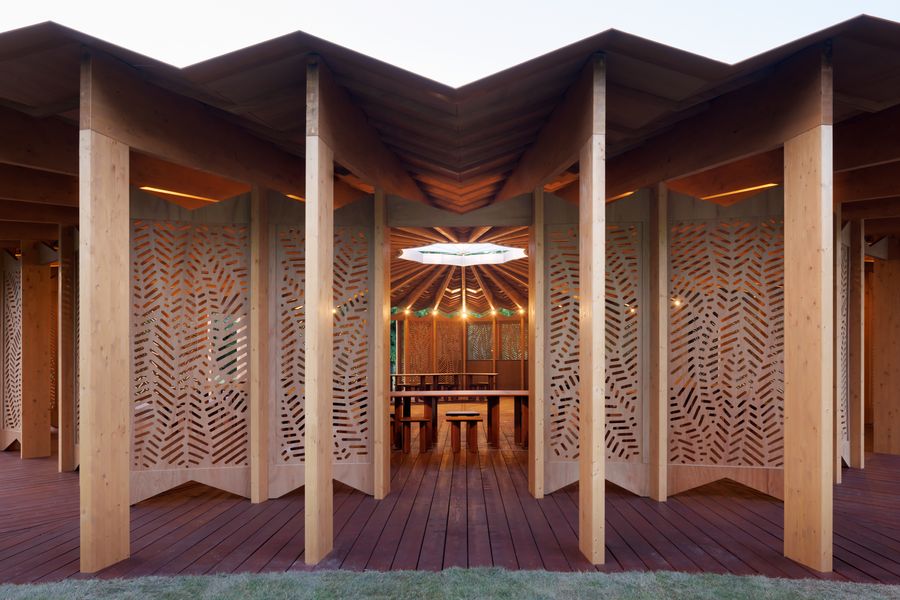
Ghotmeh’s Serpentine Pavilion.
Photo: Iwan Baan
Ghotmeh leaped several reputational rungs when she was commissioned to design the 2023 Serpentine Pavilion in London and produced a ravishing timber-frame rosette as a gathering room. It’s the sort of precious one-off that can present an architectural aesthetic in distilled form, freed from the constraints of plumbing, commerce, and protesting neighbors. Then she swung toward maximum logistical complexity when she won the competition to overhaul the British Museum, giving it what director Nicholas Cullinan has called “a complete holistic transformation, top to bottom, inside out,” with a budget north of $1 billion. Although details are still scarce, the project is not about plunking a new architectural icon down in Bloomsbury or competing with Norman Foster’s great glass dome. Rather, it’s about excavating and reassembling the guts of an immense complex to bare its history as well as its treasure.
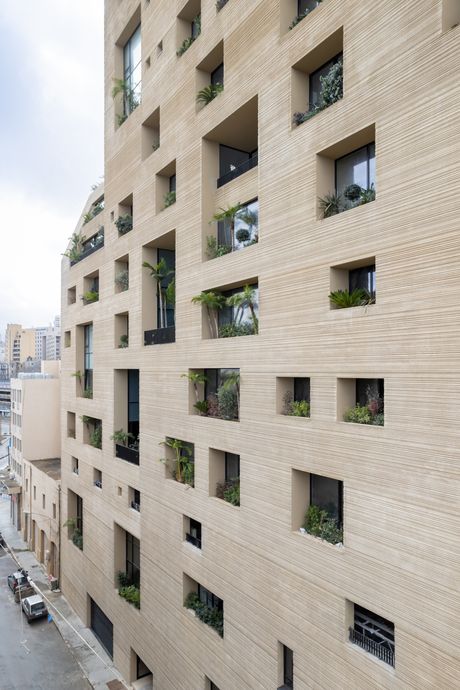
That experience will have prepared her well for the ultimate office-to-residential conversion, the project to gut and rebuild the New York City housing department’s ungainly fortress headquarters into 3,700 apartments (a quarter of them rent regulated), plus 40,000 square feet of open space and a senior center. 100 Gold Street is a less glamorous hulk than a world-class museum, but it needs an architect with a sense of how destruction and construction mark each other without either needing to obliterate the other. Ghotmeh’s Stone Garden in Beirut expresses the feeling of a city familiar with the violence of demolition and the excitement of rebirth. The apartment building is a kind of lived-in memorial, a tough but graceful tower scored with grooves and pocked by windows and balconies of various sizes, asserting its right to elegance.
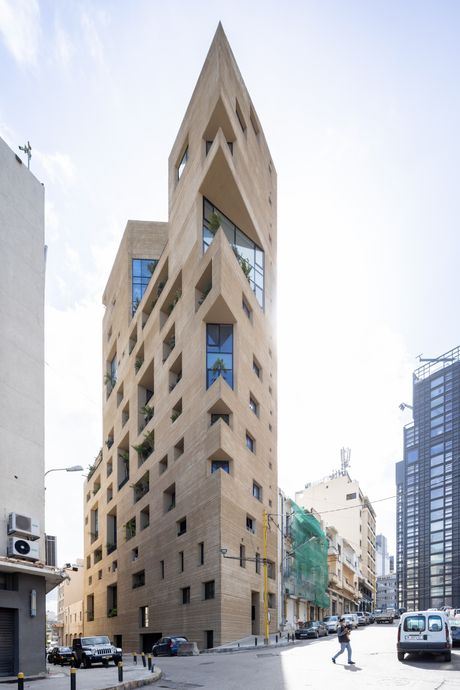
From left: Ghotmeh’s Stone Garden tower in Beirut. Photo: Iwan BaanPhoto: Iwan Baan Photography
From top: Ghotmeh’s Stone Garden tower in Beirut. Photo: Iwan BaanPhoto: Iwan Baan Photography
Country: Iran/U.K.
Firm: Farshid Moussavi Architecture
Project: Brooklyn Marine Terminal
Budget: $3.5 billion
Size: 120 acres
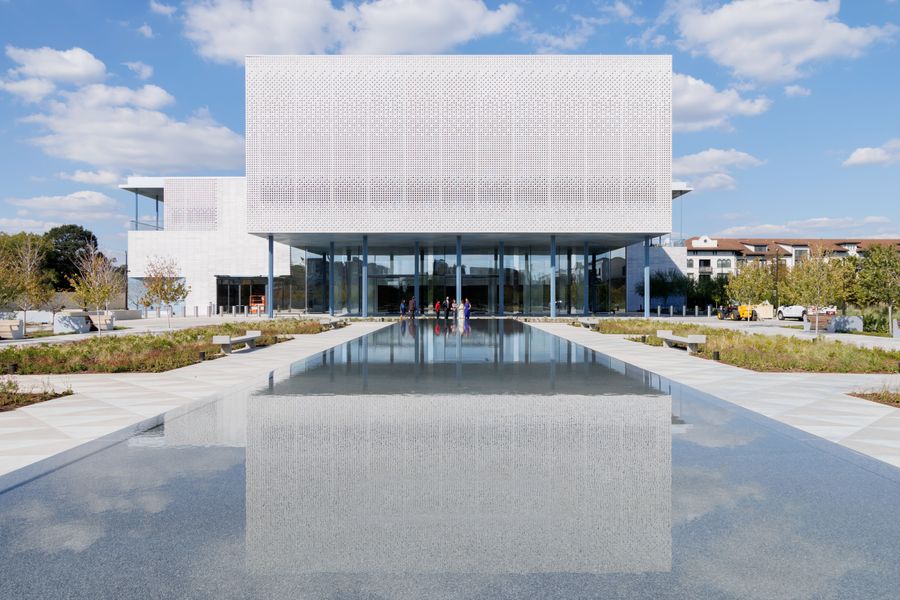
The Ismaili Center in Houston.
Photo: Iwan Baan
Moussavi’s first major building in the U.S., the Ismaili Center in Houston, is both delicate and monumental. It presides over its own acropolis with an interlocking set of white modernist boxes, like a Texas flatland version of the Getty Center in L.A. Closer up, though, it becomes less austere and more sensual; its interplay of gauzy screens filter the harsh light. A stand of tall, slender columns elevates a leaf-thin canopy above an open-air rooftop café. The interplay of geometries in the atrium recalls one of the landmark fusions of modernist architecture and Middle Eastern tradition: I.M. Pei’s Museum of Islamic Art in Doha. That work of religious, cultural, and civic architecture might make her firm seem like an odd choice to turn a 120-acre waterfront site into a combination freight port, cruise terminal, and residential neighborhood. But when she was still part of London-based Foreign Office Architects, Moussavi designed the celebrated Yokohama Port Terminal. This is far more than just a transit hall for passengers on the way on or off their cruise ships; it’s a rooftop park stacked on top of a convention center, a dramatic mash-up of origami folds, ship’s hull, and undulating topography.
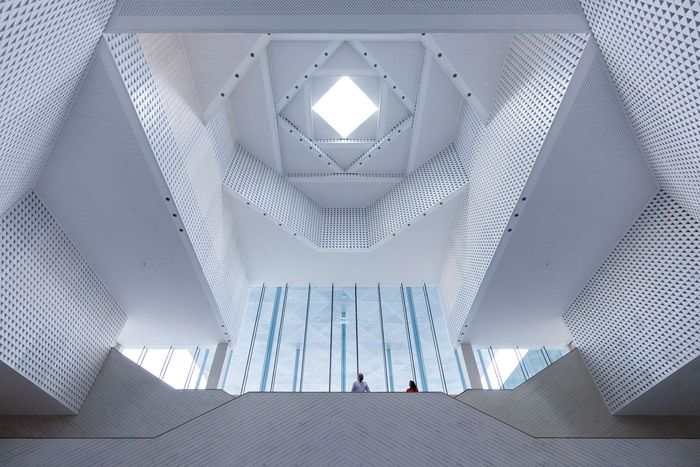
Inside the Ismaili Center.
Photo: Iwan Baan
The Brooklyn Marine Terminal needs the kind of creative eye that can follow the thread linking tiny details to a megaproject plan. The site is being divided into several parcels, one destined for a Yokohama-like building with an attached hotel, another for housing, a third for shipping perishable freight. (The terminal is now one of the city’s primary entry points for bananas.) The result could feel like an exciting extension of Brooklyn Bridge Park into a working waterfront — or it could yield a dud of cheap towers and rote esplanade. Moussavi’s track record suggests that her firm could infuse a landscape of gantries and shipping containers with some genuine musicality. You can sense the promise of that in La Folie Divine, a nine-story affordable housing tower on the outskirts of Montpellier, which resembles a stack of concrete amoebas; it’s really a cylinder wrapped with undulating balconies that offer views out to the city but not into neighbors’ turf.
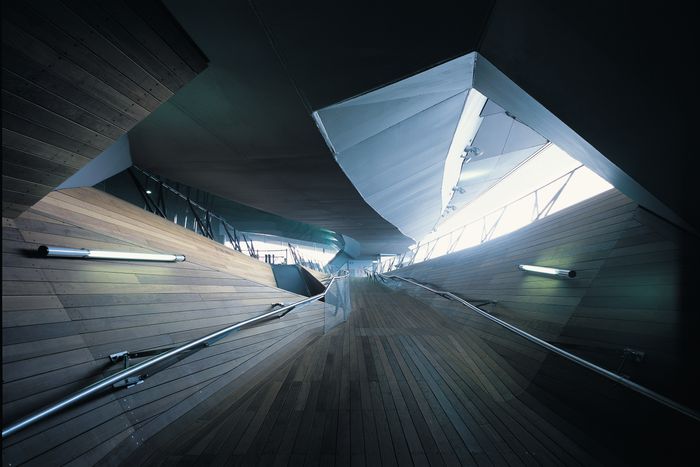
The Yokohama Port Terminal.
Photo: Satoru Mishima
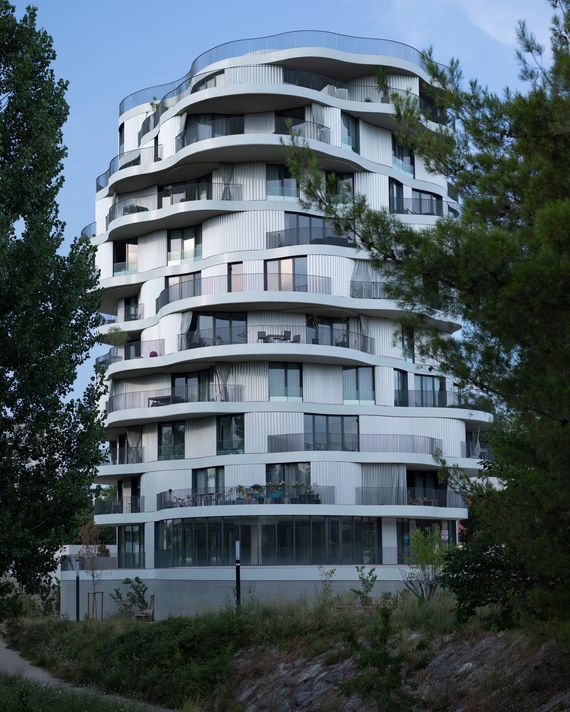
La Folie Divine, a housing project by Moussavi.
Photo: Stephen Gill
Country: Mexico and Poland
Firm: AIDIA
Project: Brownsville Recreation Center
Client: DDC for Parks Department
Budget: $240 million
Size: 74,000 square feet
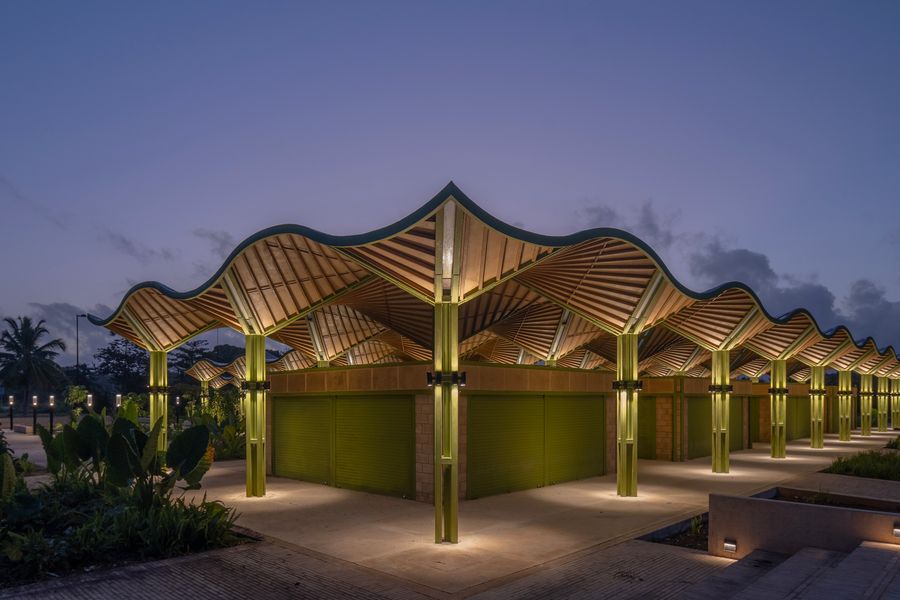
Mercado Nicolás Bravo in Quintana Roo, Mexico.
Photo: Courtesy of AIDIA Studio
One of the largest projects goes to the smallest studio, which is run by a Mexico City–based couple who are graduates of brand-name firms: Hadid, Foster, and Nouvel. They’d have to team up with some well-resourced veterans of New York public works, but they would contribute two crucial qualities: a talent for squeezing delight out of simplicity and the impulse to ennoble basic public structures. In Mexico, they turned a menu of basics — brick-hued concrete, barrel vaults, and perforated walls — into a calming community center in a Zapotec village in Oaxaca. And they protected the artisan market in the deep southern town of Nicolás Bravo (near Mayan ruins and the border with Belize) with a rhythmically undulating roof of steel trusses, clay, and concrete. Both projects prove that artistry doesn’t have to be costly; both designs had modest budgets and rich ambitions.
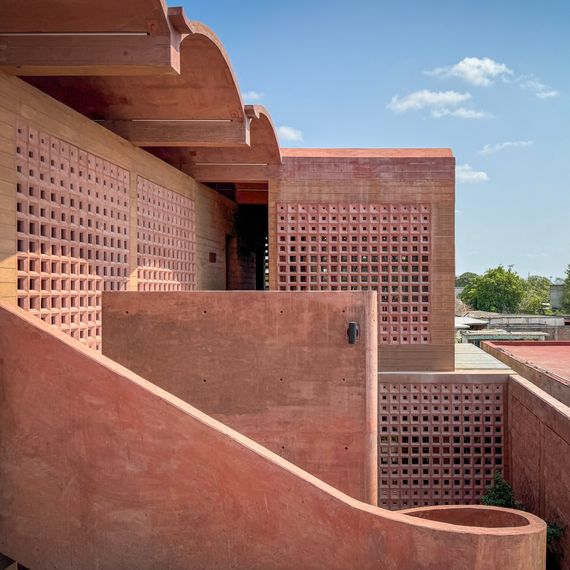
DIF Community Center in San Pedro Comitancillo, Oaxaca, Mexico.
Photo: Courtesy of AIDIA Studio
In Mexico, such straightforward, graceful structures can nurture a burble of activities: selling crafts, supervising grandchildren, serving tamales, teaching dance classes, holding political meetings. There’s no need for elaborate, high-tech designs, only a sensitivity to ventilation, shade, openness, and materials that feel rooted in local life. The Brownsville project would be a leap. The architects would have to cope with winter and pack an oddly shaped site with a dense program of leisure and sports. But AIDIA’s founders relished the challenge and quickly began sketching out an arrangement of barrel-vaulted spaces and rooftop pickleball courts shaded by a hivelike canopy. That kind of year-round protection for outdoor sports seems like an obvious plus for a city with weather as extreme as ours, but, aside from the LeFrak Center rink in Prospect Park and the basketball courts in Brooklyn Bridge Park, it practically doesn’t exist here. Even these early sketches demonstrate that they understand how to frame a gym and a pool so it’s not just an amenity but a genuine civic space.
Related