
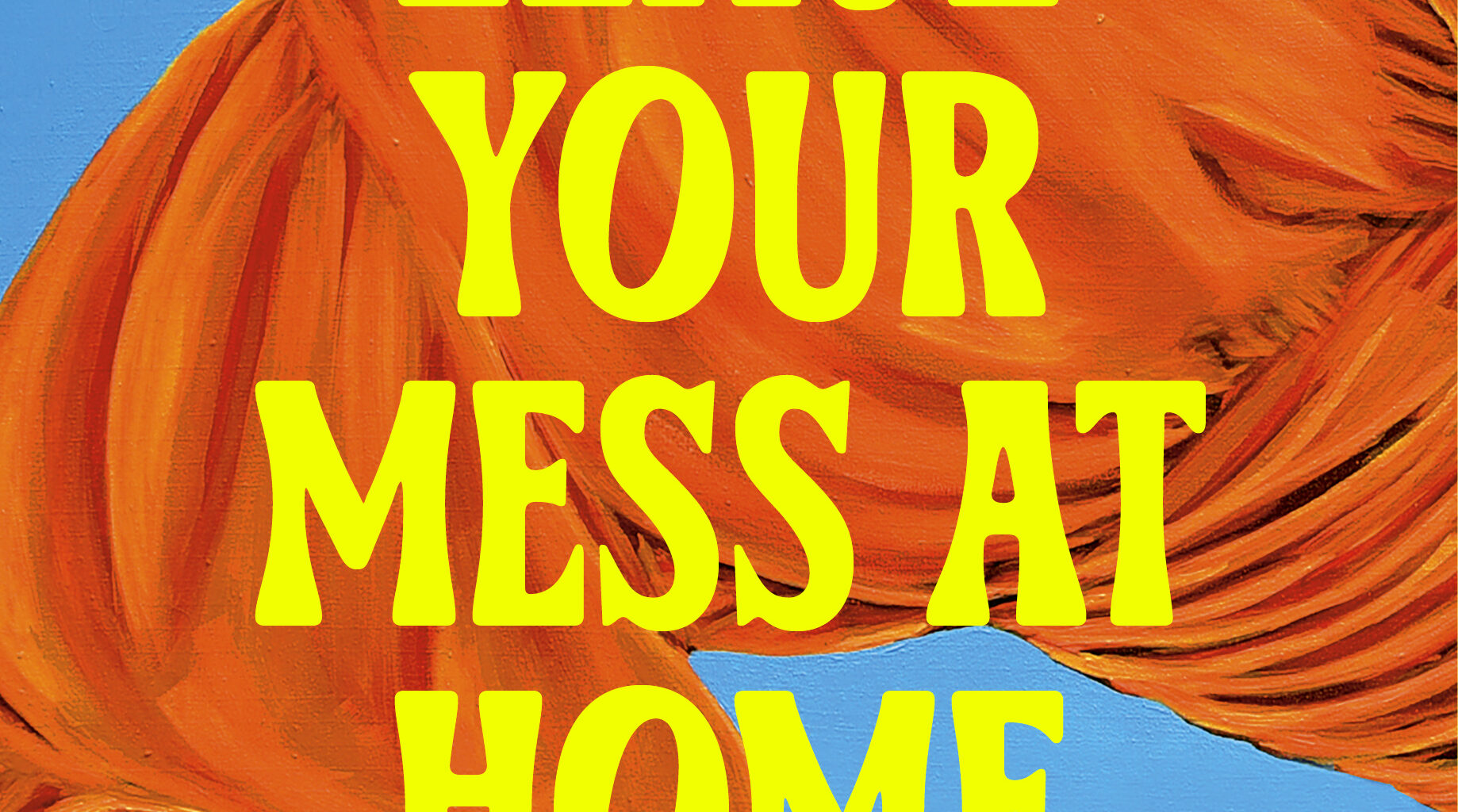
Tolani Akinola
Leave Your Mess at Home
Pamela Dorman Books, 2026
There are lessons to be learned in Tolani Akinola’s debut novel, Leave Your Mess at Home. The book, which is intimate and wide-spanning all at once, follows four adult siblings—the failed social media influencer; her brother, the soon-to-be father; his sister, the baby gay; and her sister, the girl in love with her best friend—as they each navigate coinciding turning points in their own lives. It is in this moment, and in their own ways, that all four siblings begin to look homeward—their eyes turned curiously behind them, each sibling considering the place that they left.
Leave Your Mess at Home embraces many themes, sweetly considering so much contained within the sprawl of diaspora in its meditation on a Nigerian-American family in Chicago. There is the relationship between children and their parents, upward mobility and Black capitalism, resilience as an inheritance and a burden all at once, and so much else. But its most affecting theme—and offering within—is perhaps its most obvious one: pursuit of home itself.
“It wasn’t just about finding somewhere to lay her head. It was about finding someplace where the embraces were real, where she knew that someone actually loved her.”
Akinola’s characters have all made their way to the city of their upbringing. However, these homecomings are approached with held breaths and hesitation. Each sibling carries with them an unfurling crisis that leaves them wandering, searching. It’s complicated. They carry with them troubled memories of the place where they grew up, which is complicated even further by their tangled relationships to each other. However, what the mosaic reveals to us is that despite the differences, these siblings have found themselves circling the same thing. They are all looking for a place to call home. Not a house or a city, but rather, a place where they might feel held. A place where they might rest—at last.
“‘Well. I just want to say thank you.’ Karen’s expression is sincere. ‘For every meal you cooked. For every time you dressed me up and did my hair. I never forgot.’”
In taking such an intimate yet wide-reaching approach to examining the notion of home within the diaspora, Akinola takes part in the tradition of a lineage of Black writers and artists who have done so before her. In reading Leave Your Mess at Home, I found myself thinking of the 1978 cult classic, The Wiz—a film that, for me, feels close to an answer. The movie conjures memories not too far away from those present among Akinola’s characters—memories of days spent sick and at home from school, evenings thick with the scent of my mother’s collard greens, all brought together by a unified soundtrack (music certainly plays a role in Akinola’s novel, as Lianne La Havas, A Tribe Called Quest, Sade, and more, all contribute to the soundscape of this world). In its musical climax, The Wiz posits the question kept silent in Leave Your Mess at Home: where can we find home?