
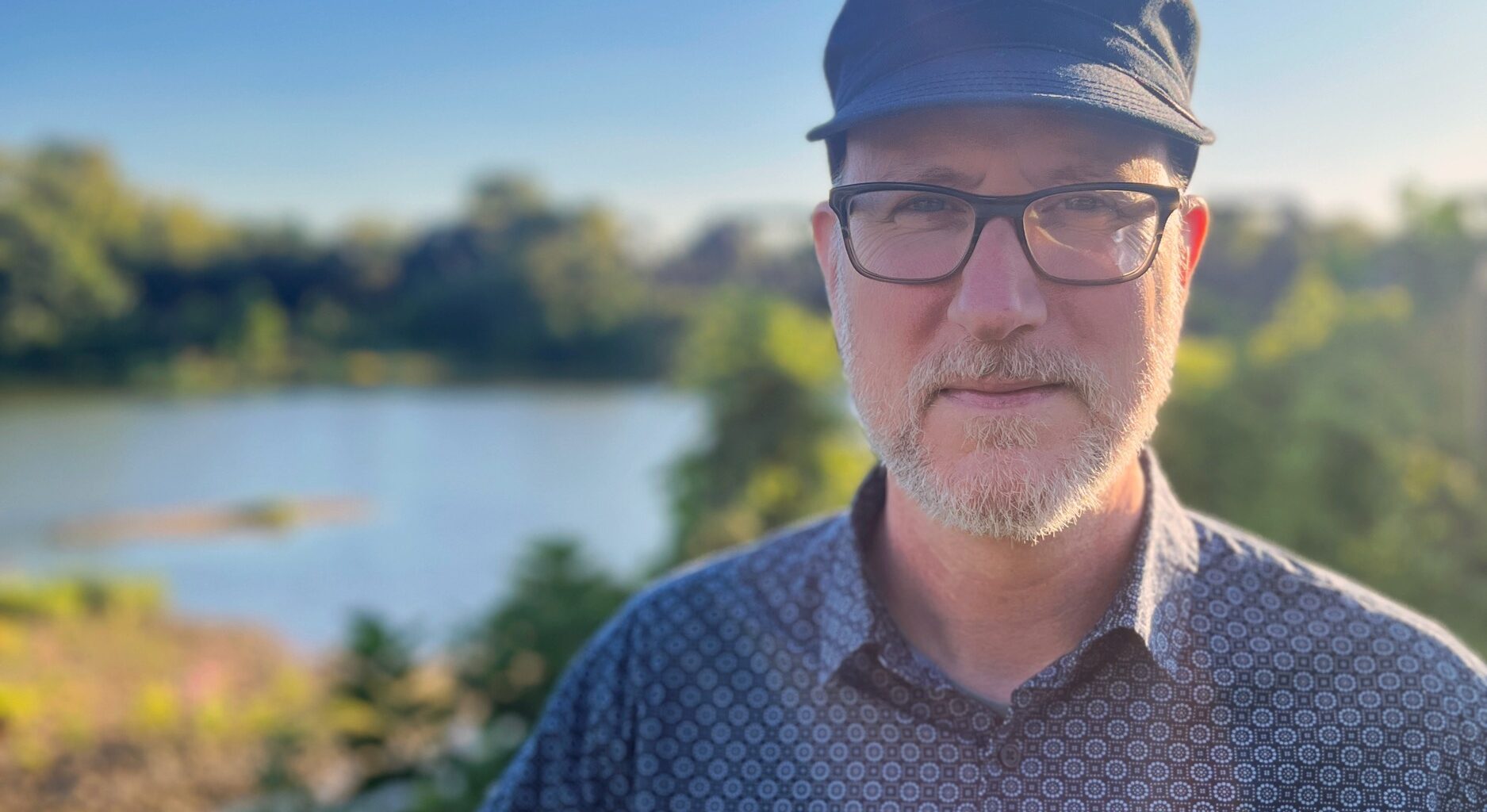
Brian Harnetty
Noisy Memory
University of North Carolina Press, 2025
Brian Harnetty is a composer based in Columbus, Ohio. Many of his works and projects begin from listening to audio—spoken word, field recordings, music—from sources as varied as small towns in Appalachian Ohio, the Sun Ra archives in Chicago, and the private tape recordings of the noted Trappist monk and writer Thomas Merton. Through a series of albums starting with American Winter (2007), and including Rawhead & Bloodybones (2015), and Shawnee, Ohio (2019)—all on Winesap Records—Harnetty fused these archival recordings with newly created musical accompaniments, opening portals between our contemporary world and the recent past. The music can be poignant sonic complements to the sampled voice, or sometimes dark, jazz-like, improvisations fittingly found on the album of folk tales, Rawhead & Bloodybones. His time spent creating music from these archives is detailed in his new book, Noisy Memory (The University of North Carolina Press, 2025). Noisy Memory is about the process of listening to and engaging with these found sounds. It is also a memoir of sorts, detailing Harnetty’s work in these communities and his own personal story.
John P. Hastings (Rail): What was the origin story of working with archives? I know you received a fellowship to work with the audio archive at Berea College in Kentucky in 2006.
Brian Harnetty: When I was doing my master’s degree one of my teachers was the British composer Michael Finnissy. He’s well known for musical borrowing but he does everything through notation. It wasn’t until I moved back home to Ohio that I thought about sampling and how sampling was that same process. I took the lessons learned from Michael and then tried to apply them to sampling. But then it raised all kinds of ethical questions for me around appropriation in particular. When I was younger, I was thinking, oh, I can borrow from whatever I want. That quickly changed, and I began to question that. So working with Berea, when I saw that opportunity, I took it. I was already working with Appalachian materials, mostly from the John Lomax recordings, nothing with permission or officially; I was just making stuff. Berea became this opportunity to have an established relationship with the archivists, with historians.
When I moved there I got to meet community members and see how the recordings were being used in Berea and Appalachia more broadly. It got me to meet the people connected to the recordings and that’s when it really hit me, the recordings themselves can supposedly contain everything, except for those human interactions. That’s what meeting the ancestors or the relatives of the people on the recordings, meeting the people who took care of the recordings or collected them, meant. Taking account of all that history opened up this whole new way of interacting with the recordings.
Rail: How did you envision something to go with those recordings?
Harnetty: If I look back to the models that I was following, Finnissy’s work is about collaging many different layers on top of one another so that those things clash. If I looked at Steve Reich, he was following the metric patterns of speech and then allowing those things to repeat, again and again. I was interested in both of those things and trying to keep more of a documentary approach and having my own ensemble play along with it. I’ve focused more and more on the storytelling part and trying to leave the recordings alone as much as possible. It became a matter of getting out of the way. Can I make the right choices with what I’m listening to in the samples? Sometimes I’m alongside, sometimes I’m in the background or sometimes I’m covering it up, so it just depends on the recordings.
Rail: One of the parts of the process I found interesting was that you gave musical materials to performers to improvise with, they would record them and send them back, and then you would manipulate those recordings to create a final score. I hadn’t heard of anyone doing that sort of thing.
Harnetty: It might come out of a personal deficit. [Laughs] I mean, there are a lot of composers out there who can just hear stuff. I can’t work that way or I don’t like what I make when I work that way. I thought, if I can have someone send me a bunch of recordings that they’ve improvised on, it would be like getting another archive and that sense of surprise and listening can happen all over again. What I started to do was I would transcribe bits of pieces that I really liked out of the archive. I would spin out small melodic fragments or harmonic fragments, and I would give those to the musicians. When they send it back, that gives me this chance to hear what they added and then collage everything together. Only after that do I make a score either to remember what I made or for performance.