
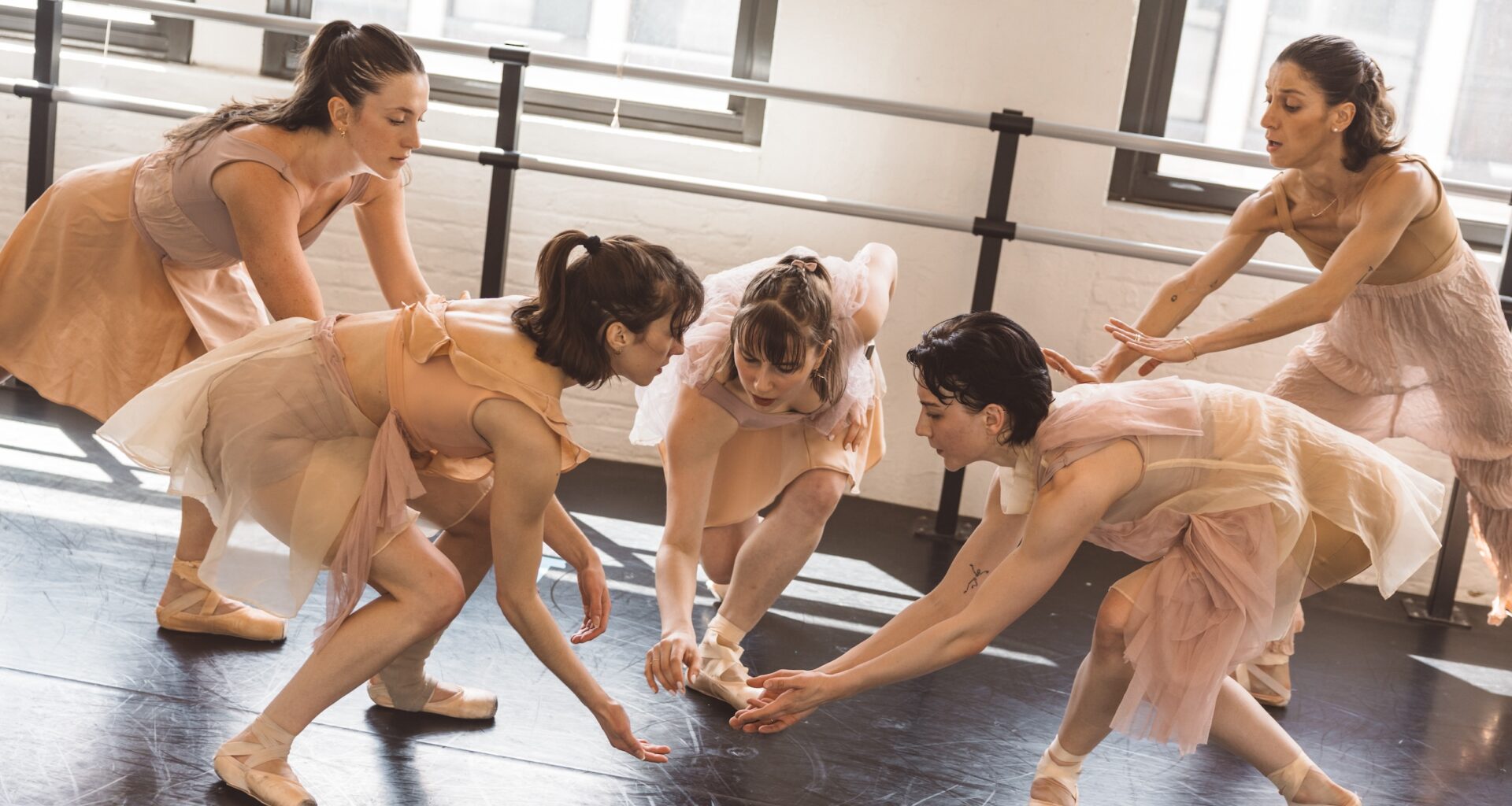
At Ballet Academy East in New York City, the six women dancers of Renversons Contemporary Ballet quickly switch between Keds, ballet slippers, and pointe shoes during a run-through of the group’s upcoming performance. In a rousing sneaker ballet, one dancer lifts another upside down, her body spiraling, while another tour jetés into her partner’s arms, as artistic director Minnie Lane watches intently from the front of the studio.
Like many project-based companies, Renversons is made up of freelancers; they have a few hours to run through the ballets and work out the kinks before their rented-studio time is up. But they dance with a single-minded purpose as they prepare for the company’s first official season. Origins, a mixed bill featuring works by Lane and Adriana Pierce, opens April 3 and 4 at New York Live Arts.
The life of an average freelancer isn’t easy, from inconsistent income and rehearsal schedules to paying for classes, health care, and other necessities that full-time companies usually provide. Many juggle multiple gigs at once and supplement their income with part-time jobs, and the nature of ballet culture often leaves these dancers vulnerable to less-than-ideal working conditions. Lane, who has herself freelanced in New York City for several years, saw how some of her friends struggled. “Freelancers are primed to be exploited,” she says. “The more I started choreographing, the more I wanted to change this.”
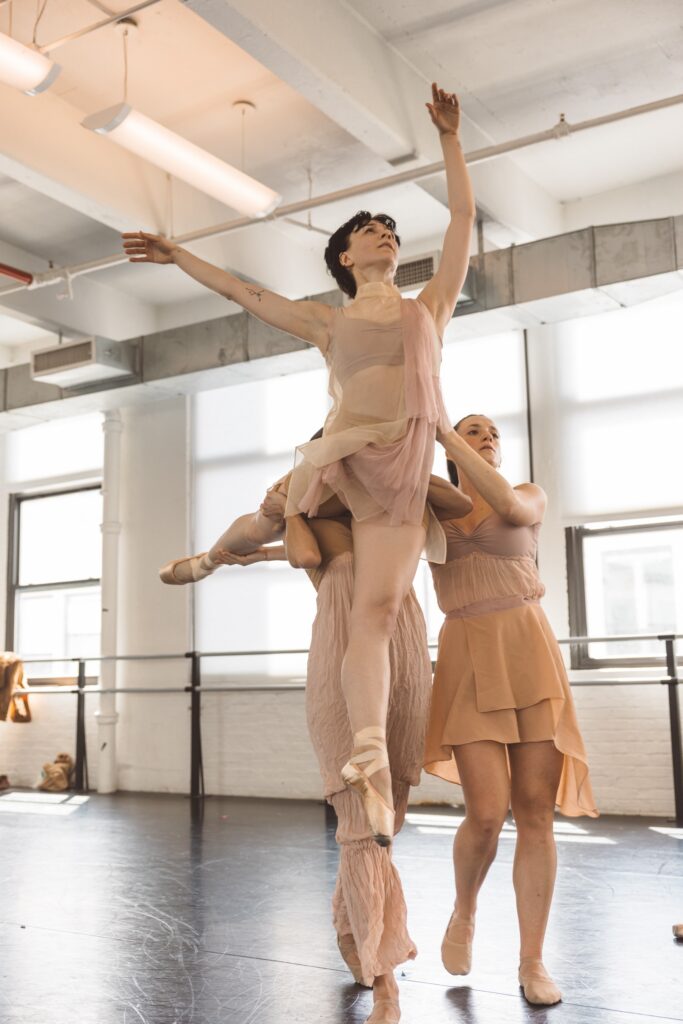 Photo by Nicole Marie Creative/Nicole DiGiovanni, courtesy Renversons.
Lane started building Renversons—a play on the step renversé (“to upset, or upend”)—last June, self-financing start-up costs. But she says she’s been researching how to create change in the dance industry for years. “I have a lot of connections, I’ve [studied] a good amount of scholarship, and I have privilege and want to use it,” Lane says. She hired associate director Rosie Elliott in August, and the pair started fundraising, drawing up contracts, and meeting with Volunteer Lawyers for the Arts to put together bylaws and a board (which Lane and Elliott insisted include a company dancer with voting rights).
Contract transparency is key, says Lane. The six dancers are paid $30 an hour, with rehearsals totaling roughly 10.5 hours a week. “If anyone gets paid differently,” she adds—for instance, if a dancer takes on rehearsal assistant duties—“we have to tell the other dancers and explain why.” The company reimburses its artists for pointe shoes and provides physical therapy. “It’s expensive, but a little goes a long way,” Lane says. “The cost of an understudy is so much more than giving a dancer access to PT.” If a company member gets injured, they’ll continue getting paid for their contracted time through worker’s compensation.
Dancers also receive free class twice a week, which Lane opens to “anybody who believes that access to class will help their freelance career,” she says. “Sometimes dancers can’t find work because they can’t afford class.” (The company had to cap the number of participants due to popularity.) Renversons’ website also includes resources for both freelance dancers and smaller, project-based companies.
As for its artistic vision, Lane says Renversons primarily performs contemporary ballet, with many works featuring same-sex partnering and queer themes. “It’s very possible for women to partner each other,” Lane says. “But it’s a learning curve and requires a lot of coordination, because you can’t rely on brute strength. Having consistent rehearsals to practice queer partnering has been game changing.”
Partnering is featured in all of the upcoming program’s works, which opens with Lane’s Recreation, a high-energy sneaker ballet to folk-inspired music. The Gallery—to an album called Electric Fields by the artists Barbara Hannigan, David Chalmin, Katia Labèque, and Marielle Labèque—follows a woman as she engages with the visual artworks she encounters, and explores how they are actually reflections of her own identity. Then in Adriana Pierce’s Kiss the Rhythm, a quartet of dancers slowly builds speed to the churning rhythms of violinist/bass duo big dog little dog. The second act features Lane’s Bury Your Gaze, a queer narrative ballet that blends elements of creation stories with the Muses of Greek mythology, to music by Jean-Michel Blaise. All works on the program feature costumes designed by Lauren Carmen.
In terms of sustaining Renversons’ company model, Lane says that though the group is primarily focused on this season, it’s actively applying for festivals and hopes to tour. “We’re aiming to have a summer and fall season, and a winter/spring season,” she says, leaving November and December free so that the dancers can book Nutcrackers and building space in the rehearsal schedules for them to take on other gigs. “The freelance community offered me community when I needed it most, and now I want to be a part of building it even more.”
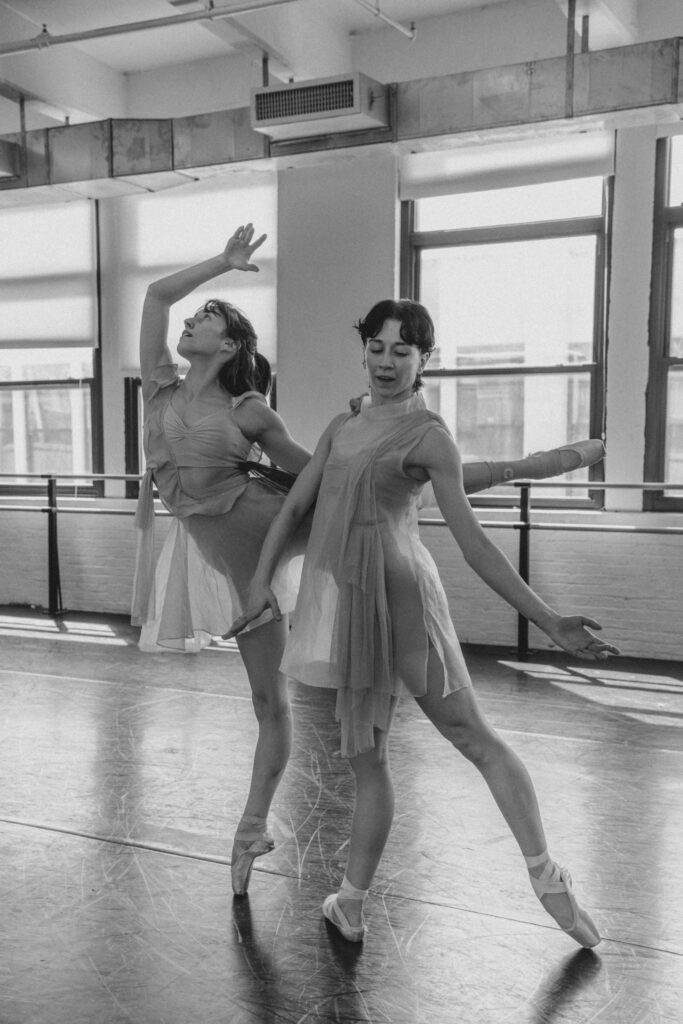 From left: Cassandra Punzo and Sara Jumper of Renversons Contemporary Ballet. Photo by Nicole Marie Creative/Nicole DiGiovanni, courtesy Renversons.