
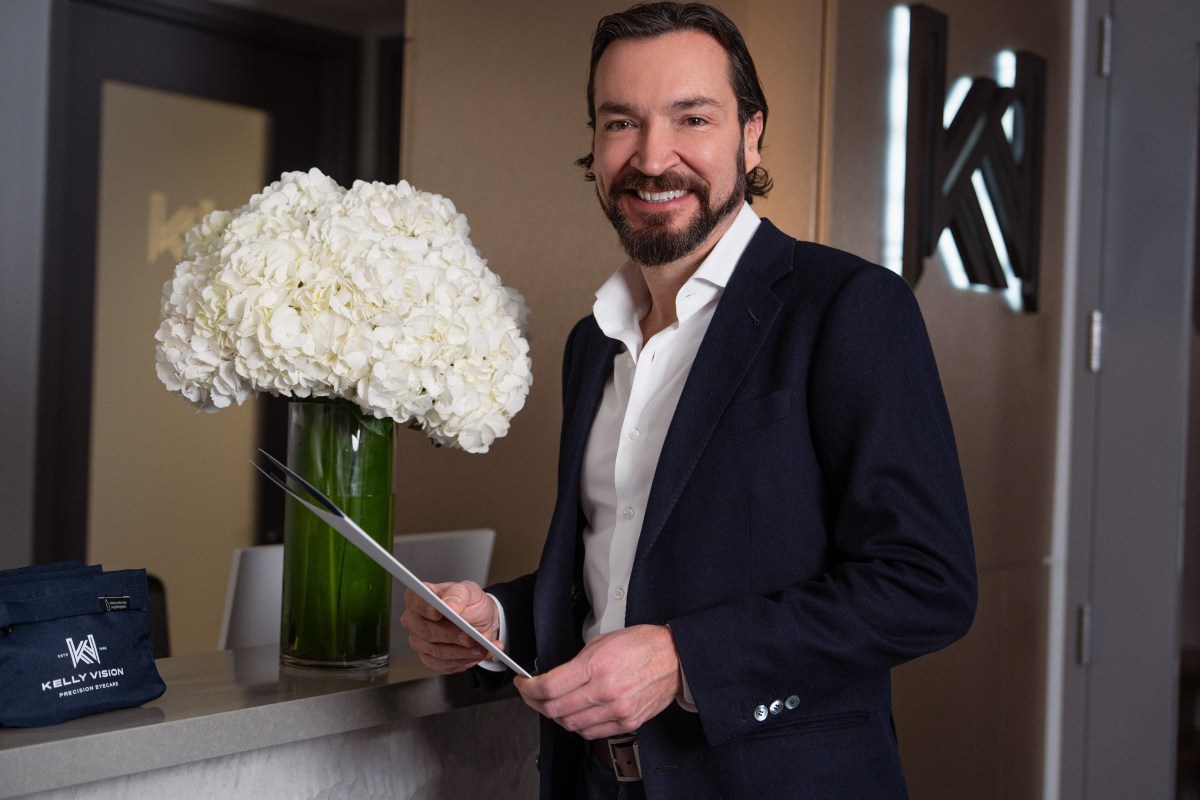
For Dr. James Kelly, a nationally recognized ophthalmologist and refractive surgeon, Manhasset has long been more than just a place to live. It is home.
Kelly, who grew up in Queens, has lived in Manhasset since 2001, raising four children who all attended local schools from kindergarten through high school. Now in their 20s, his children are even considering moving back, something he sees as a reflection of the community’s lasting pull.
“I wanted to be in a place where education is valued, that’s close to New York City but still has that strong sense of community,” Kelly said. “Manhasset was the perfect fit.”
That balance between a high-level medical career and local roots has shaped Kelly’s path. After earning his undergraduate degree from Columbia University and his medical degree from Cornell University, he trained at The Manhattan Eye, Ear & Throat Hospital, one of the nation’s leading eye surgery centers. Today, he leads Kelly Vision, with offices serving both New York City and Long Island.
Early in 2025, Kelly took on a new role as Director of Refractive Surgery Education for Northwell Health, where he trains the next generation of ophthalmologists. The position allows him to work closely with fellows, teaching a wide range of techniques used to correct vision.
“It’s important that young doctors are comfortable with many different approaches,” he said.
That philosophy extends beyond medicine. Kelly encourages young people, in the community, to pursue a broad education.
“Even if you’re going to be an engineer, you should consider study music, poetry, politics,” he added. “Having a broad-base education is important. Don’t get too narrowly focused.”
When he’s not working, Kelly enjoys spending time around town, running or playing tennis on the high school fields, grabbing a pint at Schout Bay Tavern, having a quiet reading moment at Barnes & Noble on Northern Boulevard, and enjoying an Italian meal at Cipollini in the Americana.
Looking ahead, Kelly hopes his work continues to expand access to advanced vision care, especially for older adults.
“People think it’s too late, but it’s not,” he said. “We have incredible technology now. Patients in their 50s, 60s, even 70s come in after surgery and say, ‘Why did I wait so long?’”
For Kelly, that impact of helping patients see more clearly while staying connected to the community remains at the heart of his work.
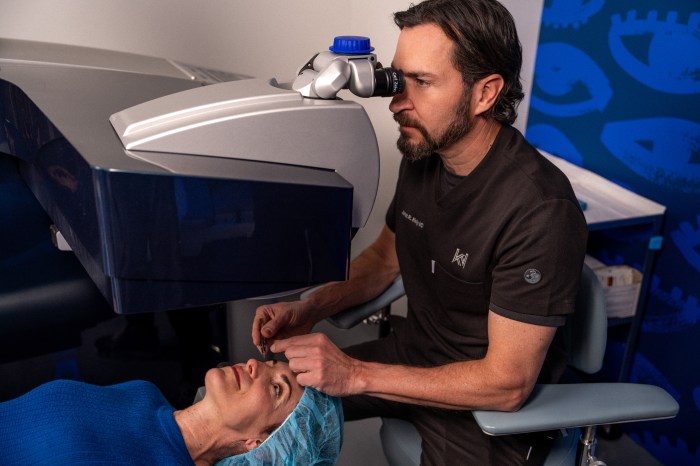 Looking ahead, Kelly hopes his work continues to expand access to advanced vision care, especially for older adults.Courtesy of James Kelly