

Photo: Kara McCurdy/Mayoral Photography Office
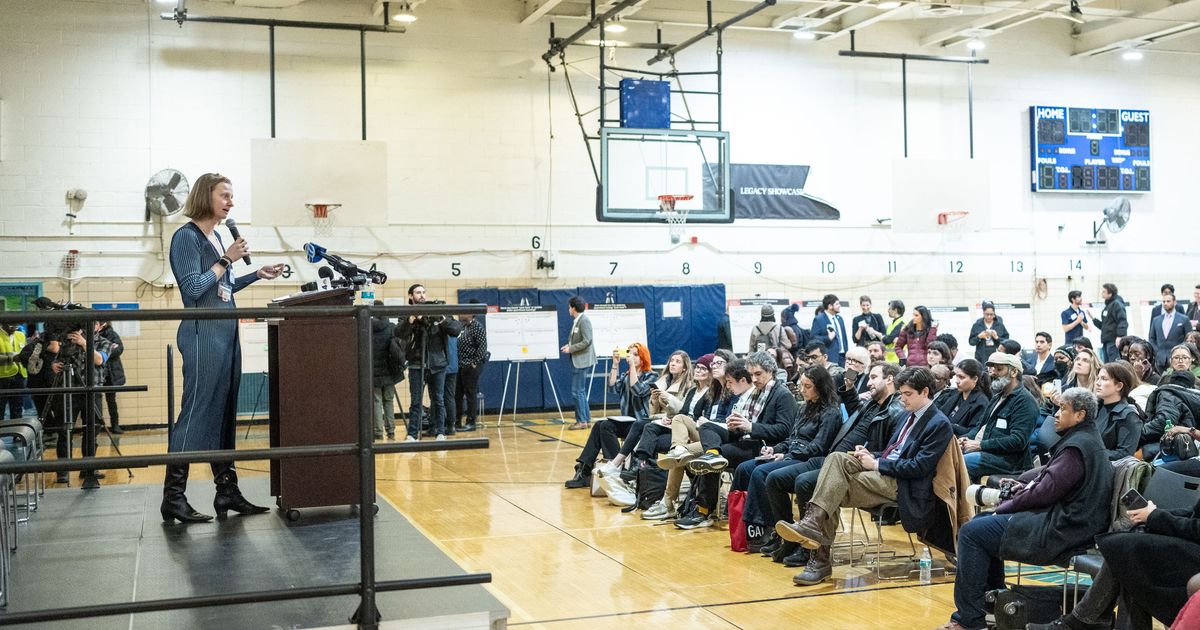
Cea Weaver is still adjusting. For one, there is calling Zohran Mamdani “the mayor” instead of his first name. “I just messed up,” the director of the Mayor’s Office to Protect Tenants says after dropping a stray “Zohran” on the first night we meet. It is also weird to have two phones. We are seated at little desks in a classroom at a Queens high school and she shows me her work phone’s backdrop, which is a photo of Mamdani, not out of professional devotion but so she can tell the otherwise identical devices apart by having her boss’s face looking back at her when she picks one up. Then there’s getting dressed, especially for events like the one she’s about to headline, the second in a series of Rental Ripoff Hearings the administration has organized to hear tenant grievances across the five boroughs: “I am spending so much money on the RealReal.” Tonight, Weaver is wearing a cropped black jacket and gray slacks — a hint of twee in the floral socks peeking out from her mary-jane heels.
While Weaver, who is 37, is comfortable enough facing the public — she was a housing organizer and minor celebrity of the New York left prior to joining the administration — she is not used to this kind of visibility. Or scrutiny. During her first week in office, the New York Post picked up old deleted tweets of hers that advocated for “seizing private property” and called homeownership a “weapon of white supremacy.” A circus erupted: Post reporters camped out in front of her Brooklyn apartment and published photos of her crying on the street under a headline calling her a “Woke, Privileged, Tenant Advocate.” (“That’s not how I would say things today,” she said of the tweets.) Since January, she’s been the subject of op-eds in The Wall Street Journal suggesting she will turn the city into Venezuela and think pieces in The Atlantic painting her as an extremist. The Daily Mail called her “anti-white” and a “hypocrite” (the latter accusation because her mother owns a craftsman-style home in Tennessee). “It was at a level of intensity that was new,” she says of the coverage.
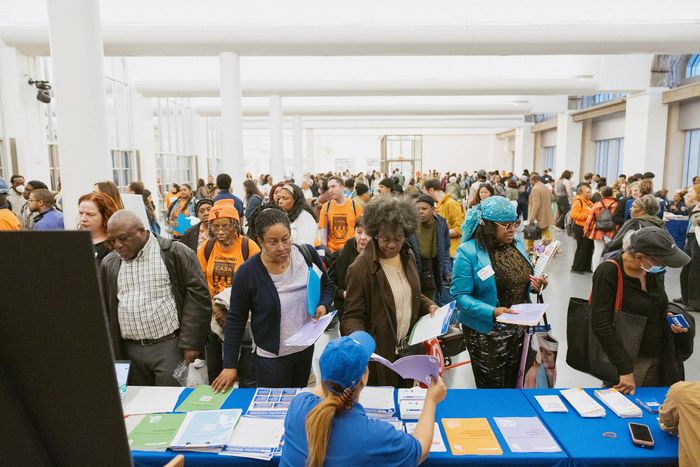
Photo: Kara McCurdy/Mayoral Photography Office
But the Academy of American Studies in Long Island City is friendly terrain. A volunteer working the event asks Weaver for a selfie. One of the tenants testifying knows her from organizing and gushes at first sight. Another is simply a fan. “I’m excited that it’s you,” a woman who sits down to testify says. “The housing czar!” Weaver is a self-described nervous public speaker. (In her previous role, “I made other people do the talking,” she says.) But as people line up to tell her about their landlord woes, she seems very much at ease. Weaver knows this part: where to direct someone who is being overcharged on rent, explaining what a tenants’ association is and what it can do.
“It feels to me like a leveling up of things that I was doing before,” Weaver says. “Not a big shift, but growth.” Talk about the name of her office and she reframes the emphasis to put it back on the tenants themselves: “The most protected tenant is an empowered tenant who’s organized with their neighbors and who knows their rights.” This might sound like sloganeering, and it is, but it’s also practical; Weaver needs tenants as much as they may feel they need her. There is a limit to how much the mayor’s office can do — like, say, compel the governor to raise taxes in order to fund a set of programs that were central to one’s campaign — but as an organizing apparatus, City Hall is an incredible pulpit. Weaver calls the city “a majority tenant town” — 70 percent of the people here do not own their homes — and knows that with those numbers comes power, if the administration can harness it. Which seems to be the basic idea tonight: part data collection, part mass catharsis event, part recruitment effort. (There are tables in the lobby set up for various government agencies and community organizations.) “The tenant-organizing stuff is not something that we’re doing because it’s nice,” Weaver tells me.“We’re doing this because it literally makes our work better and more efficient and more possible.”
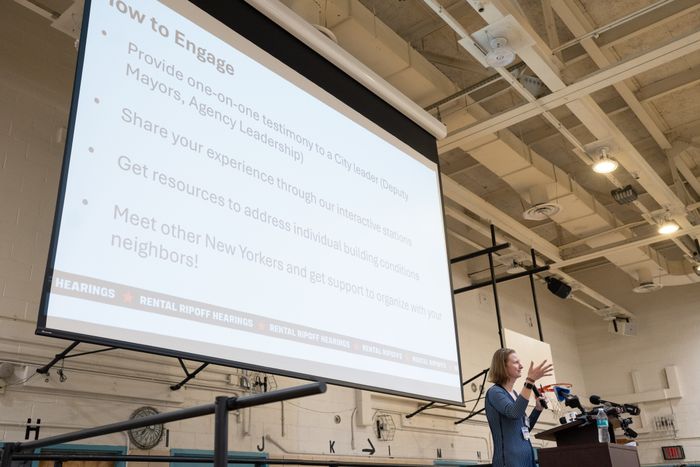
Photo: Kara McCurdy/Mayoral Photography Office
The Mayor’s Office to Protect Tenants has always felt a little like an afterthought. The first appointment Bill de Blasio made after creating it in 2019 served for just a year before being reassigned to Covid response. Then came one acting head and another sort-of head under Adams, who essentially dismantled it. Under Mamdani, it is still small (there is currently just one employee other than Weaver with plans for eight total) but clearly a priority. The new mayor is also using the office as a sort of coordinating force between different agencies, which is why there are so many other city officials at the night’s hearings. (At one point, while waiting for tenants to arrive, I see Weaver teasing Housing Preservation and Development commissioner Dina Levy about her listening skills.)
And while the short list of her predecessors in the role have mostly come from elsewhere in government, Weaver is perhaps the most well-known member of the Democratic Socialists of America to get a day-one seat in City Hall. Weaver met Mamdani about a decade ago through their involvement in the organization: She was newly out of grad school at NYU and working as a tenant organizer in Brooklyn; Mamdani was working on a DSA-endorsed candidate’s City Council campaign. But it was when Mamdani ran for state assembly in late 2019 and Weaver was leading the statewide organizing group Housing Justice for All that they really got to know one another. Weaver had just scored a historic win in Albany — passing the Housing Stability and Tenant Protection Act, which basically rewrote the playbook landlords had been using to flip rent-stabilized apartments to market rate. (For her efforts, The Real Deal called Weaver real estate’s “giant killer.”) She and Mamdani started collaborating on policy priorities — Weaver has talked about Mamdani asking her what she thought the most ambitious thing a new member of the assembly could do to protect tenants — and her housing campaigns. “I think he had a perfect attendance at all the Housing Justice for All actions,” Weaver says with a laugh.
When Mamdani announced his bid for mayor in 2024, he called Weaver again. They shared a belief in the political power of tenants and that those same tenants were generally lacking in political representation. (The last mayor who rented was Ed Koch in 1977). “I always thought that at some level there would be someone that I wanted to work for and I would want to make a transition into public service,” Weaver says. And the 2019 rent laws that Weaver helped design pretty much set the trajectory for Mamdani’s time in office. By effectively ending the speculative business model that had, for decades, turned the city’s aging supply of rent-stabilized housing into steady moneymakers, landlords were left with significant debts. Some stopped maintaining their buildings — or used the rent caps as justification for what had been a longstanding practice of not maintaining their buildings. Tenants were left to live in apartments that, in some cases, were literally falling apart.
On its first day, the Mamdani administration tried to test the power of the office by jumping into one of the biggest foreclosure cases of a rent-stabilized portfolio in history. Pinnacle Group, a billionaire-owned real-estate firm, had filed for bankruptcy on its 93 rent-stabilized buildings — many of which were falling into disrepair. The intended buyer, Summit Properties USA, had an equally bad record when it came to maintaining its properties. The administration threw its weight behind the Union of Pinnacle Tenants by trying to halt the sale and direct it toward a different buyer. It was both a Hail Mary and a declaration of intent; the results were mixed. They failed to stop the sale, but Summit agreed on spending $30 million in repairs. “There’s many ways to win,” she says. “I think there is no way that Summit would’ve been compelled to put $30 million into these buildings if it weren’t for the tactics that the city took.” It’s a little bit of a spin. But governing, like tenant organizing, is often a matter of dealing in losses, especially when you are trying to do something that is largely unprecedented (and arguably very, very hard).

Photo: Kara McCurdy/Mayoral Photography Office
There are likely more obstacles on the horizon. Governor Kathy Hochul has shown little interest in raising taxes on wealthy New Yorkers; the mayor’s threat to raise property taxes to replace that funding was wildly unpopular. (He has reportedly dropped that idea.) And the cost-saving efforts his office is making are paltry compared to the budget gap he is trying to cover. The Mamdani campaign was wildly successful at motivating tenants to vote. How do you motivate them to stay with you if you lose? “I think we have been doing our best to communicate honestly and transparently about the constraints that the city is facing without sacrificing our shared values,” Weaver says. “The most important thing is to just be clear with people what’s going on.” Another tactic the administration seems to be employing: making the things it can win — like the rent freeze that now seems within reach, or a night of organizing tenants and venting about bad landlords — major, impossible-to-ignore spectacles.
As the hearings drag on into the evening, I watch as a tenant tells Weaver how her landlord turns her heat off at night. Then another who says she hasn’t had heat for three years. People talk about leaks in their ceilings. Mold. Weaver turns to the City Hall intern taking notes to make sure she gets down the exact clause another cites in their complaint about co-ops. “People have issues in their buildings, and they need to be heard,” Weaver says. The person they think can help is seated right across from them. If that help does not come, the person they may blame is sitting there, too.
Related