
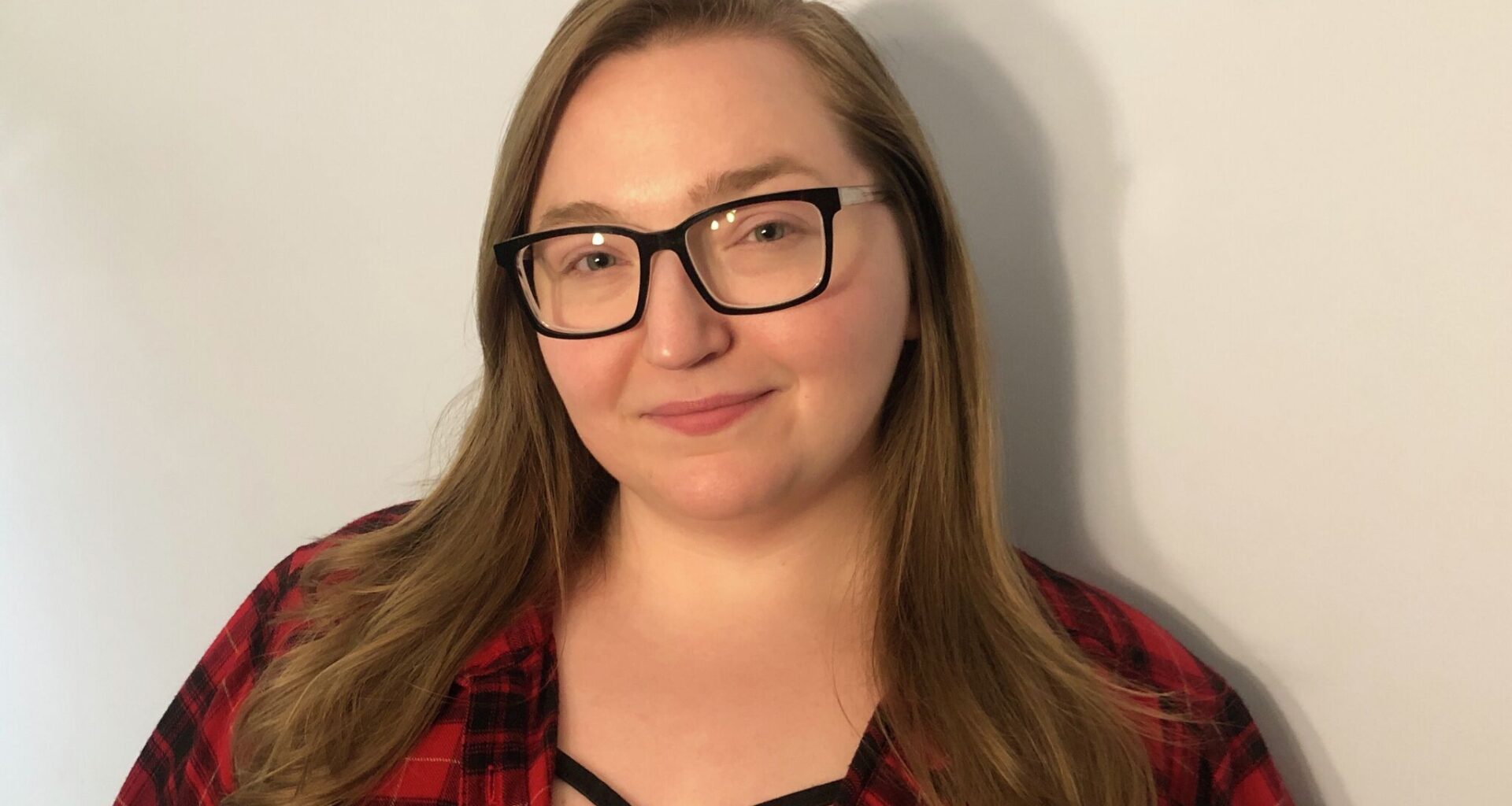
Alara Bedka said she began using marijuana at a young age. She hasn’t used it since 2016.
Lana Bellamy / Times Union
Dr. Vincent Calleo, medical director of the Upstate New York Poison Center, said unintentional cannabis edible exposures among children under six surged from single digits in 2019 to nearly 200 in 2023. He cautioned the numbers likely undercount the real toll.
Provided by Dr. Vincent Calleo
Dr. Yasmin Hurd, director of the Addiction Institute at Mount Sinai, said adolescent brains have higher concentrations of the receptors where THC binds, making teenagers biologically more vulnerable to its effects than adults.
Provided by Dr. Yasmin Hurd
Kevin Sabet, president of Smart Approaches to Marijuana, said edibles that mimic children’s snacks and 99% THC vape waxes are driving psychosis in young people at rates never seen before.
Provided by Kevin Sabet
Jonathan Purtle, an associate professor of public health policy at New York University, said comparing today’s cannabis to what previous generations smoked is “apples and oranges.” Harm can rise even if the number of users stays flat, he argued, because potency has changed so dramatically.
Provided by Jonthan Purtle
Alara Bedka was 15 years old the summer she broke a promise she had made to herself.

She had grown up in a home shaped by addiction. She had family members who struggled with alcohol, opioids and pot use.
Article continues below this ad
But that summer, the promise crumbled. She was hanging out with older kids, trying to fit in, trying to impress boys. Someone passed her a joint. She took a hit.
“For me, it started really more like a social pressure of just wanting to be cool and wanting to fit in,” Bedka said. “And I cared more about that because I was so kind of broken inside.”
Bedka’s story is not unusual.
Make the Times Union a Preferred Source on Google to see more of our journalism when you search.
Add Preferred Source
Since New York legalized recreational cannabis in 2021, a combination of high-potency products, regulatory loopholes and the broad normalization of marijuana has created what doctors, researchers, and addiction specialists describe as an escalating crisis among young people.
Article continues below this ad
Cannabis-related emergency department visits in the state have more than doubled since 2016. Poison center calls involving children who accidentally ingested cannabis-infused edibles have surged from single digits to nearly 200 in a single year. And a growing body of research links adolescent cannabis use, particularly of high-potency products, to psychosis, schizophrenia, and other psychiatric disorders.
Yet the full scale of the harm remains elusive. Experts say the data almost certainly understates the problem, because poison center reporting is voluntary, emergency room visits capture only the most acute cases, and the slow damage that high-potency THC inflicts on developing brains may not surface for years.
For Bedka, what began as a way to belong quickly became something else. She had severe anxiety that she attributes to years of trauma at home. Marijuana made it quiet. For the first time, she felt calm.
“It just took root like a weed,” she said. “No pun intended.”
Article continues below this ad
Through high school, she managed. She was an overachiever, she said, receiving academic honors and playing sports as she also ascended into leadership positions. She got excellent grades. Nobody suspected anything. In college, the escalation began. She bonded with new friends through marijuana use, then started smoking alone. By her junior year, she was in a relationship that gave her even more access to marijuana around the clock.
“I would schedule my day around the smoking,” she said. “I would be planning and figuring out, like, I got to make sure I have enough.”
In her senior year, Bedka moved off campus. There was no one to stop her. She regularly smoked all night with her friends. When they passed out at 3 am, Bedka stayed up to finish her schoolwork until 7 a.m., and then went straight to class. Though it all, she still performed, earning two degress and graduating with summa cum laude honors.
“There’s such a thing as a functional addict,” Bedka said. “Somebody who can still show up and seem like they’re doing OK in life, but inside is absolute turmoil.”
Article continues below this ad
After college, her sister died. Bedka’s marijuana and alcohol use surged. She got involved with friends who had easy access to drugs. She said things got so dark that she wanted to die.
Bedka said she got sober through a 12-step program in September 2016 and that it turned her life around. She said she will celebrate 10 years of recovery this fall.
But when Bedka looks at the world today, at the dispensaries on every corner, the vape pens, the edibles shaped like candy, the THC concentrations that would have been unimaginable when she was smoking in college, she feels something between grief and terror.
“I consider the low potency to be like my guardian angel that protected me,” she said. “Because if I had the type of issues that I had now, in today’s world, I probably would end up dead.”
Article continues below this ad
The cannabis Bedka said she smoked bore little resemblance to what is sold in New York today. The consequences are showing up in emergency rooms, poison centers and psychiatrists’ offices across the state.
‘Apples and oranges’
In the 1990s, the average THC concentration in marijuana seized by federal authorities hovered around 4%. Today, concentrates sold in vape pens and wax products can reach 99%. Edibles pack hundreds of milligrams of THC into packages designed to look like ordinary candy.
The comparison between generations is meaningless, said Jonathan Purtle, an associate professor of public health policy at New York University.
Article continues below this ad
“The amount of THC, the strength, the magnitude, is unlike anything we’ve ever seen,” Purtle said. To compare today’s products to what previous generations smoked, he added, is “apples and oranges.”
Yasmin Hurd, director of the Addiction Institute at Mount Sinai, drew a parallel to the opioid crisis: morphine gave way to heroin, which gave way to fentanyl. Each leap in potency brought exponentially greater harm. The same escalation, she said, is happening with cannabis.
“The teenage brain is one of novelty seeking, which is important for our evolution,” Hurd said. “The only difference is today, when they experiment with a drug like THC, it is not a low concentration. It’s a potent drug.”
The biology makes adolescents especially vulnerable. The brain’s cannabinoid receptors, the sites where THC binds, are present in higher concentrations in adolescent brains than in adult ones. The prefrontal cortex, which governs judgment and impulse control, does not fully mature until the mid-20s.
Article continues below this ad
“Dose matters,” Hurd said. “For all the things that are negative, they’re all about high-dose THC. And those are the main things being sold today.”
Kevin Sabet, president of Smart Approaches to Marijuana, an organization opposed to marijuana legalization and commercialization, said he is most alarmed by the 99% THC waxes used in vaping devices and by edibles that mimic children’s snacks.
“They literally look like the same name brands as Oreos and Doritos and potato chips and cookies,” Sabet said. “Kids don’t have to smoke anymore. They can get the high from these products.”
Loopholes and smoke shops
New York’s path to legal cannabis has been defined by good intentions and unintended consequences.
Article continues below this ad
The state implemented its medical cannabis program in 2016. Two years later, the federal Farm Bill legalized hemp, defined as cannabis containing no more than 0.3% THC by dry weight. New York legalized adult-use cannabis for those 21 and over in 2021.
But the legal market opened slowly, hampered by lawsuits, bureaucratic delays and early limits on enforcement. During that gap, thousands of unlicensed shops sprang up across the state to meet demand. Consumers bought unregulated products from the illicit stores, which flourished in the nearly 18 months it took New York to open the first licensed retail shop in New York City.
A separate loophole compounded the problem. The 2018 Farm Bill classified hemp as legal, and companies began using it to synthetically manufacture products with high levels of THC. Those intoxicating hemp-derived products flooded convenience stores, bodegas and gas stations. In addition, licensed hemp stores also began selling THC-infused products that regulators have alleged were unlawful.
“What the companies have been doing is using hemp and then synthetically manufacturing very high THC products out of it,” said Linda Richter, senior vice president of prevention research and policy at the Partnership to End Addiction. “That’s what a lot of kids are using.”
Article continues below this ad
Last November, federal legislation closed that loophole by shifting to a total THC standard, capping consumer products at 0.4 milligrams of THC per container. But the law includes a one-year transition period. Full enforcement does not begin until this November.
A 2025 Columbia University secret shopper study laid bare the gap: licensed dispensaries checked customer identification 100% of the time; unlicensed shops checked only about 10% of the time.
The Office of Cannabis Management has closed more than 550 illicit shops statewide and now has roughly 600 licensed dispensaries operating.
But Sabet said the illicit market remains larger than the legal one.
Article continues below this ad
“The black market actually got stronger because we had no enforcement,” Sabet said. “People need to realize, if a version of legalization is going to be even remotely effective, you actually have to do a lot of enforcement.”
A surge in emergencies
The numbers tell a stark story, even if experts warn they are incomplete.
Cannabis-related emergency department visits in New York have more than doubled since 2016, according to state Department of Health data.
Article continues below this ad
In 2024, the number dipped slightly but remained nearly twice the pre-legalization baseline.
At the Upstate New York Poison Center, Dr. Vincent Calleo has watched a different crisis unfold among the youngest patients. Unintentional exposures to cannabis edibles among children under 6 rose from single digits in 2019 to nearly 200 cases in 2023.
The number fell to 114 in 2025, but Calleo cautioned that the decline may be misleading.
Article continues below this ad
“Reporting cases to the poison center isn’t something that everyone has to do,” Calleo said. A recent study he co-authored found that hospital cases outnumbered poison center calls. “This number might actually underrepresent how many exposures are actually occurring.”
Dr. Madeline Renny, an assistant professor of emergency medicine and pediatrics at Mount Sinai, found in a recent study that substance-use-related emergency room visits among adolescents and young adults increased from 2018 to 2023, with cannabis driving much of the surge.
Purtle, the public health policy professor at NYU, said that the available data almost certainly fails to capture the full picture.
“The rates of use as a measure of success or adverse impact doesn’t make any sense,” Purtle said. The reason, he explained, is simple: “Because the potency is higher, harm can rise even if prevalence remains flat.”
Article continues below this ad
Federal survey data reflects small but meaningful shifts. Among New Yorkers aged 12 to 20, both past-year marijuana use and marijuana use disorder ticked up in recent years, according to the National Survey on Drug Use and Health.
Among New York City high school students, current marijuana use rose to 13% in 2023, up from 11.7% two years earlier.
Perhaps more troubling, the number of those who tried marijuana before age 13 grew from 4.5% to 5.2% in that same period.
‘They’re gummy bears’
In hospital emergency rooms across New York, doctors describe a pattern that barely existed a decade ago.
Article continues below this ad
Dr. Molly Boyd-Smith, a medical toxicologist at Albany Medical Center, said cannabis-related visits have surged in the past five years.
“Since COVID, since legalization in the state, the amount of marijuana associated visits I see has absolutely skyrocketed,” Boyd-Smith said. “There’s a lot of marijuana hyperemesis syndrome, which is something I had never even heard of in my training.”
Cannabis hyperemesis syndrome occurs in heavy, chronic users. They arrive vomiting uncontrollably, sometimes for days, unable to keep down food or water. The condition can cause dangerous electrolyte imbalances and often requires hospital admission and significant fluid hydration, Renny said.
Article continues below this ad
For teenagers, the most common scenario is acute intoxication from edibles. Unlike smoking, which produces a rapid high, edibles take much longer to take effect.
“They take one edible thinking it’s going to work quickly, and they don’t feel anything,” Calleo said. “So then they take more, and then all of a sudden they feel all the effects a little bit later, and it hits them pretty hard.”
These patients arrive with racing hearts, severe anxiety, and confusion.
The most dangerous cases involve young children who find a parent’s edibles. Toddlers can develop altered mental status, seizures, and breathing difficulties. Some require intubation or ICU admission.
Article continues below this ad
“A baby will eat this because they’re gummy bears and they’re delicious,” Boyd-Smith said. “They will come in with altered mental status, difficulty breathing, arrhythmias. And unless we can figure out what happened, we’re working the kids up for strokes, for head injuries, for sepsis. And it turns out that mom and dad, very legally, had marijuana edibles, but didn’t realize how dangerous they were.”
‘It can destroy your life’
Beyond the emergency room, a quieter crisis is building.
A study published in JAMA Health Forum early this year, examining hundreds of thousands of adolescents from 2016 to 2023, found that their cannabis use over the prior year was linked to significantly increased risk of psychotic, bipolar, depressive, and anxiety disorders by their mid-20s.
Article continues below this ad
A 2023 Danish study found that cannabis use was associated with as much as 30% of schizophrenia diagnoses among young men.
Dr. Gregory Bunt, a psychiatrist in Rockland County, said THC commonly produces paranoia during intoxication. In most users, it fades. But in adolescents who begin using high-potency products at 14 or 15, the psychotic symptoms can persist even after they stop.
“The correlation between the earlier age of onset and the dose is connected to the likelihood that an individual will have long-lasting psychotic effects,” Bunt said.
Hurd, the Mount Sinai neuroscientist, explained that high-THC products can induce anxiety and psychotic reactions even in people with no genetic predisposition or family history of mental illness.
Article continues below this ad
“Even in healthy individuals, if you give them THC, and the higher the concentration, even people who don’t have a risk for psychosis, they get a psychotic reaction,” Hurd said.
The relationship between cannabis and mental health runs in both directions, said Richter, who oversees prevention-oriented research projects for the Partnership to End Addiction. Young people with untreated depression or anxiety turn to marijuana to soothe their symptoms, she said. But marijuana can also trigger mental health conditions in those who previously had none. The result, Richter said, is often a co-occurring disorder: a mental health condition and a substance use disorder reinforcing each other.
Alara Bedka lived that cycle. She smoked to quiet her anxiety. But the things she said she did to get marijuana — stealing, lying, keeping dangerous company — produced shame. And the shame sent her back to smoking.
“It’s the addictive cycle,” she said. “You start doing that thing because you think it’s going to make you feel better. But then in the chase, in the pursuit of doing that thing, you do a lot of other things and (face) a lot of other consequences. And that shame and discomfort makes you need to self medicate. So you need more of that thing, and then you just go around and around.”
Article continues below this ad
Boyd-Smith, the Albany Med toxicologist, said she was a marijuana advocate before legalization. She no longer is.
“What we never saw coming was the sheer quantity and the sheer number of people who are taking marijuana,” she said. “When you have millions of people using on a regular basis, that little, minimal harm very much adds up.”
She described a current patient, hospitalized for days in a psychotic episode triggered by high-potency cannabis, now on powerful antipsychotic medications.
“From just a normal human being,” Boyd-Smith said. “That’s just something we had really, really never seen before.”
Article continues below this ad
Guardrails in place
State officials say the legal market was designed to be safer than the alternative.
June Chin, the chief medical officer at the Office of Cannabis Management, said licensed dispensaries must verify age, follow strict packaging and labeling rules, and cannot market products to young people. In the regulated market, edible products are capped at 10 milligrams of THC per serving and 100 milligrams per package.
“Most cannabis-related ED visits are preventable,” Chin said, noting the agency invests heavily in public education, works with school districts, and requires child-resistant packaging and clear dosing labels.
Article continues below this ad
Dr. Matthew Holm, a pediatrician and addiction medicine specialist in the Bronx, said legalization was the right decision for racial justice. But the commercial rollout has outpaced the safeguards.
“You see the commercialization of cannabis outpace the ability for us to make sensible, protective cannabis products that keep our young people safe,” Holm said.
Kevin Brennan, the deputy director of market analysis for the Office of Cannabis Management, said the legal market is improving. The state now has roughly 600 dispensaries, and legal prices have dropped about 20% in two years.
But even the industry’s own data shows the market is moving toward stronger products. Brennan acknowledged that higher-potency items like vape pens, edibles, and beverages are gaining market share, while flower, the traditional and generally less concentrated form, is losing ground.
Article continues below this ad
What parents can do
Richter, who studies the consequences of substance use and addiction, especially among young people, urges parents to talk to their children early and honestly, without panic or scare tactics. More important than lecturing about marijuana, she said, is addressing the problems that drive young people to use it: untreated anxiety, depression, social isolation.
“You want your kids to come to you as a parent when they have questions or concerns,” Richter, who oversees prevention research at the Partnership to End Addiction, said. “So you don’t want to make a huge deal and panic and scream and shout. But at the same time, if a 13-, 14-, 15-year-old is using marijuana, don’t just ignore it as a phase.”
Sabet, who founded the organization that opposed cannabis commercialization 13 years ago, called for THC potency caps, a ban on cannabis advertising, and higher taxes.
Article continues below this ad
“Our children have the impression that marijuana is harmless, that it’s legal, it’s good for you, it’s medicine,” Sabet said. “Our government should help educate both parents and kids about the dangers.”
Purtle, whose work at NYU focuses on public health policy, recommended using cannabis excise tax revenue to impose potency limits on the legal market, which he argued poses as much risk as the illicit one.
“Emphasis should be placed on what they can regulate and what they can control,” Purtle said.
Calleo, who directs the Upstate New York Poison Center, suggested practical steps: store products out of reach, use lock boxes, eat edibles over a sink so nothing falls where a child can find it.
Article continues below this ad
Alara Bedka has repaired her relationships with family members.
But since marijuana was legalized, she smells it everywhere: on the street, in parks, in parking lots. The vape pens are invisible. The edibles look like regular food.
She did not stop using it because she stopped wanting it.
“I love weed,” she said. “I don’t want to smell it because I don’t want to want it. I don’t want it. I don’t need it. I don’t want to have it in my life.”
Article continues below this ad
She thinks about the teenagers out there now, the ones with noisy brains and broken homes, reaching for something to make it quiet. What they will find is nothing like what she found.
“Check on the kids that are overachieving,” she said. “They’re also not OK.”