
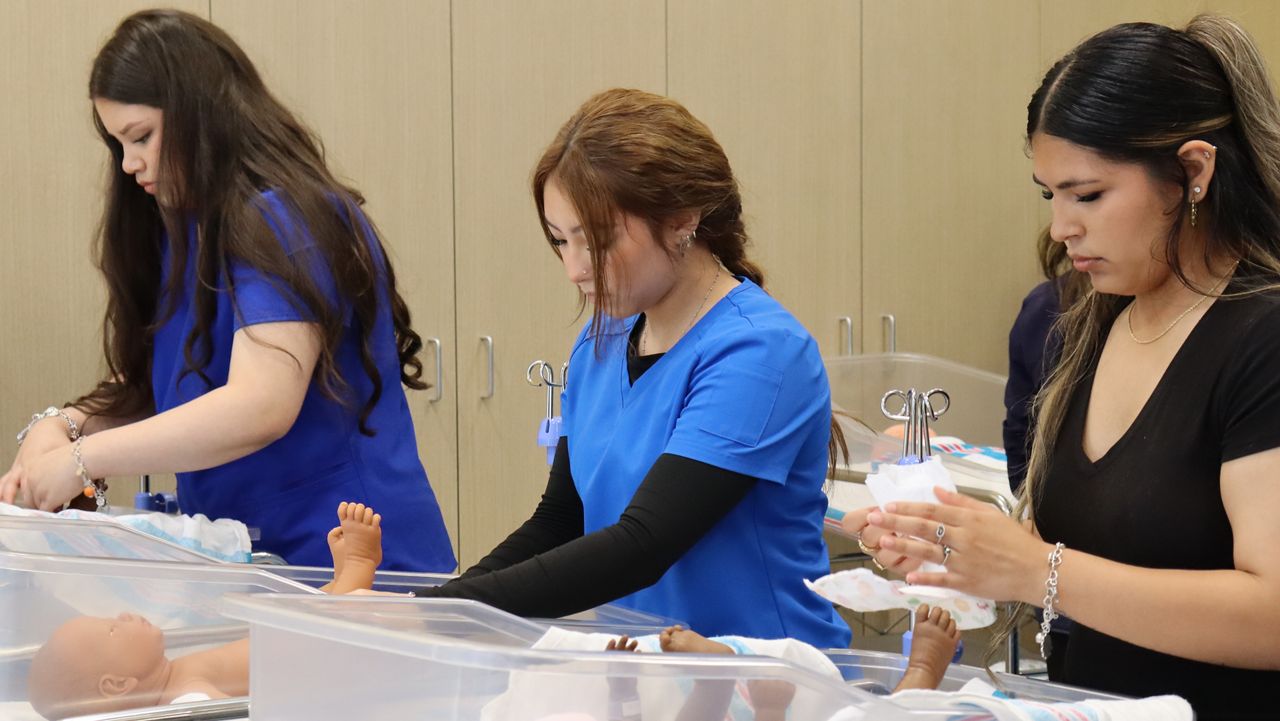
The demand for registered nurses in New York is outpacing the number of people entering the profession, as a new report by the Center for Health Workforce Studies reveals mounting barriers to training and retaining nursing talent across the state.
The state Department of Labor projects more than 17,000 annual openings for registered nurses between 2022 and 2032. The state is currently producing roughly 10,000 new nurses per year — a gap that experts warn will widen if structural problems go unaddressed.
About half of nursing programs reported turning away qualified applicants last year, citing insufficient faculty, shortages of clinical training sites and enrollment caps.
Robert Martiniano, the report’s author, pointed to pay disparities as a root cause.
“When you look at faculty salaries versus bedside salaries, there’s still a huge disparity there,” Martiniano said.
Programs have increasingly relied on adjunct instructors to fill the gap, but experts describe that approach as a short-term fix for a long-term problem. Approximately 13% of full-time nursing faculty positions were vacant in 2025, up from prior years.
The shortage is not limited to the training pipeline. The report found that bedside nurses are leaving the profession at a faster rate than before, compounding the supply problem.
The New York State Nurses Association said in a statement that working conditions are driving experienced nurses out of hospitals.
“Safe, quality care depends on enough nurses and frontline caregivers to do the job. While hospitals complain of a nursing shortage, they continue to push nurses away from the bedside by prioritizing profits over nurse and patient safety. Far too many qualified, experienced nurses are leaving hospitals because healthcare executives refuse to provide the health and safety protections, safe staffing standards, and respectful wages and benefits nurses deserve. Addressing the issue of safe staffing in hospitals requires improving nurses’ working conditions and the retention of healthcare professionals and educators.”
The consequences for patients could be severe. Fewer nurses could mean reduced hospital bed capacity, facility downsizing, nursing home closures and diminished access to care statewide.
The report calls for expanded data collection and urges policymakers to move beyond traditional incentives. Scholarships alone will not be enough to sustain the workforce pipeline, the report concluded, noting that support services such as child care, transportation and tutoring are critical to keeping prospective nurses on track.