
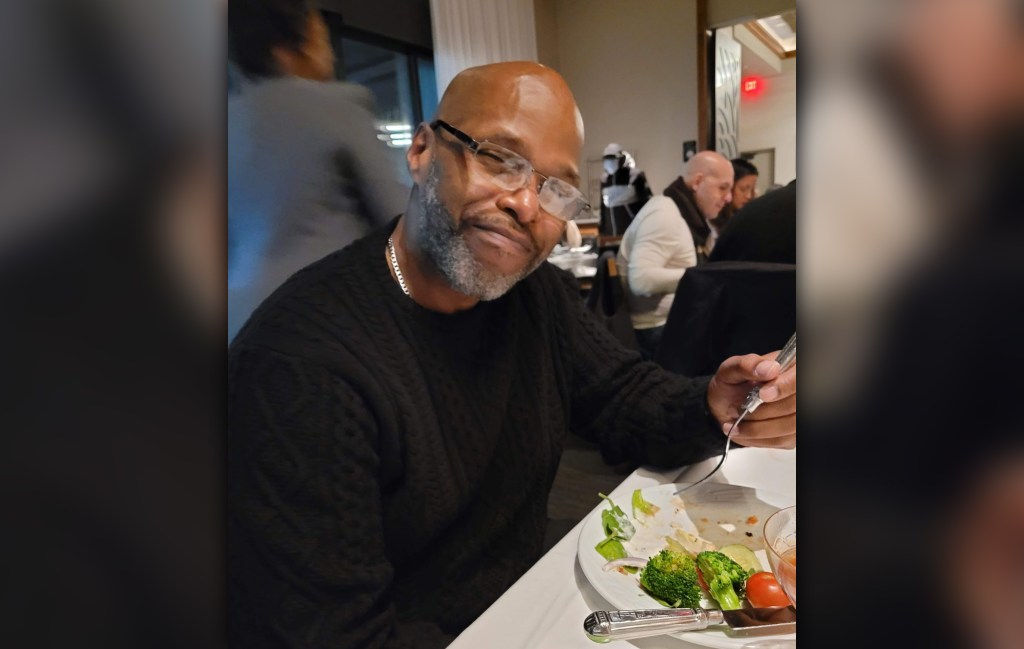
A Brooklyn man who wrongly spent 31 years behind bars for the murder of a Hofstra assistant football coach is suing Nassau County and several detectives, alleging that cops withheld hundreds of pages of police investigation notes that would have cleared him.
Christopher Ellis was 20 years old when he was coerced into confessing he shot Joseph Healy outside an Arby’s drive thru on Sept. 29, 1990, after a grueling 18-hour in interrogation where he didn’t get food, drink, sleep or a phone call, according to a federal civil rights and malicious prosecution lawsuit.
“I remember waking up the next morning after being interrogated, and it’s like, ‘Wow, these people really don’t care,’” Ellis, now 56 and living in Brooklyn, told the Daily News.
He recanted, but police in Nassau arrested him, and he was tried for second-degree murder. Despite an alibi — he was hosting his brother’s birthday party at the time, and the DJ and his brother’s girlfriend testified he was there all night — a jury convicted him, based on the confession and a single witness. He was sentenced to 31 1/3 years to life.
“My son was just born at the time. He was born in November of 1990 and I went to prison in February of ’91,” Ellis said. “So I lost all that time with him, spending time with him, watching him grow…. I lost my mother, my father, both of them passed away while I was in prison. Just lost a lot, you know, I didn’t get to really enjoy life.”
Ellis maintained his innocence in prison, and eventually learned about an “exclusion witness”, a woman who the killing told Nassau Detective Richard Wells she was present when Healy was shot, and she didn’t see Ellis anywhere at the crime scene.
The witness “recognized Mr. Ellis from the newspaper as one of the men arrested for the Arby’s shooting, and repeatedly told Defendant Wells that Mr. Ellis was not one of the men she saw at the scene of the Arby’s shooting,” according to the lawsuit.
Wells even went as far as testifying at a pre-trial suppression hearing that the woman didn’t exclude anyone in her witness statements, the lawsuit said.
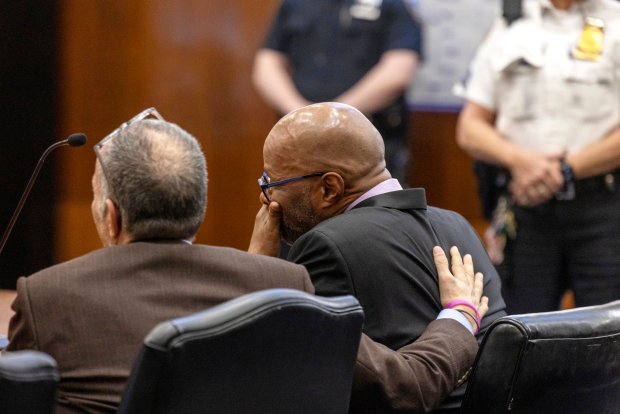
Newsday / Howard Schnapp
FILE – Christopher Ellis, the man accused of taking part in the 1990 stickup robbery where a Hofstra football coach was killed, reacts as he was found not guilty on Friday, Jan. 24, 2024 in Mineola. (Newsday / Howard Schnapp)
That revelation led Ellis to move his conviction be overturned, and in August 2021, a Nassau judge agreed, vacating the conviction and freeing him without bail.
“It’s scary that if Christopher Ellis can be convicted of this crime, then anybody can be convicted of any crime” his lawyer, Ilann Maazel of of Emery Celli Brinckerhoff Abady Ward & Maazel.
The Nassau County D.A. announced shortly after his release that they would re-try him from murder. That trial brought fresh revelations Ellis had been railroaded — “a 234-page file titled ‘Unnamed Homicide Squad investigative file,’ consisting of NCPD police notes, homicide lead sheets, arrest records, and statements by witnesses and suspects from the NCPD investigation, all pointing to additional leads and suspects never before disclosed,” according to the lawsuit.
In all, the lawsuit alleges, the reams of police documents Ellis never got for his first trial pointed to “at least eleven other murder suspects and four separate confessions.”
In January 2025, a second jury acquitted Ellis.
“After the verdict, it felt like a weight was lifted, like finally somebody was listening,” Ellis told the News.”That first jury, they didn’t listen to anything…. After that (second) verdict, it was like, finally, someone listened.”
At the first trial, the witness who fingered Ellis said Healy was eating with friends on Sept. 29, 1990 when two men approached him, one of whom pulled a gun and told them all to get up. The other man remarked, “Just do it, just do him” and then the gunman shot Healy in the face.
That witness didn’t recognize anyone from photo arrays for months, and even when two Nassau detectives, Wells and John Comiskey, went to her dorm room the following February with a six-photo array with Ellis’ face in it, she failed to ID him, the lawsuit alleges.
The two detectives brought her in for an eight-person line-up, and she only settled on Ellis after hearing him read the line, “Just do it, just do him,” the suit alleges.
Representatives of Nassau County did not return messages seeking comment Tuesday, and attempts to reach the detectives named in the suit were unsuccessful.