
Sign up for Chalkbeat New York’s free daily newsletter to get essential news about NYC’s public schools delivered to your inbox.
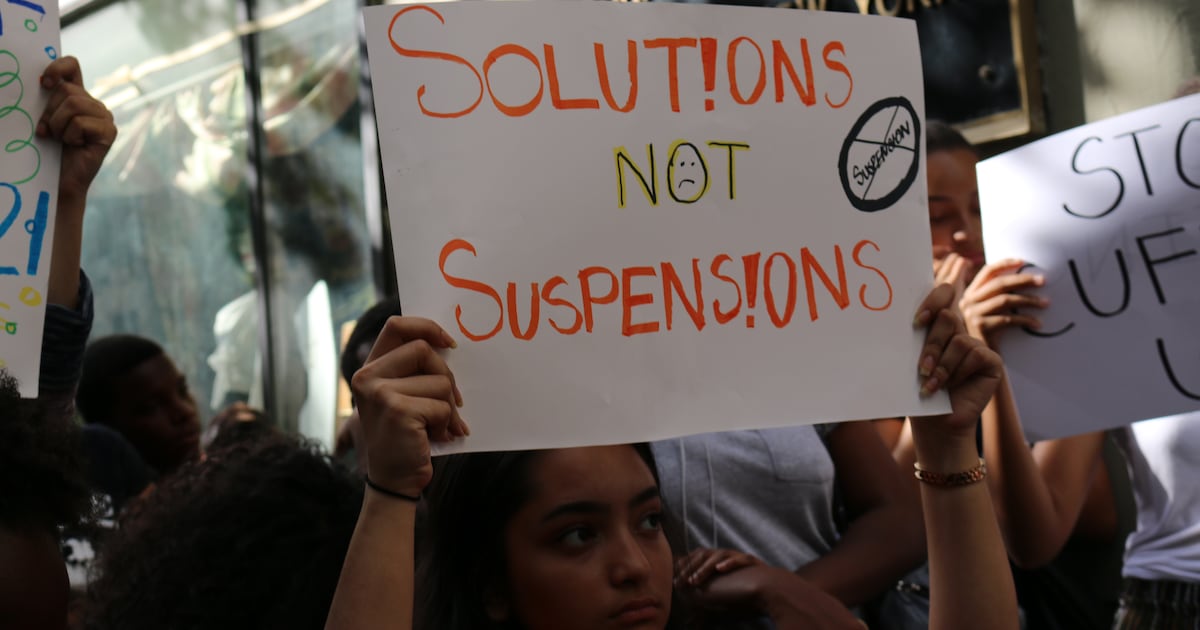
Suspensions across New York City’s public schools plunged in the first half of this school year, according to new city data released this month.
From July to December 2025, schools handed out nearly 9,200 suspensions, 8% fewer than the same period in 2024. The decline included a nearly 22% drop in long-term superintendent suspensions, which run six days or more and are served at outside suspension sites.
Principal suspensions, which last five days or fewer and are typically completed in school, fell about 5% to nearly 7,600.
Suspensions were already on the decline in the runup to the pandemic and cratered when school buildings shut down. They came roaring back after school buildings reopened, and educators raised fears that student behavior was deteriorating.
But the punishments have since steadily declined over the past two school years, falling below pre-pandemic levels. Schools handed out 27% fewer suspensions in the first half of this school year compared with the same period the year before the pandemic forced buildings to shutter. Enrollment in the city’s K-12 schools has declined about 15% over that period (the data do not include charter schools).
It’s unclear what is driving the significant drop in suspensions even as concerns about student mental health grew in the wake of the pandemic. There have not been any major changes to school discipline policies in recent years under former Mayor Eric Adams, though lengthy suspensions have drawn scrutiny. A Chalkbeat investigation found schools have routinely suspended students with disabilities for longer than legally allowed.
The decline could reflect changes in student behavior and broader social trends. (Violent crimes, including murders, shootings, and robberies, have dropped sharply.) Chronic absenteeism remains elevated, meaning students are in school fewer days on average.
We’re on a need-to-know basis.
Every weekday morning, Chalkbeat New York is bringing thousands of subscribers the news on public schools and education policy that they need to start their day. Sign up for our free newsletter to join them.
Advocates who represent families in suspension proceedings contend that investments in mental health support and restorative justice, which can include peer mediation and other approaches to resolving conflict, are bearing fruit.
“The efforts to introduce alternatives to suspensions and to use restorative practices to help lift the social-emotional well being in schools — that is taking greater root,” said Nelson Mar, an attorney at Bronx Legal Services. Still, he said “it’s really hard to say” whether there has been more subtle pressure on principals to reduce suspensions. (Multiple school leaders said they were unaware of any new districtwide efforts to clamp down on suspensions.)
Some observers feared that a new ban on cellphones in schools, which took effect last fall, could lead to a spike in disciplinary incidents. It does not appear to have caused an uptick in suspensions, at least for now.
Chyann Tull, an Education Department spokesperson echoed that the decline in suspensions reflect that “schools are increasingly using restorative practices, peer mediation, in-school counseling, and referrals to external mental health providers to respond to student needs, helping keep students engaged in their learning while maintaining safe school communities.”
Mayor Zohran Mamdani did not include funding for some of those initiatives in his preliminary budget. He did not extend $6 million in city funding for restorative justice programs. And his budget does not include $5 million to provide access to mental health clinics and other support at 50 high-need schools in the Bronx and Brooklyn, an initiative known as the Mental Health Continuum. In prior years, advocates and local lawmakers have pushed for those programs to be restored in the final city budget that is due by July 1.
Advocates are watching closely, as Mamdani has said little about how his administration intends to approach school discipline policy.
Under Adams, “they had not emphasized these programs but didn’t go out of their way to cut them,” said Mar. “It may be the same song and dance.”
Advocates have also long raised concerns about stark disparities in suspension rates; Black students and those with disabilities remain disproportionately removed from their classrooms even as suspensions have dropped. The mid-year suspension data does not include demographic breakdowns; those statistics should be available when full-year suspension statistics are published in October.
Alex Zimmerman is a senior reporter for Chalkbeat New York, covering NYC public schools. Contact Alex at azimmerman@chalkbeat.org.