
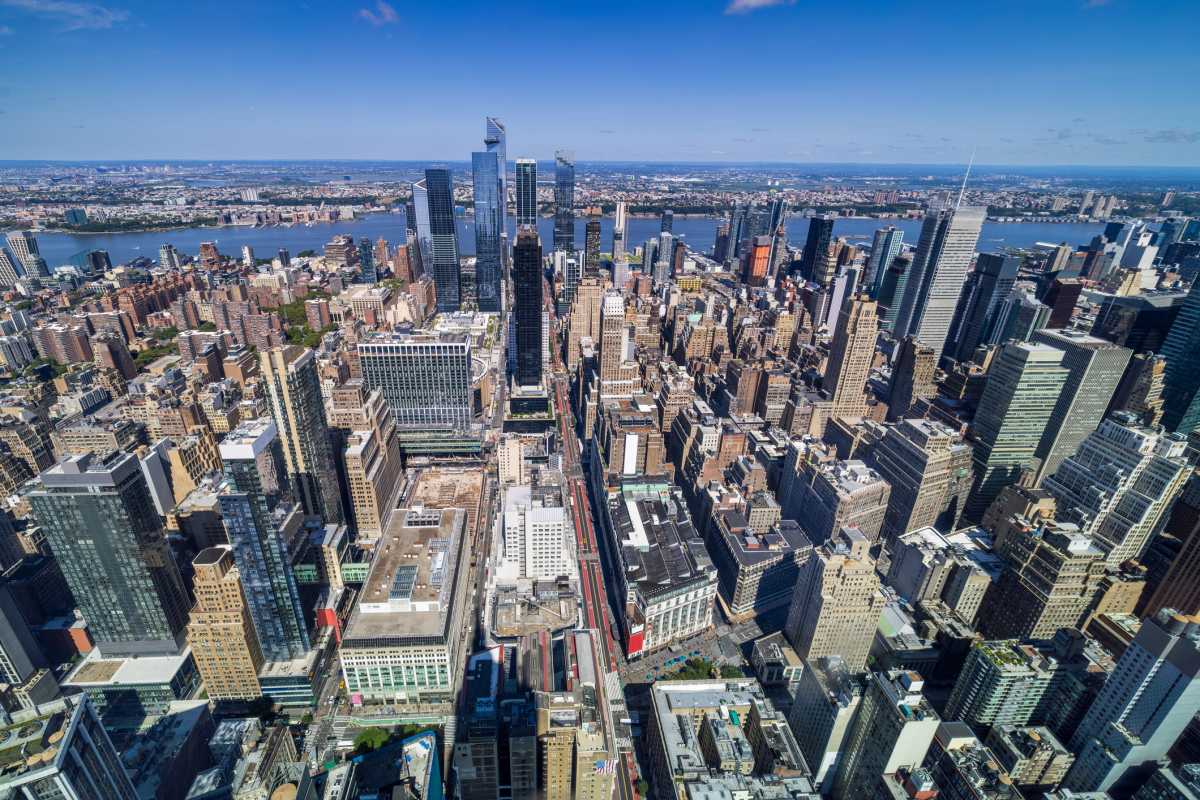
Midtown’s vacant office spaces could create thousands of apartments.
Photo via Getty Images
New York has always been defined by its willingness to build: whether it’s housing, infrastructure, or opportunity. From the Brooklyn Bridge to the subway system, from Stuyvesant Town to Hudson Yards, the story of this state is the story of people who refused to accept the world as they found it. But today, one of the very laws intended to protect our environment is too often being misused to delay or derail the projects we urgently need.
The State Environmental Quality Review Act (SEQR) was born from a noble and necessary intent: to ensure that we don’t build at the expense of our environment. The law has played a critical role in safeguarding our air, water, and neighborhoods for decades. And it is important to make sure that we have projects that fit into our existing environment. No one disputes that. Environmental stewardship is not a partisan issue — it is a responsibility we all share.
But the law, as currently applied, has drifted far from its original intent. Instead of ensuring responsible development, it has too often become a tool for obstruction weaponized to stall housing, clean energy projects, and even basic infrastructure improvements. Each delay comes with an environmental cost of its own. Every month a solar project sits in review is a month we’re burning more fossil fuels. Every year a mixed-income housing complex is tied up in litigation is a year working families go without affordable homes. This is just wrong.
In my past role as City Council Member, I was proud to champion common sense reforms that would make it easier and faster to build new housing and infrastructure in New York City — from the Midtown South rezoning for office conversions to the citywide program to boost housing in every neighborhood to a plan to build new ADA accessibility in every subway station. But outdated review requirements have added significant delays and unnecessary costs to these important projects. Projects with strong community support and clear public benefit have been mired in procedural loops that serve no legitimate environmental purpose.
The status quo is no longer sustainable. We are facing a dual crisis: a historic housing shortage and a pressing need to transition to green energy. Thankfully, there is real momentum this year to modernize SEQRA, so we can unlock New York’s potential and build the kind of housing and green infrastructure we need to succeed. That’s why the legislature must include it in this year’s budget.
All too often, SEQR is used by “NIMBY” interests – not to protect the environment, but to stall much-needed transit-oriented development and affordable housing through endless litigation. Projects that already meet stringent modern zoning and building codes are often forced to spend years—and millions of dollars—re-proving their impact in ways that add no new protections. Every year a project sits in “review limbo” is a year that rents rise, carbon emissions stay high, and construction costs skyrocket.
This isn’t about cutting corners or silencing communities; it’s about ensuring that “environmental review” doesn’t become a permanent veto for progress. Under the current law, a single person can block or delay a project.
Delays in housing production disproportionately impact low- and middle-income New Yorkers, who bear the brunt of rising rents and limited supply. Similarly, stalled infrastructure projects often mean that underserved communities wait longer for improvements they deserve — better transit, cleaner water, reliable power. For this reason, the proposals are supported by a wide range of groups, including Habitat for Humanity of New York State, Fair Housing Justice Center, and the Partnership for New York City
In the course of discussion and debate with my colleagues I have heard many good faith concerns about changes to this law. I recognize that we can make reasonable adjustments to uphold the original environmental intentions of the bill and we must be careful not to create any severe unintended consequences in any particular neighborhood. I trust the upcoming process to drive a good outcome
It’s time that New York modernizes SEQR and meets the mission to build new housing, reduce delays, and deliver world class projects. We cannot build a green future if the tools to build it are stuck in a decades-long traffic jam.
Assembly Member Keith Powers represents New York’s 74th district, encompassing parts of the Lower East Side, East Village and Midtown East.