
When Jabbar Collins got word in 2010 that his conviction for the fatal shooting of an Orthodox rabbi would be tossed and he’d be released, he made a promise to a fellow prisoner.
Collins said he’d help the prisoner, Allen Porter, clear his name for a separate double murder conviction Porter said he also hadn’t committed. The men, who shared a deep Christian faith, had become friends after meeting in the chapel of Green Haven Correctional Facility.
“You’re my brother and I’m going to keep my word and keep fighting for you,” Collins said.
Collins would receive a $10 million settlement for his wrongful conviction. But rather than ride off into the sunset, Collins would go on to open his own investigative firm, Horizon Research Services. He kept working on Porter’s case.
In January, a judge tossed Porter’s double murder conviction, ruling that prosecutors did not disclose a range of evidence, violating his rights and depriving him of a fair trial.
Collins had kept his promise.
“You have friends in prison, you’re very close, and they go home and they forget,” Porter said. “But Jabbar didn’t forget. That is so rare it’s almost unheard of.”
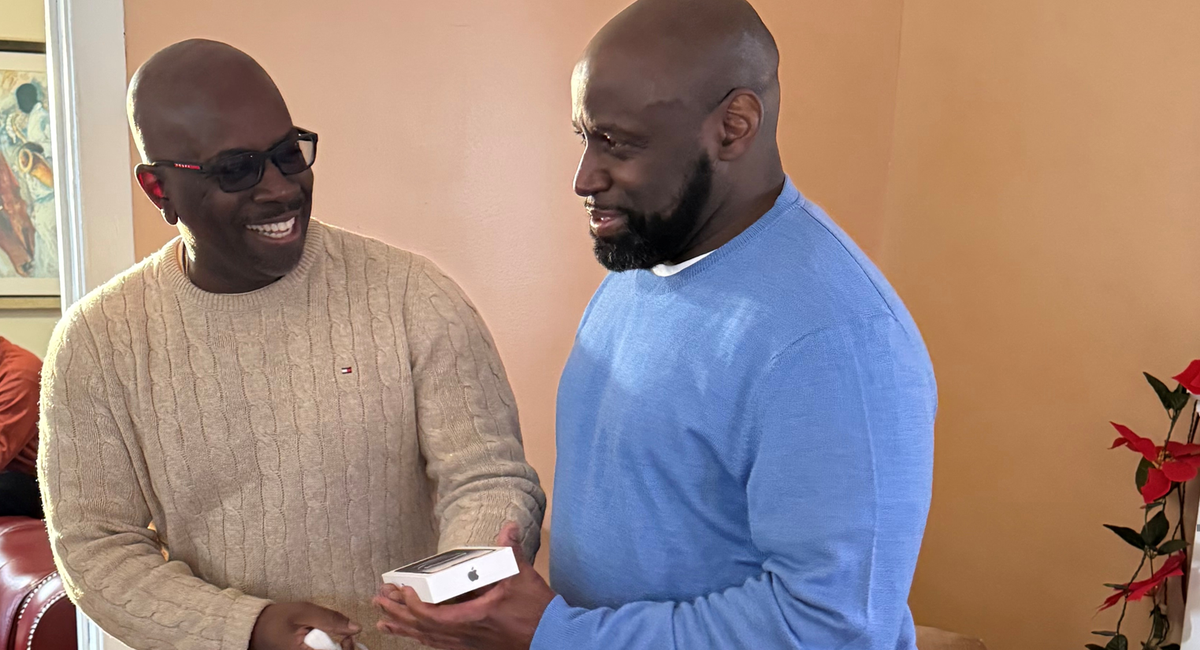
When Porter, 53, was released on bail after three decades in prison, Collins was there to embrace him.
“We both cried into each other’s arms,” Porter said.
”I’m here because of God, and if God didn’t use Jabbar, I probably wouldn’t be sitting here. I didn’t have those tools in my toolbox.”
“They fought us tooth and nail at every turn, entire arms of the government. It was difficult, tedious and heartbreaking,” Collins said. “I felt tied to Allen and his mom and so I felt every ounce of it.”
Collins, a self-educated legal expert, has been a remarkable ally for incarcerated people who say they have been wrongly convicted. Since 2013, Collins has contributed to 10 cases where a judge dismissed a conviction or reduced a prison sentence. All told, his work has played a role in $48 million in legal settlements. Collins has also contributed to several pending lawsuits.
In 1994, Collins was a 22-year-old high school dropout when he was convicted of fatally shooting Rabbi Abraham Pollack as Pollack collected rent in Williamsburg, Brooklyn. Collins was sentenced to 34 years and eight months in prison.
He said he knew prosecutors got the wrong man, and so in prison he used the state’s public records act to obtain long-hidden case documents.
Collins uncovered that prosecutors had threatened three eyewitnesses with prison, forcing them into testifying against him.
Other prisoners, including Porter, noticed Collins’ success. They came to him for help with their own cases.
Collins filed records requests for Porter’s case from behind bars and even hired a private eye to try to talk to witnesses on the outside.
Collins became a free man after a federal judge ruled the new evidence had tainted his conviction. Then came the $10 million settlement with the city.
But Collins said he developed a love for the legal process — the same process that had taken 16 years of his life for a crime he didn’t commit.
“I had left friends I cared for and I wasn’t just going to leave them behind,” Collins said. “I planned to take a year off. That lasted six months. And I love the work, the process of litigation.”
He kept fighting in court for Porter, as well as other men who said they were wrongly convicted. At times, Collins would work with a lawyer as a paralegal. In other instances, Collins would file legal demands for documents from the NYPD and district attorneys on his own.
Charles Linehan, who previously was chief of the Brooklyn district attorney’s Conviction Review Unit, described Collins as one of the foremost experts on freedom of information requests in New York.
“Nobody knows the Freedom of Information Law better than Jabbar, including lawyers and journalists,” said Linehan, who is one of Porter’s lawyers. “The guy is a force of nature.”
Collins, who does not have a law degree, sued both the NYPD and the Queens District Attorney’s office on Porter’s behalf. In 2018 — after five years of litigation — authorities turned over 2,500 pages of documents that proved critical in Porter’s case.
Collins’ list of legal victories also includes the case of Emmanuel Cooper, who served 27 years for the murder of a token booth clerk in Brooklyn during a robbery. Collins drafted the motion that showed a key eyewitness lied about having seen the shooting.
Cooper was exonerated in 2021, and later received a $10 million settlement.
“He brought the truth out, something I was trying to do for many years. To this day I can’t express how grateful I am for that man coming into my life. I can’t find the right words. I always thank God,” Cooper said.
Collins also contributed to the exoneration in 2021 of Rohan Bolt, George Bell and Gary Johnson for the 1996 murders of an off-duty police officer and a check cashing store owner in Queens.
Lawyers for the trio were able to show that Queens prosecutors under then-DA Richard Brown withheld evidence that showed a robbery crew, known as the “Speedstick Gang,” was actually responsible.
Judge Joseph Zayas wrote in his decision the prosecutorial misconduct “merited the strongest possible condemnation.” The city paid roughly $55 million in legal settlements.
“He’s a very intelligent man and he’s a very patient man. To understand the law and effectively attack the law, you have to have a strong mind. You can’t bring in emotions and you have to be very diligent in your character and that explains Jabbar,” Johnson said.
Journalist Sean Gardiner, who is writing a book about the three exonerated men, said Collins played a huge role in the case.
“Ninety-nine out of 100 people in his place would take their loot and go live the good life on an island somewhere,” Gardiner said. “But Jabbar continues to work on wrongful conviction cases. He knows too many inmates he believes are innocent and he has vowed not to forget them.”
Sixteen years after his release, Collins has a unique understanding of the criminal justice system. He said he’ll continue assisting Porter as the Queens district attorney weighs an appeal of the judge’s ruling tossing Porter’s conviction.
“In my naivete, I originally thought there were some thin lines they would never cross, and yet these DA’s offices and other agencies crossed those lines again and again and only years later you find out they were lying,” Collins said.
“Not just in my case, but in many other cases. So, it taught me you have to question everything. The average defendant doesn’t have the money. Me knowing what I know, how could I not do it?”