
✕
New York City is currently undergoing a sidewalk shed revolution. One of the more ubiquitous and unsightly fixtures of street life in Manhattan, construction scaffolding is a necessary blight that city leaders are intent on beautifying—or, at the very least, shortening its duration. Just over a year ago, the New York City Council passed sweeping, five-part legislation aiming to combat this “pervasive problem” through improved sidewalk shed design and more restrictive permit lengths. (As of last March, the average age of the more than 8,000 sidewalk sheds distributed throughout the city was over 500 days, with 334 of them being more than five years old). Additionally, in November of last year, the office of former Mayor Eric Adams unveiled six attractive new and Department of Buildings–approved pedestrian protection designs conceived by individual teams led by Arup and PAU as part of an initiative meant to “improve the aesthetic of city streets” while safeguarding the public from “potential overhead hazards.”
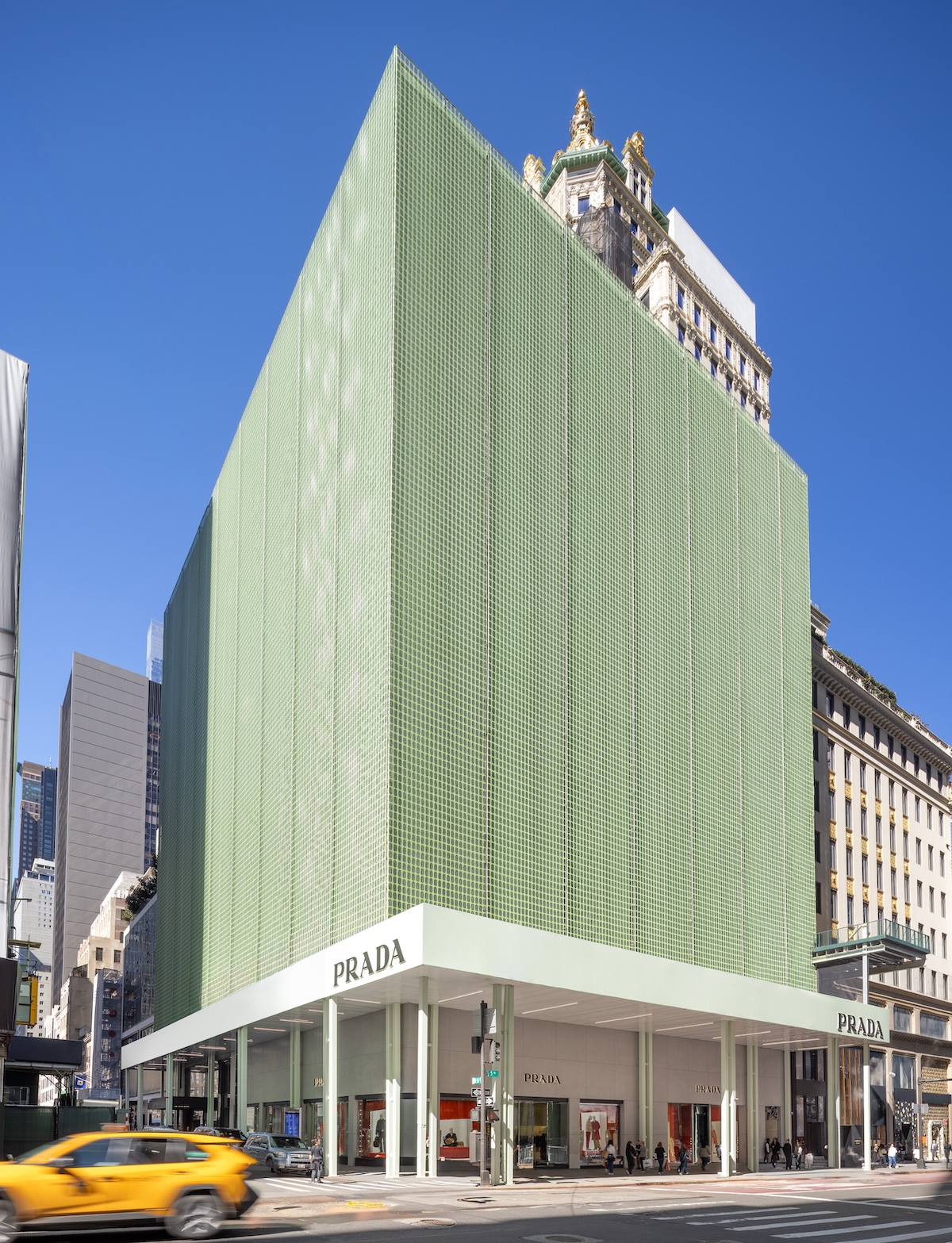
Photo © Bridgit Beyer
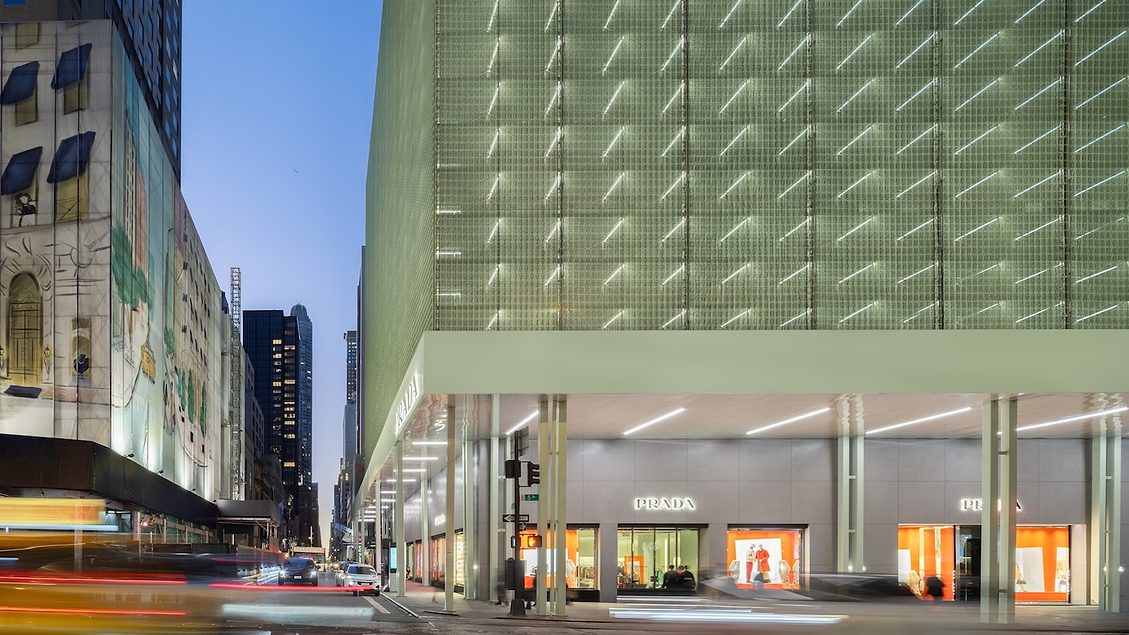
While these new-and-improved, city-sanctioned sidewalk sheds have yet to be implemented (Adams’ successor Zohran Mamdami has launched his own scaffolding reform campaign), Prada has taken it upon itself to set an impressively high bar with a “bespoke, temporary wrapper” currently up on the two exposed facades of the Italian luxury brand’s New York flagship at Fifth Avenue and 56th Street. In place for an indeterminate amount of time while the building is renovated, the ephemeral installation incorporates all the standard elements of New York City scaffolding—sidewalk shed, pipe construction, debris netting, and lighting— while producing a mesmerizing, constantly shifting moiré effect with the use of a dual-layered, semi-transparent scrim made from architectural mesh with printed variations of an abstracted construction fencing pattern. Although the camouflaged facades appear static from a distance, an optical illusion reveals itself when one comes closer to the building as the surface shifts depending on changing light, viewing angle, and other conditions. At night, the scrim fades away as an LED lighting grid aligned with the scaffold illuminates the pipe framework largely concealed beneath. Timeless and functional, the scaffolding is unmistakably Prada, right down to its seafoam-green hue.
The system was conceived by Prada with multidisciplinary studio 2×4 as part of a longtime spatial design partnership that can be traced back to the brand’s early creative collaborations with OMA. Knowing that the scaffolding might be up for a while, Prada “wanted to make something that felt more permanent, more architectural,” explains architect Christopher Kupski, a principal and group creative director at 2×4. “They’re always looking at ideas where banal materials take on an uncanny appearance or something that’s very industrial and then making it refined.”
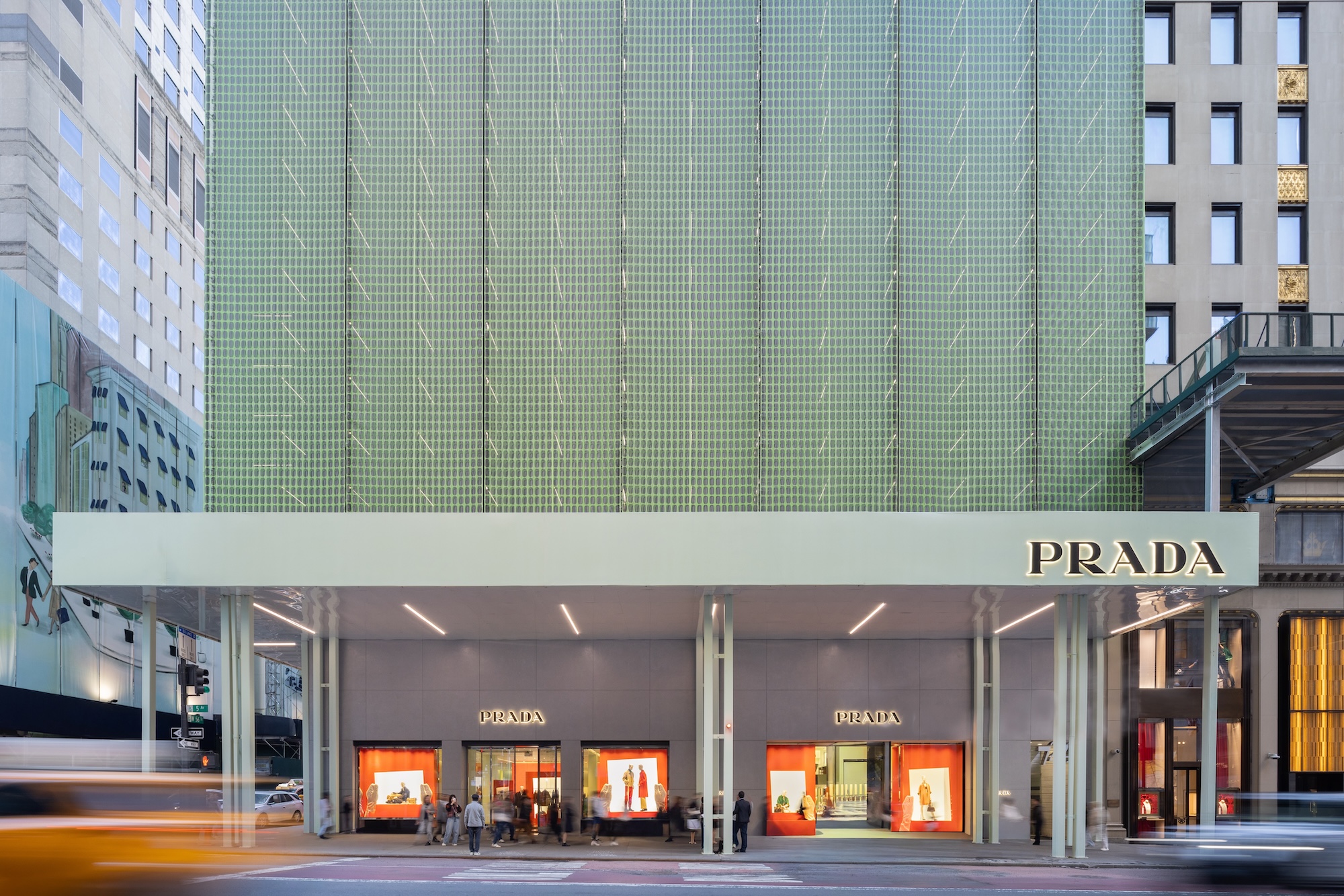
Photo © Bridgit Beyer
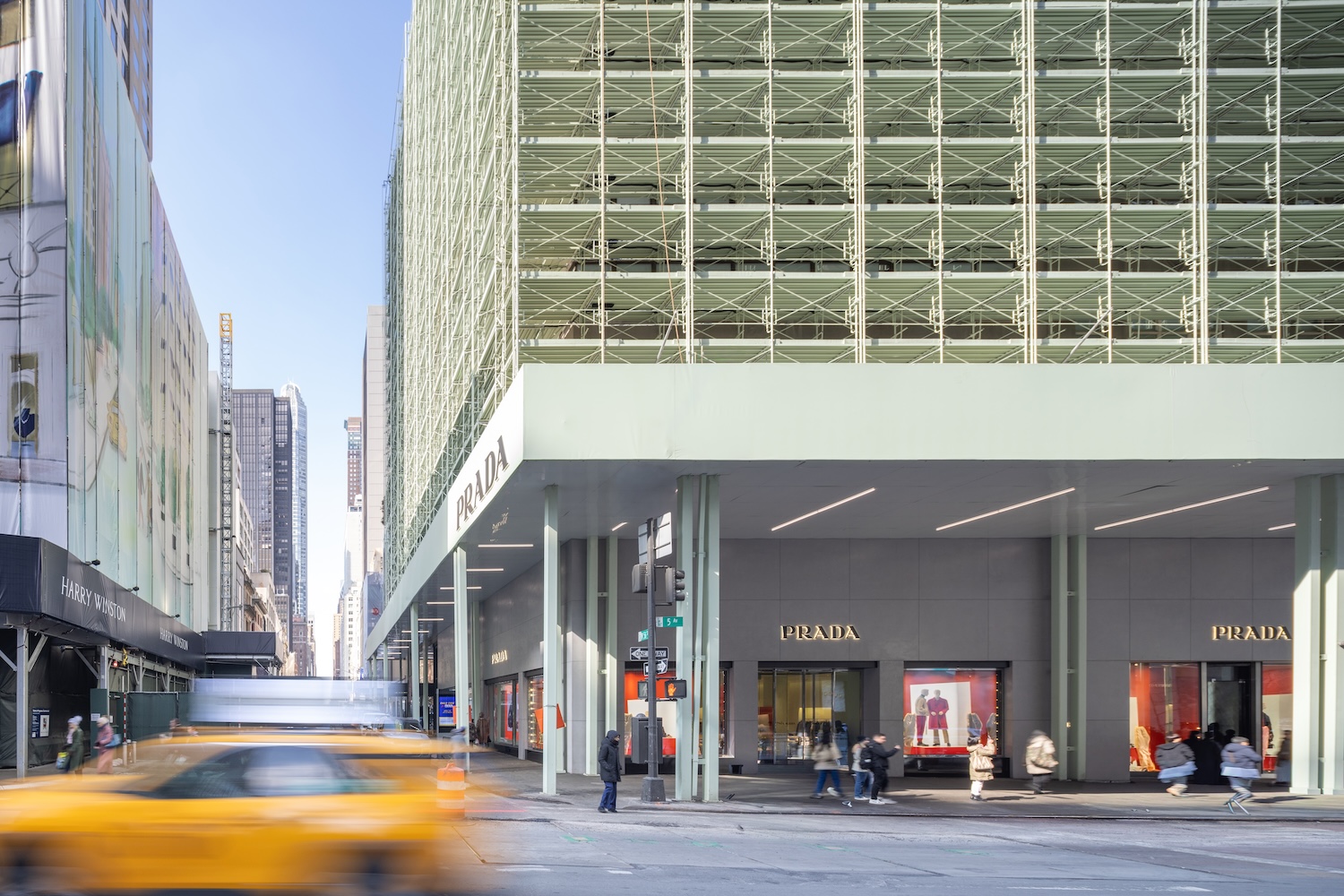
Photo © Bridgit Beyer
In its approach, the 2×4 team, working in collaboration with Queens-based contractor Spring Scaffolding, facade mesh fabricator Britten, and lighting designer TM, set out to create a long-lasting solution by rethinking the components of scaffolding through “the lens of Prada” without creating a spectacle Kupski says. (The approach is certainly more understated than the one taken just up the block at Louis Vuitton).
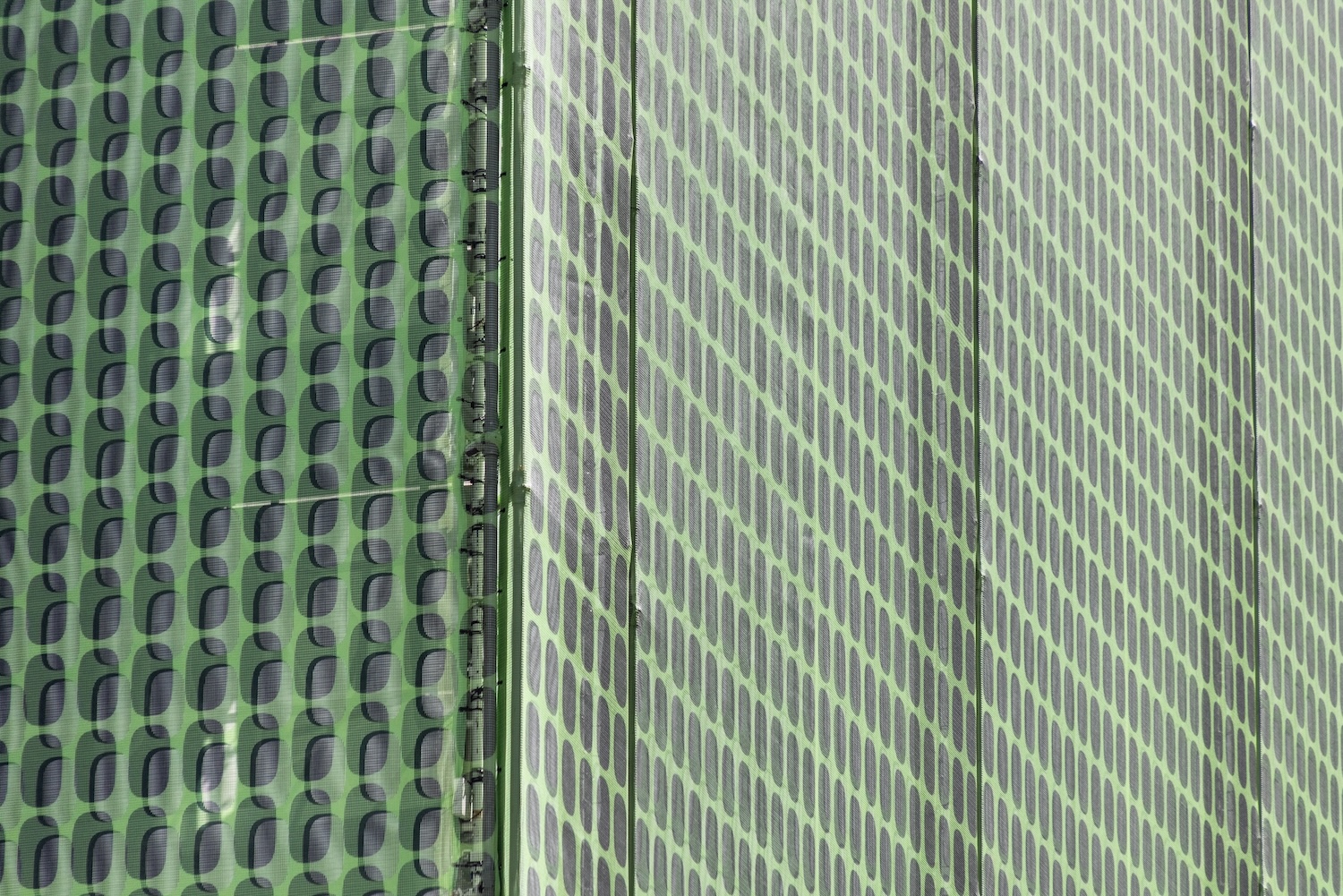
Photo © Bridgit Beyer
To clarify, the color of the scaffolding’s outer mesh layers isn’t exactly the Prada green. To emphasize the complex transparency of the design, the 2×4 team took the color values of the brand’s signature hue used in the boutique’s interior and shifted the brightness and saturation to create an array of several different greens used throughout the scrim. “When laid on top of each other, the colors feel more complementary to the original Prada green, whereas using the actual Prada green didn’t feel as much so because of the effect that’s happening,” says Kupski.
“There’s always been a spirit of exploration in the brand—to shine a new light on everyday objects in some way,” he adds.
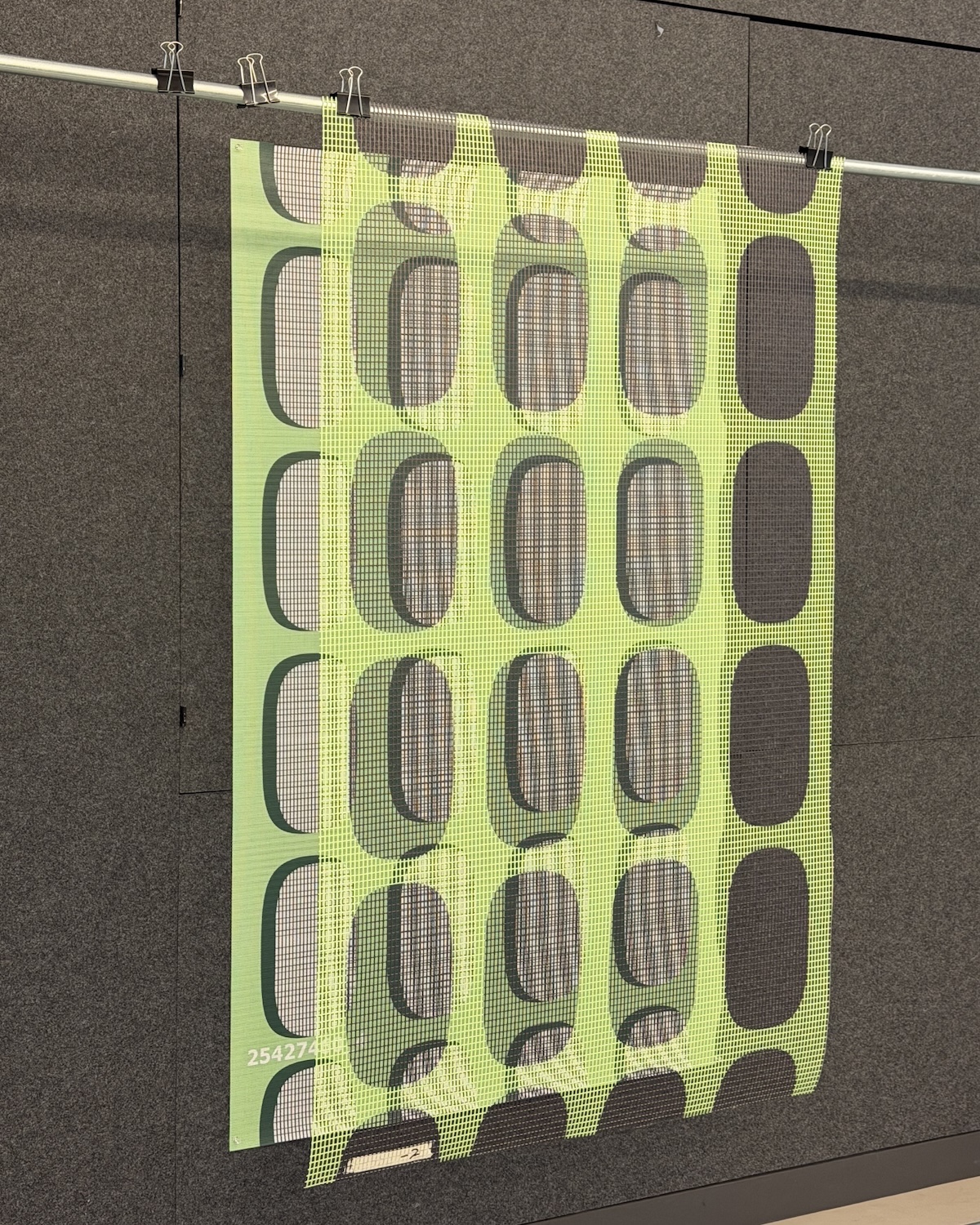
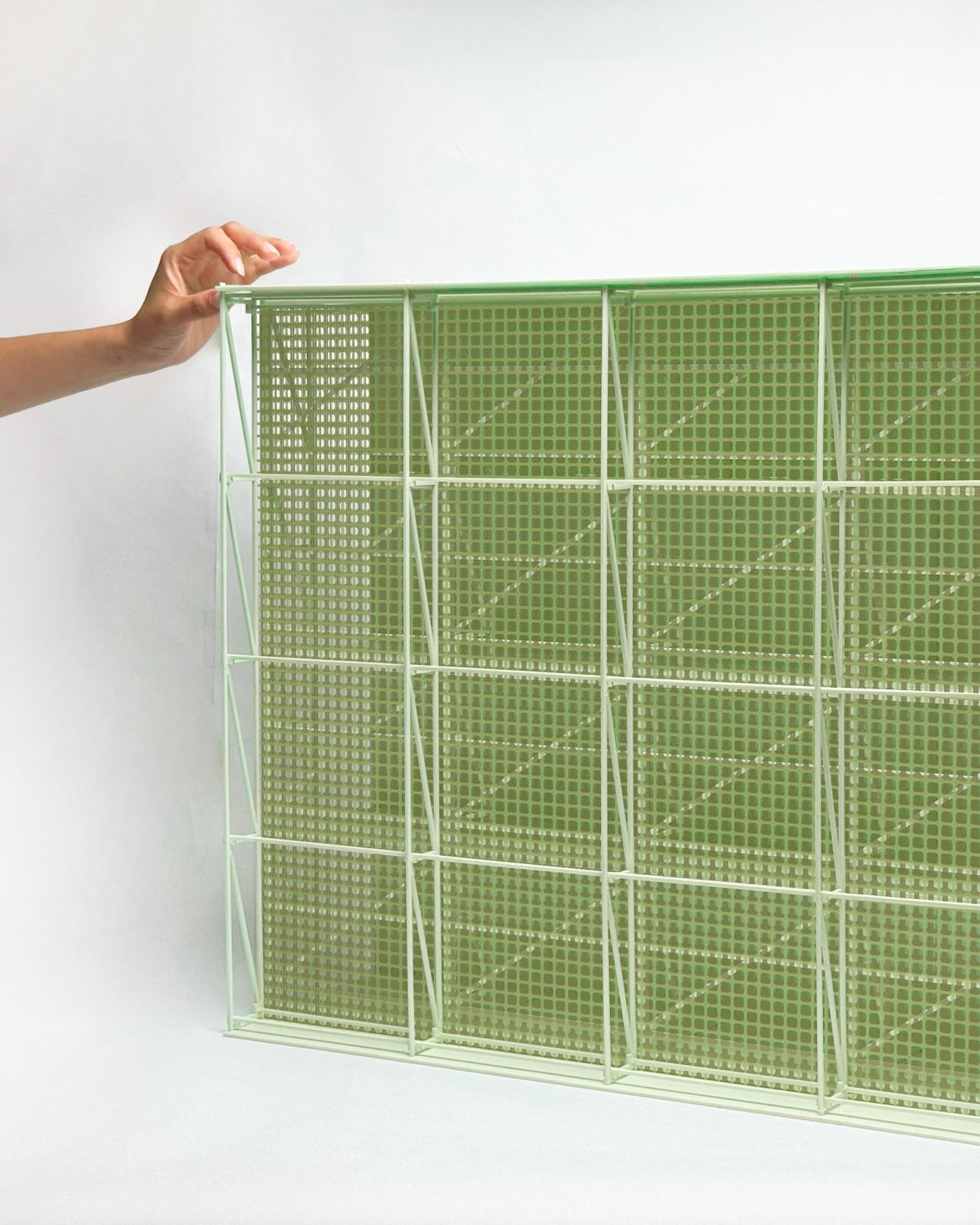
Scrim design process images. Photos courtesy 2×4