
It’s the 100th anniversary of Route 66, a roadway that has both shaped and reflected the twists and turns of the U.S. economy and its development. So what does a journey along Route 66 teach us about where the American economy might be headed next, amid the advent of artificial intelligence? “Marketplace Morning Report” David Brancaccio set out from Southern California to find out.
I’ve just come off a long drive down Route 66 to see what the economy looks like 100 years after the storied highway from Illinois to California came into being. In the 1930s, the Mother Road (as old Route 66 was called) was the vector of a mass migration from an environmental disaster called the Dust Bowl. Some found opportunity in California; others found squalor and exploitation.
In 2026, we’re in the midst of sweeping climate challenges, while at the same time living through ferociously fast technological change. Off Route 66, in Albuquerque, New Mexico, I experienced what many experts call our K-shaped economy, with one leg up and one down.
We stopped in for a bite at Ancora Bakery, where they’re serving up eggs, chorizo, and — surprise — job training! Dominic Cagliostro is one of the founders.
“Well, we usually get about 70 to 100 people trained per year, and we always get people placed,” said Cagliostro.
Ancora provides work training to people in recovery. They’re taught to be baristas, as well as how to cook and bake.
“When people are getting sober, they’re real cranky, and when they’re getting out of relationships, there’s dysregulation. And we’re gonna be extra supportive and get them working and regulated,” Cagliostro said. “We get them a resume, get them outfits, we get them mock interviews, and prepare them to go get a permanent job out in society.”
Ancora Bakery is a 501(c)(3) nonprofit, and the cash flow isn’t easy. For a time recently, the cafe part of the recovery center went on hiatus, and Google Maps listed it as “permanently closed.” But it’s back open, and there was a solid breakfast and an excellent latte.
To keep the cafe afloat, Cagliostro said they rely on “donations, philanthropists, me and my wife, we collaborate with other places.”
Contributing to the operation is Ancora’s work moving surplus restaurant food out to unhoused people in and around the neon corridors of Route 66, called Central Avenue in Albuquerque. It stands in contrast with a different side of the city; this one is flush with AI, science, and tech money, but not flush with big private tech companies.
At the National Museum of Nuclear Science and History in Albuquerque, six blocks from Route 66, there’s a loop of President Harry S. Truman announcing the use of the atomic bomb on Hiroshima.
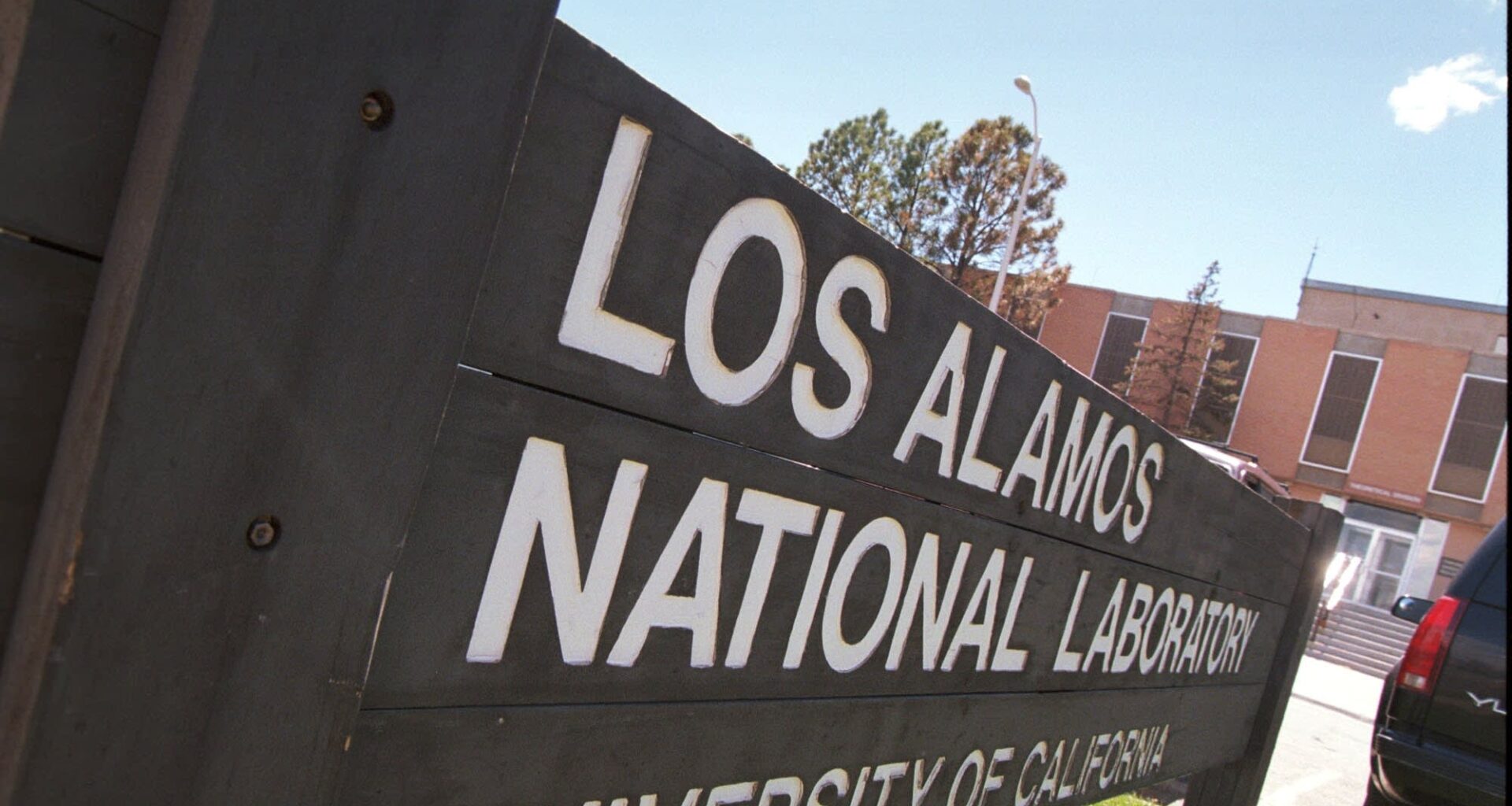
A lot of the scientific work that went into this was done in this region, which is now home to three national labs: Los Alamos, Air Force Research, and Sandia. Right here, we still find one of the greatest collections of scientific minds, with many working at the frontiers of artificial intelligence. Recently, a Brookings report identified this waypoint on Route 66 as an AI mini-cluster, but certainly not a superstar AI hub.
Mark Montgomery is a noted AI scientist and entrepreneur based here. “You would think even that by accident, by now, we would have very successful companies in New Mexico,” he said.
“We have quite a few small companies that have been successful, but we’ve never had a major company succeed in New Mexico, in technology — which is probably the biggest gap in the world that I’m aware of, anyhow, between the R&D dollars that are spent, versus the commercialization and the opportunities for employment.”
Montgomery is the driving force behind a pioneering company called KYield, which uses a “neurosymbolic” flavor of AI very different from the currently popular (but often wrong) large language models. Among the use cases for his technology is helping to predict and prevent corporate disasters.
Despite all this, and his previous experience as a venture capitalist, Montgomery said he’s not expecting a New Mexican Nvidia or Anthropic to emerge.
“Since government dominates the economy, we don’t have what typically you have: a bunch of wealthy angel investors who have existing businesses that are also early-stage customers. Those are the things that are missing,” he said. “And so, the low-hanging fruit is to become a military contractor. And after you beat your head against the wall as an entrepreneur in New Mexico for a while, most of them will take that route.”
Or they’ll take the route west, on 66, toward the coast.
“Lot of times they fly after they’ve been acquired by companies on the coast,” Montgomery said. “Silicon Valley is pretty well known for cherry picking New Mexico tech transfer.”
On the flip side, New Mexico has taken its cut of burgeoning oil and gas production and built a $70 billion sovereign wealth fund to invest in entrepreneurial local companies.
Still, there’s concern that if ever the two pillars of the economy here were to topple at the same time — if the oil and gas market crashed while government military research money got reined in — this state might be in for a financial mess like the one that shattered the Texas economy when oil, real estate, and banks went bust in the ‘80s.
Using fresh data, New Mexico boasts it’s No. 1 in the nation for growth in median family income. Yet, the state also ranks in the bottom three worst in the country for its poverty rate.
This bend in the road on 66 is shaped like a K.
Related Topics