
Over a million New Yorkers could soon see crucial services in their apartment buildings disappear as tens of thousands of unionized doorpersons, porters, superintendents, handypersons and resident managers prepare to walk off the job later this month if their demands aren’t met.
Photo by Sadie Brown
Over a million New Yorkers could soon see crucial services in their apartment buildings disappear as tens of thousands of unionized doorpersons, porters, superintendents, handypersons and resident managers prepare to walk off the job later this month if their demands aren’t met.
Luis Ayala, a union strike captain and overnight porter who has been in the building service industry for around five years, said the labor contract the real estate industry was offering stinks — and the stench of an odious labor dispute will be one that apartment dwellers will experience if a strike happens.
“After a few days, the building is going to stink; it’s not going to be clean; it’s not going to look nice,” Ayala said. “Our tenants who go to work, they don’t want to come home to a smelly building, and that’s what it’s going to look like. It’s not going to be pretty and it’s not going to smell nice.”
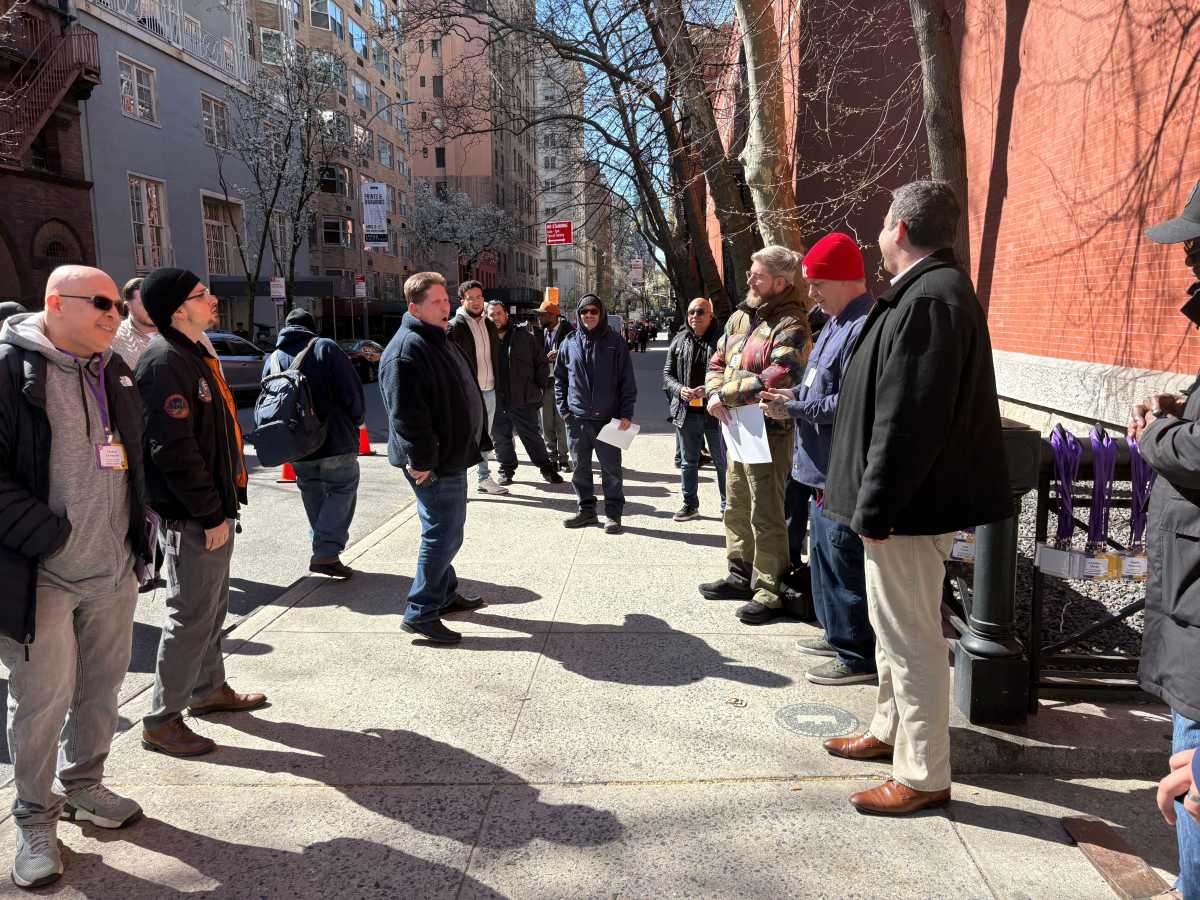
Thousands of residential building workers in 32BJ SEIU started prepping strike locations this week, with strike captains gathering at locations near unionized buildings, distributing namecards, talking strategy, and pumping up union pride.
The union’s feud is with the Realty Advisory Board on Labor Relations (RAB) and centers on changes to the current contract that would shift some of the financial burden for healthcare premiums onto union members. The union is also demanding wage increases to account for the cost of living.
Jordan Weiss, who works on Park Avenue as an overnight doorman and has been in the industry for a decade, said he’s felt the changes in the economy squeezing his pocketbook.
“The price of gas is going up now, food costs—everything,” Weiss said. “Our members are really struggling with the paychecks they have now. They’re struggling to make ends meet, so we definitely need to get an increase for the next contract.”
The union pointed to recent data detailing record-high rents and astronomically low vacancy rates to back up its demands that a wage bump, 0% healthcare premiums, and other asks are reasonable.
But RAB leaders said the market outlook is not sufficiently certain to warrant locking in those financial commitments.
RAB President Howard Rothschild said in a statement that the organization is committed to a fair contract but that the two sides have a long way to go to reach an agreement. He also indicated concerns about a potential rent freeze for stabilized apartments that may happen later this year.
“The likelihood of 0% rent increases across nearly one million rent-stabilized apartments in New York City for years during the entire life of this contract will significantly limit the industry’s ability to support wage growth,” Rothschild said. “At the same time, co-ops and condos basically operate as non-profits, and they are already contending with rising tax burdens and increased common charges. 32BJ has recognized these facts across the table, and we hope that we can work together to confront the economic realities facing the industry.”
In February, Mayor Zohran Mamdani appointed new members to the Rent Guidelines Board, bringing what power he had to bear on his campaign promise to freeze the rent for the city’s some 1 million rent-stabilized apartments, many of which are serviced by union workers covered under the contract negotiations.
The board will announce its rent regulations later this year.