
Spring may not feel like it yet in the Capital Region and Hudson Valley, with only a few warm days so far and lingering chilly weather. However, data and natural signs suggest the season is already beginning to take hold in our region.

In the Capital Region, specifically around Albany International Airport, spring is running ahead of normal. Despite recent temperature swings, we’ve picked up more warmth than usual since January. This extra heat has accelerated the spring season, putting us about three days ahead of the typical timing based on the 1991-2020 average, according to the USA National Phenology Network.
In the Hudson Valley, the trend is even more pronounced. The accumulated growing degree days in the city of Poughkeepsie are about six days ahead of schedule, almost keeping pace with last year’s unusually early spring.
Article continues below this ad
What are the different definitions of spring?
In climatology, spring is always March, April and May. In astronomy, spring starts with the vernal equinox, which is based on the Earth’s position relative to the sun, or around March 20. It’s when the Northern Hemisphere starts tilting more toward the sun, bringing longer days and warmer weather to our part of the world, according to Theresa Crimmins, director of the USA National Phenology Network.
Yet locally, we observe signs of spring by observing natural events.
Left: A maple tree blossoms Monday at Washington Park in Albany. Right: New foliage on a willow tree Monday next to Washington Park Lake in Albany.
Will Waldron/Times Union
Top: A maple tree blossoms Monday at Washington Park in Albany. Bottom: New foliage on a willow tree Monday next to Washington Park Lake in Albany.
Will Waldron/Times Union
“That’s when we start to actually see leaf buds start to break open, flowers start to appear, migratory birds reappear, and insects start to initiate their activity,” Crimmins said. “Those events are not fixed in time because they are largely cued by local conditions like temperature. If it’s a warm spring, those things tend to start earlier.”
Article continues below this ad
Make the Times Union a Preferred Source on Google to see more of our journalism when you search.
Add Preferred Source
Here is what the local nature says.
Leaves say we’re almost there
Plants have already started greening up across much of the country, beginning in the South as early as January, in places like Texas, Louisiana, Mississippi and Alabama, and gradually moving north. In the Capital Region, signs of spring are appearing. The first leaf-out has been observed in the Hudson Valley and in parts of Western New York.
Article continues below this ad
Plants know when to grow by responding to environmental signals such as temperature and day length, Crimmins said. Some plants require sufficient warmth, while others use the lengthening of days as a protective mechanism to ensure it’s safe to expose their tissues.
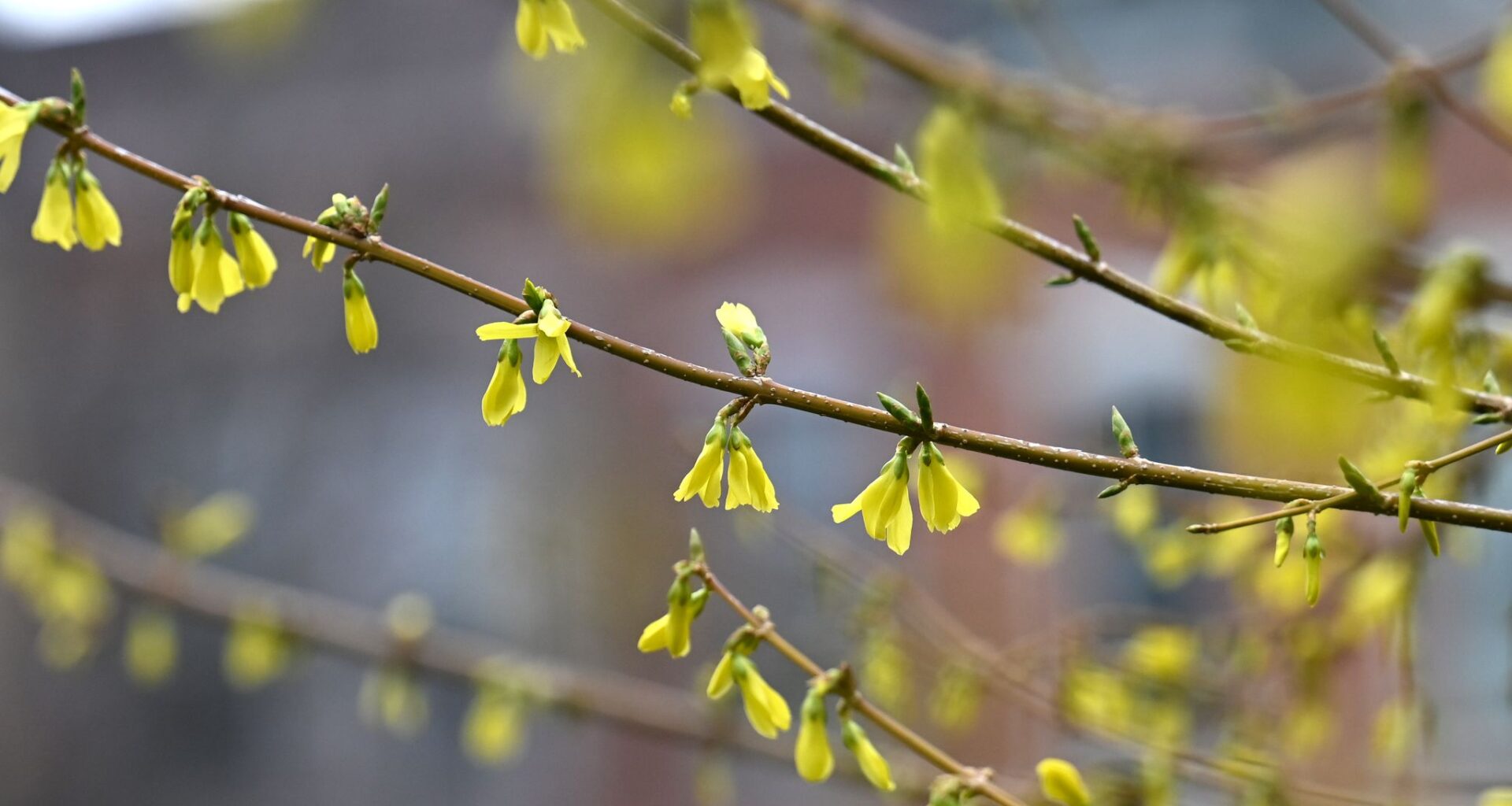
Early bloomers include snowdrops, hellebores and crocuses, along with skunk cabbage, budding maples and birches, and shrubs like witch hazel and forsythia that flower before leafing out.
Left: Snowdrops emerge from their winter slumber at Washington Park on March 11. Right: Yellow arum lilies flower on the leafy ground.
Will Waldron/Times Union; Bryan Knox, Getty Images
Top: Snowdrops emerge from their winter slumber at Washington Park on March 11. Bottom: Yellow arum lilies flower on the leafy ground.
Will Waldron/Times Union; Bryan Knox, Getty Images
“The growing season is often considered to start after the last frost, then runs from the last spring frost to the first fall frost,” said Jessica Spaccio, a climatologist at the Northeast Regional Climate Center, which defines the last frost as the last time temperatures hit 32 degrees.
Article continues below this ad
In the Capital Region and Hudson Valley, the last frost typically occurs between late April and mid-May, based on the normals from 1991 to 2020. While the accumulated warmth, which is running ahead of schedule this year, helps plants start growing, they also have to “wait out” the risk of frost. If plants bloom too early in a warm spring and a late frost hits, it can kill the blossoms and turn them brown.
Birds are heading north … and many more are coming
Warmer spring temperatures are typically associated with earlier bird migrations, according to Aimme Van Tatenhove, a Rose Postdoctoral Fellow at Cornell Lab of Ornithology. Over the past month, there were a few spikes of birds migrating across Albany County.
Article continues below this ad
“Bird migration largely aligns with the growth of food resources and, in higher latitudes, the thawing of water resources,” Van Tatenhove said. For example, Canada geese move north as open water and vegetation become available when temperatures warm, while warblers follow the increase in insect activity.
To make the journey less demanding, birds time their migrations carefully in response to weather signals. They often take off on nights when rising air pressure signals good weather, and tailwinds help them fly farther with less energy. Other factors, such as temperature, precipitation and day length, also influence when they start or resume migration after stopping, Van Tatenhove said.
On nights when flocks moved through Albany, winds from the south probably gave northbound birds a boost. It’s difficult to say which species were passing through or exactly when they got started, so explaining those big spikes on certain days isn’t straightforward — but some tailwinds and clear weather usually help, Van Tatenhove said.
Article continues below this ad
There’s still plenty for birdwatchers to see as we’re early in the migration season. In New York, a wide variety of songbirds, raptors, and shorebirds pass through, including eye-catching species like American redstarts and chestnut-sided warblers. People can also spot sandpipers, broad-winged hawks, and scarlet tanagers as they move into the area to breed.
Birdwatchers will soon be able to spot the American redstart (Setophaga ruticilla) in New York.
Michele D’Amico supersky77/Getty Images
A blue jay and morning dove are not happy to encounter fresh snow on their bird seed on Tuesday in Guilderland.
Lori Van Buren/Times Union
A broad-winged hawk is observed in an enclosure at the home of wildlife rehabilitator Kelly Martin on July 29, 2025, in Middleburgh.
Lori Van Buren/Times Union
“Migration for our region typically spans from late March to mid-May,” Van Tatenhove said. “Here in NY, some resident species are already breeding, but many migratory species are still migrating or just beginning to establish breeding territories.”