
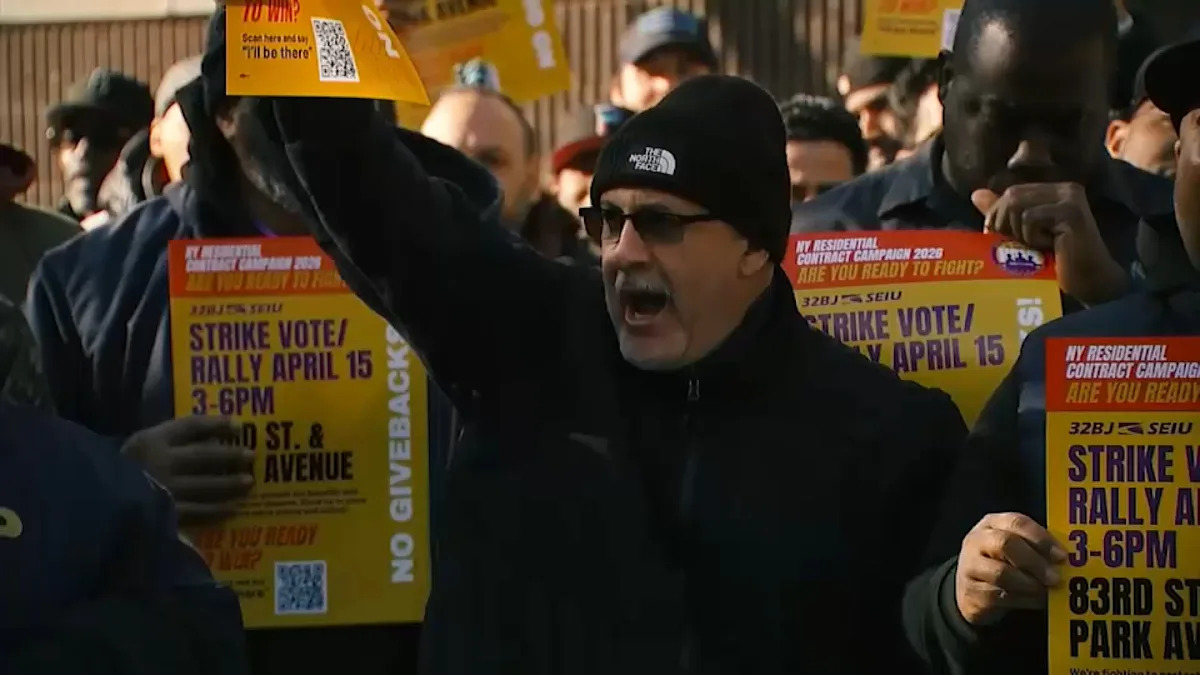
About 34,000 workers in residential buildings across New York City could go on strike as early as April 20.
Doormen, supers, porters, and handymen are threatening to walk off the job over a dispute over wages and benefits.
The last time the city’s union residential building workers went on strike was in 1991.
Eyewitness News reported on their return to work after 12 days.
Trash had piled up, and residents had never been so happy to see the doorman.
“We always look out for them, they look out for us,” a resident said.
Every four years, door staff and porters ask residents to support them once again, as their contract comes up for renegotiation.
They are ready to strike on April 21 if 32BJ and building owners haven’t agreed to a deal.
Bryant Cardona has been a union maintenance worker for 16 years in Crown Heights.
“I get to feed my family. I’m a single dad. I get to meet a lot of interesting people in the building too,” Cardona said.
With the rising cost of living, he’s glad to have a rent-stabilized apartment.
“Because if I didn’t, I don’t know where I’d be at. I wouldn’t be in New York,” Cardona said.
With 11 days left in their contract, and three bargaining sessions down, the union is still far apart with building owners.
The Realty Advisory Board on Labor Relations, which represents the employers, says, “The likelihood of 0% rent increases across nearly one million rent-stabilized apartments in New York City for years during the entire life of this contract will significantly limit the industry’s ability to support wage growth.”
It also says the average doorperson or porter earns about $62,000 a year, but costs employers more than $112,000.
Part of the reason is that health care in their contract is still 100% covered.
“Health care saves lives. I have coworkers, survivors of cancer and things of that nature. They possibly wouldn’t be alive if it wasn’t for 32 B-J’s health care. So we’re looking forward to that continuing,” Lobby Attendant Teddy Francis said.
“What we can’t do in these times of inflation is to take a step forward in wages and take a step backwards on health care. The number one reason people go into bankruptcy is health care,” SEIU Local 32 BJ President Manny Pasteich said.
The board representing employers wants the workers to kick in for health care, saying 32 BJ members are among only 5% of American workers who don’t contribute anything.
The union says members still enjoy premium and copay-free health care because of its bargaining power directly with health care systems, since the union is the fourth largest health care buyer in the state.
Submit a tip or story idea to Eyewitness News
Have a breaking news tip or an idea for a story we should cover? Send it to Eyewitness News using the form below. If attaching a video or photo, terms of use apply.