
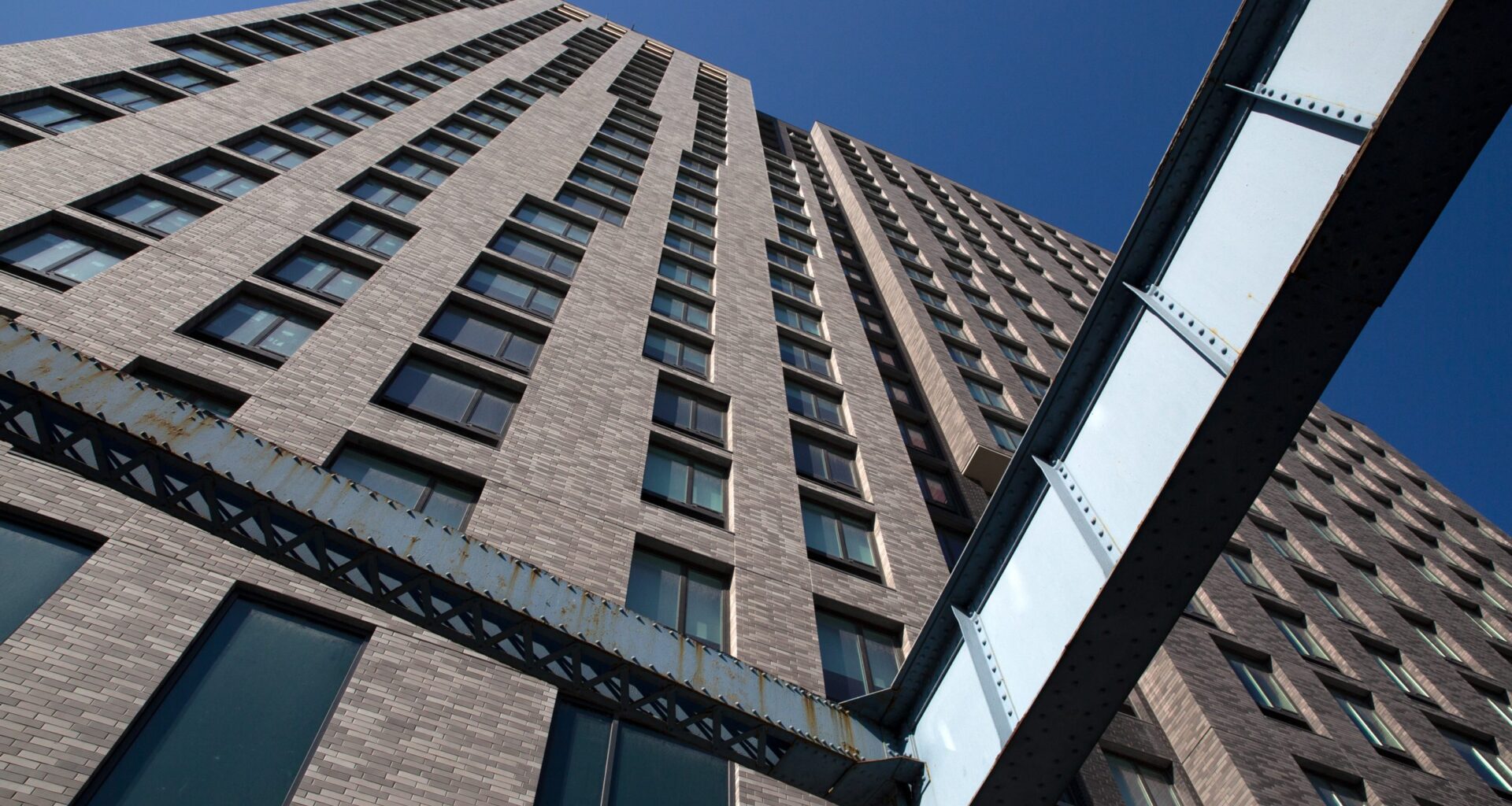
While New Yorkers feel the crush of a housing crisis, newly built affordable apartments in New York City can remain empty for more than a year.
That’s according to a new report released Friday by Enterprise Community Partners, a nonprofit that helps build affordable housing, which analyzed its portfolio of over 800 affordable housing projects nationwide, including 50 in the five boroughs.
Enterprise found that across more than 4,500 affordable apartments in New York City, a median of 439 days passed between when a building’s apartments were finished to when new tenants moved in. The shortest leasing timeline was about 8.5 months, while the longest was over two years.
It took Ayah, a 29-year-old mom who spent three years living in a city shelter with her 5-year-old son after leaving an abusive marriage, about two years to secure her current apartment in Jamaica, Queens.
“Even though I’m so grateful to be in my own space, it just felt like I had to jump through so many hoops and it just felt so exhausting and absolutely humiliating,” said Ayah, who requested her last name be withheld for safety concerns. “The entire experience was extremely grueling.”
The median time for New York City tenants to move into affordable housing — that is, government-subsidized and income-restricted apartments — is almost three times as long as the national median time of 156 days, the Enterprise report showed.
The report comes as several housing experts and affordable housing operators have called on the Department of Housing Preservation and Development to streamline the process of placing New Yorkers into these affordable apartments — for the sake of people who desperately need homes, and for the bottom line of property owners and investors who help finance the housing.
Though there are many impediments to filling buildings with tenants, developers cited long processing times to get residents approved and overcoming multiple layers of bureaucracy as the most common roadblocks.
“Broadly speaking, let affordable housing owners just fill these buildings with people in need,” said Patrick Boyle, senior policy director at Enterprise. “It’s important to be sure the process runs fairly so people have sort of an equal chance at being placed, but when you layer in too much process, you’re hurting the people that you’re trying to help.”
The city government is looking to cut red tape that complicates the process. The day he took office, Mayor Zohran Mamdani convened the Streamlining Procedures to Expedite Equitable Development (SPEED) Task Force to figure out how to quicken the pace of building and leasing up housing. The task force is due to issue a report with recommendations by April 11, but City Hall indicated it’d be out in the coming weeks instead.
“All options are on the table as we review these recommendations and work to get New Yorkers into available affordable housing units as quickly as possible,” said mayoral spokesperson Matt Rauschenbach.
‘It’s Disheartening’
The city housing agency’s own data encompasses a wider universe of projects than Enterprise’s analysis and shows a shorter — but still alarming — timeline to get buildings fully leased up: a median of 210 days to complete approvals for affordable housing applicants.
Enterprise’s analysis found there have been more delays in leasing the buildings in its portfolio over time: 13% of Enterprise’s projects experienced delays between 2013 and 2016, while all of them did between 2021 and 2024.
Delays can cost millions of dollars for affordable housing owners, many of which are nonprofits operating at a loss or close to it. And those delays could disincentivize investors to finance more affordable housing in the future, Boyle said.
It takes time and many steps to get affordable buildings ready to be listed on Housing Connect, the platform where New Yorkers can apply for apartments and homes through a lottery. And then there are other layers of approvals and long processes to find and greenlight eligible residents. That means some operators of homeless shelters that also run affordable housing projects aren’t able to place residents of their shelters directly into the apartments.
Some would-be residents need additional approvals, especially if they hold a rent voucher, like the city-funded CityFHEPS.
Ayah, the mother who obtained a voucher to move from a shelter, knows the extended timeline all too well. She found landlords were reluctant to rent to her, and when she did tour places, many weren’t suitable for her son who has special needs. When she finally nailed down an apartment, she had to wait more than a month for final inspections and paperwork processing related to her voucher.
“This process, if I didn’t have my child in front of me, and constantly looking at like, ‘This is my reason, I have to get out of here and create a stable environment for him,’ I would’ve been crushed under how impossible it was and how the system was designed to just break people like me,” she said. “It took [being a] survivor to a whole different level.”
CityFHEPS requires tenants to submit documentation for city approval and there must be an inspection of the apartment before they can move in.
Christina Harsch, director of leasing and compliance at Wavecrest Management, said at least a third of tenants coming in through the lottery have a voucher and nearly all people coming in through homeless referrals have one.
“Processing those applications — I can’t get anyone in faster than four months,” she said. “As a marketing agent, that’s deeply frustrating. And as a citizen, it’s disheartening.”
Harsch said an affordable building for seniors in The Bronx with over 200 apartments took two years to lease up. In that time, she said 88 people who originally applied either said they were no longer interested, moved into nursing homes or died.
Aiming for Easier Placements
Alicia Glen, former deputy mayor for housing under Mayor Bill de Blasio and managing principal of development firm MSquared, wrote in The Daily News in March that she regularly sees 14-month timelines to fill affordable housing buildings — much longer than in other cities.
“One of the key differences is that these cities do not rely on a centralized lottery system,” she wrote. “Everywhere else, developers largely manage their own affordable leasing.”
One example Glen cited was a building in Inwood with nearly 700 apartments, about 40% of them affordable. Although 70,000 applicants applied for those 281 affordable apartments through the housing lottery, just 168 had tenants in them seven months later.
HPD Commissioner Dina Levy told the City Council during a March hearing that the agency was considering an overhaul to its processes for getting New Yorkers into affordable housing.
“We plan to revamp both our housing lottery and our homeless placement systems,” she said. “Incremental fixes here will not go far enough. We’re taking a hard look at every part of the process and if necessary, we will migrate to a more efficient and nimble system.”
Ilana Maier, a spokesperson for HPD, pointed out that nearly 15,000 families received affordable housing in fiscal year 2025: “It’s life-changing — a shorter commute, a bedroom of their own, a place where they can finally exhale.”
In the meantime, pending the possible overhaul, HPD has taken some steps to make it easier to place people into apartments — measures that have started to make a difference, housing providers and leasing agents told THE CITY.
For example HPD last year slashed the paperwork required for tenants to apply for affordable apartments, and allowed for affordable re-rentals to go on the open market for eligible apartment-seekers, rather than leasing through a complicated “mini-lottery” process.
Related