
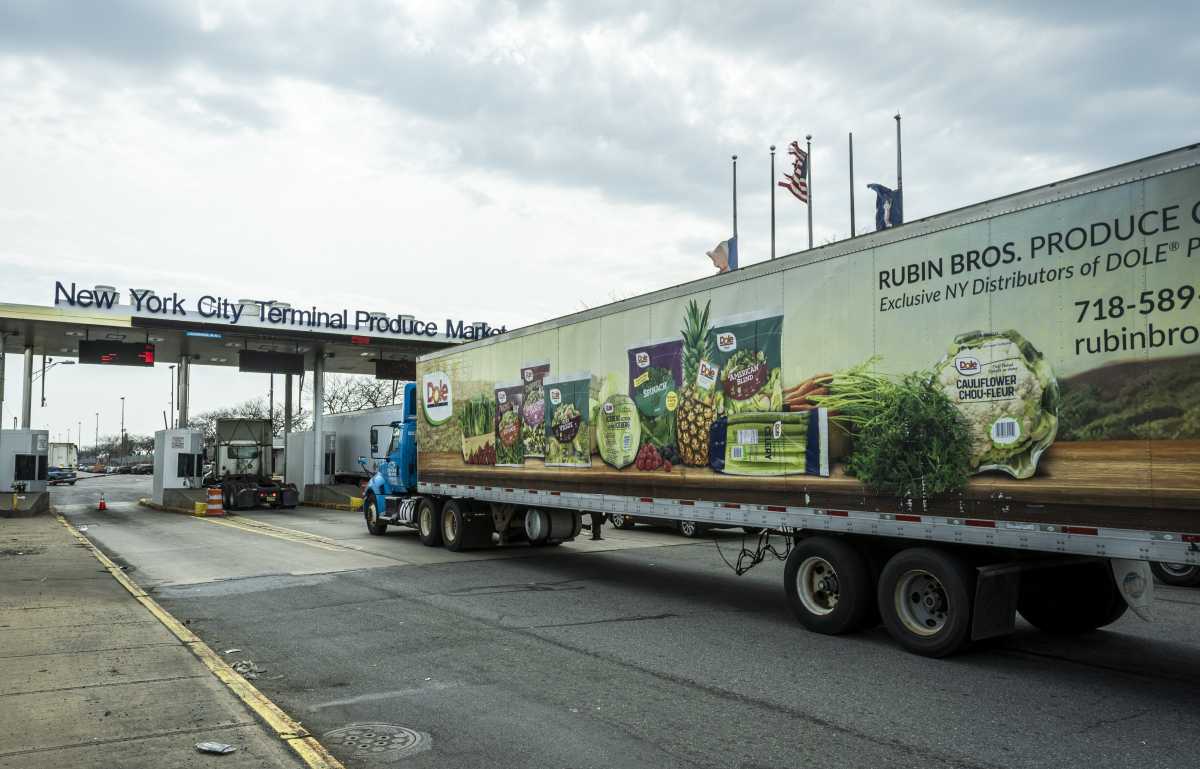
Every night while New Yorkers are fast asleep, fleets of trucks enter the Bronx carrying millions of pounds of food that gets distributed to supermarkets, bodegas and restaurants – all before the sun rises. The critical operation is what keeps New York City fed.
The 329-acre Hunts Point Food Distribution Center is a place most people will never see but heavily depend on. It’s the largest wholesale food hub in the country – the distribution center supplies 25% of NYC’s produce, 35% of its meat and 45% of its fish. Each year, it distributes 4.5 billion pounds of food, more than half of which stays in NYC.
The three markets — the Hunts Point Terminal Produce Market, the Hunts Point Cooperative Meat Market and the New Fulton Fish Market — consist of more than 200 wholesalers and distributors that make about $5 billion yearly.
One of the markets, the New Fulton Fish Market, began operating in 1822 in Lower Manhattan before being relocated to Hunts Point in 2005. The city-run $85 million complex is the largest fish market in the U.S. and the second largest in the world, after the Toyosu Market in Japan.
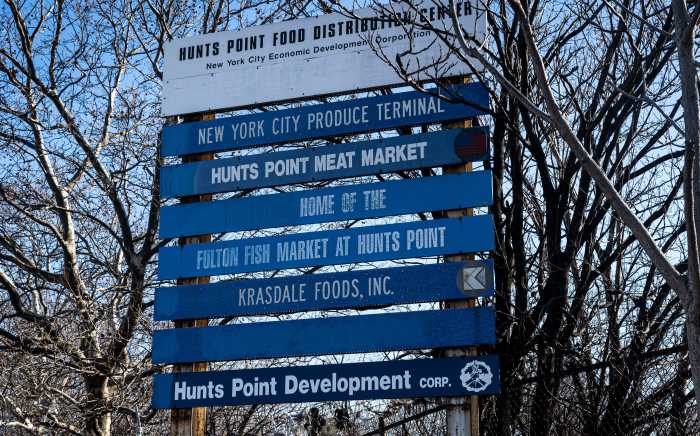 Inside the Hunts Point Food Distribution Center, workers move billions of pounds of produce, meat and seafood through the nation’s largest wholesale food hub. Photo by Jonathan Portee
Hunts Point is the city’s invisible engine, as nearly all the food consumed in New York passes through the Bronx hub before being distributed across the state and around the world. Without it, this city of more than 8 million people would starve.
“Hunts Point feeds the entire region,” Ora Kemp, a senior policy advisor at the Mayor’s Office of Food Policy, told the Food for Humanity Initiative at the Columbia Climate School. “That’s stock in grocery stores, all of our restaurants, all of our food service, our emergency food network.”
The food distribution center also provides over 8,500 jobs to local Bronx residents – more than 65% of its staff – according to the NYC Economic Corporation. Teamsters Union Local 202, reported in a New York State Comptroller survey that its members earn between $45,000 and $75,000 annually and receive medical and other benefits.
Hunts Point residents shut out of Hunts Point markets
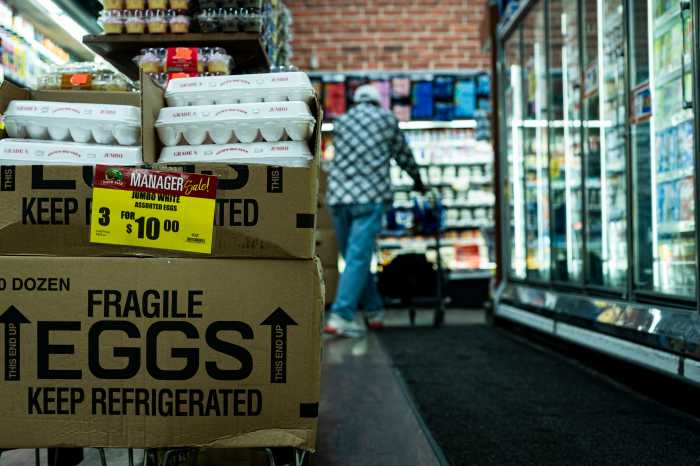 Despite the constant flow of food through Hunts Point, many Bronx supermarkets remain out of reach or unaffordable for the communities closest to the supply. Photo by Jonathan Portee
Despite being one of the largest food distribution centers in the country, the three Hunts Point markets are not accessible to the community it surrounds. Its wholesale model means food is sold in bulk to businesses, not to Bronx residents.
While trucks leave Hunts Point daily to stock supermarkets and restaurants across the East Coast, residents still struggle to access fresh, affordable food.
In 2024, the New York State Regional Food Hub built a local 60,000 square-foot distribution facility in Hunts Point, from which they obtain food from upstate New York farmers to provide low-income NYC communities with fresh produce at affordable prices.
Corinna Lee, the director of the Wholesale Food Hub program for GrowNYC – the nonprofit that operates the hub focused on sustainable food programming throughout the city’s five boroughs – told the Bronx Times that if quality products can be grown in the state, the hub can distribute it locally before others can access it.
As a wholesaler, the hub focuses on finding more affordable options for independent stores that sell produce to low-income communities.
“Independent retailers are at a disadvantage because food agribusinesses and consolidated businesses give preferential pricing to major buyers like Walmart and Whole Foods,” Lee said.
Typically, smaller local stores will pay more per unit, putting them on the same price scale as larger grocery stores and bodegas.
City run groceries to help feed the Bronx?
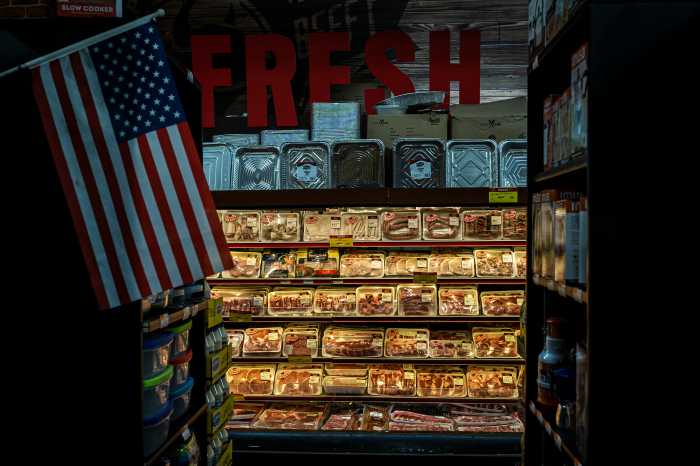 From loading docks to delivery routes, Hunts Point operates as the unseen backbone of New York City’s food system— keeping shelves stocked while most of the city sleeps. Photo by Jonathan Portee
One potential option to keep prices down could be to advance Mayor Zohran Mamdani’s five municipal city-run grocery stores, according to Lee. An initiative that would focus on areas with limited access to full-service supermarkets not focused on earning a profit.
“If those five stores can coordinate their purchasing, then they could potentially negotiate fairer pricing that can be passed on to customers,” she said.
According to the Bronx Borough President, Vanessa Gibson, this can’t happen without the support of the private sector.
“That includes landlords, property owners, private sector supermarkets and others that work and do business here. It’s impossible for government to do it by itself,” Gibson said.
Mayor Zohran Mamdani’s administration has begun scouting locations for city-run grocery stores in all five boroughs, per Bloomberg. His administration is prioritizing food deserts where residents can’t access fresh and affordable food.
A spokesperson for Mayor Mamdani’s office did not respond to a request for comment in time for publication.
Gibson told the Bronx Times that she sees the challenges independent grocery stores and small bodegas face with wholesale food access who can’t quite compete with large grocery chains like Whole Foods or Key Foods.
“People complain about quality– they complain about price gouging, they complain about expired food in our neighborhoods,” she said.
Gibson says the private sector can help nonprofits like GrowNYC and support other means of Bronx residents having access to fresh produce, like a year-round farmers market.
“It’s the only borough in New York City that doesn’t have a year-round farmers market,” Joel Berg, the CEO of Hunger Free America, told the Bronx Times. “If you make healthier food more affordable, more physically accessible and more convenient to obtain and prepare, people will buy it.”
If it is not more accessible, all the nutrition education in the world could not get residents to change their diets and habits, Berg added.
“It’s a myth that low-income people don’t want healthier food or don’t know that kale is healthier than rock candy. There’s a lot of racism and classism to the assumption of why low-income people eat what they eat,” he said.
Experts like Tania Rodriguez, associate director for Part of the Solution – a community resource center for low-income families in the Bronx – have found that the lack of access to affordable grocery stores in the borough has made it easier for people to rely on the hundreds of fast-food restaurants.
“Not only are they battling hunger, but they’re battling a lot of health conditions based on their choices of eating,” Rodriguez said, adding that Bronx residents are under a great amount of stress because they can’t afford to buy groceries or prepare meals – it’s easier to go for fast food.
In the South Bronx, fast food restaurants are the most common food option, second to bodegas which typically heavily advertise pre-made unhealthy products, according to a study by the New York City Department of Health and Mental Hygiene.
Accessing affordable options
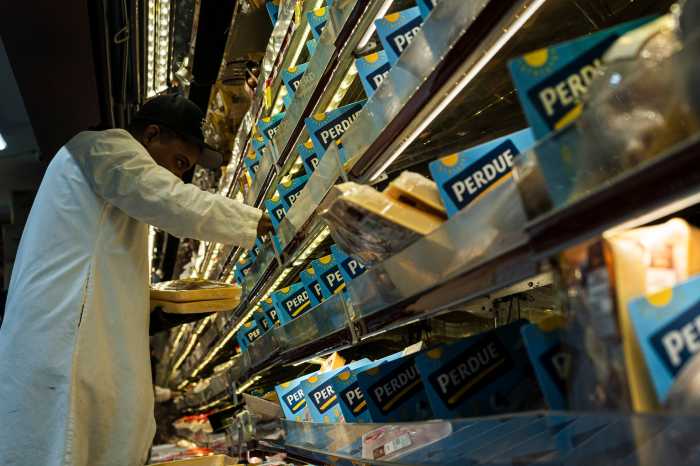 Even with one of the largest food distribution hubs in the country nearby, many Bronx residents still have to travel far and navigate high prices to access fresh, affordable groceries. Photo by Jonathan Portee
While the Bronx has several affordable grocery store options, like Aldi, Food Bazaar and ShopRite, they aren’t distributed equally throughout the borough, meaning some residents need to travel far or shop at stores with smaller selections.
In some cases, Bronx residents need to leave the borough entirely to get specific food items they need.
There’s one affordable supermarket chain that Bronx residents could benefit from having access to but they have never been in the borough or have future plans to – Trader Joe’s.
The Bronx is still the only borough in New York City that doesn’t have a Trader Joe’s despite having a median household income of $46,040, according to U.S. Census Bureau data. There are 10 locations in Manhattan, three in Queens, three in Brooklyn and two on Staten Island.
Trader Joe’s spokesperson Nakia Rohde did not respond to whether the company would open a store in the Bronx, but said they are always looking to open more stores.
“We are actively looking at hundreds of neighborhoods across the country, including many in New York, as we hope to open more neighborhood stores each year,” Rohde said. “We are not yet in every neighborhood that we hope to be in.”
Pedro Suarez, executive director of the Third Avenue BID, told the Bronx Times that while a Trader Joe’s could benefit Bronx communities, he wants people to support the local grocery stores that already exist in our neighborhoods.
“The city should look into how they can support existing local grocery stores so they can offer more low-cost options for families,” Suarez said, adding that the responsibility of making sure healthy food is accessible and affordable should come from the government, not local business owners or Bronx residents.
As city officials, nonprofits and wholesale retailers debate ways to solve equal access to healthy, affordable food, Hunts Point will remain the backbone of the city’s food distribution system. Still, each morning, many of its own residents are left navigating a system where fresh food is right in their own backyard, but not within reach.
Additional reporting by Jonathan Portee and Shea Vance.