
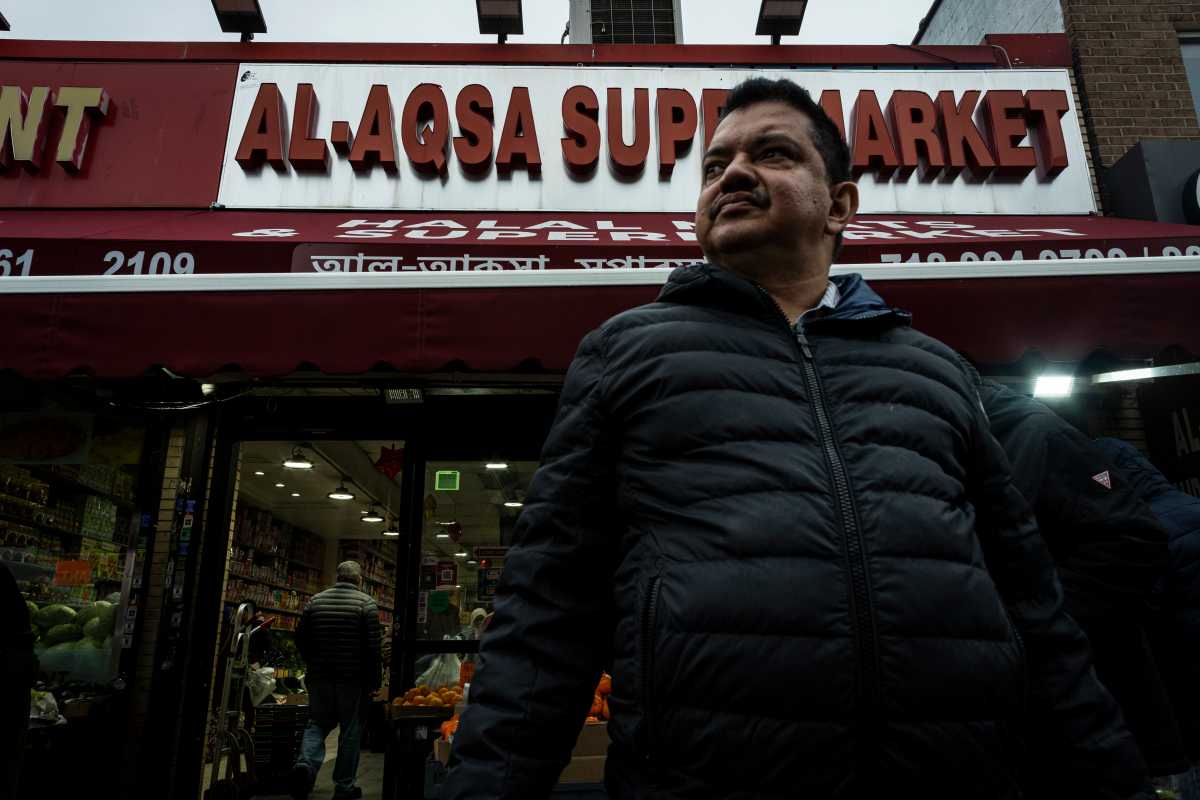
For many Bangladeshi families in the Bronx, getting groceries was not always as simple as walking down the block.
Fatema Nur emigrated to the Bronx from Bangladesh with her family three years ago. They now live just blocks from Starling Avenue, the center of the Bangladeshi community’s commercial activity.
Grocery trips are “pretty easy,” she said. Within a few blocks, she can find South Asian snacks, spices and halal meat. If one store doesn’t have what she needs, there’s always another nearby.
Along the Starling Avenue corridor —often referred to as “Bangla Bazaar,”— stretching between Castle Hill Avenue and Unionport Road, dozens of businesses cater specifically to the community.
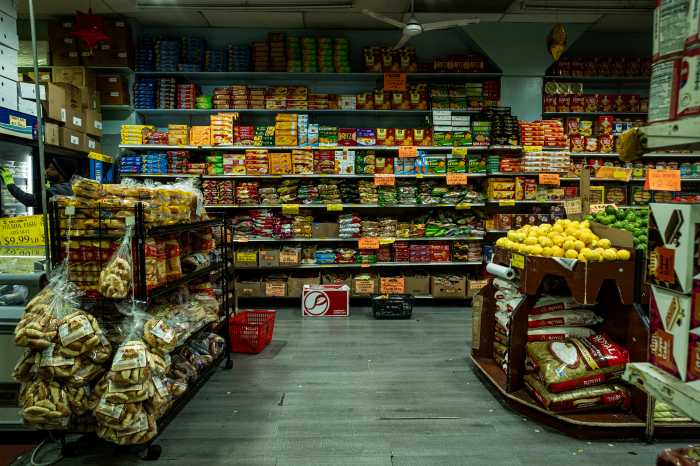 South Asian Spices, snacks, grains, and flours line the shelves at Al-Aqsa Supermarket. Photo by Jonathan Portee
Owned by Bangladeshi immigrants and second-generation residents, the strip includes not only grocery stores, but restaurants, clothing shops, pharmacies, tax offices and even driving schools. The Bangla Bazaar Business Association estimates there are about 45 storefronts along the two-block stretch, though multiple businesses often operate within a single space, bringing the total to up to 80.
Even for families who no longer live in the densely populated Bangladeshi enclave, trips to Starling Avenue remain a weekly routine.
Noshin Shakawat, who lives near Gun Hill Road, still makes the trip with her family. They often split their shopping— picking up bulk staples from American supermarkets or driving to Costco in Westchester County, while relying on Starling Avenue for halal meat, spices and specialty ingredients.
“It’s like when you go to one car dealership and they’re all next to each other,” Shakawat said.
Shakawat lives in a multigenerational household with 11 relatives, including aunts, uncles and cousins. Each week, a family member prepares a shared grocery list, typically budgeting between $250 and $300.
On weekends, the trip can take hours.
After circling for parking— sometimes settling for a spot in a nearby supermarket lot or double-parking along the crowded street—family members split up to tackle different parts of the list. One person gathers produce like mint, cilantro, cucumbers and bitter gourd, while another heads to the butcher for halal meat, such as whole chicken for curries. Others pick up spices, snacks and frozen goods.
S. Ali, who lives in Van Nest, goes to Starling Avenue almost every other week, driving with her sisters for their seven-person household while her sister cooks.
Like Shakawat, parking on Starling Avenue is a hassle for her and she has accumulated several parking tickets over the years.
“They’re trying to beat the clock because every Bengali is shopping there on a Saturday,” said Ali’s daughter, Tasnia.
Although securing familiar Bengali foods involves several logistical challenges, many families describe it as convenient.
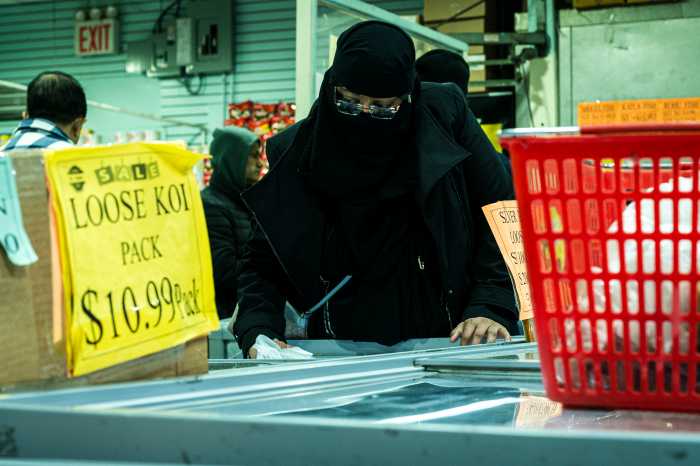 A shopper takes her pick of the frozen fish available, which includes local Bangladeshi species. Photo by Jonathan Portee
But it wasn’t always like this.
Since the 1990s, the number of storefronts serving the Bangladeshi community has grown rapidly, spurred by waves of immigrants arriving through the diversity visa lottery. While some families settled in neighborhoods like Norwood and Mosholu Parkway, the largest concentrations formed in Parkchester and Castle Hill, clustering around the Parkchester Jame Masjid— one of the earliest mosques in the area.
Bilal Islam has seen that transformation firsthand. He arrived in the Bronx as a young child in the late 1980s, when his family was among only a handful of Bangladeshi immigrants in the borough.
“Everybody liked to stick together and live near each other,” Islam said.
At the time, options were limited. Islam remembers just two small Bangladeshi grocery stores on Starling Avenue —Al-Amin Grocery and Poshora Market, the latter of which is still there today— and some South Asian produce at nearby Chinese supermarkets.
Bangladeshi cuisine relies on ingredients not typically found in major American grocery chains. For Muslims, who make up a majority of the Bangladeshi community in the Bronx, there is also the added necessity of halal-certified meat, requiring animals to be slaughtered according to Islamic law.
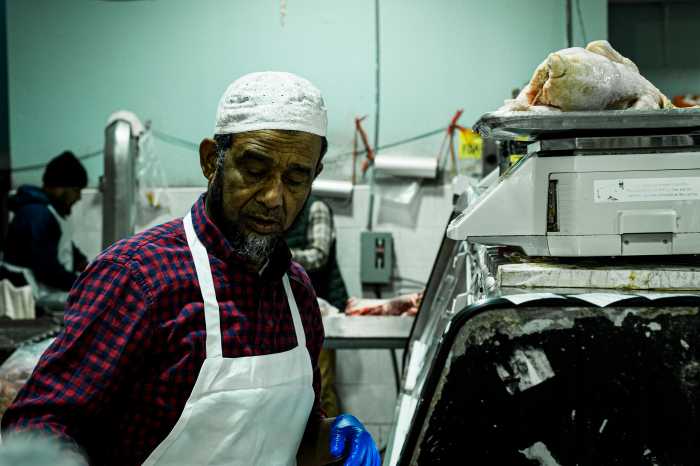 A butcher weighs a chicken at the halal meat counter at Al-Aqsa Supermarket. Photo by Jonathan Portee
Families often traveled far to meet these needs. Islam recalled trips with his father as a child, a yellow cab driver, to Jackson Heights, Queens, a major hub for South Asian groceries.
“People used to take trains and everything for Jackson Heights shopping. Everyone used to go there for groceries, clothing and everything,” Islam said. “Honestly speaking, now nobody goes to Jackson Heights.”
Today, shoppers travel from across the tri-state area, including New Jersey and Connecticut, to visit Bangla Bazaar. It’s become a more accessible alternative to Jackson Heights.
One of the most popular destinations is Al-Aqsa Supermarket, known for its wide selection of South Asian goods and relatively low prices, according to shoppers who spoke to the Bronx Times. Islam said that several South Asian grocery stores had previously occupied the same site over the decades, but Al-Aqsa’s success reflects the rapid growth of the Bangladeshi population in recent years.
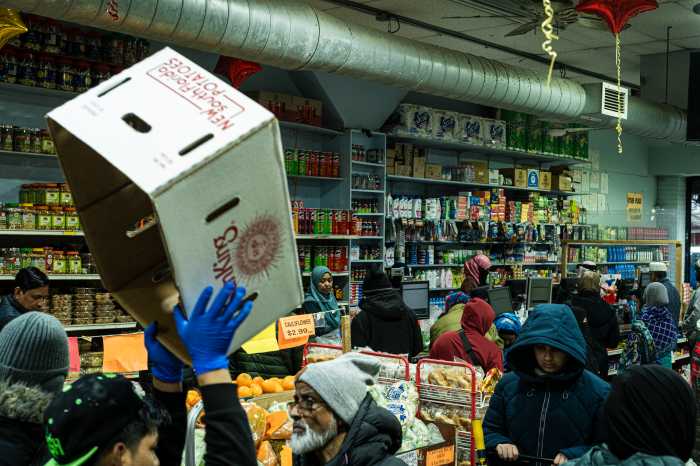 Shoppers fill the popular Al Aqsa Supermarket. Photo by Jonathan Portee
The Center for Migration Studies estimates that there are over 105,000 Bangladeshi immigrants in New York City as of 2023, an 87% increase from 2010. Approximately 20,000 people live in the Bronx, according to 2020 Census Data.
Islam, who owns Golden Palace Catering and Banquet Hall on Unionport Road, is part of a younger generation of Bangladeshi business owners working to sustain and expand the corridor’s growth. As vice president of the Bangla Bazaar Business Association, he helped revitalize the group after the passing of their first president.
Islam said the biggest challenge is that the population is growing faster than the available retail and housing space. Bangladeshi businesses are spreading outward along the 6 train lines to Castle Hill Avenue, Zerega Avenue and Westchester Square. At the same time, families are moving from Queens to the Bronx for more affordable homes and easier access to groceries and community networks.
But for the families who shop along Starling Avenue, the appeal isn’t just convenience— it’s connection. What began with two grocery stores has blossomed into a corridor of businesses that bring a sense of home and continues to grow.