
Across the country, food pantries, providers, and advocacy organizations are bracing for the full impact of President Donald Trump’s “One Big Beautiful Bill Act” passed last summer, which made drastic changes and cuts to the federal Supplemental Nutrition Assistance Program (SNAP).
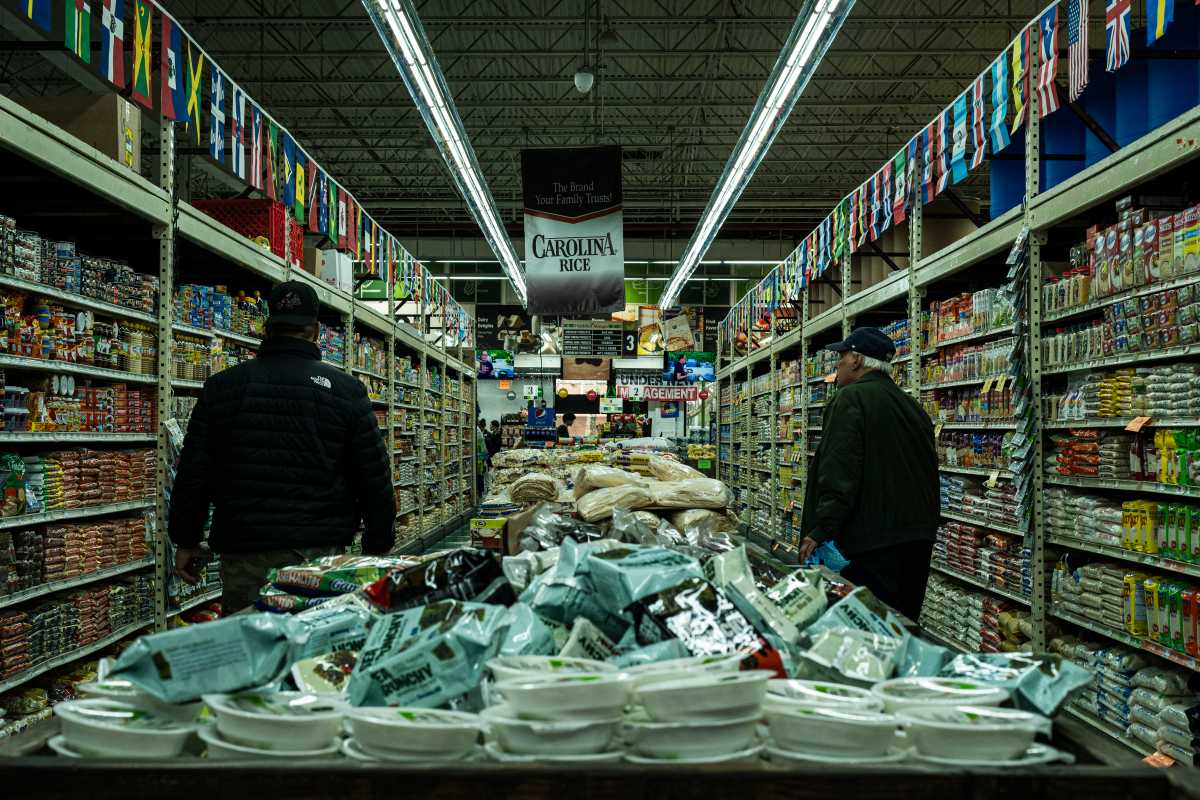
In New York City, this effort is especially crucial in the Bronx, which has the highest hunger, food insecurity, and poverty rates of New York City’s five boroughs.
“There’s a big gap in the Bronx to fill,” explained Josh Morden, director of network engagement for City Harvest, a food rescue organization that delivers millions of pounds of food to 400 food pantries and soup kitchens across the city.
To understand the Bronx’s stark food insecurity rates, Morden said, one has to take into account the cost of living and access to healthcare in addition to the raw data regarding hunger.
Community Districts 1 and 2 in the Bronx, which include Longwood, Hunts Point, Melrose, Mott Haven and Port Morris, have the highest rates of poverty and income inadequacy in New York City, with 80% of households falling below the estimated True Cost of Living, according to a new report released in March.
Morden, alongside food pantries and food organizations across the Bronx, is staring down devastating cuts to federal food assistance in an already strained borough.
“We’re going to try and meet the gap as best as we can,” Morden said. “But $186 billion in critical SNAP funding, it’s going to be devastating.”
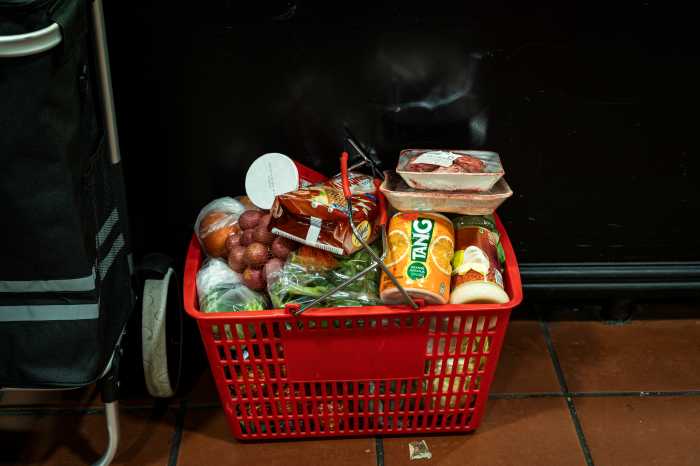 The Bronx has the highest deli-to-supermarket disparity across the five boroughs. In some neighborhoods, bodegas and delis outnumber supermarkets 25-1. Photo by Jonathan Portee
The coming cuts
In numbers, last summer’s federal budget includes $186 billion in cuts to SNAP. Trump and Congressional Republicans included the cuts in a slew of budget slashes to make room for trillions in tax cuts. The bill also included cuts to Medicaid, Medicare, and Affordable Care Act subsidies.
The new SNAP rules expanded work-reporting requirements, restricted benefit-level increases that are currently made based on inflation and rising food costs, and shifted billions in SNAP costs to states. Previously, the federal government covered 100% of SNAP.
Though the cuts have yet to fully take shape, food pantries in the Bronx have already seen moments of high need, such as last November’s federal government shutdown, which halted SNAP benefits across the country.
“This is something that happens in cycles and happens over time, whenever there is a federal policy or situation that is affecting people’s access to resources and food, the immediate reaction is we get a lot of people who come to us in confusion and distress,” said Diego Padilla, the director of external relations and communications at Part of the Solution (POTS), a Bronx community organization that has operated a food pantry and soup kitchen for over four decades.
In addition to providing meals, food pantries look to provide information to the people who walk through their doors. Misinformation about federal benefits runs rampant on social media, Padilla explained, and a key aspect of the work is helping people understand and access the benefits they’re eligible for.
“Either if people are not receiving the SNAP benefits that they’re eligible for, or they are not receiving the right allotment of those SNAP benefits based on our staff’s determination, we can help them through mediation or through application in order to get those SNAP benefits,” said POTS Executive Director Christina Hanson.
Even without the drastic cuts facing Americans who benefit from SNAP, the program has long struggled to meet full need. In a year without historic cuts, food pantries and providers work hard to fill the gaps left by federal assistance.
“SNAP is really the big anti-hunger program,” Hanson said. “And then we’re very happy to be here to serve where those gaps are, which do exist. We all know the SNAP program is inefficient.”
The policy battle
Joel Berg, the CEO of Hunger Free America (HFA), a nonprofit that studies hunger and advocates for food assistance, said that food pantries can only do so much to meet need, especially when need is so high.
Food pantries and soup kitchens are the most visible actors in the battle against hunger, Berg said, but they only have the capacity to provide about 6% of what SNAP benefits offer to New Yorkers.
HFA is a nonpartisan group, but Berg is the first to acknowledge that the best shot at reversing some of the devastating SNAP cuts is if Democrats take back the House and Senate during the fall midterm elections.
Berg said that HFA and other organizations have been in communication with the city and state about developing a “comprehensive plan” to handle the federal cuts.
In October 2025, Gov. Kathy Hochul announced that the state would be fast-tracking $30 million in state funds to mitigate some of the impact of the SNAP changes, which began taking place on Nov. 1, 2025.
The City Council focused on partnerships with Bronx-based food organizations in the wake of the initial cuts, wkathorking with City Harvest and Food Bank for New York City to increase food supply to high-SNAP-use neighborhoods and coordinate additional distributions for federal workers, seniors, and SNAP recipients impacted by the shutdown.
Berg said that the future of food assistance in the United States, and in high-need areas like the Bronx, is uncertain. With cuts to a federal program that already struggles to meet need, things have gone from “bad to worse and worse to worser,” Berg said.
Food pantries and direct aid organizations are important actors in the fight against hunger, Berg said, but at the end of the day, if the cost of living keeps skyrocketing and people are struggling to afford rent and healthcare, the food insecurity crisis in the Bronx and in New York City will only compound.
Meeting the gap
For food pantries and providers across the city, the gaps were already widening before SNAP cuts took effect. The cost of living in New York City is skyrocketing, and increasing income inequality across the five boroughs — particularly in the Bronx — has worsened food insecurity.
“We are looking at what the ballooning need will be, not just from SNAP cuts, but from cuts to health care and other federal subsidies that people get, because that is going to contribute to food insecurity in general,” Morden said.
City Harvest and POTS work together to ensure that healthy, fresh food gets where it needs to go. In addition to providing meals, food pantries and community centers like POTS work to offer their clients food choice and high-quality options.
The Bronx has the highest deli-to-supermarket disparity across the five boroughs. In some neighborhoods, bodegas and delis outnumber supermarkets 25-1. At POTS, Bronxites in need can either take a points card and select food on their own or they can opt for pre-selected food.
“We’re making sure that we’re providing constantly fresh produce and vegetables, as well as proteins and dairy, to make sure that we have a well-balanced meal,” said Taina Rodriguez, Associate Director of Food and Dignity Programs at POTS.
Building connections with the Bronxites that come to the food pantry and the soup kitchen — called the community dining room — is key to POTS’ work. POTS alone provided 3.1 million meals to the Bronx in 2025, Hanson said.
Those provisions, however, are meant to be an emergency stopgap to meet needs left by SNAP benefits that run out at the end of the month or a particularly low-income period. Once POTS meets the immediate need, it takes individuals in to help them get the proper federal support. This work is strained when that federal support dissipates.
There are hundreds of thousands of people in the Bronx and in New York City who are eligible for benefits and not receiving them, or who are receiving the wrong level of benefits, Berg said. In “normal times,” there are countless gaps that need filling, and in a time of historic benefit cuts, there’s no telling what the need will look like.
“It’s really scary,” Morden said. “We’re fortunate that New York City has a lot of major food funders that overlap, but it’s still a huge amount of product and access to food resources that’s going to disappear. It will have a huge impact on New York.”
Food pantries like POTS will rely more heavily on philanthropic support to boost their operations, Hanson said. In the Bronx, this need is especially high, and food aid organizations are bracing for what’s to come.
“Should the impact be what we think it will be, we cannot mount a response without financial support from a range of sources,” Hanson said. “I encourage people to support their local pantries and consider what’s coming.”