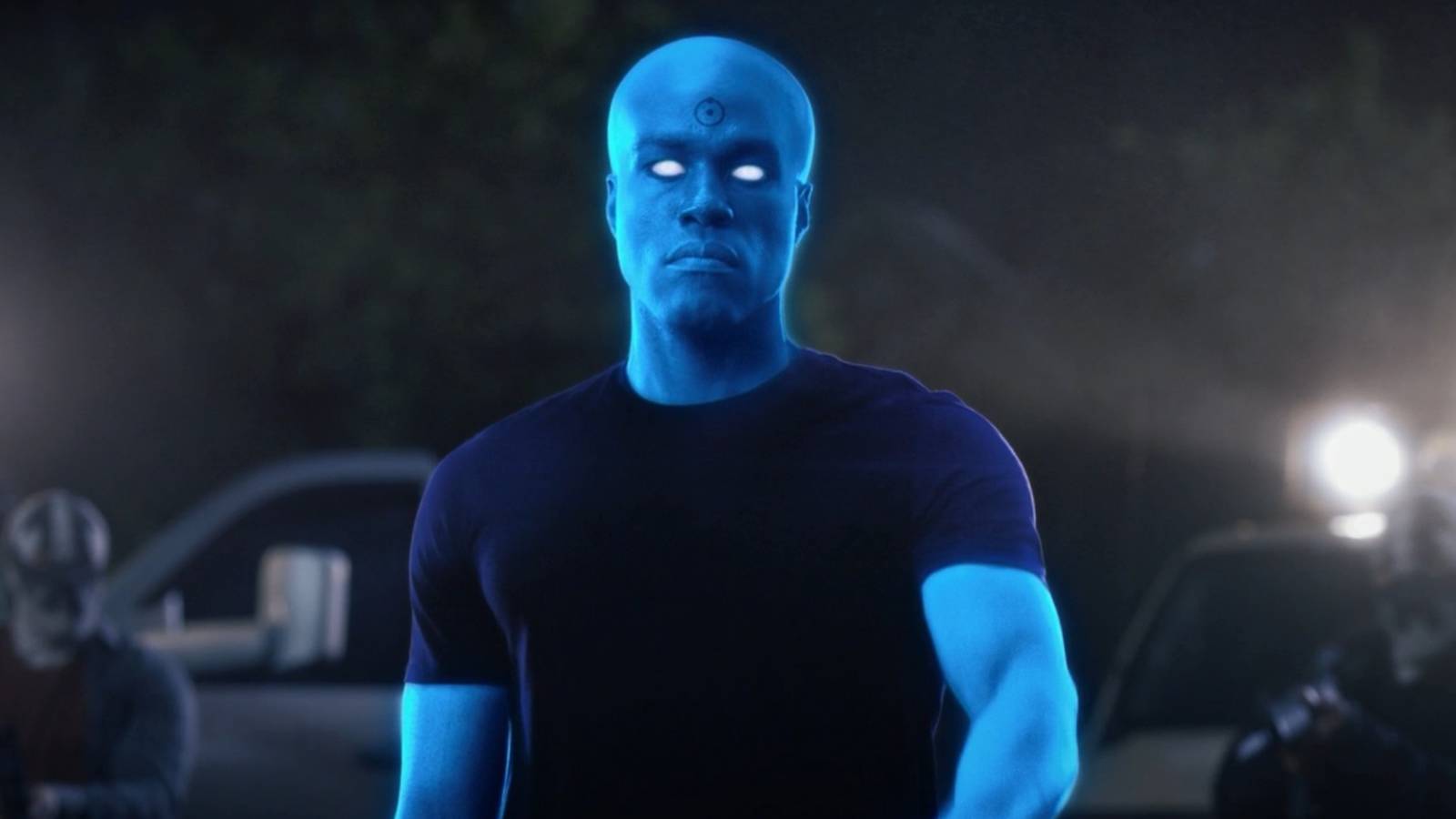
Audiences have always had an adoration for superheroes. From comic books to big screen blockbusters, the genre has served as a beacon of escapism. From the likes of the Caped Crusader, the Man of Steel, and Your Friendly Neighborhood Spider-Man, the landscape of the genre has grown beyond the classics and into a new realm, thanks in part to the boom in superhero TV series. There have been countless shows that have scratched the comic book itch in the 21st century, but one of the most dominating entries was the HBO adaptation of Watchmen. Created by Damon Lindelof for television, the limited series took the DC comic and remixed it through a modern lens. Watchmen was a highly lauded and awarded series, and rightly so. Brilliantly crafted with a cinematic approach, Watchmen continues to resonate as more superhero shows come to fruition.
Now, should there be a Mount Rushmore of the genre, Watchmen would likely just miss the carving, as there are four superhero shows that are better. One is a violent satire on superheroes and society at large. Another is lifted straight from the brain of the face of My Chemical Romance. One took a beloved heroine and gave a truly twisted take on grief. And the last one surged to the top as an underdog series depicting the downside of having powers when all you want to do is be a star. The titles on this list have made a major impact on the genre by pushing superhero stories beyond the bangs, booms, and pows. They’ve found humanity within. They’ve introduced the power of family. And most importantly, they’ve given us non-stop entertainment.
‘The Boys’ (2019–Present)
Superhero films often sanitize some of the action to appeal to a wider audience. That’s not to say that there isn’t death and violence along the way, but the gore factor tends to be absent. And sometimes, that’s OK! But what happens when you remove the filter and go full tilt in violence, gore, and shock value? You get the groundbreaking crowd-pleaser, The Boys. Developed by Eric Kripke for Prime Video, the series is based on the comic book series by Garth Ennis and Darick Robertson. The premise of the show is simple: superpowered individuals, better known as Supes, are corrupt, narcissistic celebrities managed by a ruthless corporation known as Vought International. The story follows a group of human vigilantes, led by Billy Butcher (Karl Urban), who fight to expose the true nature of Vought by taking down Homelander (Antony Starr) and the Seven, the world’s premier yet evil superhero team, having been created by the substance Compound V. The Boys is a dark, satirical super show that subverts the genre and flips it on its head. An extremely graphic superhero series, The Boys unabashedly showcases the grimy side of what a hero might look and act like.
The way into The Boys is accepting the reversal of the hero’s journey. The bright, colorful costumes mask the moral darkness inside. On the other side, the grim bleakness of the vigilantes opposing the Supes appears morally gray, but there is heroism somewhere within. That’s the masterful part of The Boys. Even with the roles reversed, it still retains the elements we love about the genre as we examine the compelling contrast between our preconceived notions. The Boys dives straight into contemporary social topics and media trends using the superhero lens. Yes, it often comes off as quite heavy-handed, but it’s the mirror we need during dark times. What The Boys and Watchmen have in common is their approach to social commentary. Watchmen uses it in a quite dense manner, whereas The Boys introduces it through a more direct, entertainingly scathing satire.
The Boys delivers high-octane performances on screen. The Boys has soared to the top thanks to brilliant performances from the entire ensemble. Starr has crafted such a vile creation in Homelander that he’ll likely always be seen as Homelander in the same way Anthony Hopkins will forever be Hannibal Lecter. His ability to elicit such strong reactions, even as his character literally gets away with murder, is a mark of a legendary performance. Jack Quaid plays the audience’s entry into this world as Hughie, and he does so remarkably. From pure good to kind of good with a willingness to move toward the dark side. Then you have big, bold additions throughout the run, including Aya Cash as Stormfront, Claudia Doumit as Victoria Neuman, and Susan Heyward as Sister Sage, who built the universe to be even more diabolical. Watchmen introduces more nuanced characters to the story, respecting the source material and genre. They honor the genre, while the characters in The Boys enjoy tearing it down and burning it to the ground. A special shout-out must be given to Gen V, the spin-off series to The Boys. For a show that’s only getting started, allot Gen V to ruminate a bit longer, and it’s on track to surpass the success of its predecessor. Nevertheless, The Boys has the edge over Watchmen because of its willingness to go where no superhero show has gone before.
‘The Umbrella Academy’ (2019–2024)
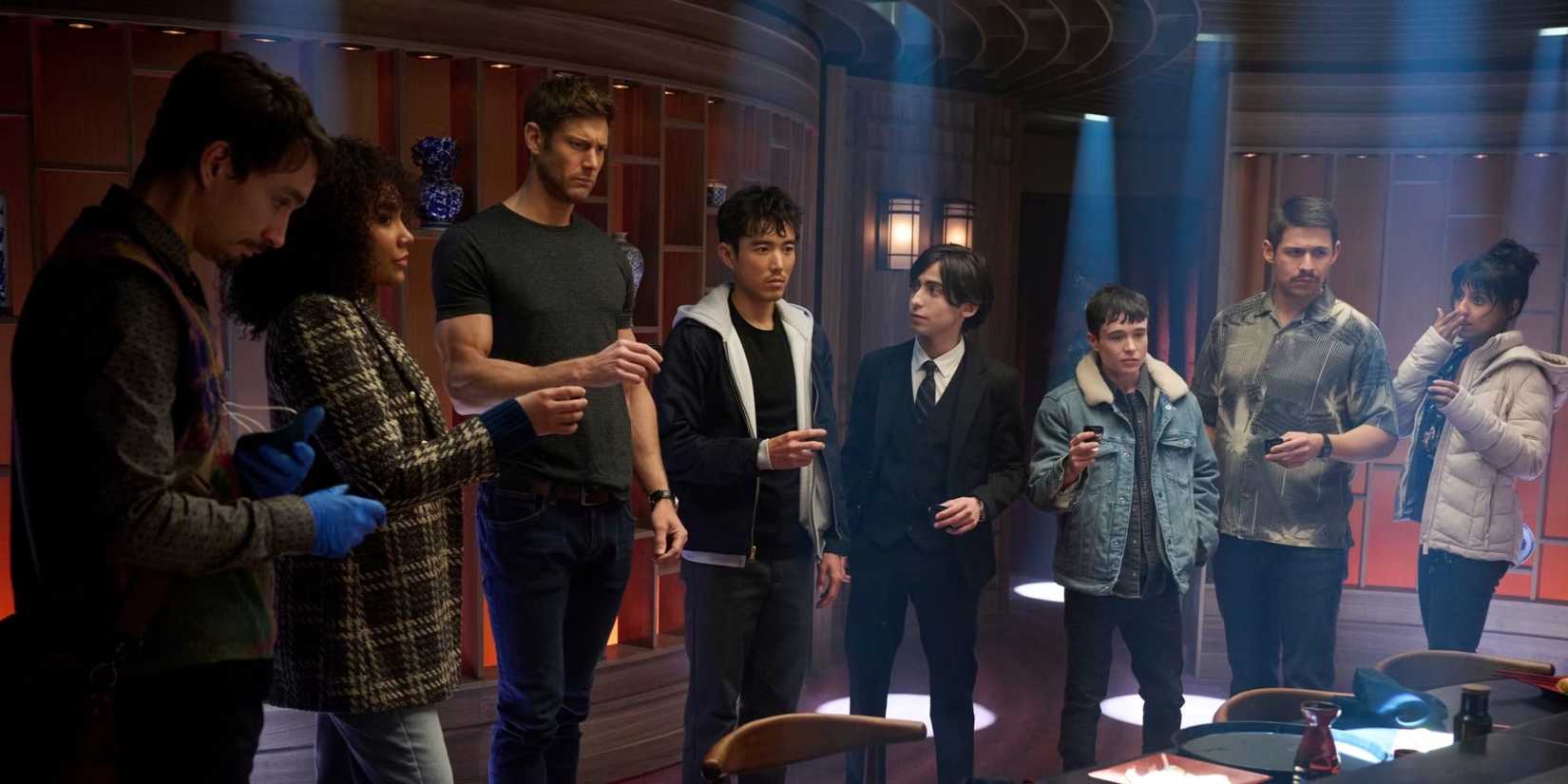
Emmy Raver-Lampman, Tom Hopper, Elliot Page and the cast holding shot glasses in The Umbrella Academy.Image via Netflix
Though DC and Marvel tend to dominate the superhero comic circuit, never sleep on Dark Horse Comics! In 2019, Netflix entertained audiences with a four-part series inspired by the comic book series, The Umbrella Academy, by Gerard Way, of My Chemical Romance fame, and illustrated by Gabriel Bá. The hit series follows seven estranged, superpowered adopted siblings who reunite following their father’s death. The dysfunctional siblings must work together to solve family mysteries and prevent a recurring, imminent apocalypse, all while navigating their own messy lives, traumatic childhoods, and unique abilities. Becoming one of the most-streamed series of the year, The Umbrella Academy presented a new type of superhero narrative paired with an unconventional tone of humor, pizzazz, and absurdity. With a brilliantly vibrant aesthetic and a killer soundtrack, The Umbrella Academy swiftly moved up the ranks as a top-notch series with a devoted following of the original comic lovers and newfound fans alike.
The main draw was the primary characters. Audiences love to latch onto a particular character, whether for personal association or adoration of the hero, so having six Hargreeves siblings to choose from became an immediate draw. Fortunately, they were portrayed sensationally by a team of extraordinary performers— Tom Hopper as an astronaut with super strength, Luther; David Castañeda as telekinetic troublemaker Diego; Emmy Raver-Lampman as rumor mindbender Allison; Robert Sheehan as flamboyant dead communicator Klaus; Aidan Gallagher as the sibling who can jump through space and time but stuck in a boy’s body, Number Five; and Elliot Page as the violinist who can convert sound waves into physical force, Victor. Each main character not only has a chance to shine with their own storyline, it’s when they unite that magic happens on screen. Only the Umbrella Academy can save the world while bickering and fighting through unresolved sibling issues. The Umbrella Academy was truly about the characters. Even when some of the storylines were haywire or veered away from the source material, it was the ensemble that kept the series alive. Beyond the Hargreeves, The Umbrella Academy boasted a fantastic ensemble during its run, including Mary J. Blige and Cameron Britton as Cha-Cha and Hazel; Justin H. Min as Ben Hargreeves and later the Sparrow Number Two version of Ben; Ritu Arya as Lila Pitts; and the dynamic duo of Nick Offerman and Megan Mullally as Dr. Gene and Dr. Jean Thibedeau in Season 4.
Beyond the main action, The Umbrella Academy dove headfirst into showcasing how these damaged individuals were not just heroes; they were grappling with abilities that they didn’t necessarily ask for. Through a psychological lens, The Umbrella Academy was far more daring than Watchmen, which stuck to the status quo in superhero storytelling. The Umbrella Academy was a far more accessible, action-packed joyride, like a carnival fun house. Now, listen: as a loyalist to the series, I can acknowledge that the final season was a bit of a letdown. So was Game of Thrones—for two seasons—but we don’t discredit its brilliance. The Umbrella Academy was a hodgepodge of a masterpiece. Call it the Pablo Picasso of superhero series.
Collider Exclusive · Star Wars Quiz
Which Force User
Are You?
Light Side · Dark Side · Or Somewhere Between
The Force is not a binary. It is a spectrum — from the serene halls of the Jedi Temple to the shadowed corridors of Sith space. Ten questions will reveal where you truly fall. The Force has always known. Now you will too.
🔵Jedi Master
🟡Padawan
🔴Sith Lord
⚫Inquisitor
⚪Grey Jedi
IGNITE YOUR SABER →
01
What is the Force to you?
Your relationship with the Force defines everything else.
AA living energy I must be worthy of — it is not mine to control.
BSomething vast and mysterious I’m only beginning to understand.
CNeither light nor dark — just a current I choose to ride.
DPower. Pure and simple. The strong take it; the weak don’t.
NEXT QUESTION →
02
When you feel strong emotions — anger, grief, love — what do you do?
The Jedi suppress. The Sith feed. Others choose differently.
AAcknowledge them, then release them. Attachment leads to suffering.
BFeel them fully, then decide what to do — they’re not the enemy.
CBury them. Emotion is a liability I can’t afford to indulge.
DUse them. Passion is the engine of the dark side for good reason.
NEXT QUESTION →
03
The Jedi Council gives you an order you disagree with. You:
How you handle authority reveals your alignment.
AFollow it. The Council’s wisdom surpasses my own perspective.
BVoice my objection clearly, then defer to the decision.
CComply outwardly while doing what I think is right.
DIgnore it. The strong don’t answer to committees.
NEXT QUESTION →
04
You are offered forbidden knowledge that could give you enormous power. The cost is crossing a moral line. You:
The dark side’s pull is never more than a choice away.
ARefuse without hesitation. There is no cost worth that price.
BWeigh it carefully — sometimes darkness holds real answers.
CFeel the pull but walk away — for now.
DAccept it. Power justifies the method used to obtain it.
NEXT QUESTION →
05
Your approach to training and learning is:
A student’s habits become a master’s character.
ADedicated but humble. There is always more to learn from my masters.
BRigorous and patient. Mastery is earned through years of discipline.
CEclectic — I draw from every tradition, not just one.
DRelentless and brutal. Pain accelerates growth. Rest is weakness.
NEXT QUESTION →
06
In a duel, your lightsaber fighting style reflects:
Combat is the purest expression of a Force user’s philosophy.
ADefense and composure — I wait for my opponent to overcommit.
BFast and instinctive — I trust the Force to guide my movements.
CUnpredictable — I blend styles to keep enemies off-balance.
DOverwhelming aggression — I end fights before they begin.
NEXT QUESTION →
07
A defeated enemy lies at your feet, powerless. You:
Mercy — or its absence — is the truest test of alignment.
AStrike them down — compassion toward enemies is naïve and costly.
BNeutralize them permanently. I can’t afford loose ends.
CSpare them if I can — but stay clear-eyed about the risks.
DOffer them a chance to surrender. Every being deserves that.
NEXT QUESTION →
08
The Jedi Code forbids attachment. Your honest view on love and bonds:
The source of the greatest falls in the galaxy.
AThe Code is right. Attachment clouds judgment and invites suffering.
BLove is not a weakness — the Jedi Code got this one wrong.
CI have no attachment — only loyalty to my master’s mission.
DI feel it deeply but struggle to reconcile it with my training.
NEXT QUESTION →
09
Why do you use the Force at all? What’s the point?
Purpose is the difference between a knight and a weapon.
ATo learn. I’m still figuring out what I’m capable of.
BTo protect and serve. The Force is a responsibility, not a gift.
CTo survive — and maybe carve out something worth having.
DTo dominate. Strength demands to be expressed, not contained.
NEXT QUESTION →
10
At the final moment — light side or dark side pulling at you — what wins?
In the end, every Force user faces this moment. What does yours look like?
AThe light. I choose peace, even when darkness would be easier.
BNeither fully — I carve my own path through the middle.
CWhoever I serve — my loyalty defines me more than my morality.
DThe dark. Power is the only thing that’s ever actually been real.
REVEAL MY ALIGNMENT →
Your Alignment Has Been Determined
Your Place in the Force
The scores below reveal how the Force sees you. Your highest number is your true alignment. Read on to understand what that means — and what it will cost you.
🔵
Jedi Master
🟡
Padawan
🔴
Sith Lord
⚫
Inquisitor
⚪
Grey Jedi
Disciplined, compassionate, and deeply attuned to the living Force, you have walked the path long enough to understand its demands — and accept them. You lead not through authority alone, but through example. You have felt the pull of the dark side and chosen otherwise, every time. That is not certainty. That is courage.
You are earnest, powerful, and brimming with potential — and you know it, which is both your greatest asset and your most dangerous flaw. You act before you think, trust your gut over your training, and sometimes confuse impatience for bravery. The Masters see something in you, though. The question isn’t whether you have what it takes — it’s whether you’ll be patient enough to find out.
You are not simply dangerous — you are certain, and that is worse. You have decided what the galaxy needs, and you have decided you are the one to deliver it. Your power is genuine and formidable, earned through sacrifice that would have broken lesser beings. But examine your victories carefully. Every Sith believed their cause was righteous. The dark side’s cruelest trick is that it agrees with you.
You were forged in fire and reshaped by those who found you at your lowest. You serve, because service gave you structure when you had none. Your allegiance is not to an ideology — it is to survival and to the master who gave you purpose. But there is something buried beneath the conditioning. The Jedi you hunt? You recognize them. Because you remember what it felt like before the choice was taken from you.
You have looked at the Jedi Code and the Sith Code and found both of them incomplete. You walk the line not out of indecision but out of conviction — you genuinely believe both extremes miss something essential. The Jedi don’t fully trust you. The Sith think you’re wasting your potential. They’re both partially right. But so are you.
↻ RETAKE THE QUIZ
‘WandaVision’ (2021)
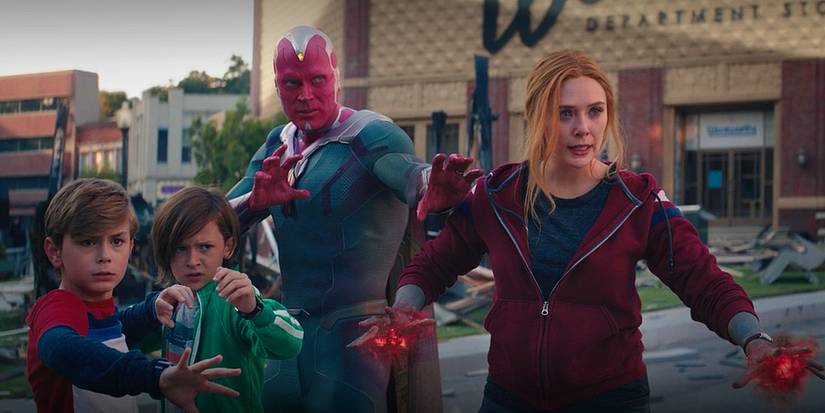
Wanda and her family fight in WandaVisionImage via Disney+
The Marvel Cinematic Universe is an ever-growing media mammoth thanks to the consistent success of the films. They’re not all perfect, but they certainly pull in at the box office! There were Marvel TV shows that weren’t officially canon quite yet, like Agents of S.H.I.E.L.D. and Jessica Jones, but once the MCU joined forces with Disney+, the series were amplified. And it all started with WandaVision. A spin-off that followed the events of Avengers: Endgame, WandaVision dropped Marvel’s favorite couple, Wanda Maximoff (Elizabeth Olsen) and Vision (Paul Bettany), into an idyllic suburban life in Westview, New Jersey. Not everything is what it seems. Moving between the decades through an homage to classic sitcoms, the strange events surrounding the town were all due to Wanda’s creation of a “pocket reality” to cope with the loss of vision. As Monica Rambeau (Teyonah Parris), Jimmy Woo (Randall Park), Darcy Lewis (Kat Dennings), and S.W.O.R.D. investigate the anomaly, it’s Wanda’s nosy neighbor, “Agnes,” better known as Agatha Harkness (Kathryn Hahn), who is really in control. On its own, WandaVision had a brilliant premise, but the biggest discovery was that the MCU could not only expand to the small screen but also could be even greater than the big-screen blockbusters.
WandaVision broke the mold of where the MCU could go. Rather than sticking to the typical Marvel format, creator Jac Schaeffer crafted a sensational universe that was uniquely its own. By subverting the typical Marvel tropes through a weekly television series, it allowed the mystery to build as the characters developed more than they could in a large-cast film. For television lovers, WandaVision’s ability to play with sitcom satire while using it as a coping mechanism was beyond universal. We all have our escape shows, but we don’t get to live them out. Wanda gets to, becoming an even more relatable figure. WandaVision helped make Wanda even bigger than she was, especially when the Scarlet Witch officially arrived. Pair that with Hahn’s impeccable turn as a new version of the comic character, and magic was made.
WandaVision had an element that Watchmen didn’t: pop culture appeal. With each episode honoring a specific sitcom style, viewers took to social media to discuss and theorize. Then, it all blew up the moment that Kristen Anderson-Lopez and Robert Lopez’s iconic song, “Agatha All Along,” dropped. It launched the series into the stratosphere, making it a cultural phenomenon. The series was so well received that it spawned two more parts for a trilogy: Agatha All Along and the upcoming VisionQuest. None of this could have happened without the emotional storytelling, innovative format, and brilliant tone. Watchmen stayed in its lane for a cynical, politically tinged drama. WandaVision was more than eager to break the mold and pave the way for every MCU-Disney+ series that followed. If you like your superhero content to have a clever take on meta-realism, look no further than this masterpiece.
‘Wonder Man’ (2026–Present)
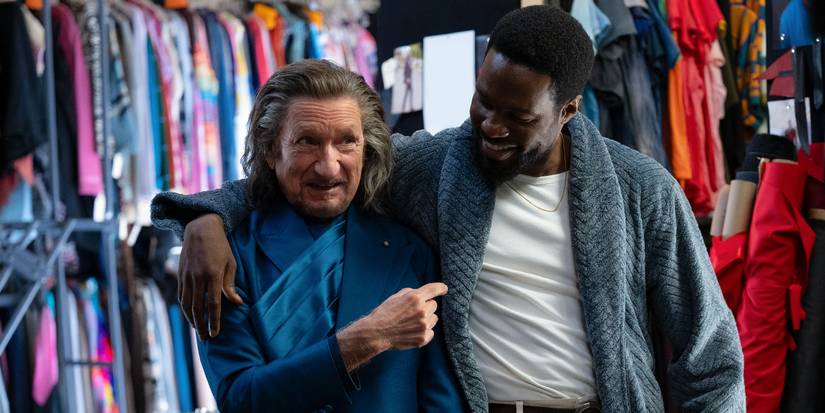
Yahya Abdul-Mateen II with his arm around Ben Kingsley who is pointing to him and they both smile in Wonder Man Episode 7.Image via Disney+
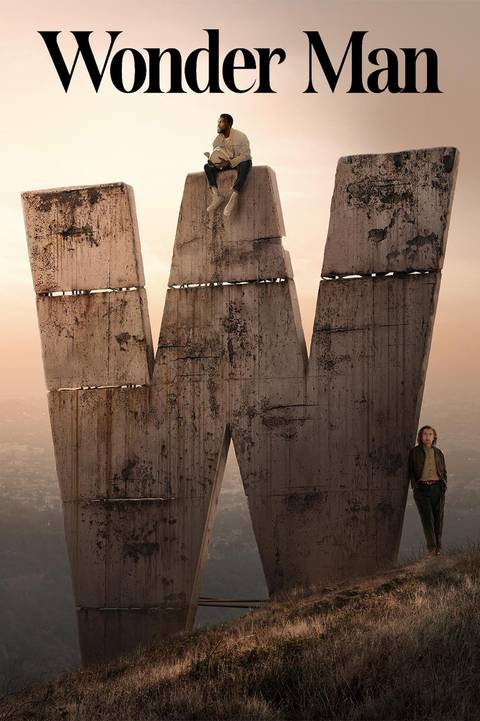
Yes, the truth is that we seek out superhero content for the bangs, the booms, and the pows. But if you’re seeking out the other side of the superhero story, look no further than the latest MCU masterpiece, Wonder Man. Created by Destin Daniel Cretton and Andrew Guest, Wonder Man went beyond the tropes to create a sensational twist on what it’s like to have powers when all you want to do is be a series actor. The series follows Simon Williams (Yahya Abdul-Mateen II), a struggling Hollywood actor with superhero powers. Simon attempts to land his dream role in a remake of the film Wonder Man. Unfortunately, following the Doorman Clause, there is a ban on superpowered individuals working in the industry. As Simon attempts to keep his ionic energy powers at bay, he forms an odd couple bond with the infamous Trevor Slattery (Ben Kingsley), who is secretly working for the Department of Damage Control. A series that works wonders as a meta-commentary on the genre, Hollywood, and the industry’s absurdity, Wonder Man proved that high-octane action sequences do not define a superhero story.
Fans of Marvel Comics are familiar with Simon Williams as the alter ego of Wonder Man, but rather than an origin story, it’s presented as a triumphant, standalone, character-driven narrative. Wonder Man became a groundbreaking entry for both the genre and the MCU. Simon is presented as an individual first, superpowered hero second. By doing so, it allows Simon to become a fully-rounded, nuanced character. Wonder Man is not about a global catastrophe where the hero has to save the world from ending. Wonder Man is about a personal catastrophe where a hero has to save himself from having his life and career end. You identify with his struggles and with how his abilities have become more of a hindrance than a help. With the theme of identity at the forefront, Simon becomes a relatable character as his struggles resonate on a deeper level.
The writing within the eight-episode first season is top-notch. The MCU is used as a backdrop, but at times, it smartly disappears into the background to allow the characters to shine. Then, to spend an entire episode away from the titular character to dive into the lore and mythology of the Doorman Clause and DeMarr Davis’ (Byron Bowers) impact on the greater hero perception was groundbreaking in itself. Pulling away from Simon to provide crucial insight by showing, not telling, enriched Wonder Man. It’s a risk most shows would never dare take. Wonder Man soars because of the performances. Perhaps the secret to success is casting Yahya Abdul-Mateen II because, wouldn’t you know, he starred in both Wonder Man and Watchmen! Then, pair him with one of the most controversial figures in the entirety of the MCU, and somehow Trevor Slattery emerges as an empathetic figure that we misjudged since his first appearance. Though there could have been more to the Watchmen story, it was only given a single season. Wonder Man immediately earned and deserved a second season order. Simon was so well-received that he’s likely going to appear on the big screen at some point in the upcoming MCU phase. Watchmen will forever be praised for opening doors in the genre. Wonder Man busted down the door frame and zoomed right through, leaving Watchmen in the dust.
Release Date
2026 – 2026-00-00
Network
Disney+