
Gibson Durnford says it’s a tough time to be a farmer and a tough time to serve as a charity.
It’s even more difficult at his farm, the nonprofit Ten Mile Farm Foundation. The farm grows food specifically tailored for local pantries and communities that need them.
“In our area, farm resources are really being pulled back,” Durnford said. “Even doing a tractor repair can be really challenging because those places just don’t exist anymore. A lot of our seed comes from pretty far away, and so resources just are pretty slim, plus operating costs are increasing.”
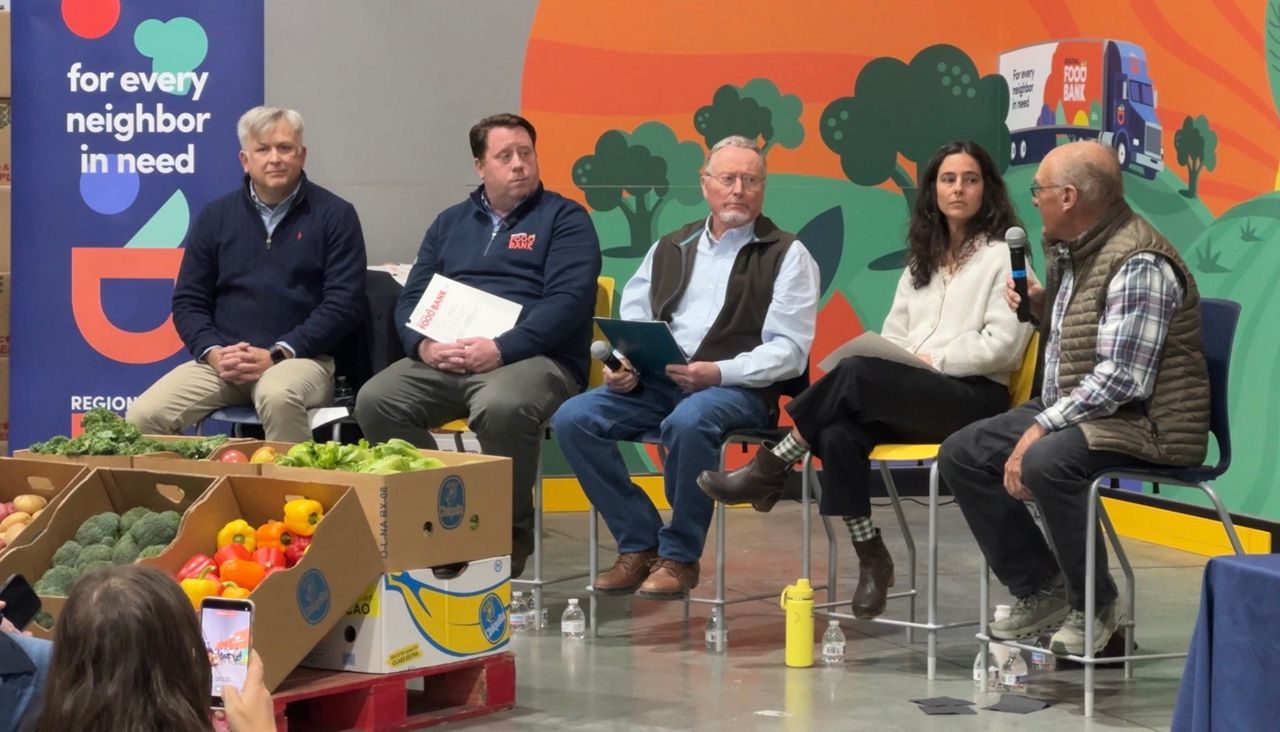
Facing issues with rising costs and declining funding and research, Durnford was flanked by experts in agriculture at the Hudson Valley’s Regional Food Bank to find solutions. The building hosted a panel where farmers, alongside the food bank’s CEO and the state Commissioner of Agriculture and Markets Richard Ball, discussed the issues facing their field and how to confront them.
Ball said that the pandemic-era program Nourish New York has been a huge success. Now a permanent program, it opened a new marketplace for farmers to sell their food to emergency food providers like the food bank. The first three years of the program saw it distribute more than 100 million meals statewide. Ball says New York needs to continue innovating.
“The objective today is really to enhance the collaboration and enhance the relations,” he said. “We already in New York have an excellent relationship with our food banks, with our food pantries, with the emergency food system. And I think the pandemic brought home how critical that relationship needs to be.”
Food Bank CEO Tom Nardacci says it’s focused on continuing communication and connection with local farms.
“We’re trying to do a better job getting to them, talking to them and letting them know what types of programs we have,” he said. “You’re also trying to solve the transportation issue. How do we source food, pick it up and deliver it to people in need?”
Durnford said collaboration might be most important. There’s a lot of farmers, a lot of food pantries, and they will continue relying on the food bank to bridge the gap.
“So many pantries and kitchens and church groups that are doing work,” he said. “So having this organizing entity that is the food bank is really important just to have a common voice, a common effort and someone that small groups can turn to for resources.”