
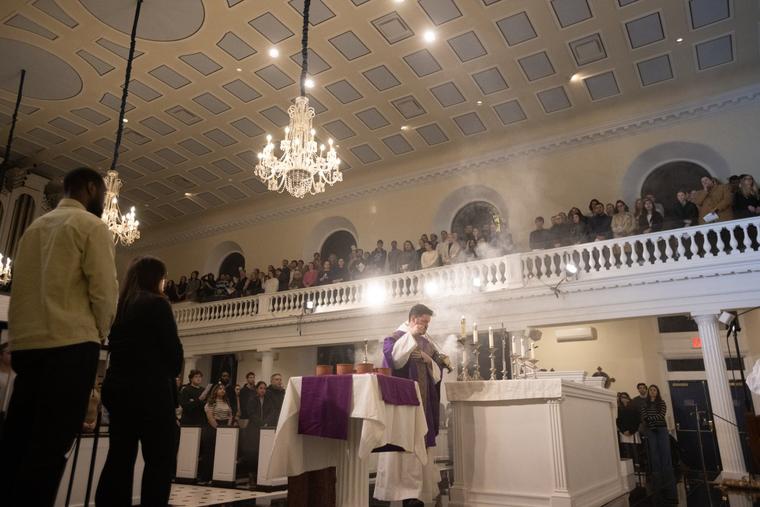
If you’ve been reading the headlines lately, you know that urban Gen Zers are flocking to the Catholic Church in droves — or, at least, to a few, particular parishes.
Last month, Fox & Friends released a clip titled “GEN Z REVIVAL: NYC church sees lines out the door every Sunday.” The New York City church in question was my own: the Church of St. Joseph in Greenwich Village, colloquially referred to as “St. Joe’s.”
Soon, the New York Post followed suit: “Gen Z Catholic influencers make church look cooler than ever — snapping up hundreds of thousands of social-media followers.” The article includes photos of influencers and TikTokers descending on my parish. (I can’t say I’ve seen or met any of them.)
Not to be outdone, The Washington Post published an article titled “Why Catholicism is drawing in Gen Z men: Young men in their 20s and 30s are increasingly drawn to the Catholic Church as they seek truth, beauty and, yes, girlfriends.” Evie magazine, hailed as the “conservative Cosmo,” published a viral piece titled “NYC’s Hottest New Club Is Catholic Mass.”
Additionally, my church and the media coverage of it have attracted members of the Twitterverse and other influencers.
A user by the name of “Mid Thirties Manhattan Guy” posted a photo of the line outside the door of my church on Easter, a post which has since garnered 1 million views:
“Tried to go to Easter mass but they ran out of seats and standing room
Next best thing: soho house brunch with a jazz quartet
The libs have lost. Being WASPy is cool again.”
(I can assure ”Mid 30s Manhattan Guy” that the next best thing to Mass at St. Joe’s is not a boozy brunch, but Mass at any of the other 60-some parishes in Manhattan.)
Another poster seemed to discount the legitimacy of Gen Z interest in places like St. Joe’s on the basis that its parishioners are too good looking and successful, errantly calling my church a “Clavicular podcast,” a reference to a TikToker who champions “looksmaxxing.”
And a Catholic academic also attempted to weigh in on the perceived political trends of my church, asserting that “this is a very right-wing parish … and has other right influencers promoting it. It’s representative of that and not much more.”
All of this, shall we say, “internet discourse” has depicted my church as a hip venue full of young, hot, right-wing attendees, eager to don their Sunday best, mingle with their pew mates, and “get swol” for God.
What these stories and posts fail to explain, however, is why so many Catholics are actually flocking to St. Joseph’s in Greenwich Village and Manhattan parishes like it. Yes, Dominican Father Jonah Teller and the other priests stationed at St. Joe’s are fantastic (if you’re reading this, Father Jonah, don’t let it go to your head.)
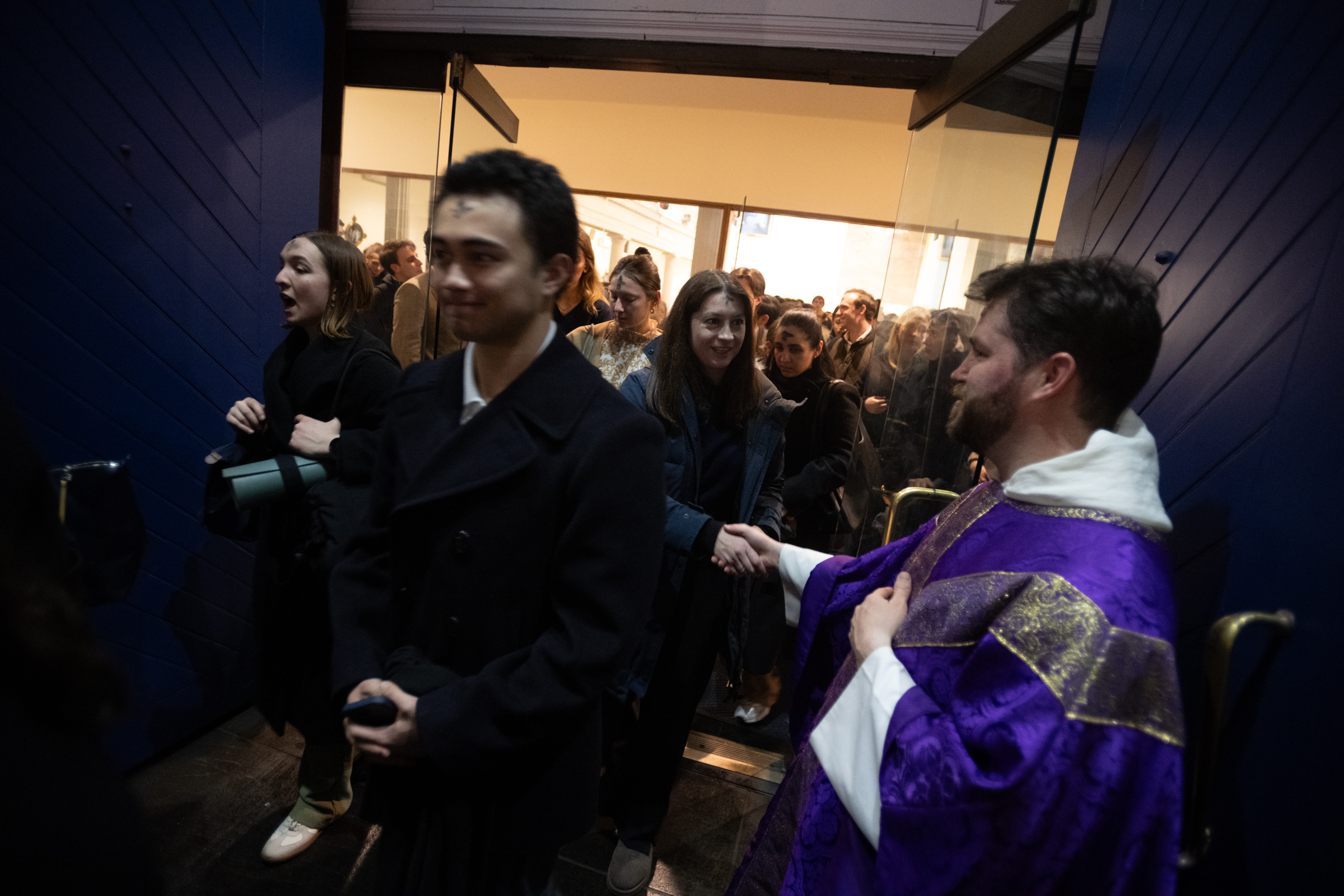 Dominican Father Jonah Teller greets Massgoers after an evening Mass on Ash Wednesday 2026.(Photo: Jeffrey Bruno for the National Catholic Register)
But the majority of my fellow parishioners aren’t going to Mass (or converting to Catholicism) to join an exclusive social club, unlock a new self-improvement routine, or partake in real-life CatholicMatch (although I’m sure many wouldn’t be opposed to that last outcome). They’re going to Mass to partake in the Real Presence of Christ in the Eucharist.
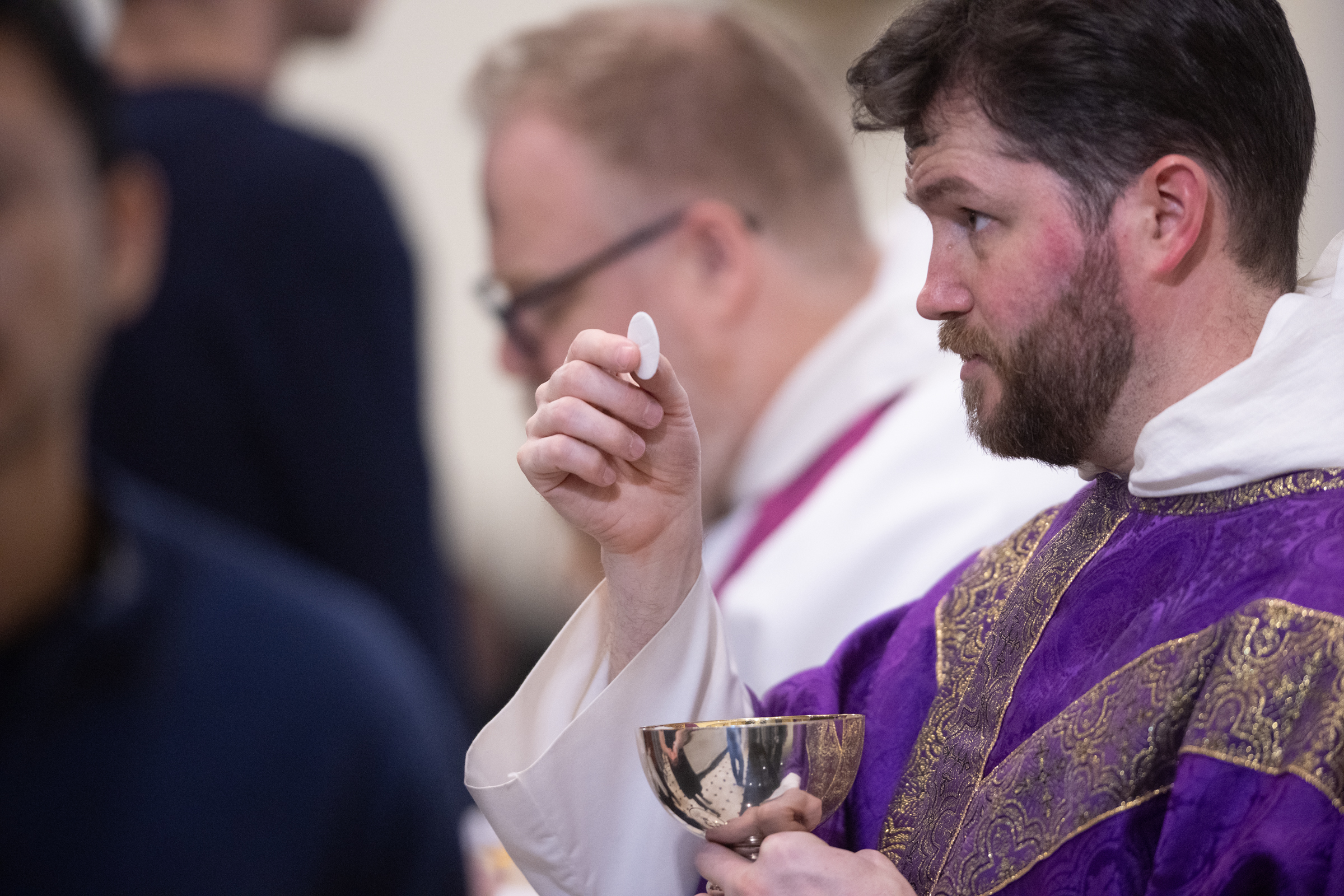 Dominican Father Jonah Teller and other Dominican priests give Communion, Ash Wednesday 2026, at the Church of St. Joseph.(Photo: Jeffrey Bruno for the National Catholic Register)
Certainly, a vibrant community or inspirational preaching can help a tentative observer walk through the front door. But the draw of a church — where attendees participate in the daily, weekly commitments of actually being or becoming Catholic — cannot be explained away in the same language one might describe the popularity of Soho House or Equinox.
 The faithful pray with Dominican Father Jonah Teller on Ash Wednesday 2026 at St. Joe’s.(Photo: Jeffrey Bruno for the National Catholic Register)
It is precisely because the Catholic Church offers something that cannot be found in the world — the real presence of the living God and the hope of eternal life — that she draws souls unto herself.
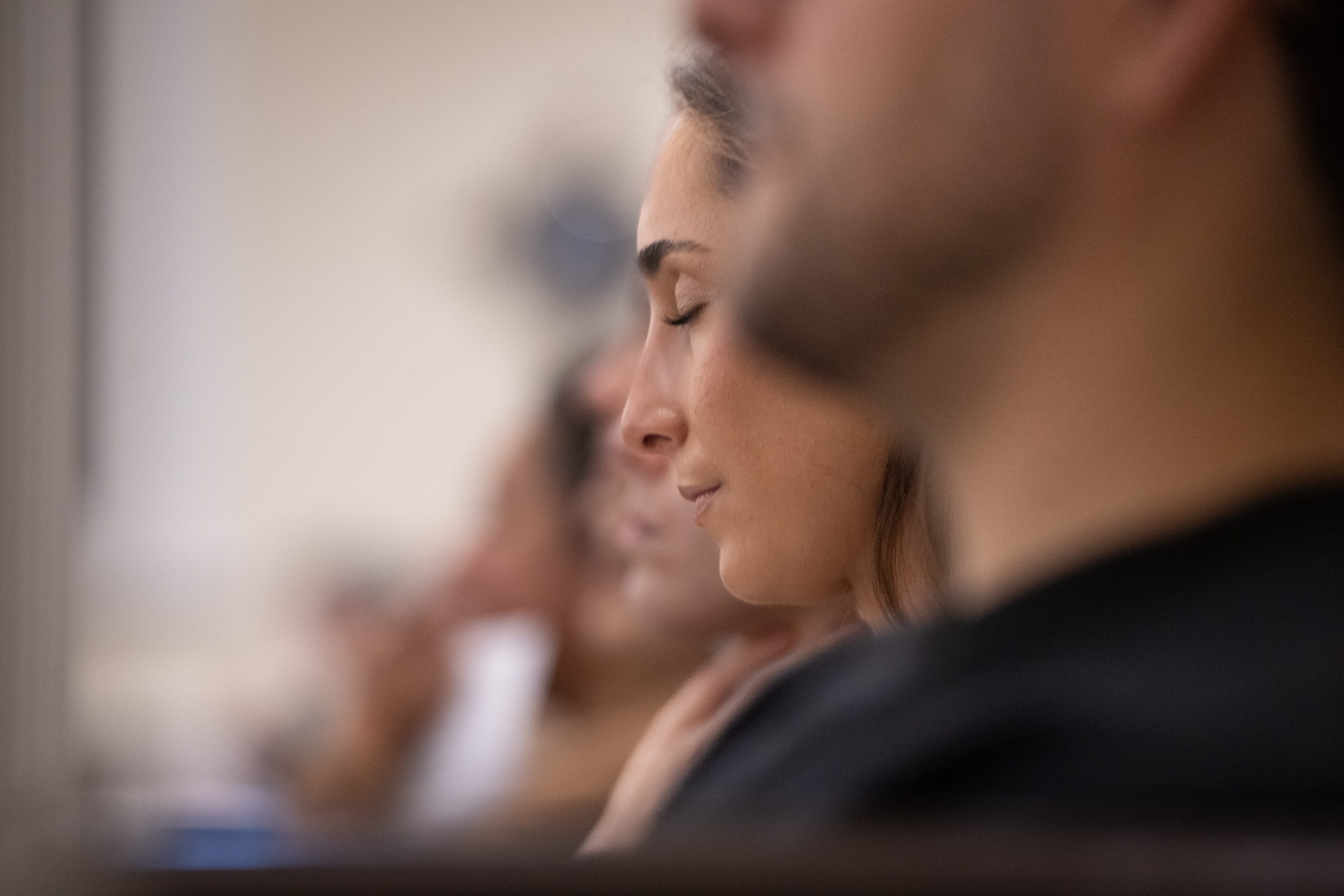 Young adults pray at the Church of St. Joseph in Greenwich Village, Feb. 18, 2026.(Photo: Jeffrey Bruno for the National Catholic Register)
The Church proclaims a reality entirely opposed to the modern, secular views that undergird our self-focused culture of self-optimization. The Church teaches that we are not our own, but made by God, for God. Of all the friends I have made at St. Joe’s since I moved to New York last year, not one attends Mass every Sunday in order to boost their social status or mingle with their fresh-faced peers. They go to draw near to God, that He might draw near unto them.
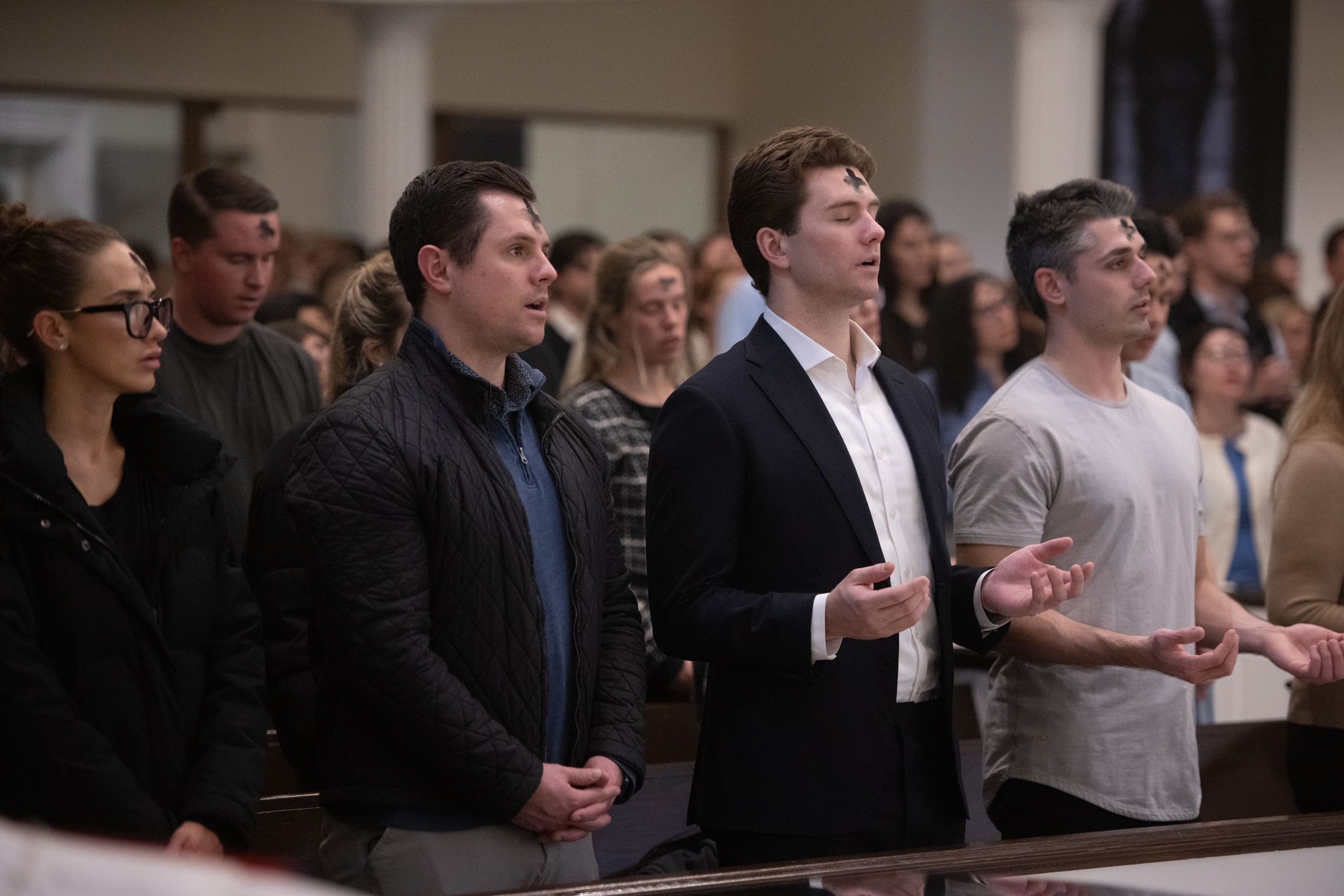 Young adults fill the pews of St. Joe’s on Ash Wednesday 2026.(Photo: Jeffrey Bruno for the National Catholic Register)
At a parish like St. Joe’s, the core and irreplaceable purpose of the Mass is made more immediate through traditional liturgical aids: a homily that centers the listener on Christ, music that calls the soul to heaven, and a pervasive atmosphere of sacred devotion.
Most recent mainstream coverage missed that parishes like St. Joe’s draw young people en masse because their services are both orthodox and normal, a seemingly rare but ever-popular combination among devout Catholics of all ages. Neither the hardcore “trads” nor the kumbaya boomers are capable of winning over mainstream, urban-dwelling normies.
The three main parishes in Manhattan that draw the young, fresh, consultant-class Catholics are St. Joe’s; St. Vincent Ferrer’s on the Upper East Side; and Old St. Pat’s, the original cathedral church of the Archdiocese of New York. (The National Catholic Register gave an excellent rundown of parish life at all three.)
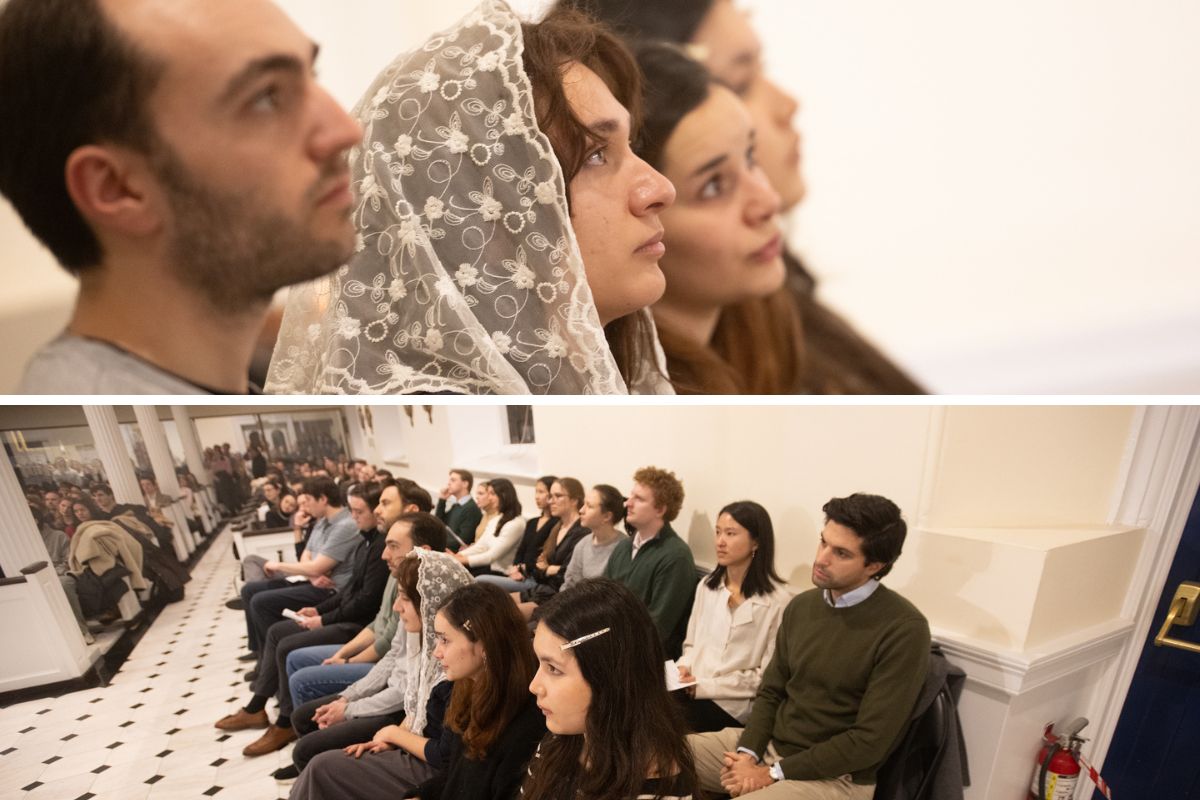 Young people pack St. Joe’s on the first day of Lent 2026.(Photo: Jeffrey Bruno for the National Catholic Register)
These churches have much in common. For one, both St. Joe’s and St. Vincet Ferrer’s are run by the Dominican Province of St. Joseph’s. The Dominicans (whom I spent much time with as a former employee of the Thomistic Institute) are a serious bunch. They take the cultural questions of our time as seriously as they take the metaphysical questions of all time, often illuminating how the latter hold the key to the former.
The Dominicans are also surprisingly young. By the demographic standards of religious-order priests nationally, the Dominicans are downright juvenile, with some “30 under 30” in formation in the Eastern province alone. According to the U.S. Conference of Catholic Bishops, religious-order priests over 70 years of age outnumber those under age 70 by nearly 4-to-1.
Further, the Dominicans are not to be outdone with regards to religious education. They are the Ordo Praedictorum (Order of Preachers), after all. St. Joe’s hosts programming geared towards young professionals nearly every day of the week. Upcoming events include an introductory lecture to René Girard’s mimetic theory, a lecture on the liturgical significance of the Haec Dies chant, and a book club on The Brothers Karamazov. At St. Vincent Ferrer’s, parishioners can discuss The Spirit of Mediaeval Philosophy by Étienne Gilson or hear a talk on the history of the Church in the midst of the French Revolution.
Old St. Pat’s is similarly attractive to yuppies. After the 7 p.m. Sunday Mass, parishioners in their 20s and 30s head to a local bar to commune over a couple of beers. (It doesn’t take too much to make a Catholic happy.)
Why else are these three parishes so popular? On a simple, human scale, like attracts like. Devout, Catholic young professionals tend to be friends with other devout, Catholic young professionals. They tend to go to church where their friends go to church. And they tend to go to Mass where the priest can relate to their experience.
As much as I wish every Catholic church in Manhattan was bursting with enthusiastic young people, these three parishes appear to have an oligopoly on the zealous youths. This piece by Luis Parrales in The Atlantic offers a more sober analysis of the isolated spikes in Mass attendance and Catholic confirmations among young adults in the U.S. Although many dioceses are experiencing an increase in the number of young converts joining their parishes, cradle Catholics continue to leave the Church at a faster rate than new Catholics are joining.
But this is not a cause for doubt or fear. To be Catholic is to live apart from trends, to ascribe to ancient beliefs, and to pledge allegiance to an eternal Church. In their own lives, Catholics must choose to practice their faith day after day, week after week, year after year.
And, of course, the event that draws so many young adults to these parishes, the Mass itself, is anything but a passing fad; it’s an ancient rite. The first “missals” — texts containing the order of the Mass — were found in monasteries nearly 1,000 years ago. The sacrament of the Eucharist spans two millennia, tracing its origin to Christ’s own words and actions at the Last Supper. The Gen Zers who come to Mass in Manhattan are seeking to participate in this radical tradition — not an alternative club scene or a “personalitymaxxing” program.
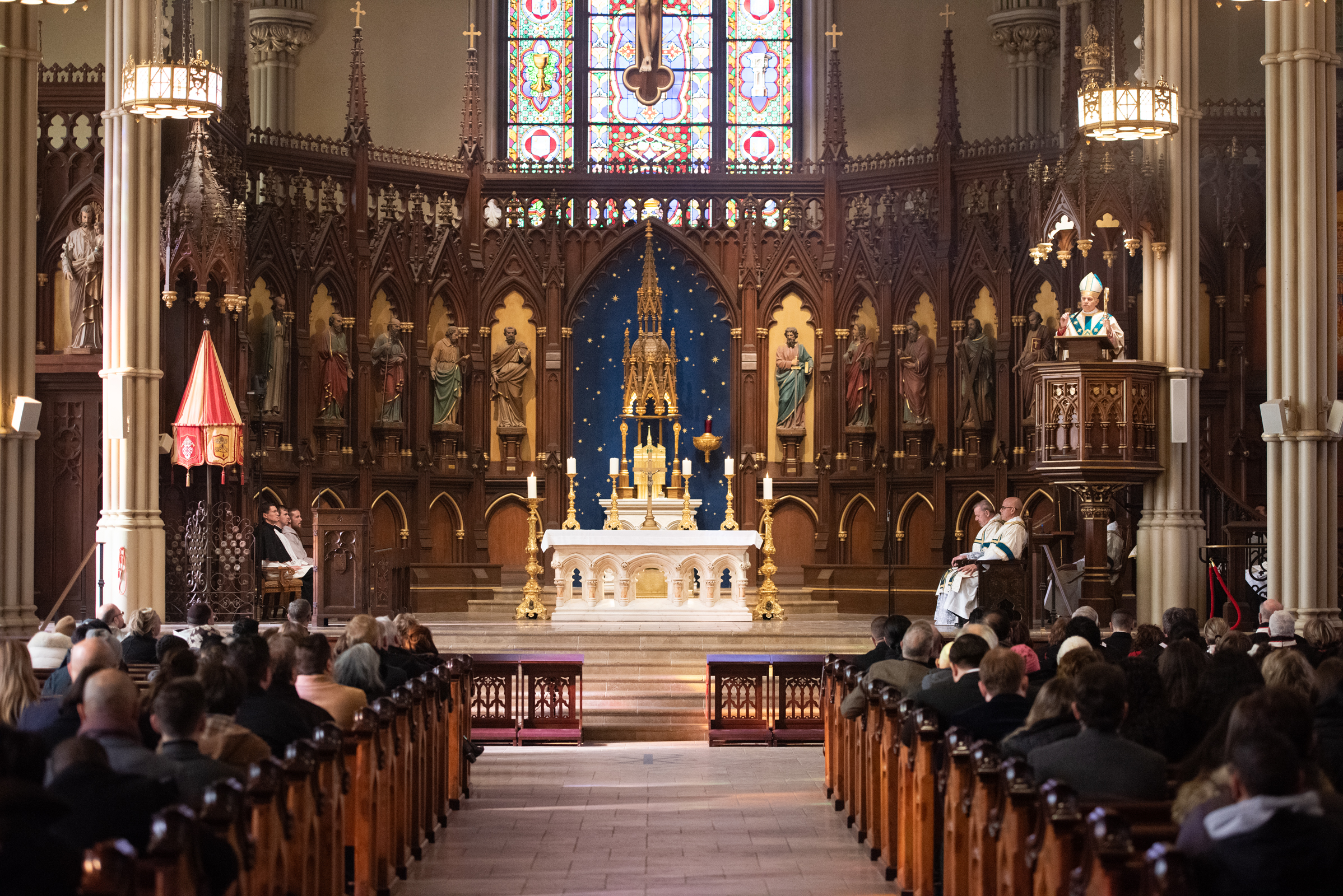 Mass underway at Old St. Pat’s(Photo: Jeffrey Bruno for the National Catholic Register)
The Church has lasted through countless trends, and she will prevail through countless more. While I hope my generation continues to find a home in the Body of Christ, I will place my trust in the Lord, not TikTok.