
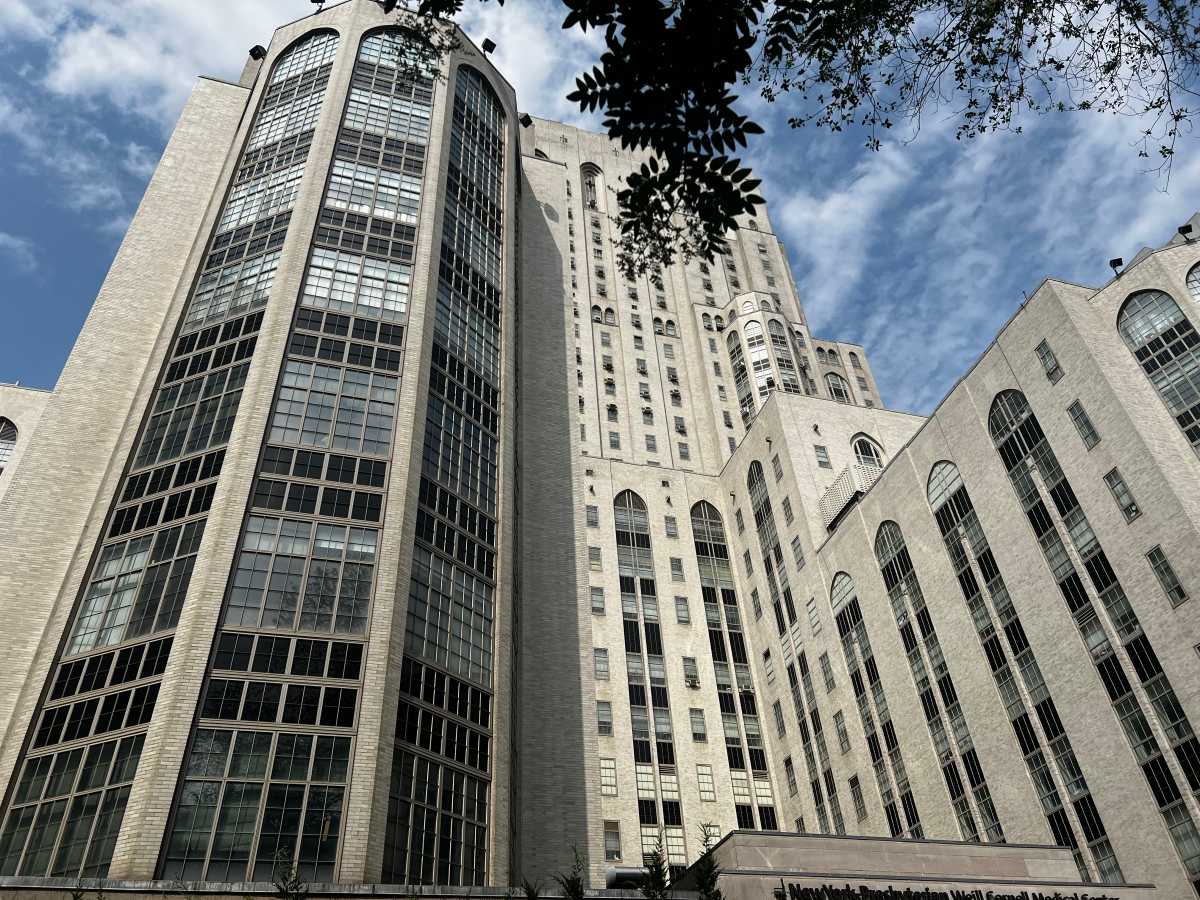
The Weill Cornell Medical Center in the Upper East Side, owned by NewYork-Presbyterian, the hospital system that just entered into a settlement with the state’s attorney general after an investigation revealed failures in its mental health policies.
Andrew Denney
The city’s largest hospital system must reform its mental healthcare protocols extensively after a yearslong investigation by the state’s attorney general revealed it repeatedly allowed impaired patients to walk out of the hospital without permission.
In addition to implementing the required reforms, the hospital system must pay the state a $500,000 penalty.
New York Attorney General Letitia James said NewYork-Presbyterian has “engaged in a repeated pattern of failures that put vulnerable patients at risk” when announcing a settlement with the hospital Monday. James’ office found NewYork Presbyterian frequently diverted ambulances from bringing mental health patients to emergency departments without any defined policy in place, did not keep complete or accurate patient documentation, routinely discharged patients without the care they needed and consistently failed to properly screen, stabilize and supervise patients with behavioral health conditions.
The hospital also left dozens of psychiatric beds offline during a worsening mental health crisis, James’ office says.
The 58-page settlement document cites roughly a dozen examples of patients experiencing suicidal ideation or other psychiatric conditions that made them a risk to themselves or others leaving the hospital without staff issuing them clearance or alerting hospital leadership, referred to as patients “eloping.” Some of those patients, ranging from teenagers to those over 70 years old, had recently tried to attack family members, harm themselves or were brought to the hospital because they were experiencing psychosis or hallucinating.
NewYork Presbyterian is now required to strengthen patient safety policies to prevent impaired patients from walking out, including immediately notifying leadership and documenting any instance of patients leaving prior to official discharge, establishing mandatory observation protocols and maintaining monitoring logs documenting clinical decisions.
The hospital group must also schedule follow-up assessments for higher-risk patients and screening policies to identify risks such as suicide, violence and substance use. It must reopen unused psychiatric beds, as required by law.
“These sweeping reforms will protect patients, strengthen oversight and help ensure that no one is left without care in their most vulnerable moments,” James said in a statement. “Mental health care is necessary medical care, and hospitals have a legal and moral obligation to treat these crises with urgency and compassion.”
When asked for a comment on the attorney general’s investigation and mandated reforms, NewYork-Presbyterian called providing high-quality care for patients with complex needs a “priority” and said it “remains committed to continuous improvement” for its patients.
A spokesperson added that NewYork Presbyterian has “continued to strengthen policies and workflows, expand mental health capacity with inpatient beds and outpatient services and improve safety” since James’ office started investigating it in 2022.
The hospital system did not respond to questions on its timeline or funding plans for implementing the required reforms.
James’ office noted that NewYork-Presbyterian’s mental healthcare failings have come during a time of crisis in the city and state. Three million New Yorkers, or 20%, live with mental illness. In 2023, 31% of New Yorkers reported symptoms of anxiety or depression, and almost 500,000 children had a behavioral health condition as of 2022.
NewYork-Presbyterian will also be required to make new and meaningful investment into at least one new service of its choice, James’ office said. Options include a behavioral health outpost clinic at NYP-Methodist, an assessment into the possibilities of developing a crisis stabilization program or partnering with community-based providers to assist patients after they’re discharged, and implementing procedures to follow up with patients at moderate or high-risk of self harm or suicide.
NewYork-Presbyterian has received notice in the past for mental healthcare failures.
In 2019 and 2022, the Centers for Medicare and Medicaid Services issued statements of deficiencies to NYP-Methodist for failing to implement emergency department policies and procedures for patients at risk of elopement, failing to identify factors that contributed that risk and implementing corrective actions, placing patients at risk for potential harm.
If you or a loved one is at risk of suicide or self-harm, you can contact call or text 988, or call the National Suicide Prevention Lifeline at 1-800-273-8255. Visit SpeakingOfSuicide.com/resources for a list of resources.