
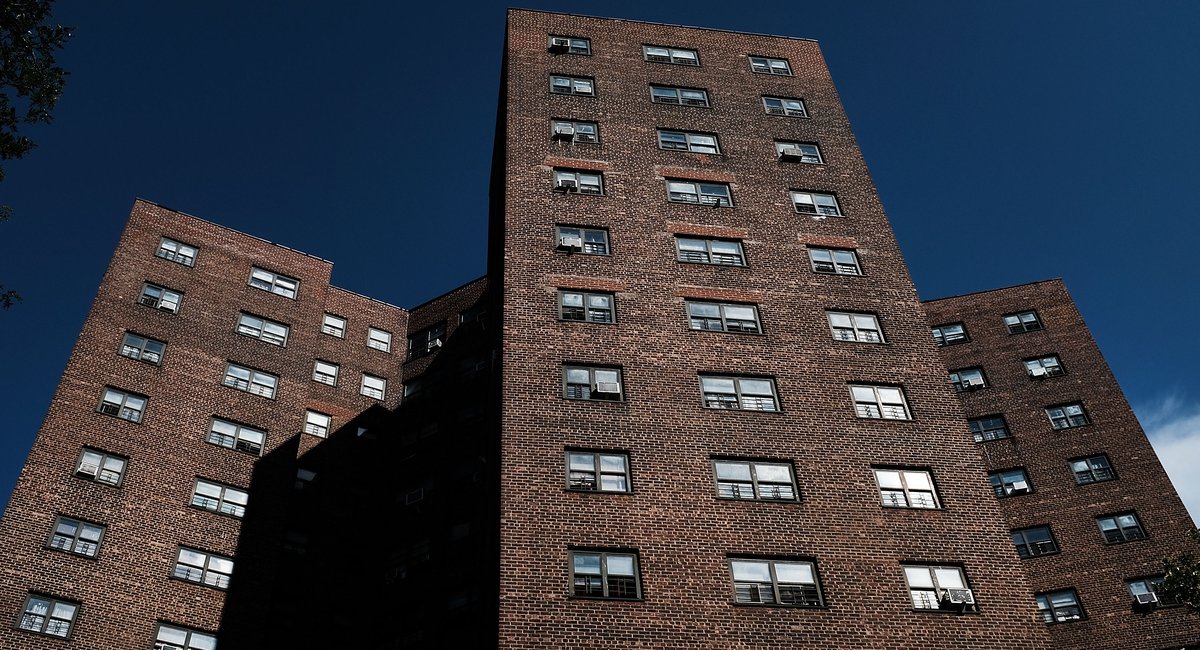
More than 5,000 low-income New York City households face an impending deadline as a pandemic-era federal housing voucher program runs out of money.
Tenants with federally funded Emergency Housing Vouchers have just over two weeks to apply for another source of aid. The New York City Housing Authority is now turning to its stock of vacant public housing apartments as it scrambles to plug the gap.
NYCHA has begun notifying tenants with the soon-to-expire subsidies that they have until May 1 to apply for a “range of subsidized housing options, including public housing and other programs,” according to a letter dated March 25 and shared with Gothamist by renters and landlords.
But NYCHA spokesperson Michael Horgan said not everyone is guaranteed a new placement, and the authority is still assessing the number of available units it can offer to Emergency Housing Voucher recipients. It remains unclear what other programs the agency could tap.
The housing authority already maintains a yearslong waitlist that featured over 182,000 households at the start of last year.
Tenants qualify for Emergency Housing Vouchers based on income, and use them to rent privately owned apartments. Recipients typically pay 30% of their earnings toward the total rent, with the subsidy covering the remainder.
Congress created the Emergency Housing Vouchers in 2021 as part of a Biden-era spending package meant to boost economic recovery during the COVID-19 pandemic and estimated the $5 billion program would last for 10 years. No place benefited more than New York City, which received about 11% of the 77,000 vouchers issued nationwide.
But the Trump administration announced in March 2025 that the assistance program was running out of cash years earlier than expected.
Trump and Congress declined to replenish the aid program in last year’s federal budget, forcing cities and states to come up with ways to replace the assistance, continue to pay landlords and prevent renters from facing eviction and homelessness.
In its letter, NYCHA informed tenants that submitting their public housing application is “a crucial first action for you to take to potentially avoid responsibility for paying the entire contract rent for your unit.”
NYCHA administers the federal Emergency Housing Voucher program for about 5,200 households who lease their apartments from private landlords — more than any other housing agency in the nation.
The agency’s new guidance marks the latest twist in a halting, yearlong effort to figure out how to prevent low-income renters from getting cut off from needed assistance.
NYCHA officials initially planned to transfer tenants to the federal Section 8 program, which functions the same as the Emergency Housing Voucher program. It closed its Section 8 waitlist to accommodate them last year, but the plan fell through, Gothamist first reported in February. A NYCHA spokesperson said the Trump administration barred the authority from issuing the new vouchers.
The city’s Department of Housing Preservation and Development administers about 2,500 other Emergency Housing Vouchers, and officials say they have established a “stopgap” program to keep funding rental assistance for its tenants for another two years — an option NYCHA said it cannot afford.
But city data shows NYCHA has more than 6,200 empty apartments, a number that has steadily risen in recent years and faced sharp criticism from city councilmembers and housing advocates. The agency has said many of the apartments require intensive renovations and lead paint removal amid a serious budget deficit.
NYCHA has also issued letters to landlords informing them of the looming end of the program and has warned the agency will stop making payments on their behalf no later than the end of the year.
A spokesperson for the U.S. Department of Housing and Urban Development did not answer questions about NYCHA’s plan or any additional funding. In February, the department issued a notice to local housing agencies stating it could reallocate unspent money “as long as funds permit.”
‘A bomb on over 5,000 families’
Tenants who spoke with Gothamist over the past year say they cannot afford to continue paying rent without the assistance.
On Monday, Lashonne Smith said she was “in shock” to learn about the looming expiration of the voucher last month. Smith, 52, said she has used the program to rent a Brooklyn apartment with her adult son with special needs since fleeing domestic violence in 2022.
“We’re working on healing and getting our lives together and for you to take away our subsidy from us is surreal,” Smith said. “I don’t want to be homeless again.”
The federal government, she said, “threw a bomb on over 5,000 families.”
Smith said she receives her Emergency Housing Voucher through NYCHA and pays about $600 toward her total rent of $1,079 a month.
But she questioned NYCHA’s instructions to apply for public housing since the authority already has a lengthy waitlist. She said she first submitted an application for a public housing unit more than eight years ago and has not heard back about an available apartment.
Plugging the gap
Advocates for low-income renters criticized the plan to transfer at least some tenants to public housing units and called on the city and state to boost their own rental assistance programs in the absence of federal money.
As Gothamist reported last year, replacing New York City’s expiring vouchers would cost more than $175 million.
Mayor Zohran Mamdani has resisted expanding the city’s voucher program, known as CityFHEPS, amid a legal battle with the City Council — a reversal from a campaign pledge to implement laws giving thousands more people access to the program. A meager state subsidy known as the Housing Access Voucher Program is funded with just $50 million and currently locks out tenants who have expiring Emergency Housing Vouchers.
“We need the city and state to coordinate so people can stay in their homes,” said Gabriela Sandoval Requena, the vice president of New Destiny Housing, which provides housing and services to survivors of domestic violence.
The city issued roughly 1,100 Emergency Housing Vouchers to families and individuals fleeing domestic violence, data shows — part of a concerted effort to prioritize New Yorkers with the most needs.
“It’s going to push people back to the shelters, back to the streets, and domestic violence survivors are going to be pushed back to their abusers,” Sandoval Requena said of the looming end of the program.
Jessica Valencia, who cofounded the organization UnlockNYC to help tenants with rental aid find housing, said many renters will end up facing eviction if they can no longer pay for their apartments.
“People are really scared and I’m surprised there’s no funding for this situation,” said Valencia, a former voucher recipient.
Some state lawmakers have called for the next budget to include $250 million for the Housing Access Voucher Program and enact a new measure that makes people with expiring Emergency Housing Vouchers eligible for state aid.
A spokesperson for Gov. Kathy Hochul said the state is determining what options it has while urging Congress to restore funding for the program in the next federal budget.
“The federal government defunding Emergency Housing Vouchers will cause families and New Yorkers to be put back into the streets unless Republicans in control of Congress take a stand and help push for additional funding,” Hochul spokesperson Kassandra White said in a statement. “The federal government should be supporting families, especially when it comes to maintaining access to safe and stable homes — not causing unnecessary hardship.”