
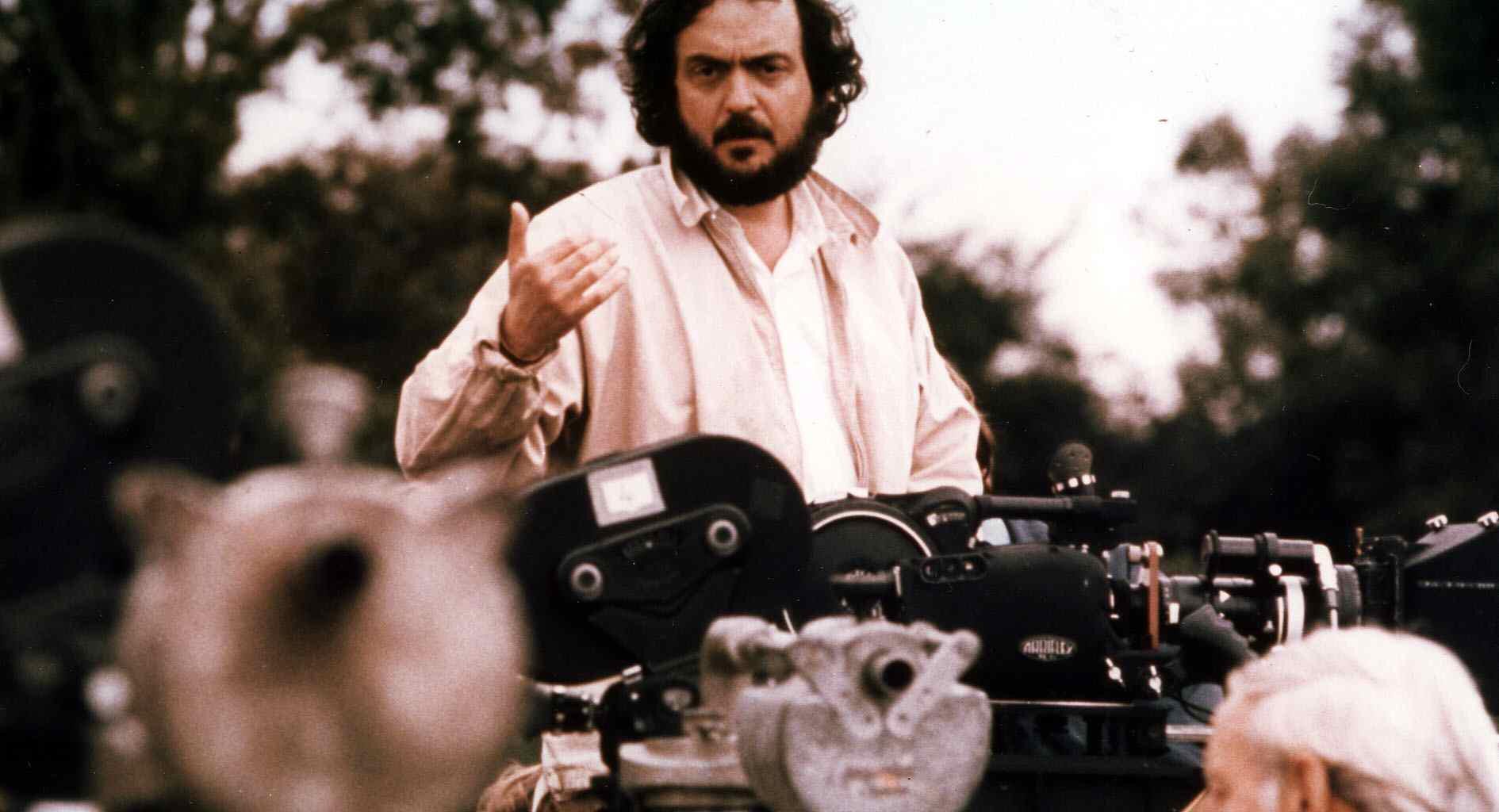
The singular American filmmaker Stanley Kubrick saw the little details. He even saw the future. But, most of all, he saw people, with all their quirks. Kubrick’s films, from Dr. Strangelove (1964) to The Shining (1980), offer proof of this—as do his earliest photos, produced during the 1940s. One new trove of 18 such images will get its first-ever outing next week, when Los Angeles-based Duncan Miller Gallery presents the find alongside works by contemporary photographer Jacqueline Woods at the Photography Show in New York.
Kubrick grew up in the Bronx. Before even graduating high school in 1945, he joined the staff at Look, a photo-heavy magazine exploring life around the globe. Kubrick was lucky to get such a gig, considering his GPA was too low for college.
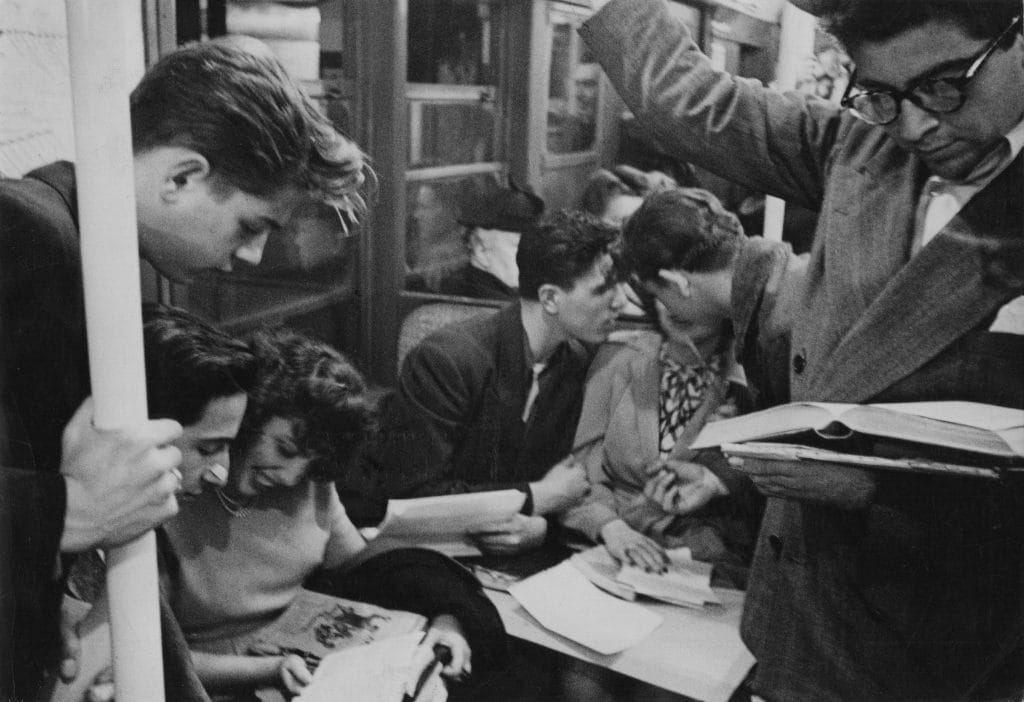
Stanley Kubrick, “Life and Love on the New York City Subways” (1945) Photo courtesy of Duncan Miller Gallery.
Over the next half decade, Kubrick documented subjects like a young shoeshine, the boxer Walter Cartier, and showgirl Rosemary Williams for Look. He quit the magazine in 1951—the same year he made his first two short documentary films and ended his five-year marriage to his high school sweetheart.
One hundred and twenty photographs from Kubrick’s Look tenure appeared eight years ago in “Through A Different Lens,” a traveling museum exhibition that launched at the Museum of the City of New York alongside a Taschen hardcover of the same name. The 18 early Kubrick photos that Duncan Miller Gallery is bringing to the Photography Show, though, have never been publicly exhibited. Kubrick shot all of them in the New York subway system, primarily between midnight and 6 a.m. Look printed only some of them.
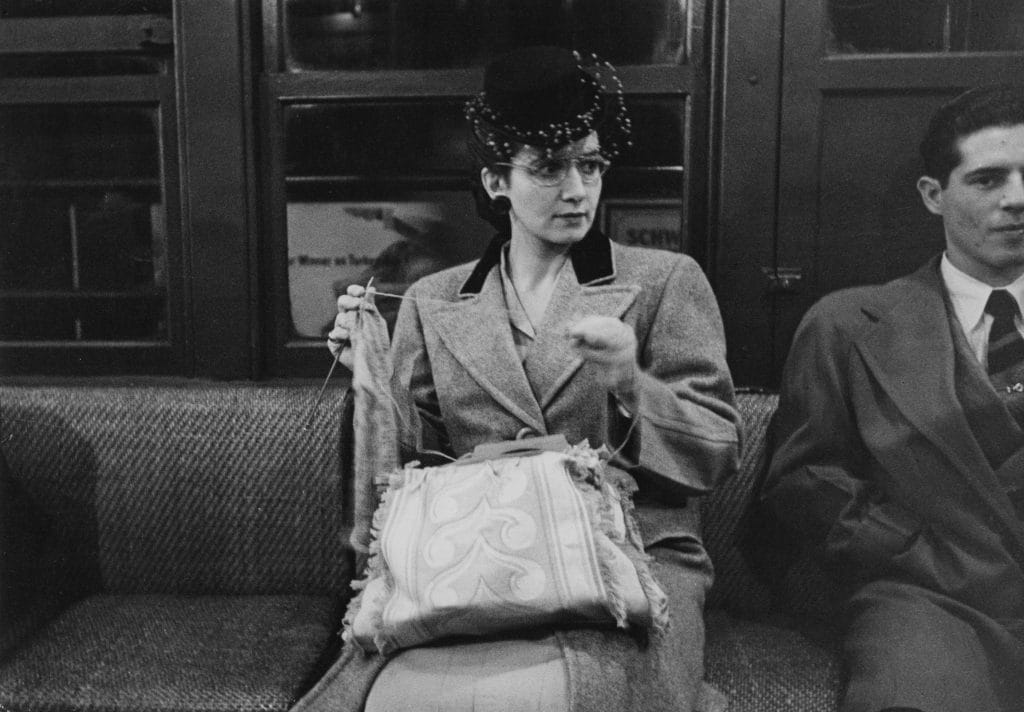
Stanley Kubrick, “Life and Love on the New York City Subways” (1945) Photo courtesy of Duncan Miller Gallery.
Duncan Miller Gallery discovered these prints. The gallery has run a project for photography collectors called Your Daily Photo since 2012. There, subscribers receive a fresh email every morning featuring several photographs available at special rates for the first buyers to snap them up. The team is constantly acquiring a wide array of photographic archives to sustain the endeavor. “These Kubrick prints were buried deep in a recent purchase,” the gallery’s director Daniel Miller told me over email.
The photos are some of the earliest images that the director made for Look. “New York’s subway trains are a reading room on wheels, a lover’s lane and, after 11 p.m., a flophouse,” Kubrick’s subsequent photo essay accompanying his subway visions opined.
That full spectrum manifests here, from gaggles of guys gossiping to a woman perched alone atop the car’s upholstered (!) seats. The longer you let yourself look, the way Kubrick did, the more you see. There’s so much subtle interaction at play—people assessing each other, even a woman covering her nose, for reasons we probably don’t even want to know.
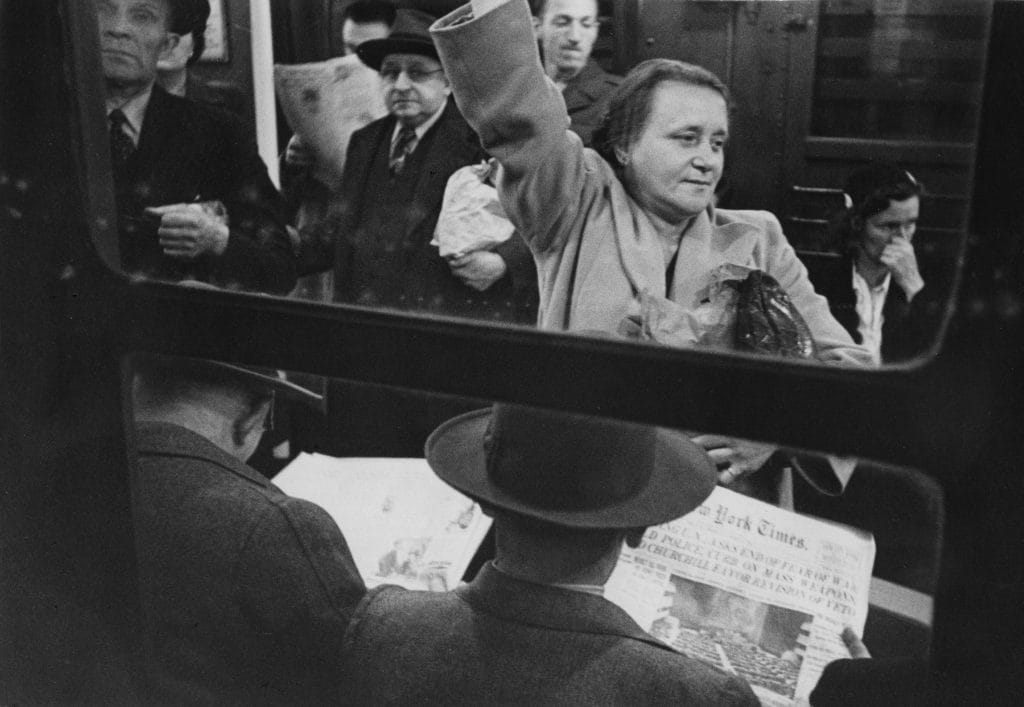
Stanley Kubrick, “Life and Love on the New York City Subways” (1945) Photo courtesy of Duncan Miller Gallery.
“Kubrick wore his camera around his neck and rigged a wire shutter release into his coat pocket, allowing him to photograph subjects without their realizing it,” Miller intimated over email. “He often shot entire rolls of film to capture only a handful of strong images.” Indeed, Kubrick knew how to stage a scene, but here at least, he let his subjects take the lead.
The Photography Show is on view at Park Avenue Armory, 643 Park Avenue, New York, April 22–26.