
 Astoria, New York (April 9, 2026) — Museum of the Moving Image announces major summer film programs, including a series celebrating films about, for, and by the American people to coincide with the nation’s 250th anniversary; a focus on Philippine nonfiction; a retrospective of Brian De Palma; a look at the culture wars of the 1980s and ’90s as reflected in film, timed to coincide with Isaac Butler’s new book The Perfect Moment: God, Sex, Art, and the Birth of America’s Culture Wars; and its annual summer festival of 70mm films.
Additional programs and information will be posted as they are confirmed.
By the People, For the People: Real American Tales
May 22–July 5
As our country celebrates 250 years, this screening series takes its own approach, choosing to highlight films that take on the perspective of the nation’s historically marginalized and less frequently represented on screen. From films about collective labor and the underclasses (Matewan, The Grapes of Wrath, Days of Heaven) to immigrant communities (The Exiles, Los Sures) and the disenfranchised (Native Land, Nothing but a Man, Buddies), these films ask what the term “American cinema” means—and what it perhaps could mean in an ideal world.
Heart on Fire, Brain on Ice: Philippine Nonfiction since 2000
May 22–31
Direct and political in their aims, these documentaries, features and shorts mostly unreleased and unseen in the United States, take a clear-eyed view of the Philippines’ most exploited—landless peasant farmers, urban poor displaced by development, generations of indigenous families affected by toxic waste left behind by U.S. military bases—as well as those among them who are agitated to resist. The filmmakers are often intimately if not directly affected by the repression they capture, and the films are made by and with activists who have integrated with the communities they follow on the ground. Occasionally surreal, sometimes absurd, these films—which run the gamut from the U.S. premiere of JL Burgos’s Alipato at Muog to John Gianvito’s four-hour-plus Wake (Subic)—maintain a firm grip on the visceral reality that binds their struggles together. Guest programmed by A.E. Hunt.
De Palma: Summer of Suspense
June 12–July 26
After cutting his teeth on experimental cinema and political protest films, Brian De Palma turned to the thriller, parlaying his fascination for the mechanics of Alfred Hitchcock’s cinema into a career-long inquiry into movie suspense. The result has been decades of bona fide classics that playfully risk absurdity—and controversy—by pushing horror, suspense, noir, and action movie grammar into realms of self-conscious artifice that might have made Hitch himself blush. From 1973’s gonzo Sisters to 1980’s erotic nightmare Dressed to Kill (both unofficial remakes of Psycho); from his florid eighties and nineties gangster epics Scarface, The Untouchables, and Carlito’s Way to his dream-within-a-dream-within-a-dream hallucinations Raising Cain and Femme Fatale, De Palma has not been paying homage as much as allowing us to enter his own extreme movie fantasy worlds—all of them created with impeccable craft that pushes genre conventions (and viewers) to the breaking point.
Culture Wars!
June 26–July 12
In the late eighties and early nineties, American artists found themselves in the crosshairs of an ascendant conservative coalition. As the Republican party increasingly aligned itself with the religious right, politicians like Jesse Helms, Pat Buchanan, and Pat Robertson took it upon themselves to root out alleged deviance in both avant garde and popular art, particularly when the artists involved had received government funding. This wasn’t limited to controversial photographers and painters such as Robert Mapplethorpe, Andres Serrano, and David Wojnarowicz but also affected a great number of important filmmakers, from major Hollywood figures like Martin Scorsese to fierce independent voices on the rise, like Todd Haynes, Cheryl Dunye, Marlon Riggs, and Gregg Araki. Naturally, in the midst of the AIDS crisis—and the Reagan administration’s callous response to it—many of these films were queer themed.
This new screening series was programmed in conjunction with Isaac Butler’s new book The Perfect Moment: God, Sex, Art, and the Birth of America’s Culture Wars (2026, Bloomsbury Publishing), which reexamines this vital—and sadly influential—historical moment, highlighting films that provoked the ire of these wannabe censors. Butler will appear in person, both in conversation and to introduce some of these landmark films—all of them “dangerous” and wildly entertaining.
See It Big: 70mm!
July 31–August 30
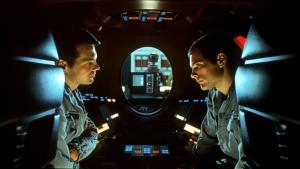
MoMI’s annual summer tradition returns with a thrilling selection of films screening in 70mm prints. With a larger frame size that captures more detail and light, 70mm offers the biggest, brightest image—the ideal film format for ambitious cinematic spectacle. The centerpiece remains 2001: A Space Odyssey, and there’s nowhere better in New York to watch Stanley Kubrick’s monolithic masterpiece than in the Sumner M. Redstone Theater, which was designed with an eye towards its space-age aesthetic. More exciting titles to be announced! Presented by MUBI
About Museum of the Moving Image
MoMI celebrates the history, art, technology, and future of the moving image in all of its forms. Located in Astoria, New York, the Museum presents exhibitions; screenings; discussion programs featuring actors, directors, and creative leaders; and education programs. It houses the nation’s most comprehensive collection of moving image artifacts and screens over 500 films annually. Its exhibitions—including the core exhibition Behind the Screen and The Jim Henson Exhibition—are noted for their integration of material objects, interactive experiences, and audiovisual presentations. For more information about MoMI, visit movingimage.org.
###