
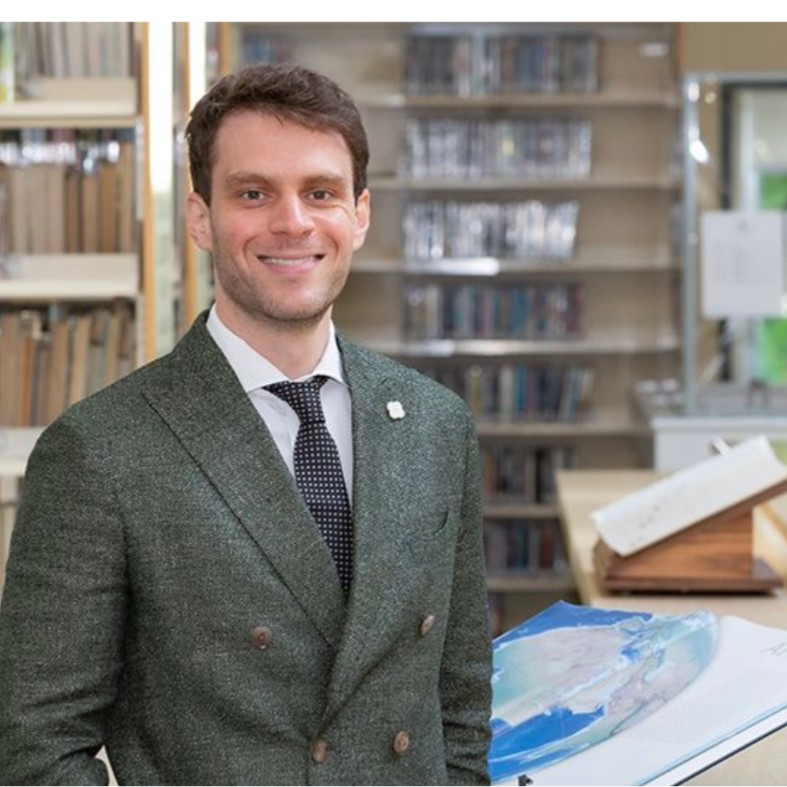
Giacomo Di Pasquale, assistant professor of economics at Wagner College and director of the BRIDGE Research Lab (Bridging Research on Inequality, Development, Growth, and Equity), has been recognized by the Staten Island Economic Development Corp. as one of its 20 Under 40 honorees, highlighting young professionals shaping a stronger, more equitable borough.
His work examines urban inequality, health disparities, and economic conditions shaping Staten Island and New York City through data-driven research and partnerships with community-based organizations.
Much of Dr. Di Pasquale’s research focuses on how neighborhood-level inequality translates into measurable health outcomes. “Staten Island is a particularly powerful case because, within a relatively small geographic space, you see stark differences between communities in terms of income, access to resources, and health,” he said.
One current project examines how income inequality shapes food insecurity and mental health, finding that inequality can create conditions where households experience higher stress and reduced access to stable food sources. Another project builds what he calls a “healthcare fragmentation index” across New York City, which shows that some neighborhoods, including parts of Staten Island, face “structural barriers to accessing care that aren’t immediately visible if you only look at poverty rates.”
Through the BRIDGE Research Lab, students are closely involved in applied research connected to these efforts. All students, regardless of major or year, are welcome to join the research if they are interested, both undergraduate and graduate students alike.
“Students are deeply involved in real-world, data-driven projects,”Dr. Di Pasquale said. They have contributed to projects analyzing local health disparities using survey data, building geographic maps of inequality across neighborhoods, and evaluating nonprofit programs, including partnerships with organizations such as the YMCA. “Perhaps most importantly, they leave with the experience of seeing how their work can actually matter beyond the classroom.”
Looking ahead, Dr. Di Pasquale hopes to expand this research beyond Staten Island while continuing to strengthen partnerships with local institutions and organizations. “For Wagner students, this means more opportunities to engage in hands-on research, internships, and collaborative projects that connect directly to their career paths,” he said, while helping provide clearer, data-driven insights to support more effective and equitable policy decisions locally.