
“The RAB’s proposals to cut costs on the backs of its essential workers are insulting,” counters 32BJ president Manny Pastreich. “Claiming landlords can’t raise rents flies in the face of the real-life experience of most New Yorkers, including our members, [who are] fighting to make ends meet. While the residential real estate industry continues to thrive with record-high rents, high property values, and historic low vacancy rates, many of our members are struggling just to keep up.”
On Wednesday, more than 10,000 union members held a rally on Park Avenue in the east 70s and 80s, a modern-day millionaires’ row that’s famous for its luxury, full-service doorman buildings. If an agreement isn’t reached by midnight on Monday, union members will walk off the job.
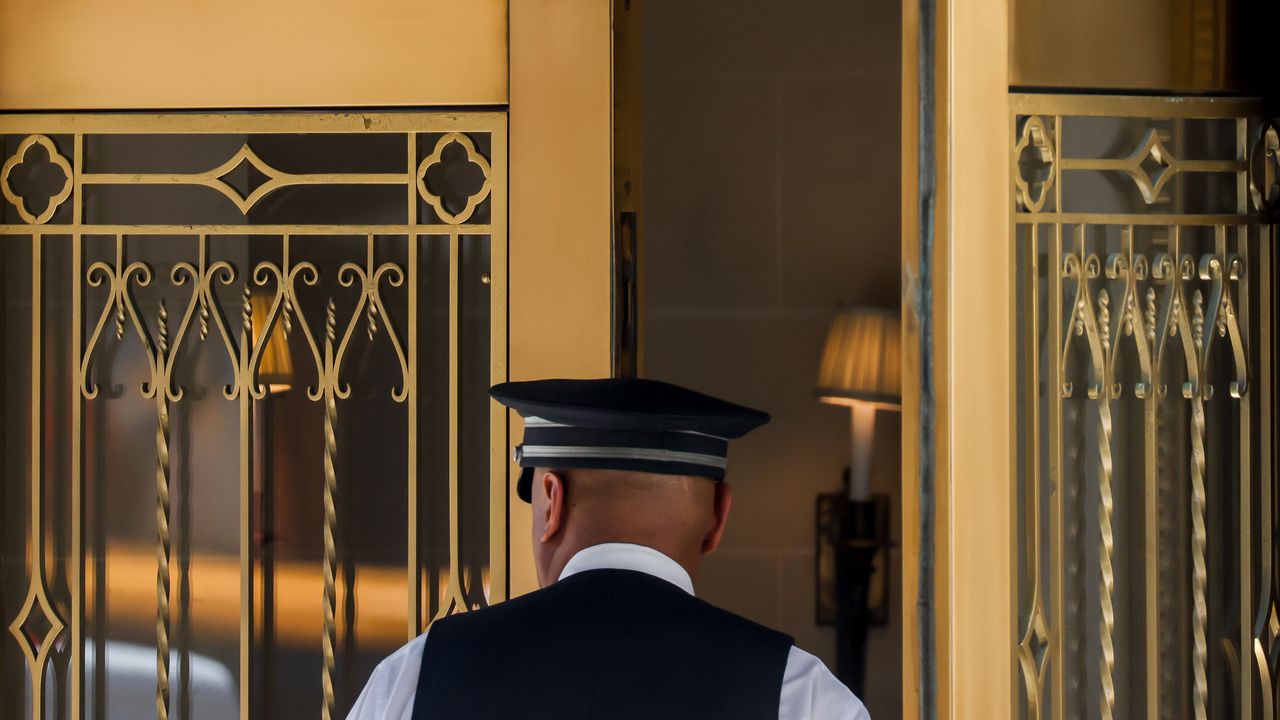
For New York, a city of hustlers and strivers, living in a doorman building has long been a signifier that you’ve made it—that you’ve reached a socioeconomic status that finally allows for urban life to be a little bit easier. That’s thanks to the doormen, porters, and supers: They sign for your packages. They collect and dispose of your trash. They keep spare keys so you’ll never lock yourself out. They hail cabs, even in a blizzard. They’ll fix your leaky sink. They’ll oversee furniture delivery or appliance installation. They let guests up to your apartment and keep unwanted visitors out. In some buildings, they’ll receive your groceries or dry cleaning and put them in your apartment for you. In every building, they’ll greet you each morning and night when you walk in the door, maybe with a treat for your dog or a lollipop for your child.
And now they all might be gone. For how long, we don’t know. The last doorman strike in New York was in the spring of 1991. It lasted 12 days. How did the city handle it? Honestly, not well.

Thousands of 32BJ SEIU building service workers at a rally on April 15. They voted to authorize a strike that will impact more than 3,300 residential buildings in New York City.
Anadolu/Getty Images
“The plumber can’t come, so the pipe keeps leaking,” Dennis Hevesi wrote for The New York Times on May 2, 1991. “The baby’s diapers are doing the same, but the diaper man can’t deliver. The movers can’t move, so some people are stuck paying two rents—for the apartment where they must still live, and for the one where they should now be living. And tenants all around town are fuming when they’d rather be fumigating as the garbage piles up and the pests burrow in, but the exterminator can’t get into the building. Help!”