
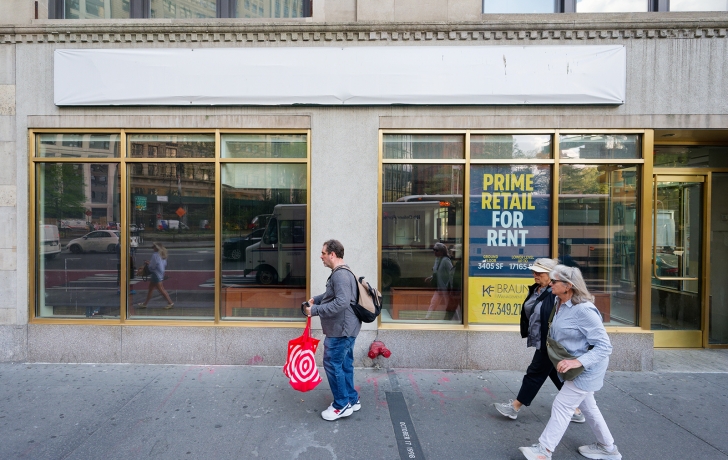
The vacant storefront at 225 Broadway is formerly the home of a Republic National Bank branch. Photo: Carl Glassman/Tribeca Trib
It’s hard to walk down a Lower Manhattan block without passing an empty storefront, or two, or three. Just how much local retail life is missing from Downtown neighborhoods? In a new report, the Manhattan Chamber of Commerce has documented the numbers and the news may be worse than imagined.
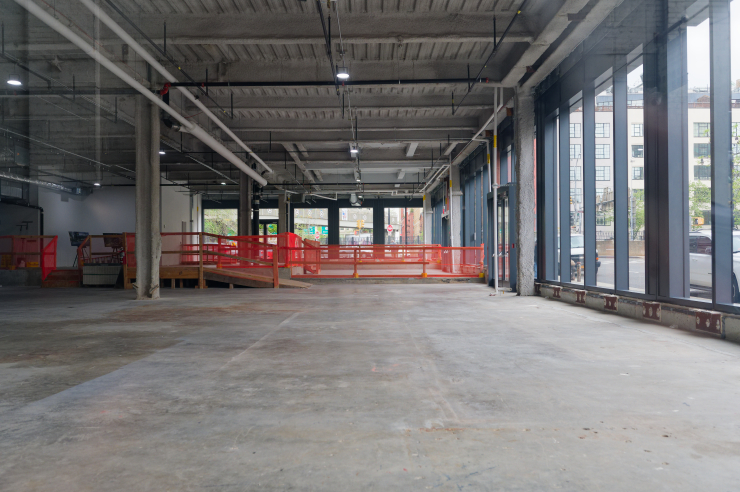
Lower Manhattan, as defined by the area covered by Community Board 1, suffers the worst vacancy rate in Manhattan, according to the study for 2025. A little over 22% of retail spaces are shuttered, the organization’s Storefront Retail Tracker found.
Maggie Paruta of the Manhattan Chamber of Commerce presented the findings April 13 to a stunned Land Use, Zoning and Economic Development Committee of CB1.
 “Thank you for letting us know what we’re up against,” said committee member Rosa Chang. “It’s horrifying.”
More concerning still is what the study showed for the sub-area, largely the Financial District, which is covered by the Downtown Alliance. At least one-quarter of those retail spaces were empty through the third quarter of 2025—dropping to 23.5% in the fourth quarter, according to the report. That number, however, is at odds with the Alliance’s own figure of 22.1% for all of 2025, close to the district-wide average.
The data showed that a storefont vacancy rise from 17% in pre-Covid 2020 to 22% in the years since has remained largely unchanged. (The fourth quarter of 2025 indicated a “notable” vacancy decline of 2%, Paruta said.)
An updated version of the report is due in June, detailing the types of businesses moving in and out of local storefronts, Paruta noted. “Anecdotally, I do know that there are more experience-based retail storefronts popping up, so more nail salons, spas, gyms, cafes, places that people can spend time,” she said.
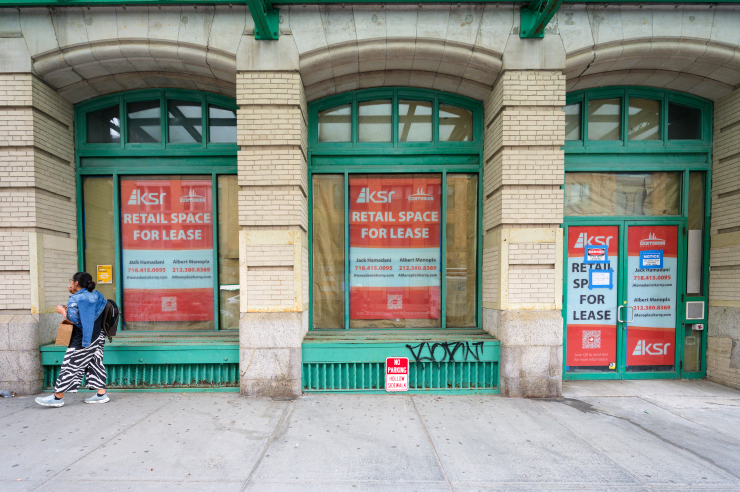
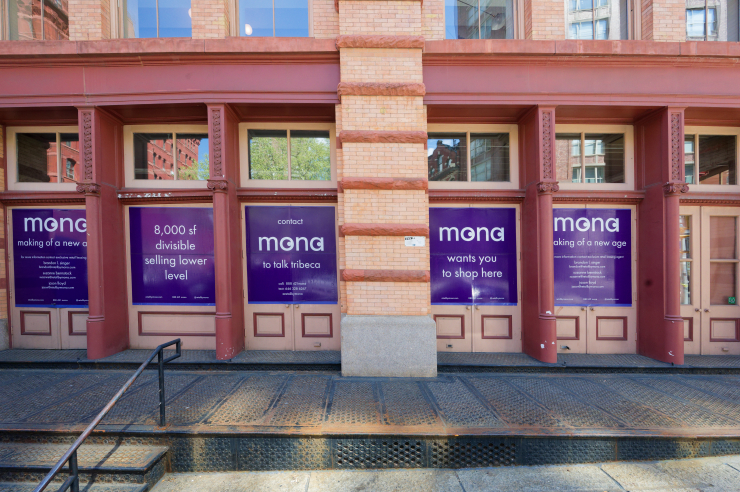 There are ongoing efforts to stem the vacancy tide. Among other initiatives, the Downtown Alliance in January launched its RE:Store program, which supports pop-up storefront businesses and provides grants to entrepreneurs. The Tribeca Alliance Merchants Association focuses on the marketing and collaboration of local businesses. And the Manhattan Chamber of Commerce is an information resource and advocate for small businesses.
A block party sponsored by the Tribeca Alliance at Bogardus Plaza on May 2 will feature a host of activities that highlight the neighborhood’s kid-centric stores, one way the organization is promoting local businesses. Demetri Ganiaris, the Alliance’s chairman, said marketing and “increasing the store owner’s voice” with city agencies are among the organization’s priorities. There are also plans, he said, to meet with real estate brokers to gain insights into the causes of chronically vacant storefronts.
.jpg "The rate of vacancies for 12 sections of Manhattan, according to these ranking by The Manhattan Chamber of Commerce.") Patrick Hall, co-owner of Elon Flowers in Tribeca and a board member of both the Manhattan Chamber of Commerce and the Tribeca Alliance, said he wants the city to establish a better relationship with small businesses. “The systems we operate within are often fragmented, time-consuming, and difficult to navigate, especially for small operators without dedicated compliance staff,” he said in a statement read by Paruta to the committee. He cited, among other needed bureaucratic disentanglements, a streamlining of processes across city agencies and creating “clear points of contact for business owners.”
Patrick Hall, co-owner of Elon Flowers in Tribeca and a board member of both the Manhattan Chamber of Commerce and the Tribeca Alliance, said he wants the city to establish a better relationship with small businesses. “The systems we operate within are often fragmented, time-consuming, and difficult to navigate, especially for small operators without dedicated compliance staff,” he said in a statement read by Paruta to the committee. He cited, among other needed bureaucratic disentanglements, a streamlining of processes across city agencies and creating “clear points of contact for business owners.”
“These are not abstract issues,” Hall said. “They affect whether a storefront opens and thrives or closes.”