
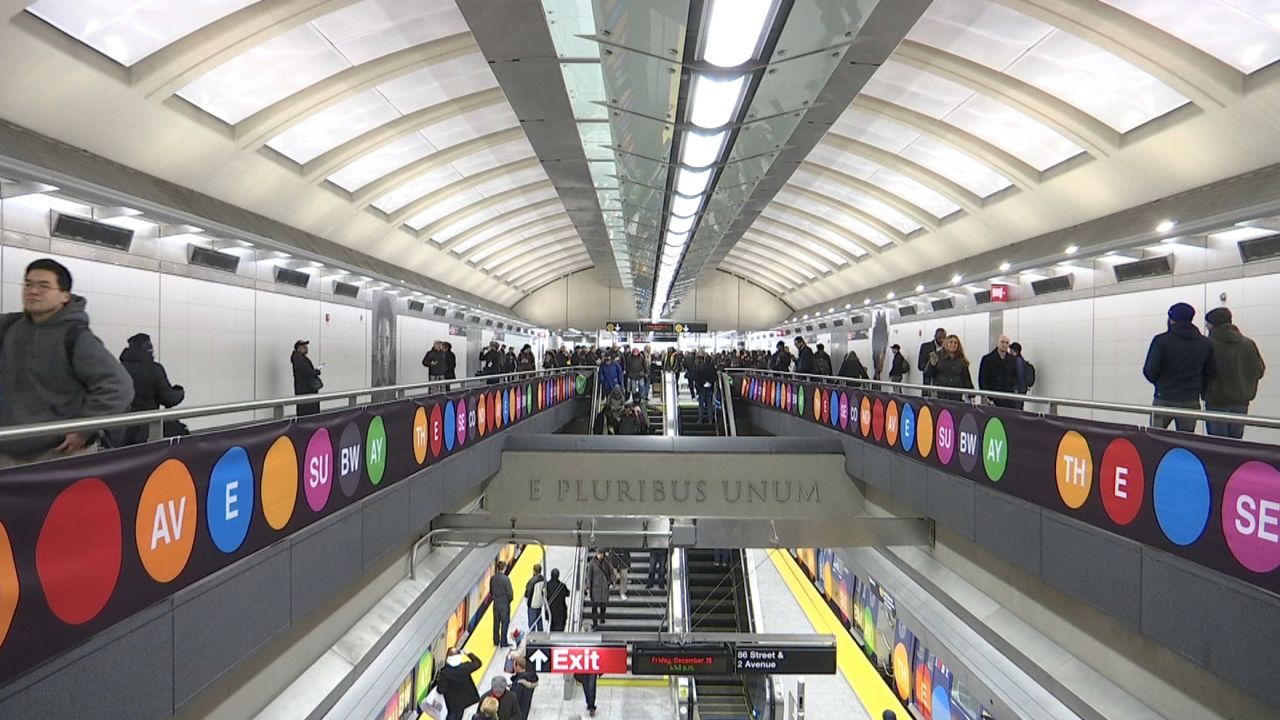
The Trump administration filed notice Thursday that it will restart payments for the project to expand the Second Avenue Subway, extending the Q line from 96th Street to 125th Street.
“We won. They capitulated on the courthouse steps,” MTA Chair and CEO Janno Lieber said.
What You Need To Know
The Trump administration filed notice Thursday that it will restart payments for the project to expand the Second Avenue Subway, extending the Q line from 96th Street to 125th Street
The MTA had been set to face the federal Department of Transportation in court in Washington, D.C. over a lawsuit the MTA filed last month seeking nearly $60 million in reimbursements
In October, the U.S. Department of Transportation stopped payments on its $3.4 billion share of the $7 billion project. According to a post on X from the White House budget director, it was stopped following a rule change regarding contracting based on sex and race
Work on the project never stopped as the state was still paying for its portion, but uncertainty over future funding prevented the MTA from hiring a contractor for the project’s next major step: excavating the 106th Street station to connect the existing tunnels to 96th Street
The MTA had been set to face the federal Department of Transportation in court in Washington, D.C. over a lawsuit the MTA filed last month seeking nearly $60 million in reimbursements. However, minutes before that legal procedure was scheduled to get underway, the DOT told the court and the MTA that it would restart the payments, which they are legally obligated to make.
Work on the Second Avenue Subway began in the 1970s but was put on hold amid the city’s fiscal crisis.
In October, the U.S. Department of Transportation stopped payments on its $3.4 billion share of the $7 billion project. According to a post on X from the White House budget director, it was stopped following a rule change regarding contracting based on sex and race.
In a letter to Lieber, the U.S. DOT said it uncovered troubling information that the transit agency considered race and sex when hiring contractors, but added that the MTA agreed not to consider those factors moving forward and said it will also reevaluate current contracts.
Work on the project never stopped as the state was still paying for its portion, but uncertainty over future funding prevented the MTA from hiring a contractor for the project’s next major step: excavating the 106th Street station to connect the existing tunnels to 96th Street.
Last month, President Donald Trump seemed unaware of the legal fight and indicated support for its completion.
“I haven’t heard about the Second Avenue subway in 20 years,” Trump said. “I guess they got to get it finished. They spent trillions of dollars, practically. I know they spent more money on that than on anything, I think, in the history of our city in New York City. And it’s been under construction for a long time. It’s very sad, actually.”
NY1 asked Lieber if he thought Trump’s remarks had any impact on the U.S. DOT’s decision.
“It’s a good point. You know, when when it was clear that the president didn’t think that the Second Avenue Subway was being delayed by his own administration, I think that may have been a little bit embarrassing for them,” Lieber said.
In a statement, the U.S. DOT told NY1, “Thanks to President Trump and Secretary Duffy, taxpayers can rest assured their hard-earned dollars will not fund unconstitutional DEI initiatives, including contracts which historically cause project costs to balloon. This has always been about securing the best deal for the American taxpayer and ensuring their dollars are spent efficiently and fairly.”