

Gift this article
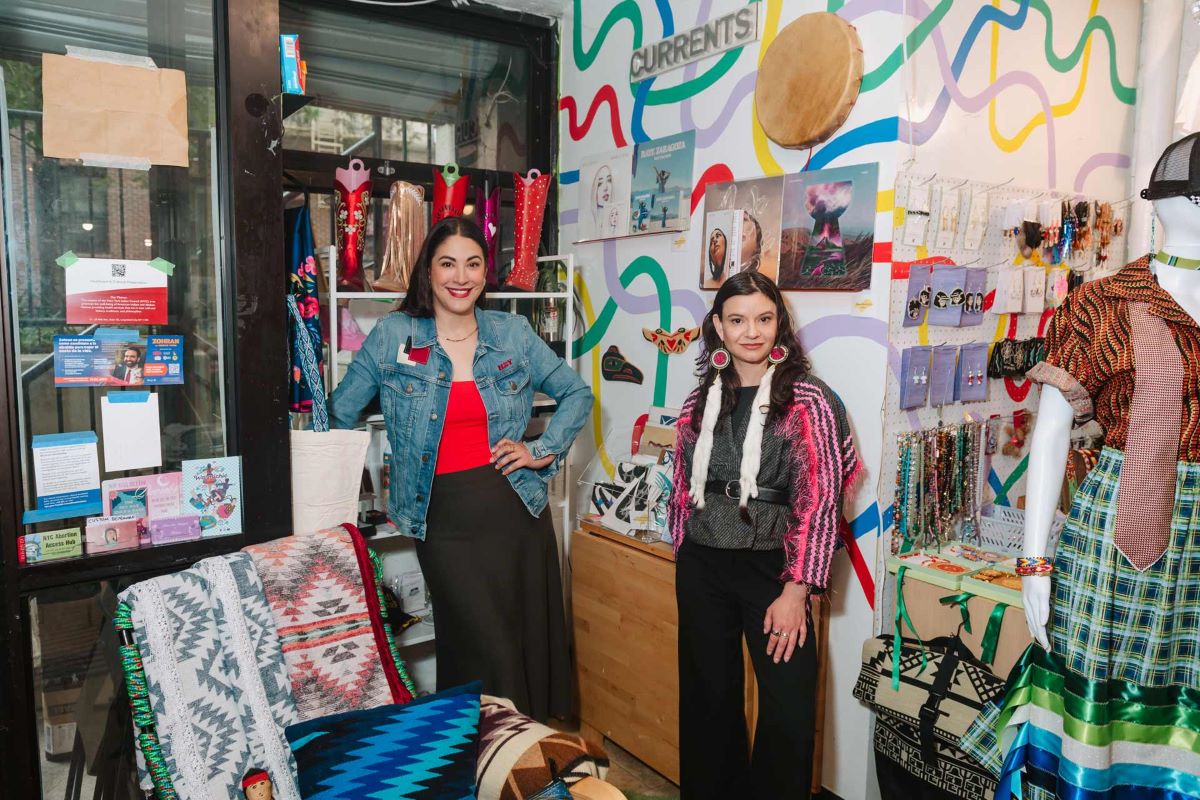
Korina Emmerich and Liana Shewey at Relative Arts
Credit: Lucía Vázquez
Rhode Island-based Turtle Island Community Capital has closed a $40,000 loan to Relative Arts, a brick-and-mortar shop and open studio in New York City’s East Village that showcases contemporary Indigenous fashion and design. The loan will pay off a high-interest line of credit Relative Arts took on to cover costs for last year’s first-ever Indigenous New York Fashion Week.
Vendors and artists at the event needed to be paid before event invoices came in, leaving the Relative Arts with no option but to use a short-turnaround lender. That lender, OnDeck, charged an effective interest rate of around 80%. TICC’s loan will cut monthly payments by more than 40% and replace revenue-based repayment with a fixed monthly structure.
“Debt has been used against Indigenous communities so many times that it’s really hard to rebuild the type of trusting connection that allows people to imagine a world where debt can be supportive instead of extractive,” TICC’s Alexander Sterling tells ImpactAlpha. Relative Arts generates around $150,000 in annual revenue and gives 70 Native artists a place to sell their work.
Indigenous finance
Native-owned businesses receive less than four-tenths of one percent of philanthropic funding and four-thousandths of one percent of venture capital. In Rhode Island, 96% of Native-owned firms have no employees, “not because they don’t want to, but because they can’t get access to the type of capital or training that would allow them to scale,” Sterling says.
TICC is one of a handful of Native-led CDFIs operating between Boston and Washington, DC. Its investor base includes the Colorado-based Oweesta Corporation, and a 0% recoverable grant from the Hidden Leaf Foundation. Sterling, a member of the Ramapo Lenape Nation who spent nearly a decade in small business and solar lending before moving into Indigenous finance, is seeking to raise $40 million.
“We want to be the lender of first resort for folks doing startup work that aren’t ready for VC funding,” Sterling said.