
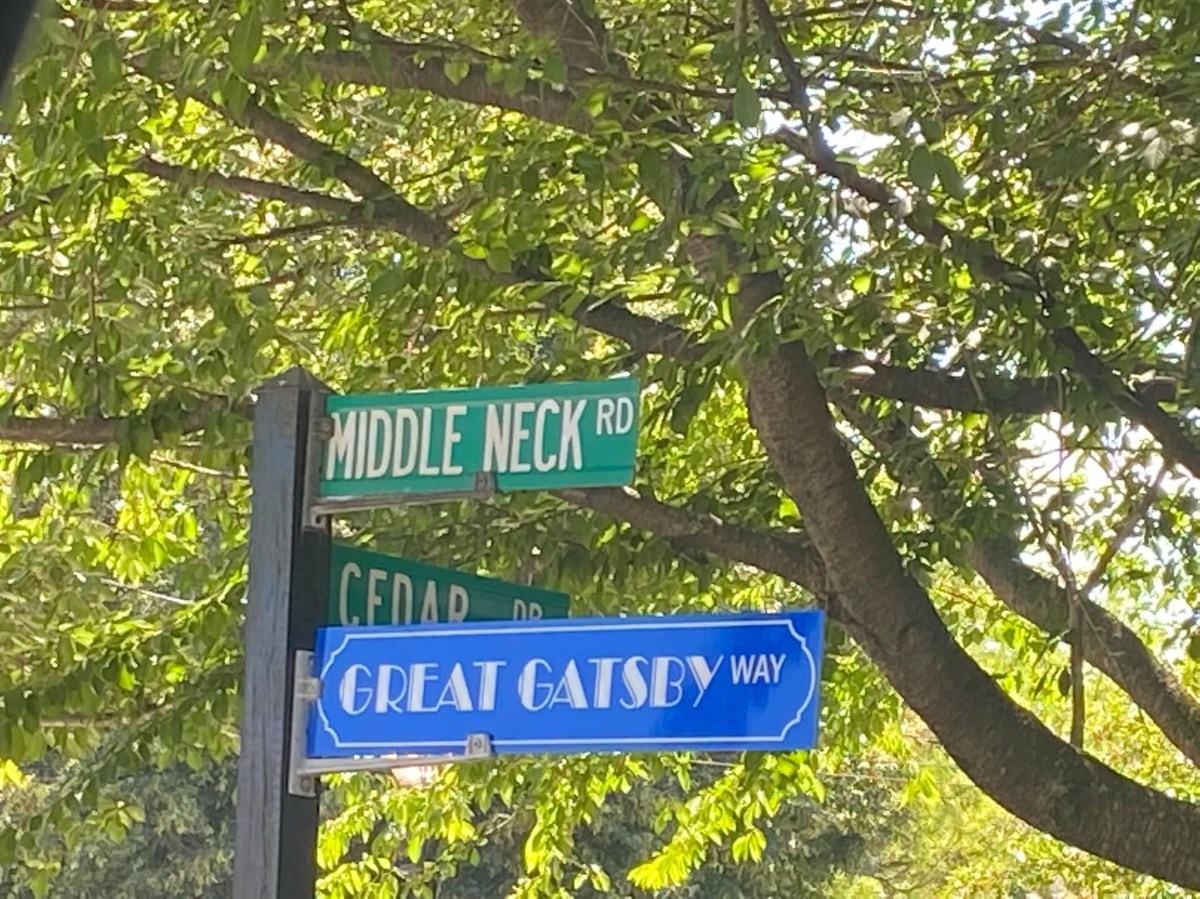
I recently enjoyed “The Great Gatsby” musical at NYC’s Broadway Theatre, which was triggering, to say the least.
Our town’s connection to the novel is real, specific, and globally recognizable, yet Great Neck is ignoring its legacy – an untapped goldmine of cultural branding and identity.
To naysayers, Gatsby is bigger than its themes of hedonism and decadence. Rather, it resonates globally as “the” American story because it’s about ambition and reinvention, wealth and status, immigration and identity – and the pursuit of belonging. These ideals actually map well onto our town’s demographics at the crossroads of the American Dream. Very well, ol’ Sport.
The case for Gatsby, by a litigator
May it please the court of public opinion: I submit that Great Neck must stand as the global locus of “The Great Gatsby,” before the statute of limitations runs out. The evidentiary record is clear:
Resident F. Scott Fitzgerald embedded the specific geography and lifestyle of our peninsula into his story. No competing jurisdiction can establish such an entitlement, nor can a direct nexus between creator, setting, and enduring cultural impact spanning literature, film, and theater (and, to be honest, some gangsta Halloween costumes).
In failing to adopt the Gatsby legacy, Great Neck is effectively waiving rights to a global powerhouse brand. The remedy is obvious and certain—deliberate cultivation of Gatsby, through tourism, programming, and preservation to establish our town– the very place that gave rise to Gatsby– as the rightful epicenter of Gatsby.
The big question is, can we even begin to reposition our town as a destination and restore our town’s glory? The comeback is always stronger than the setback!
The Great Gatsby connection is culturally famous—but locally subtle
F. Scott Fitzgerald lived at 6 Gateway Drive for several years as he wrote about West Egg’s nouveau riche residents, bustling Main Street, the Kings Point Road shoreline with its fine homes facing Manhasset Bay, and the green light across Steppingstone dock and Marina.
True, there’s no single preserved “Gatsby” house. We cannot just point at a building to evoke the narrative and much of the original Gold Coast landscape has changed. So, to reconnect the public, it requires an investment in storytelling, deliberate planning and programming.
We have the green light
1. Create a “Gatsby District” and immersive narrative by marking key areas, like Kings Point and Great Neck Estates, as a themed district. Install tasteful signage, plaques, and storytelling stops. Include augmented reality: visitors point their phone and “see” 1920s estates, parties, or scenes inspired by Gatsby. Branded walking maps, brochures, and QR codes. Tourism today is driven by what looks good online. Branding & signage: “Welcome to Great Neck – Inspiration for ‘The Great Gatsby’”
2. Annual Gatsby Festival, a well-produced summer festival tied to Roaring Twenties nostalgia that could put Great Neck on the map as a signature event. Jazz bands, swing dancing, vintage cars, Lawn parties, champagne gardens, costume contests. Nighttime mansion tours or light shows.
3. Lean into proximity to Manhattan. Visitors to New York City are already primed, so “Gatsby Day Trips” from Manhattan could be offered as a package with the Long Island Rail Road, for themed rides or discounted passes. Guided tours with narration about Fitzgerald, wealth, and Gold Coast society make it easy for tourists to say yes, as a weekend add-on to NYC tourism
4. Curated Mansion & Gold Coast Tours. Exterior walking/driving tours with East Egg/West Egg storytelling about nearby Gold Coast estates (Sands Point, etc. ) would tie the story to the geography.
Gatsby-style speakeasy pop-ups, 1920s photo sets (vintage cars, champagne towers, flapper fashion). Projection mapping onto buildings showing party scenes. Partnerships with boutique hotels, fine dining, and event planners. Gatsby-style weddings and private events — at the Mariner’s Estate! “Can’t repeat the past? … Why of course you can!”
The Challenge: We lost our mojo
Other than bragging rights to our fine lifestyles, parks and public schools, we don’t have a unified public-facing identity. Problem, defined. After our retail sector faltered over the last two decades, Great Neck municipalities and BID failed to make the strategic decision, and build a hybrid coalition to revitalize the peninsula as a destination.
That was a choice, not an accident. Choices have consequences. To be fair, we have fragmented local governance. “Great Neck” isn’t one town—it’s a patchwork of nine villages and jurisdictions. Each has its own priorities, budgets, and politics. That makes it very hard to coordinate branding, pool funding or execute something like a tourism campaign.
Great Neck is not an obvious tourism economy (yet). So, local leadership and residents (reasonably) push back: “Why deal with crowds, traffic, and disruption?” And yet, many still lament about the old days when Great Neck was great. Yo, bring us the solution, not the problem(s)!
Aside from vision, Great Neck also doesn’t have a “vision holder” for Jazz Age history and tourism strategy, as our neighbors, Sands Point and Oheka Castle, do. They have captured the “Gatsby” aesthetic and somewhat appropriated our town’s literary origin story. A Gatsby branding campaign would require an upfront investment, political and financial risk, and a savvy, driven professional to lead and advocate a large-scale initiative. It can be done, and there are millions of reasons to incentivize good talent.
K.I.S.S. It’s the economy, Stupid
Keep it simple, its all about the dough. The intellectual property rights for “The Great Gatsby” are staggering.
To date, ~30 million copies of the novel have been sold worldwide, averaging ~500,000 per year, and it has been translated into 40+ languages, serving as required reading in mass institutional sales. The 2013 firm sold close to $400 million in box office and streaming sales.
On Broadway, the gross is approximately $121 million to date, excluding touring productions, international versions, and future revivals. The conservative estimate for indirect economic impact is $200 million to $500 million.
That brings the total ecosystem value over $1B as a global cultural brand, with no central owner. And yet, no single place has fully claimed or monetized it geographically. This matters to Great Neck (or it should to stakeholders!) because we are the real-life setting and inspo that inspired all the above.
Bringing Gatsby home is both a cultural obligation and a strategic opportunity to anchor international attention to the very streets that inspired it.
If Great Neck actually leaned into the Gatsby connection in a serious, coordinated way, that could translate into real buzz, meaningful local revenue and tourism to support dining, retail, and hospitality by the additional foot traffic. (think, Speakeasy- a real cabaret experience in our town) If, however, Great Neck does not reclaim and cultivate its historical heritage, others will continue to abstract it. “So we beat on, boats against the current…” – F. Scot Fitzgerald.
Janet Nina Esagoff founded Destination: Great Neck Ltd. in 2021, aiming to fortify and celebrate her hometown. @greatneckbiz. In 2017, she launched Esagoff Law Group PC, with offices “in town” on Middle Neck Road. Prior to the law, Janet designed special–occasion wear for girls/teens at Party Girl, her Bond Street atelier.
 Janet Nina Esagoff Janet Nina Esagoff